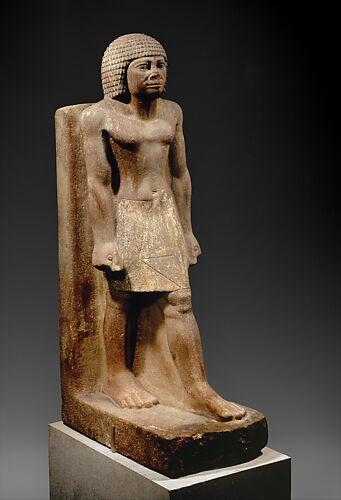
Sahure was one of the most important rulers of ancient Egypt's Fifth Dynasty. He succeeded Userkaf, the founder of the dynasty, and ruled during a period when Egypt's political organization, religious traditions, international trade, and royal architecture were developing rapidly.
Sahure is especially famous for his magnificent pyramid complex at Abusir, which contained beautifully decorated temples and some of the finest surviving reliefs from the Old Kingdom.
His reign also provides evidence of Egyptian expeditions to foreign lands, maritime activity, trade, and military campaigns. The reliefs from his mortuary temple offer a remarkable picture of the world known to Egyptians more than 4,400 years ago.
Who Was Sahure?
Sahure was the second ruler of Egypt's Fifth Dynasty.
His name is usually translated as “He Who Is Near Ra” or “Ra Comes Near.”
The name reflects the strong connection between Fifth Dynasty kingship and the sun god Ra.
Sahure probably ruled during the early part of the 25th century BCE, although the exact dates remain uncertain.
His reign is generally estimated to have lasted around a decade or somewhat longer, depending on the chronological reconstruction used by historians.
Sahure's Family Background
The exact family relationships of the early Fifth Dynasty are still debated.
Sahure may have been related to Userkaf, the founder of the dynasty, and to the powerful royal woman Khentkaus I.
Later traditions preserved stories about the divine origins of the Fifth Dynasty.
The Westcar Papyrus, written centuries later, contains a famous story in which three children are destined to become kings through a connection with the sun god Ra.
Although this story cannot be treated as direct historical evidence, it reflects the importance of solar religion in the Fifth Dynasty.
The Fifth Dynasty
Sahure inherited a kingdom that was already highly organized.
The Fourth Dynasty had produced the pyramids of Giza.
The Fifth Dynasty developed a different style of royal architecture.
The pyramids became smaller, while mortuary temples and solar temples became increasingly important.
Sahure's reign represents one of the finest examples of this new tradition.
The Pyramid of Sahure
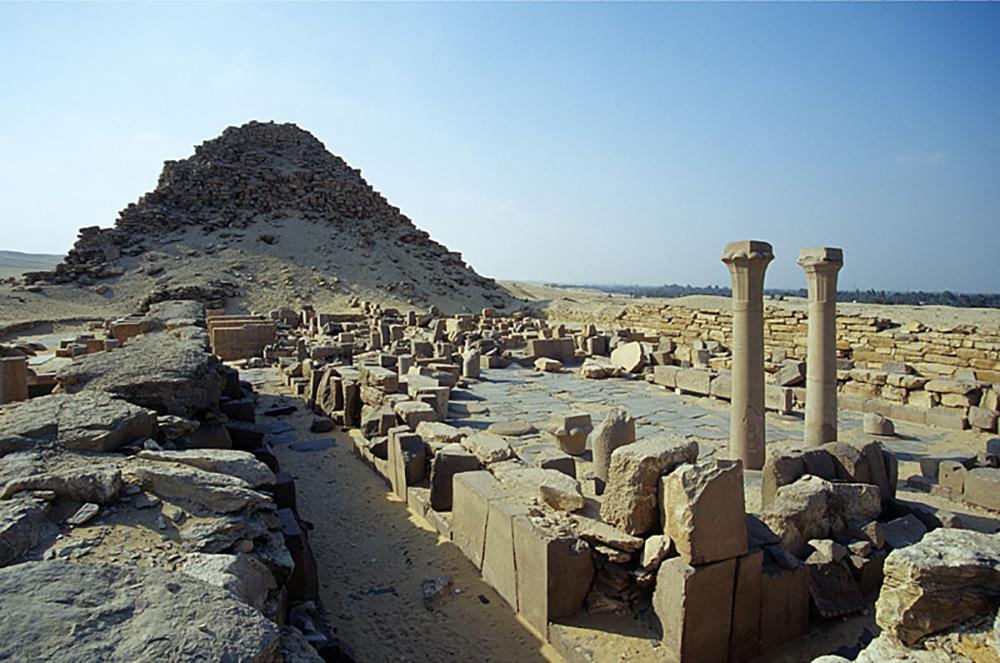
Sahure built his pyramid complex at Abusir, north of Saqqara and near the ancient capital region of Memphis.
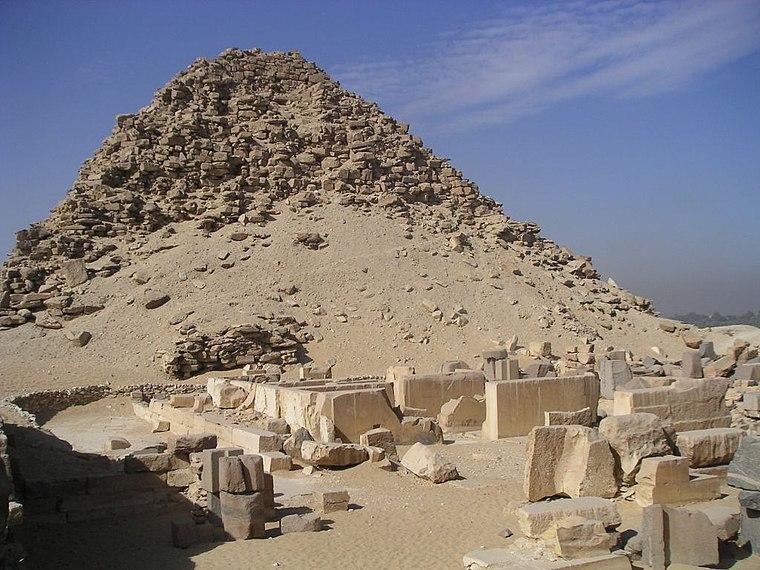
The pyramid was originally approximately 48 meters high.
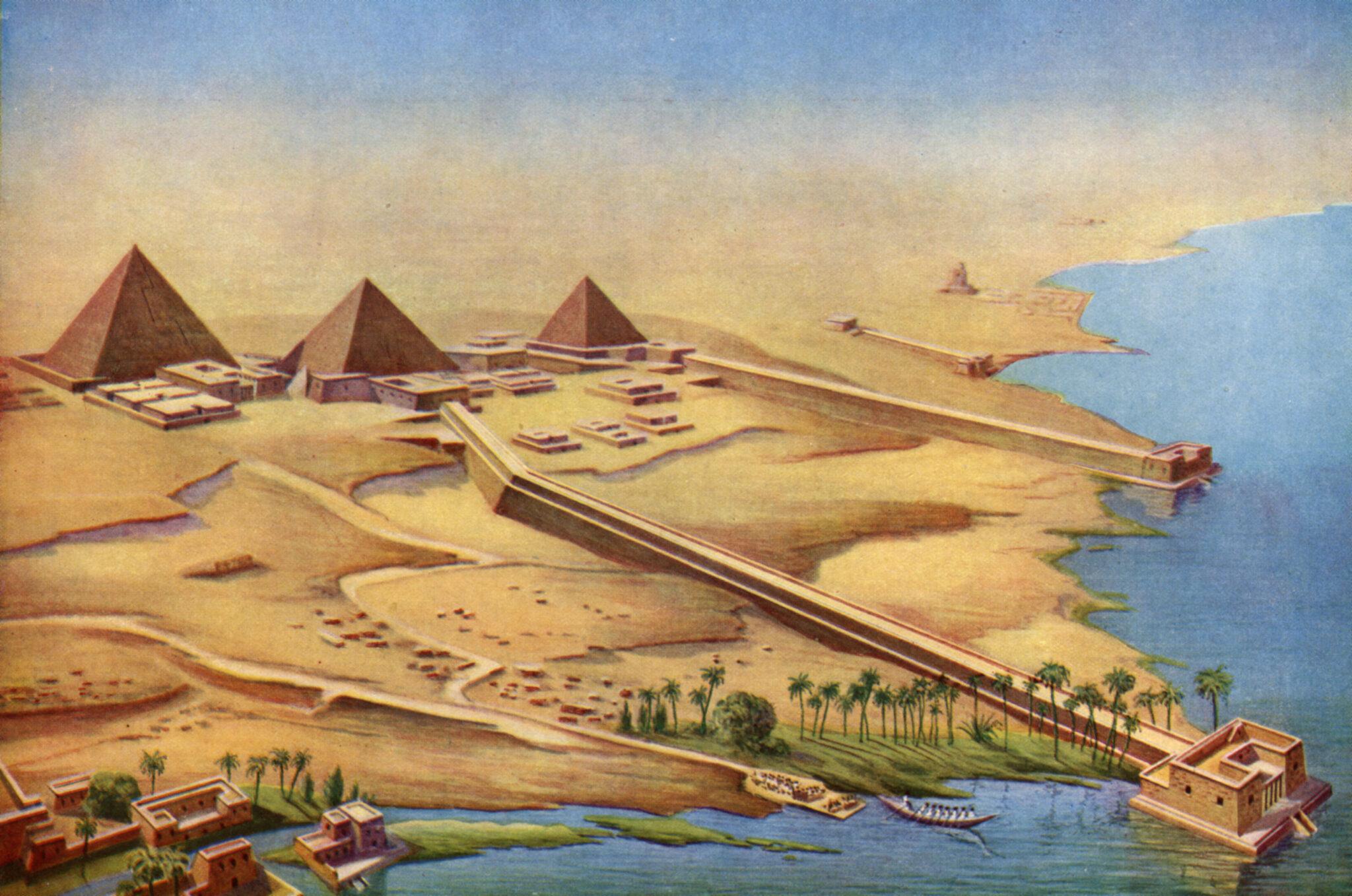
Like other Egyptian pyramids, it was built as part of a larger funerary complex.
The complex included:
- The main pyramid
- A mortuary temple
- A causeway
- A valley temple
- Storage and ritual areas
Although the pyramid itself has suffered significant damage, the remains of the temples provide extraordinary information about Sahure's reign.
The Mortuary Temple
Sahure's mortuary temple is one of the most important surviving monuments of the Fifth Dynasty.
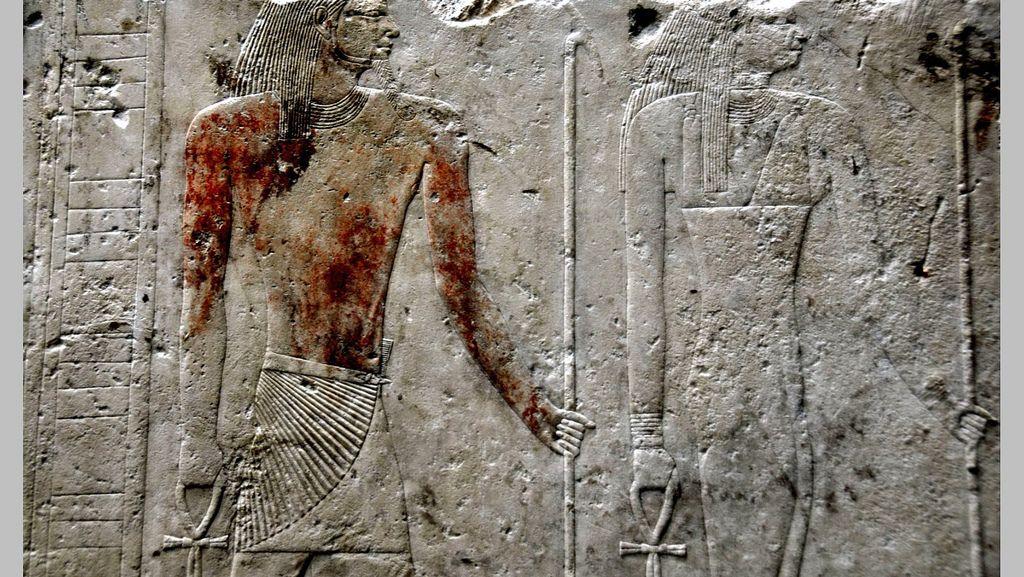
Its walls were covered with beautifully carved reliefs.
The scenes show royal ceremonies, religious rituals, animals, plants, ships, foreign lands, and military activities.
These reliefs are valuable historical sources because they reveal not only religious ideas but also aspects of Egyptian economy, trade, warfare, and daily life.
The Famous Reliefs
Sahure's temple contained some of the finest relief sculpture of the Old Kingdom.
Artists carefully carved scenes into limestone.
Many were originally painted in bright colors.
The images showed the king participating in religious ceremonies and demonstrating his power.
Other scenes represented nature and foreign regions.
The quality of the workmanship demonstrates the sophistication of Fifth Dynasty art.
Sahure and the Mediterranean
One of the most famous sets of reliefs from Sahure's temple shows ships returning from a foreign expedition.
The ships are shown with considerable detail.
Their hulls, masts, ropes, sails, and crews are represented.
The scenes demonstrate that Egyptian ships were capable of undertaking long-distance voyages.
The destination of these expeditions is debated, but they are often associated with the eastern Mediterranean and Levant.
Trade With Foreign Lands
Sahure's reign provides evidence of Egypt's international connections.
Egypt traded with regions beyond the Nile Valley.
Important commodities included:
- Timber
- Oils
- Resin
- Metals
- Precious stones
- Animals
- Luxury goods
The Levant was especially important for obtaining cedar and other valuable materials.
Egypt also maintained connections with the southern regions of Nubia and the lands around the Red Sea.
The Land of Punt
Sahure's temple reliefs also contain references that have been associated with the Land of Punt.
Punt was a distant region famous to the Egyptians for luxury products.
Egyptian expeditions to Punt later became especially well documented during the New Kingdom.
Goods associated with Punt included:
- Frankincense
- Myrrh
- Exotic woods
- Gold
- Animals
- Aromatic products
The exact location of Punt remains debated, but it was probably somewhere around the southern Red Sea region, often associated with parts of the Horn of Africa.
Military Campaigns
Sahure's reliefs also show military activity.
The king is shown defeating enemies and receiving prisoners.
Such scenes were common in Egyptian royal art.
They symbolized the king's role as protector of Egypt and defender of cosmic order.
However, these images should not automatically be interpreted as literal historical records of every event.
Egyptian royal art often used symbolic scenes to demonstrate the king's power.
The King and Maat
Sahure, like other Egyptian pharaohs, was expected to maintain maat.
Maat represented truth, justice, balance, and cosmic order.
Foreign enemies were often symbolically associated with chaos.
When the king defeated them, the artwork communicated the restoration of order.
This religious symbolism was an important part of Egyptian royal ideology.
Sahure and Ra
The Fifth Dynasty was strongly associated with the cult of Ra, the sun god.
Sahure's name itself contains a solar reference.
The king was connected with the daily journey of the sun.
At sunrise, the sun emerged from the eastern horizon.
At sunset, it disappeared into the western horizon.
The cycle represented renewal and eternal life.
The king's afterlife was therefore closely connected with solar theology.
The Pyramid Complex and Solar Symbolism
The design of Sahure's pyramid complex reflected these beliefs.
The causeway connected the valley temple with the higher mortuary temple.
The king's burial monument was integrated into a larger religious landscape.
The movement from the valley toward the pyramid symbolized the transition from the earthly world toward the divine realm.
The architecture therefore had both practical and religious purposes.
Sahure's Statues
Several fragments of statues connected with Sahure have survived.
These sculptures present the king according to the traditional conventions of Egyptian royal art.
He appears youthful and powerful.
His posture is calm and controlled.
The purpose was to present the king as eternal rather than to reproduce every detail of his physical appearance.
The Importance of Royal Sculpture
Royal statues had a religious function.
They could serve as physical representations of the king.
Offerings could be made before them.
Priests could perform rituals associated with the deceased ruler.
The sculpture therefore helped preserve the king's existence after death.
Sahure's Economy
Sahure ruled a prosperous agricultural kingdom.
The Nile provided fertile soil and transportation.
Egyptian farmers cultivated grain, vegetables, fruit, and other crops.
The government collected agricultural resources.
These resources supported the royal court, temples, officials, craftsmen, and workers.
The economic surplus also made foreign expeditions possible.
Quarries and Building Materials
Sahure's architects required large quantities of stone.
Limestone was obtained from quarries near the Nile Valley.
Granite came from the far south, particularly the Aswan region.
Other stones were obtained from different areas of Egypt.
Transporting these materials required boats, workers, ropes, sledges, and carefully organized labor.
The construction of Sahure's pyramid complex demonstrates the continuing strength of the Old Kingdom state.
Abusir: The Royal Cemetery
Sahure's decision to build at Abusir established an important royal cemetery.
Several later Fifth Dynasty kings also constructed pyramids there.
The cemetery became one of the most important archaeological sites for studying the Fifth Dynasty.
Its monuments reveal the development of pyramid architecture, mortuary temples, priestly institutions, and royal administration.
Sahure's Successor
Sahure was succeeded by Neferirkare Kakai.
Neferirkare continued the royal building program at Abusir.
His pyramid complex was larger than Sahure's, although it also suffered significant damage.
The reigns of Sahure and Neferirkare together represent an important phase in Fifth Dynasty history.
The Abusir Papyri
One of the most valuable discoveries from the Abusir royal cemetery is a collection of administrative documents known as the Abusir Papyri.
These documents contain information about temple administration, offerings, priests, workers, and daily operations.
Although many of the surviving papyri are associated with later Fifth Dynasty complexes, they help historians understand the administrative system that developed around royal funerary institutions.
Priests and Temple Institutions
Royal temples required permanent personnel.
Priests performed daily rituals.
Workers prepared offerings.
Administrators recorded supplies.
Craftsmen maintained buildings and statues.
The temples therefore functioned as large economic institutions.
They controlled land, animals, food supplies, workshops, and labor.
Sahure's reign provides an important example of the growing role of these institutions.
Agriculture and Temple Wealth
Royal and temple estates produced agricultural goods.
Fields were cultivated by farmers.
Animals were raised for offerings.
Grain was stored in granaries.
The temple redistributed resources among priests and workers.
This system helped sustain the royal cult for generations after the king's death.
Sahure's International Influence
Sahure's reliefs demonstrate that Egypt was not isolated.
Egyptian ships traveled beyond the Nile Valley.
Trade routes connected Egypt with the Levant, Nubia, and other regions.
Foreign products entered Egypt.
Egyptian expeditions also collected resources from distant lands.
These activities contributed to the wealth and prestige of the Fifth Dynasty.
The Image of Foreigners
Egyptian reliefs often represented foreigners according to established artistic conventions.
Enemies were shown as defeated or controlled.
Foreign lands were represented as sources of valuable resources.
These images reinforced the idea that the pharaoh controlled the boundaries between Egypt and the outside world.
They were therefore both political and religious statements.
Sahure's Artistic Style
The reliefs of Sahure's temple are notable for their elegance.
Artists created detailed figures with balanced proportions.
Animals were represented with remarkable observation.
Plants and landscapes were carefully carved.
Ships were shown with sophisticated technical detail.
This combination of symbolism and observation became one of the defining characteristics of Old Kingdom art.
Hunting Scenes
Some reliefs depict animals and hunting.
Such scenes communicated royal control over nature.
The king was presented as a powerful figure capable of maintaining order in both the human and natural worlds.
Animals could also symbolize fertility, abundance, and the richness of the Egyptian environment.
Sahure's Historical Importance
Sahure's importance extends beyond his pyramid.
His reign provides evidence for:
- International trade
- Maritime expeditions
- Military activity
- Solar religion
- Royal administration
- Temple economics
- Old Kingdom art
- Pyramid construction
His monuments therefore provide a remarkably broad picture of Egyptian civilization.
The Legacy of Sahure
Sahure's pyramid is now partially ruined, but his mortuary temple continues to attract enormous historical interest.
The reliefs preserve details that would otherwise have disappeared.
They show ships, animals, foreigners, royal ceremonies, and religious rituals.
For Egyptologists, these scenes are invaluable.
They help reconstruct the economy, religion, technology, and international relationships of the Fifth Dynasty.
Why Sahure Matters
Sahure matters because his reign shows ancient Egypt at a moment of transformation.
The gigantic pyramids of Giza belonged to an earlier generation.
The Fifth Dynasty developed a new style of royal architecture and emphasized the worship of Ra.
Sahure successfully combined these new religious traditions with the administrative and economic strength inherited from the Old Kingdom.
His monuments demonstrate that Egypt remained powerful even as royal architecture changed.
Conclusion
Sahure was one of the most important kings of Egypt's Fifth Dynasty.
As the successor of Userkaf, he inherited a powerful and highly organized kingdom.
His reign became famous for the construction of his pyramid complex at Abusir, especially its beautifully decorated mortuary temple.
The reliefs of Sahure's temple provide some of the most valuable visual evidence from the Old Kingdom.
They depict ships, foreign lands, animals, military campaigns, religious ceremonies, and scenes of abundance.
These images demonstrate that Egypt maintained extensive economic and political connections beyond the Nile Valley.
Sahure's reign was also strongly connected with the worship of Ra, reflecting the growing importance of solar religion during the Fifth Dynasty.
His pyramid complex combined traditional beliefs about the king's afterlife with the new solar ideology that became characteristic of the dynasty.
He was succeeded by Neferirkare Kakai, and the royal cemetery at Abusir continued to develop under later rulers.
Although Sahure's pyramid has suffered severe damage, his artistic legacy remains extraordinary.
His temple reliefs preserve a vivid picture of an ancient civilization at the height of its power.
Sahure was more than a pyramid builder. He was a king whose reign connected architecture, religion, international trade, military power, art, and administration—and his monuments continue to tell the story of Egypt's remarkable Fifth Dynasty thousands of years later.