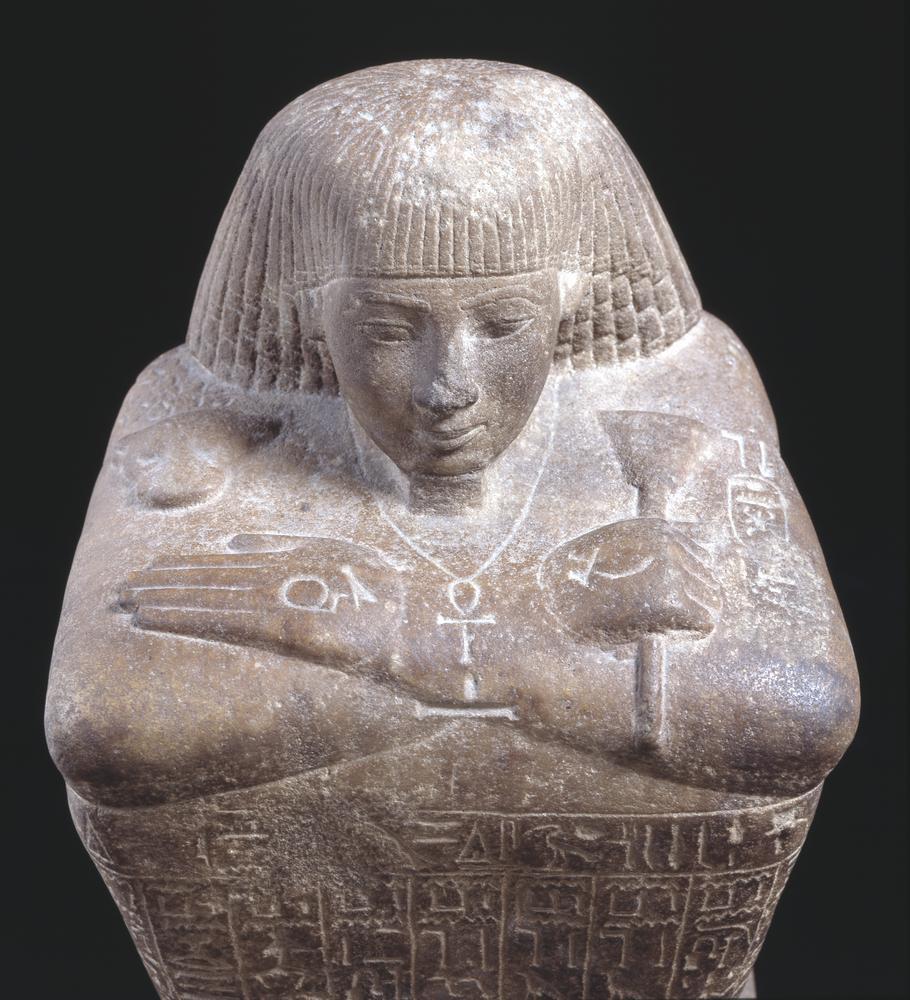
Teti was the first pharaoh of Egypt’s Sixth Dynasty and one of the important rulers of the later Old Kingdom. He came to the throne after Unas, the last king of the Fifth Dynasty, and inherited a kingdom that was still powerful but beginning to experience important political and administrative changes.
Teti is especially remembered for his pyramid at Saqqara, his connection with the royal family through his wife Iput, and the important officials who served during his reign. His rule also continued the growing tradition of using Pyramid Texts inside royal pyramids, a tradition that had become famous during the reign of Unas.
Although Teti's reign was not marked by enormous monuments like the pyramids of Giza, his period is historically important because it represents the beginning of the Sixth Dynasty and a new stage in the development of Old Kingdom Egypt.
Teti's Early Life
Very little is known about Teti's childhood or early life.
His parents have not been identified with certainty, and his exact connection to the royal family before becoming king remains debated.
However, Teti became closely connected to the previous royal line through his marriage to Iput, who was probably a daughter of King Unas.
This marriage was politically significant.
In ancient Egypt, royal blood and family connections could strengthen a king's legitimacy.
By marrying a woman associated with the previous dynasty, Teti may have strengthened his position as the successor to Unas.
Teti Becomes Pharaoh
After the death of Unas, Teti became king of Egypt and founded the Sixth Dynasty.
The transition between the Fifth and Sixth Dynasties appears to have been relatively peaceful.
There is no clear evidence of a major civil war or violent revolution accompanying Teti's accession.
Instead, the Egyptian state continued to function under the new ruler.
Teti inherited a sophisticated government, a powerful religious establishment, wealthy temples, and an extensive network of officials.
His challenge was to maintain the stability of this system while managing the growing influence of powerful officials.
The Political Situation
During the late Old Kingdom, Egypt's central government was still strong, but provincial officials were becoming increasingly important.
Governors and administrators controlled local estates, agricultural resources, and regional institutions.
Some officials possessed large and richly decorated tombs.
Their inscriptions reveal that they were proud of their careers and close relationships with the king.
Teti's reign therefore occurred during a period when royal authority and local power were gradually becoming more interconnected.
Teti's Marriage to Iput
One of the most important women associated with Teti was Queen Iput.
Iput was probably the daughter of King Unas.
Her marriage to Teti helped connect the new king with the previous royal family.
She became the mother of Pepi I, who later became one of Egypt's most famous Sixth Dynasty rulers.
Iput's importance continued after her death.
Her tomb and funerary monument near Teti's pyramid provide valuable evidence about royal women during the Sixth Dynasty.
Queen Iput's Importance
Iput was not simply the wife of the king.
She was an important member of the royal family and the mother of a future pharaoh.
Her position demonstrates how royal women could play an important role in Egyptian succession.
Her relationship with Teti also helped connect the Fifth and Sixth Dynasties.
Through Iput and their son Pepi I, Teti established a royal line that would rule Egypt for generations.
Teti's Pyramid
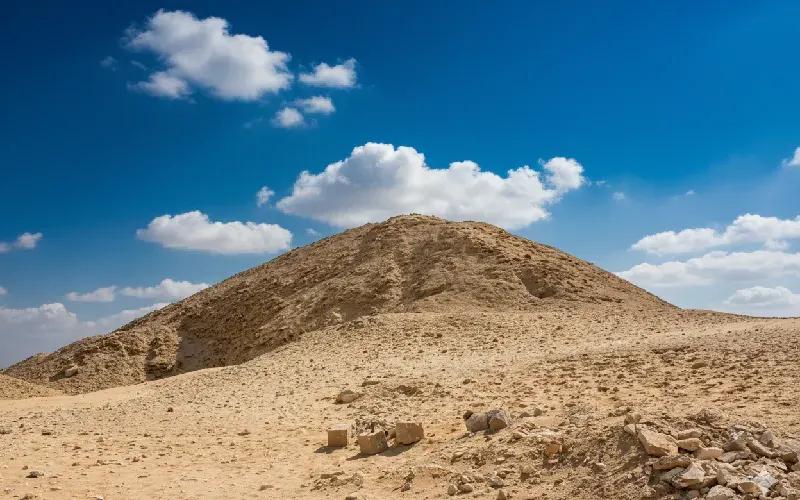
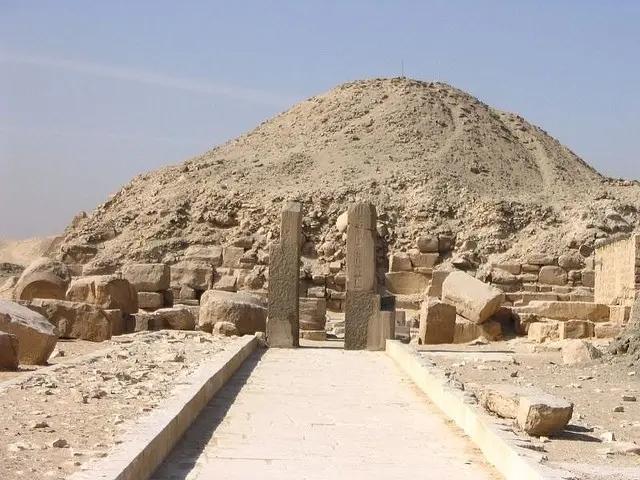
Teti built his pyramid at Saqqara, close to the pyramids of earlier kings.
His pyramid was known in ancient times as "Teti's enduring places."
Like many Old Kingdom pyramids, the monument originally had a polished limestone exterior.
Over thousands of years, much of the outer casing disappeared.
Today, the pyramid appears as a large ruined structure, but its interior remains extremely important.
The Pyramid Texts of Teti
Teti continued the tradition established by Unas.
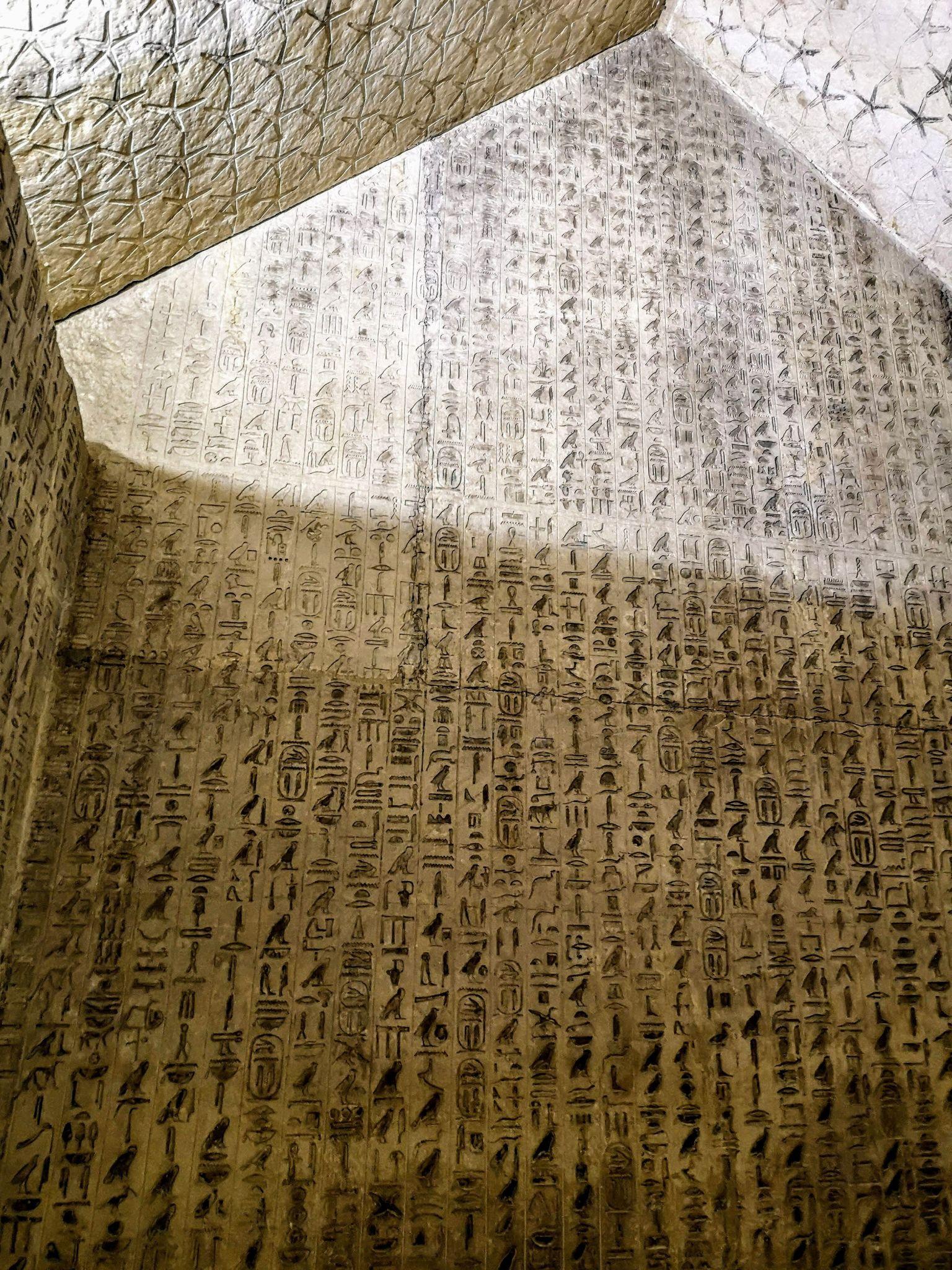
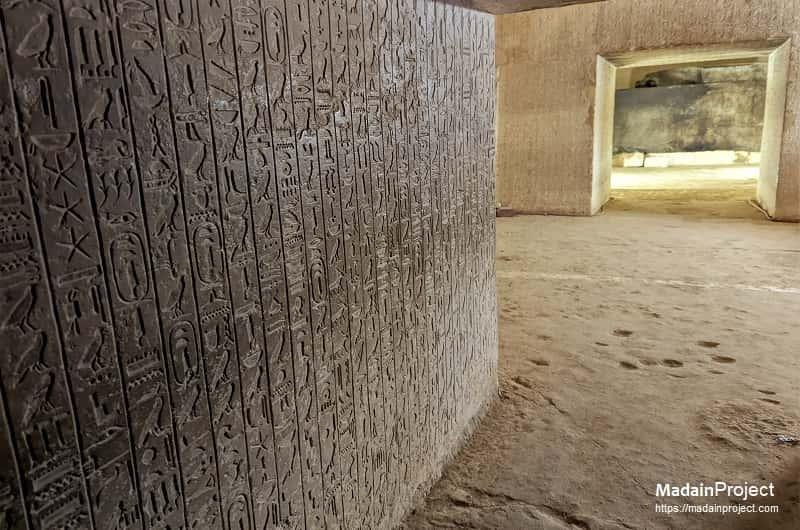
The interior of his pyramid contains Pyramid Texts, a collection of religious spells intended to protect the king and help him achieve eternal life.
These inscriptions contain prayers, magical formulas, hymns, and references to numerous Egyptian gods.
They describe the king's transformation after death and his journey into the divine world.
The Pyramid Texts of Teti are therefore an important source for understanding Egyptian religion during the Sixth Dynasty.
Teti and the Afterlife
Ancient Egyptians believed that death was a transformation rather than the end of existence.
The deceased king needed to become an eternal being.
He had to join the gods, overcome supernatural dangers, and maintain his existence forever.
The Pyramid Texts were designed to assist with this process.
Teti was expected to become a divine king who could continue to exist in the heavens and participate in the eternal cycle of the cosmos.
Teti and Osiris
The worship of Osiris continued to grow during Teti's reign.
Osiris was the god of the dead and resurrection.
According to Egyptian mythology, Osiris was killed by Seth and restored through the efforts of Isis.
The dead king was identified with Osiris.
This religious belief gave the pharaoh a path toward resurrection and eternal life.
Teti's Pyramid Texts reflect this important aspect of Egyptian funerary religion.
Teti and Ra
The sun god Ra remained an important deity.
The Egyptians believed that Ra traveled across the sky during the day and through the underworld during the night.
This daily journey symbolized renewal.
The deceased king could join the solar cycle and travel with the sun god.
Teti's religious ideology therefore combined older solar traditions with the increasingly important Osirian beliefs.
Teti's Mortuary Complex
Teti's pyramid was part of a larger funerary complex.
It included a mortuary temple where priests performed rituals and presented offerings.
A causeway connected the upper part of the complex to a valley temple.
The entire complex was designed to support the king's eternal existence.
Even after Teti's death, priests were expected to maintain his cult.
Food, drink, incense, and other offerings were presented to the deceased king.
Teti's Government
Teti inherited the sophisticated administrative structure developed during the Old Kingdom.
The government relied on scribes, officials, priests, administrators, and provincial governors.
Taxes were collected in agricultural products and other resources.
Government officials managed royal estates and organized large projects.
The king remained at the center of this system.
However, the influence of powerful officials was becoming increasingly visible.
The Vizier Kagemni
One of the famous officials associated with Teti was Kagemni.
Kagemni held an important administrative position and was later remembered through his tomb and literary traditions.
His tomb at Saqqara contains scenes showing aspects of elite life.
Kagemni's career demonstrates the wealth and influence that high-ranking officials could achieve during the Sixth Dynasty.
The Vizier Mereruka
Another extremely important official from Teti's reign was Mereruka.
Mereruka served as a powerful official and became one of the most famous figures of the Sixth Dynasty.
His enormous tomb at Saqqara contains numerous chambers decorated with detailed reliefs.
These scenes show hunting, fishing, farming, crafts, animals, food production, and other activities.
Mereruka's tomb is one of the best sources for understanding elite life during the Old Kingdom.
The Tomb of Mereruka
The tomb of Mereruka is especially impressive because of its size and decoration.
It contains many rooms and beautifully carved reliefs.
The scenes depict both everyday activities and elite experiences.
They show workers harvesting crops, fishermen catching fish, craftsmen producing objects, and servants preparing food.
These images provide valuable information about the economy and society of ancient Egypt.
Growing Power of Officials
The large tombs of officials such as Mereruka reveal an important development.
Royal officials were accumulating considerable wealth and prestige.
Their tombs sometimes rivaled royal monuments in complexity.
This did not necessarily mean that the central government had already collapsed.
Instead, it shows that the Egyptian state had created a large elite class that depended on royal administration but also possessed significant local influence.
Agriculture During Teti's Reign
The Nile remained the foundation of Egyptian civilization.
Every year, the Nile flooded the surrounding valley and deposited fertile soil.
Farmers cultivated wheat, barley, flax, vegetables, fruit, and other crops.
Agricultural production supported the population and provided taxes to the government.
The king depended on these resources to support temples, officials, soldiers, craftsmen, and construction workers.
Trade and Natural Resources
Egypt continued to maintain trade routes during Teti's reign.
Expeditions traveled to regions such as Nubia, Sinai, and the Eastern Desert.
Nubia was particularly valuable because of its gold and other resources.
Sinai provided turquoise and copper.
The Eastern Desert contained valuable stones and minerals.
These resources were essential for Egyptian jewelry, tools, weapons, architecture, and religious objects.
Teti and Nubia
Relations with Nubia were important throughout Egyptian history.
The region south of Egypt contained valuable resources and important trade routes.
Egyptian expeditions traveled south to obtain gold and other goods.
Nubia also connected Egypt with regions farther south.
Teti's government continued Egypt's interest in maintaining access to these resources.
Military and Border Security
The Egyptian king was responsible for protecting the country's borders.
Military forces could be used to secure trade routes and defend Egyptian interests.
The Sinai region was particularly important because it contained mining areas and routes toward Asia.
Egyptian expeditions needed protection from hostile groups and desert dangers.
Teti's reign appears to have maintained the general security of the kingdom.
The Role of Maat
Like all Egyptian pharaohs, Teti was expected to maintain maat.
Maat represented truth, justice, balance, harmony, and cosmic order.
The pharaoh's responsibility was to preserve this order.
He was expected to rule fairly, support temples, honor the gods, and protect Egypt.
Maintaining maat was considered essential for the prosperity of the kingdom.
Religion During Teti's Reign
Religion was deeply connected to everyday Egyptian life.
People worshipped numerous gods.
Among the most important were Ra, Osiris, Isis, Horus, Hathor, Anubis, Ptah, and Thoth.
Different regions had their own religious traditions.
The king played a central role in maintaining the relationship between Egypt and the gods.
Temples received offerings and controlled large estates.
Egyptian Art Under Teti
The art of the Sixth Dynasty continued the highly developed traditions of the Old Kingdom.
Artists created detailed reliefs showing animals, plants, people, boats, agriculture, hunting, fishing, and religious rituals.
Private tombs became especially valuable sources of information.
The scenes provide an unusually detailed picture of elite life.
They also demonstrate the technical skill of Egyptian craftsmen.
Everyday Life in Teti's Egypt
Most Egyptians were farmers.
Their lives followed the agricultural cycle.
During the Nile flood, agricultural work temporarily decreased in some areas.
Workers could then participate in construction, transportation, and other state projects.
Craftsmen worked in workshops producing pottery, furniture, jewelry, tools, and other objects.
Scribes recorded taxes, supplies, and administrative information.
Merchants transported goods along the Nile and through desert routes.
Teti's Foreign Relations
Egypt was connected to neighboring regions through trade and expeditions.
Foreign goods entered Egypt through land and sea routes.
Incense, precious stones, metals, exotic animals, and luxury products were valued by the Egyptian elite.
These international connections helped maintain the wealth and prestige of the royal court.
The Death of Teti
Teti's reign ended with his death.
The exact circumstances are uncertain.
A later historical tradition associated with the Turin Canon and Manetho has sometimes been interpreted as suggesting that Teti was murdered by his bodyguard.
However, the evidence is not strong enough to establish the exact circumstances of his death with certainty.
What is clear is that Teti was buried in his pyramid at Saqqara.
Teti's Successor
After Teti's death, Userkare briefly became king.
Userkare's exact relationship with Teti remains uncertain.
His reign appears to have been short.
He was eventually succeeded by Pepi I, the son of Teti and Queen Iput.
Pepi I would go on to become one of the longest-reigning and most important kings of the Sixth Dynasty.
Teti and Pepi I
The relationship between Teti and Pepi I is important for Egyptian history.
Pepi I inherited the throne after the brief reign of Userkare.
He continued many traditions established by his father.
Under Pepi I, Egypt remained powerful and conducted extensive expeditions.
The royal family also continued to develop its connections with powerful provincial officials.
Teti's Historical Importance
Teti is important because he founded the Sixth Dynasty and helped preserve the traditions of the Old Kingdom.
His reign demonstrates the continuing strength of Egyptian royal authority.
At the same time, his period provides evidence of the growing influence of elite officials.
His pyramid and Pyramid Texts reveal the development of Egyptian funerary religion.
His family connections helped establish a royal line that would rule Egypt for generations.
Teti's Legacy
Teti's greatest legacy can be seen in several areas.
He established the Sixth Dynasty.
He maintained the Old Kingdom political system.
He built a pyramid at Saqqara.
He continued the use of Pyramid Texts.
He was connected to important officials such as Mereruka and Kagemni.
Through Queen Iput, he became the father of Pepi I.
His reign therefore played an important role in the continuation of Old Kingdom civilization.
Conclusion
Teti was the founder and first pharaoh of Egypt's Sixth Dynasty.
His reign marked the beginning of a new royal period while preserving many of the political, religious, and artistic traditions of the Old Kingdom.
His marriage to Queen Iput, probably the daughter of Unas, connected him to the previous royal dynasty and strengthened his royal legitimacy.
Teti built his pyramid at Saqqara, where the walls of the burial chambers were decorated with important Pyramid Texts.
These sacred writings reveal the ancient Egyptian belief that the pharaoh could overcome death, join the gods, and achieve eternal life.
Teti's reign was also an important period for the development of Egypt's administrative elite.
Officials such as Mereruka and Kagemni possessed great wealth and influence, and their impressive tombs provide historians with a detailed picture of Old Kingdom society.
Egypt continued to depend on the Nile for agriculture while maintaining trade and expeditions to Nubia, Sinai, and the Eastern Desert.
Although Teti's death remains surrounded by some uncertainty, his dynasty continued through his son Pepi I, who became one of the most powerful rulers of the Sixth Dynasty.
Today, Teti is remembered as a king who stood at an important turning point in Egyptian history.
His reign connected the final traditions of the Fifth Dynasty with the long and influential Sixth Dynasty, while his pyramid, family, officials, and religious inscriptions continue to provide valuable evidence about the civilization of ancient Egypt.