Sobekneferu was one of the most fascinating rulers of ancient Egypt and one of the earliest women known to have ruled Egypt as king in her own right. She was the final ruler of the Twelfth Dynasty and brought one of the greatest periods of the Middle Kingdom to an end.
Her name means approximately "The Beauty of Sobek", connecting her directly with the powerful crocodile god Sobek, who was especially important in the Faiyum.
Sobekneferu inherited the throne after the death of Amenemhat IV.
Her reign was relatively short, lasting only a few years.
Despite the limited length of her rule, Sobekneferu is historically extremely important.
She ruled at a time when Egypt was still wealthy and politically organized.
The great achievements of the Twelfth Dynasty were still visible.
The Faiyum was productive.
Egypt's administration was centralized.
The southern frontier was protected.
Trade and mining continued.
Royal temples remained active.
Sobekneferu's challenge was to maintain this powerful kingdom while ruling in a political world dominated by male kings.
She succeeded in establishing herself as a legitimate pharaoh.
Her monuments and inscriptions show that she deliberately presented herself using traditional symbols of Egyptian kingship.
She used royal names.
She wore the traditional crown.
She was depicted in royal clothing.
She adopted the full language of kingship.
At the same time, some surviving representations appear to combine traditionally masculine and feminine elements.
This makes her one of the most intriguing figures in Egyptian art and history.
Her reign marked the end of the Twelfth Dynasty.
After her death, Egypt entered a new political period known as the Second Intermediate Period.
Although later dynasties would eventually restore Egyptian power, Sobekneferu remained remembered as the final ruler of one of the Middle Kingdom's greatest royal families.
Egypt Before Sobekneferu
Sobekneferu was born into the royal family of the Twelfth Dynasty.
She was probably closely related to Amenemhat III, although the exact details of her family relationship remain uncertain.
Some evidence suggests she may have been his daughter.
Her royal name itself contains the name of Sobek, a deity strongly associated with the Faiyum.
The royal family had already ruled Egypt for generations.
The dynasty began with Amenemhat I.
He restored central royal authority after the political fragmentation of the First Intermediate Period.
His son, Senusret I, strengthened the kingdom.
Amenemhat II continued economic development.
Senusret II invested heavily in the Faiyum.
Senusret III strengthened the army and centralized the administration.
Amenemhat III brought Egypt to a remarkable level of economic prosperity.
Amenemhat IV continued these policies.
Then Sobekneferu inherited the throne.
Becoming Pharaoh
The circumstances surrounding Sobekneferu's accession remain uncertain.
Amenemhat IV died without a clearly established male successor.
Sobekneferu then became ruler.
Her accession was unusual because Egyptian kingship was overwhelmingly dominated by men.
However, Egypt had already experienced female rulers in earlier periods.
Sobekneferu therefore did not invent the concept of female kingship.
What makes her particularly important is the amount of evidence confirming that she ruled as a king.
The Name Sobekneferu
Her name connected her with Sobek, the crocodile god.
Sobek was especially important in the Faiyum.
He was associated with:
- Water
- Fertility
- Strength
- Royal power
- Protection
The second part of her name, "neferu," is associated with beauty or perfection.
Her name therefore had a powerful religious meaning.
Sobek and the Faiyum
The Faiyum was one of the most important regions in Middle Kingdom Egypt.
The area contained fertile land and waterways.
The region had been heavily developed during the Twelfth Dynasty.
Sobek worship was particularly strong there.
The goddess Renenutet was also important.
She was associated with harvests and fertility.
A Female Pharaoh in a Male Political System
One of the most interesting aspects of Sobekneferu's reign is how she presented herself.
Egyptian kingship had traditionally been represented through male imagery.
The king was normally shown with a male body.
He wore the royal kilt.
He wore crowns associated with kingship.
He was identified as the son of the gods.
Sobekneferu had to operate within this tradition.
Royal Titles
Sobekneferu used traditional royal titles.
She had a Horus name.
She had a Nebty name.
She had a Golden Horus name.
She had a throne name.
She had a personal name.
This demonstrates that she was not simply acting as a temporary regent.
She formally occupied the position of pharaoh.
Her Royal Image
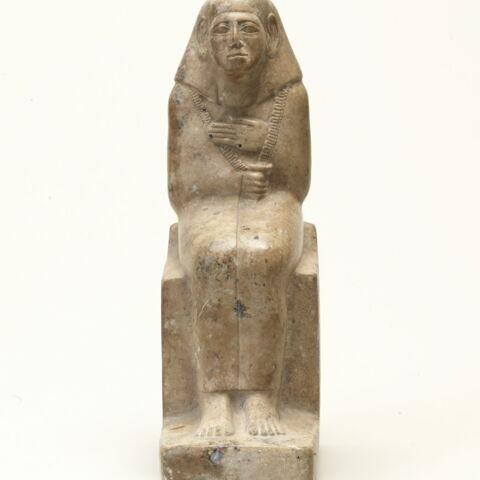
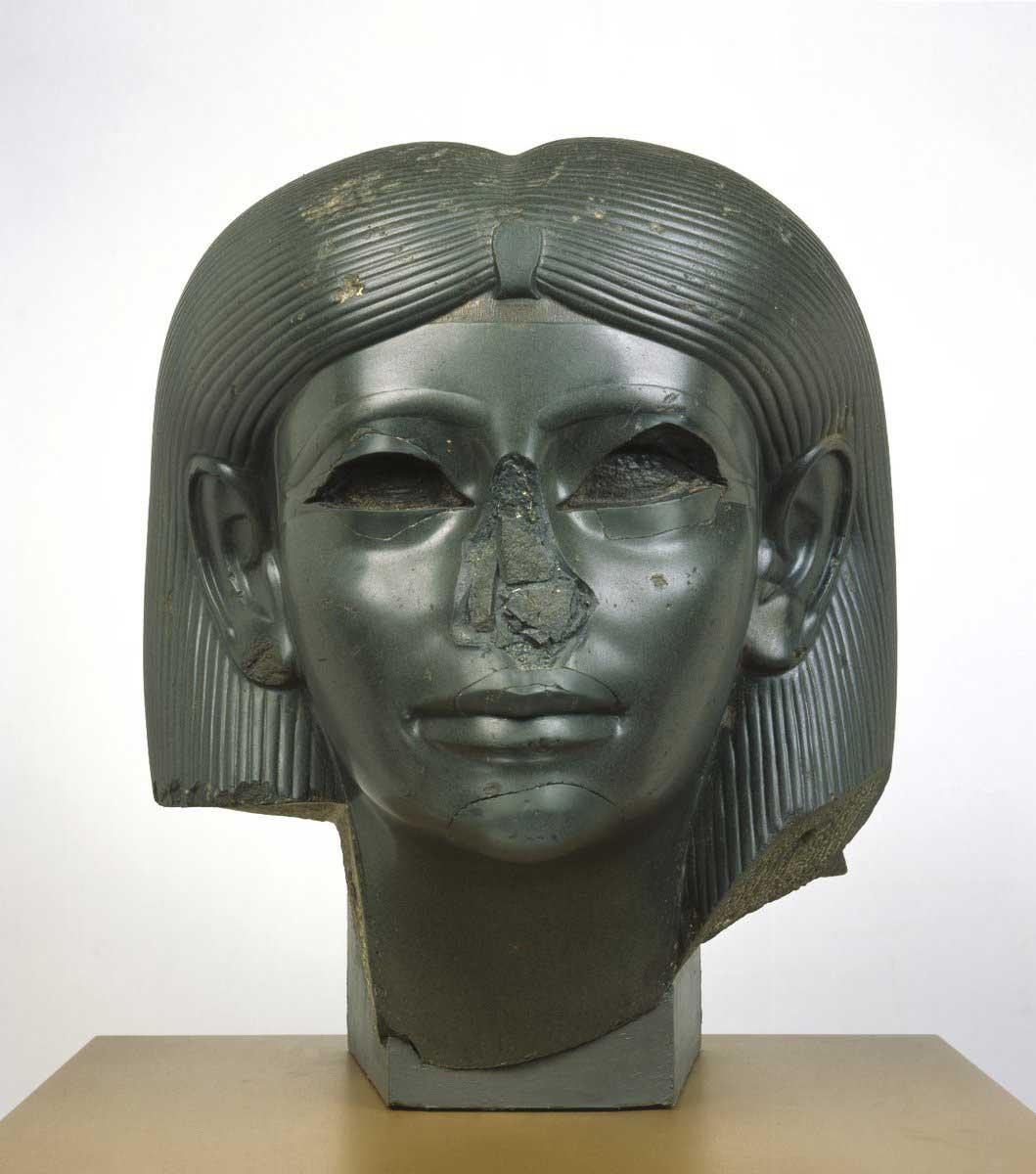
Some surviving images of Sobekneferu are especially unusual.
They appear to combine feminine facial features with traditional royal clothing.
Some scholars believe this reflects an attempt to communicate her identity as both a woman and a legitimate king.
However, interpretations of these statues remain debated.
The Problem of Her Statues
Several objects have been associated with Sobekneferu.
Some are fragmentary.
Others were found without clear archaeological contexts.
Because of this, scholars continue to debate exactly how she wanted to be represented.
Nevertheless, the evidence confirms that she adopted the traditional visual language of Egyptian kingship.
A Legitimate Pharaoh
Sobekneferu was not simply a queen standing behind a male ruler.
She was king.
Official inscriptions treated her as a sovereign.
Her name appeared in royal contexts.
Her reign was counted as a legitimate royal reign.
This is why she is so important in Egyptian history.
Her Reign
Sobekneferu ruled for approximately three to four years.
The exact length is debated because surviving chronological evidence is incomplete.
Her reign was much shorter than those of Senusret III or Amenemhat III.
This limited the number of major monuments she could construct.
A Period of Stability
There is no strong evidence of major civil war during Sobekneferu's reign.
Egypt remained relatively stable.
The bureaucracy continued to operate.
Agriculture continued.
Trade continued.
The military maintained the kingdom's borders.
Maintaining the Legacy of Amenemhat III
Sobekneferu appears to have maintained connections with the monuments and institutions of Amenemhat III.
This was politically useful.
Amenemhat III had been one of the most successful kings of the dynasty.
Connecting herself with his legacy strengthened her legitimacy.
Hawara
Amenemhat III's enormous complex at Hawara remained important during Sobekneferu's time.
The site was associated with the royal cult.
Its enormous temple complex had become one of the great monuments of the Middle Kingdom.
Sobekneferu's connection with this royal landscape helped reinforce her position.
The Faiyum
Sobekneferu continued the dynasty's connection with the Faiyum.
The region had become a symbol of prosperity.
Its agriculture supported the Egyptian economy.
Its temples honored Sobek and other deities.
The royal family had invested heavily in the region.
Agriculture
Agriculture remained the foundation of Egypt.
The Nile provided water.
The Faiyum provided fertile land.
Farmers produced grain and vegetables.
The government collected agricultural taxes.
The surplus supported temples, soldiers, officials, and the royal court.
The Nile
The Nile remained central to Egyptian civilization.
It provided:
- Water
- Transportation
- Fish
- Fertile soil
- Trade routes
The Egyptian government depended on the river for almost every major activity.
Administration
Sobekneferu inherited the centralized administrative system created by earlier Twelfth Dynasty kings.
The power of provincial governors had been reduced.
Royal officials controlled taxation.
Scribes managed records.
Military commanders controlled fortresses.
This system allowed Sobekneferu to govern efficiently despite her short reign.
The Bureaucracy
The Egyptian bureaucracy was highly developed.
Officials supervised agriculture.
Others managed temples.
Some organized mining expeditions.
Military officials controlled the southern frontier.
Scribes recorded everything.
Scribes
Scribes were essential to Egyptian government.
They wrote administrative records.
They calculated taxes.
They documented land ownership.
They recorded supplies.
They prepared official correspondence.
Without scribes, the centralized Egyptian state could not function.
Mining
Mining continued during Sobekneferu's reign.
Egypt required stone and minerals for construction and craftsmanship.
The Sinai remained important for turquoise and copper.
The Eastern Desert contained valuable stone.
Southern territories provided access to gold.
Gold
Gold had enormous religious and political importance.
It was used in royal jewelry.
It decorated temples.
It was used for statues.
It was exchanged in diplomacy.
Egypt's access to gold contributed to its international prestige.
Nubia
The southern frontier remained important.
Senusret III had created a powerful fortress system.
Amenemhat III had maintained it.
Sobekneferu inherited this defensive system.
Egypt therefore retained strong control over important areas of Nubia.
The Nubian Fortresses
Fortresses such as Buhen, Semna, and Uronarti protected Egyptian interests.
They controlled movement along the Nile.
They protected trade routes.
They housed soldiers.
They functioned as administrative centers.
Trade
International trade remained active.
Egypt had connections with the Levant.
Nubia provided African resources.
Red Sea routes connected Egypt with southern regions.
The Egyptian economy depended on these networks.
Religion
Sobekneferu's reign was strongly connected with religion.
Her name itself emphasized Sobek.
She supported traditional Egyptian religious institutions.
She maintained the temples.
She participated in royal religious ceremonies.
Sobek
Sobek was one of the most important gods of the Faiyum.
The crocodile was associated with the Nile.
The animal represented both danger and fertility.
Sobek therefore symbolized the power of nature.
As a royal deity, he was also associated with strength and kingship.
Osiris
Osiris remained central to Egyptian funerary beliefs.
He represented death and resurrection.
The deceased king was associated with Osiris.
Royal funerary rituals were designed to ensure eternal life.
Sobekneferu followed these traditions.
Amun
Amun remained an important deity at Thebes.
The god would become especially powerful during the New Kingdom.
During Sobekneferu's time, however, the religious landscape remained dominated by many regional cults.
Maat
Like every Egyptian ruler, Sobekneferu was expected to maintain maat.
Maat represented:
- Order
- Justice
- Balance
- Truth
- Harmony
A successful ruler was expected to protect Egypt from chaos.
Female Kingship and Maat
Sobekneferu's position as a woman did not prevent her from participating in traditional royal ideology.
She presented herself as a legitimate ruler responsible for maintaining maat.
This demonstrates how flexible Egyptian concepts of kingship could be.
Architecture
Sobekneferu's reign was too short for a huge building program.
However, archaeological evidence indicates that she was involved in construction and restoration.
Her name has been found in several places associated with Middle Kingdom royal activity.
The Temple at Hawara
The great complex at Hawara remained an important royal site.
It had been created by Amenemhat III.
Its enormous scale reflected the wealth of the Twelfth Dynasty.
Sobekneferu continued the royal connection with this region.
The Labyrinth
Ancient Greek writers later described the Hawara complex as the Egyptian "Labyrinth."
It contained numerous rooms and religious spaces.
Although much of the complex has disappeared, ancient descriptions provide evidence of its extraordinary reputation.
Sobekneferu's Monuments
Unfortunately, many monuments associated with Sobekneferu have not survived.
Some were destroyed.
Others were reused in later construction.
Some surviving objects are fragmentary.
This is one reason why her reign remains difficult to reconstruct.
Her Legacy in Egyptian Art
Sobekneferu's artistic legacy is particularly important.
Her representations demonstrate that a woman could adopt the full visual language of Egyptian kingship.
She could wear royal crowns.
She could use royal titles.
She could appear in official monuments.
She could be represented as the ruler of Egypt.
Earlier Female Rulers
Sobekneferu was not the first woman to exercise royal authority.
Earlier women had acted as regents or held significant political power.
However, Sobekneferu is among the earliest women for whom we have clear evidence of ruling Egypt as king.
Hatshepsut
Centuries later, Hatshepsut would become one of Egypt's most famous female pharaohs.
She also adopted traditional royal imagery.
She used the title of king.
She built enormous monuments.
Her reign demonstrates that female kingship could again become a successful political reality.
Sobekneferu therefore represents an important early precedent.
The Importance of Sobekneferu
Sobekneferu's historical importance comes from several factors.
She was a female sovereign.
She ruled in her own right.
She used traditional royal titles.
She maintained the institutions of the Middle Kingdom.
She was the final ruler of the Twelfth Dynasty.
Her reign marked the end of one of Egypt's greatest royal families.
The End of the Twelfth Dynasty
After Sobekneferu's death, the Twelfth Dynasty ended.
Egypt entered a more politically fragmented period.
This period is known as the Second Intermediate Period.
The political situation gradually became more complicated.
Foreign groups gained influence in parts of Egypt.
Central authority weakened.
The Thirteenth Dynasty
The Thirteenth Dynasty followed the Twelfth Dynasty.
The new rulers continued many Middle Kingdom traditions.
However, royal succession became less stable.
Kings often ruled for short periods.
Political fragmentation gradually increased.
The Second Intermediate Period
The Second Intermediate Period was a time of political division.
The Hyksos eventually gained control over northern Egypt.
The Theban rulers controlled parts of Upper Egypt.
This political situation would eventually lead to the rise of the New Kingdom.
Sobekneferu's Place in History
Sobekneferu stands at the boundary between two eras.
She was the final ruler of the Twelfth Dynasty.
She inherited the achievements of the Middle Kingdom's greatest kings.
She maintained them for several years.
After her death, the political landscape changed.
Her Name in Ancient Records
Sobekneferu's name appears in later king lists.
Her inclusion demonstrates that ancient Egyptian traditions recognized her as a legitimate ruler.
She was not erased from the official history of Egypt.
The Turin Canon
The Turin Royal Canon, a later Egyptian king list, preserves information about ancient rulers.
Sobekneferu appears in the tradition of Twelfth Dynasty kings.
This is important evidence for her historical status.
The Abydos King List
Later Egyptian king lists also provide evidence about the succession of kings.
However, different king lists do not always preserve exactly the same information.
This creates difficulties when reconstructing ancient chronology.
Sobekneferu's Death
The exact circumstances of Sobekneferu's death are unknown.
There is no reliable evidence that she died violently.
She simply disappeared from the historical record after her short reign.
Because she left no known heir who succeeded her, the dynasty ended with her.
Her Burial
Her exact burial place remains uncertain.
A pyramid at Mazghuna has sometimes been connected with rulers of the late Twelfth or early Thirteenth Dynasty.
However, there is no definitive evidence identifying it as Sobekneferu's tomb.
Her final resting place therefore remains one of the mysteries of Egyptian archaeology.
Why Her Tomb Has Not Been Found
Several possibilities exist.
Her tomb may have been destroyed.
It may have been robbed in antiquity.
It may remain buried.
It may have been constructed somewhere that has not yet been securely identified.
Archaeologists continue to study possible sites.
The Royal Succession
The lack of a clear successor was significant.
The Twelfth Dynasty had maintained relatively stable succession.
Sobekneferu's death without an obvious heir created a political transition.
This contributed to the end of the dynasty.
A Symbol of Continuity
Despite being a woman, Sobekneferu did not reject Egyptian traditions.
Instead, she embraced them.
She used royal names.
She supported the gods.
She maintained the bureaucracy.
She continued economic policies.
She presented herself as the legitimate king.
A Symbol of Change
At the same time, her reign represented something new.
A woman officially occupied the highest position in the Egyptian state.
She demonstrated that Egyptian kingship could be adapted to unusual circumstances.
The Legacy of the Twelfth Dynasty
Sobekneferu inherited one of the greatest legacies in Egyptian history.
The Twelfth Dynasty had created:
- A strong centralized government
- A powerful army
- A prosperous agricultural economy
- A developed Faiyum region
- Strong control over Nubia
- International trade networks
- Great temples and pyramids
- Remarkable works of art and literature
Sobekneferu was the final ruler responsible for maintaining this system.
Conclusion
Sobekneferu was one of the most remarkable rulers of ancient Egypt.
She was the final pharaoh of the Twelfth Dynasty and one of the earliest women clearly documented as ruling Egypt as king.
Her reign was short, but its historical importance was enormous.
She inherited an Egypt that had reached the height of Middle Kingdom prosperity.
Her predecessors had built a powerful centralized state.
Senusret III had strengthened the army and secured Nubia.
Amenemhat III had developed the Faiyum and created enormous economic prosperity.
Amenemhat IV had maintained the kingdom's stability.
Sobekneferu inherited this remarkable legacy.
Rather than attempting to completely transform Egypt, she preserved the institutions of the dynasty.
She maintained the bureaucracy.
She supported agriculture.
She continued religious traditions.
She preserved the military frontier.
She maintained economic activities.
She supported temples.
Her association with Sobek was especially significant.
The crocodile god was one of the most important deities of the Faiyum.
He represented water, fertility, strength, and royal power.
By including Sobek in her royal name, Sobekneferu emphasized her connection with one of the region's most powerful religious traditions.
Her role as a female pharaoh is also extremely important.
She did not rule simply as a queen or regent.
She adopted the traditional titles of an Egyptian king.
She used royal names.
She wore the crowns of kingship.
She appeared in official royal imagery.
She presented herself as the legitimate sovereign of Egypt.
Some of her representations combine feminine and masculine visual elements, demonstrating the complexity of Egyptian royal symbolism.
Centuries later, Hatshepsut would use similar strategies to establish herself as king.
Sobekneferu therefore occupies an important place in the long history of female power in Egypt.
Her monuments are relatively limited because her reign was short.
Much of the evidence that once existed has disappeared.
Her burial place has not been securely identified.
Yet the surviving evidence is enough to establish her importance.
She was recognized by later Egyptian king lists.
She was remembered as a legitimate ruler.
Her name survived through inscriptions and archaeological discoveries.
Most importantly, she brought the Twelfth Dynasty to an end.
After her death, Egypt entered the Second Intermediate Period.
Political stability gradually weakened.
The Thirteenth Dynasty followed.
Later, northern Egypt came under the control of the Hyksos.
Eventually, Theban rulers would reunify Egypt and create the New Kingdom.
But the story of Sobekneferu remained an important part of Egypt's royal tradition.
She demonstrated that the institution of Egyptian kingship could survive even when the ruler did not fit the traditional image of a male pharaoh.
She preserved the traditions of one of Egypt's greatest dynasties and left behind a legacy that would inspire later generations.
Sobekneferu was more than the last ruler of the Twelfth Dynasty. She was a pioneering female pharaoh who successfully adopted the symbols, titles, and responsibilities of Egyptian kingship, preserving the achievements of the Middle Kingdom while standing at the threshold of a new and more uncertain chapter in Egyptian history.