Shepseskaf was one of the most intriguing rulers of ancient Egypt's Fourth Dynasty. He was the successor of Menkaure, the builder of the smallest of the three great pyramids at Giza, and is generally regarded as the last king of the Fourth Dynasty.
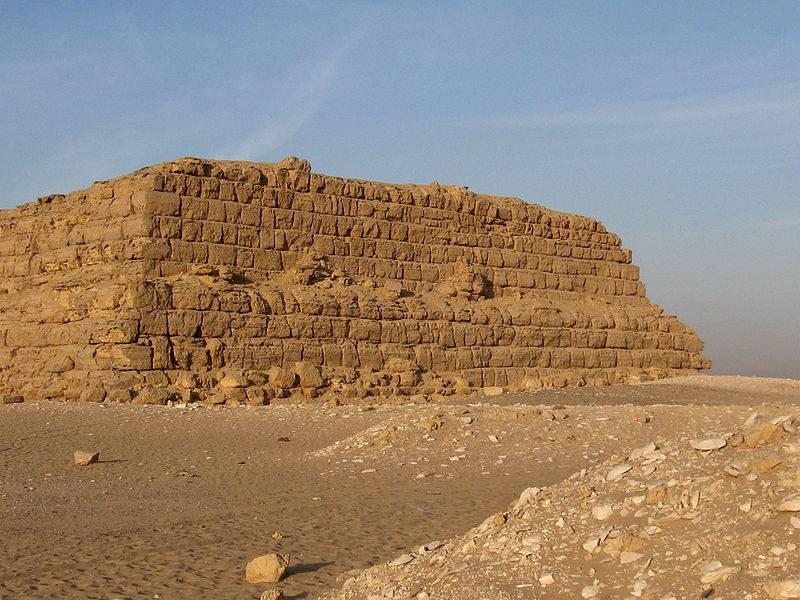
Unlike the great pyramid builders who ruled before him, Shepseskaf did not construct a traditional pyramid. Instead, he built a massive mastaba-shaped royal tomb at Saqqara, now known as Mastabat Fara'un, or “Pharaoh's Bench.”
This unusual decision makes Shepseskaf an especially interesting figure in Egyptian history. His reign came at the end of one of the most famous periods of pyramid construction, and his monuments may reflect changing religious, political, and architectural priorities.
Who Was Shepseskaf?
Shepseskaf ruled Egypt during the Old Kingdom, probably in the 26th century BCE.
He belonged to the royal family of the Fourth Dynasty.
He is generally considered to have been the successor of Menkaure.
The exact relationship between Shepseskaf and Menkaure remains uncertain. He may have been Menkaure's son, although the surviving evidence does not establish this with absolute certainty.
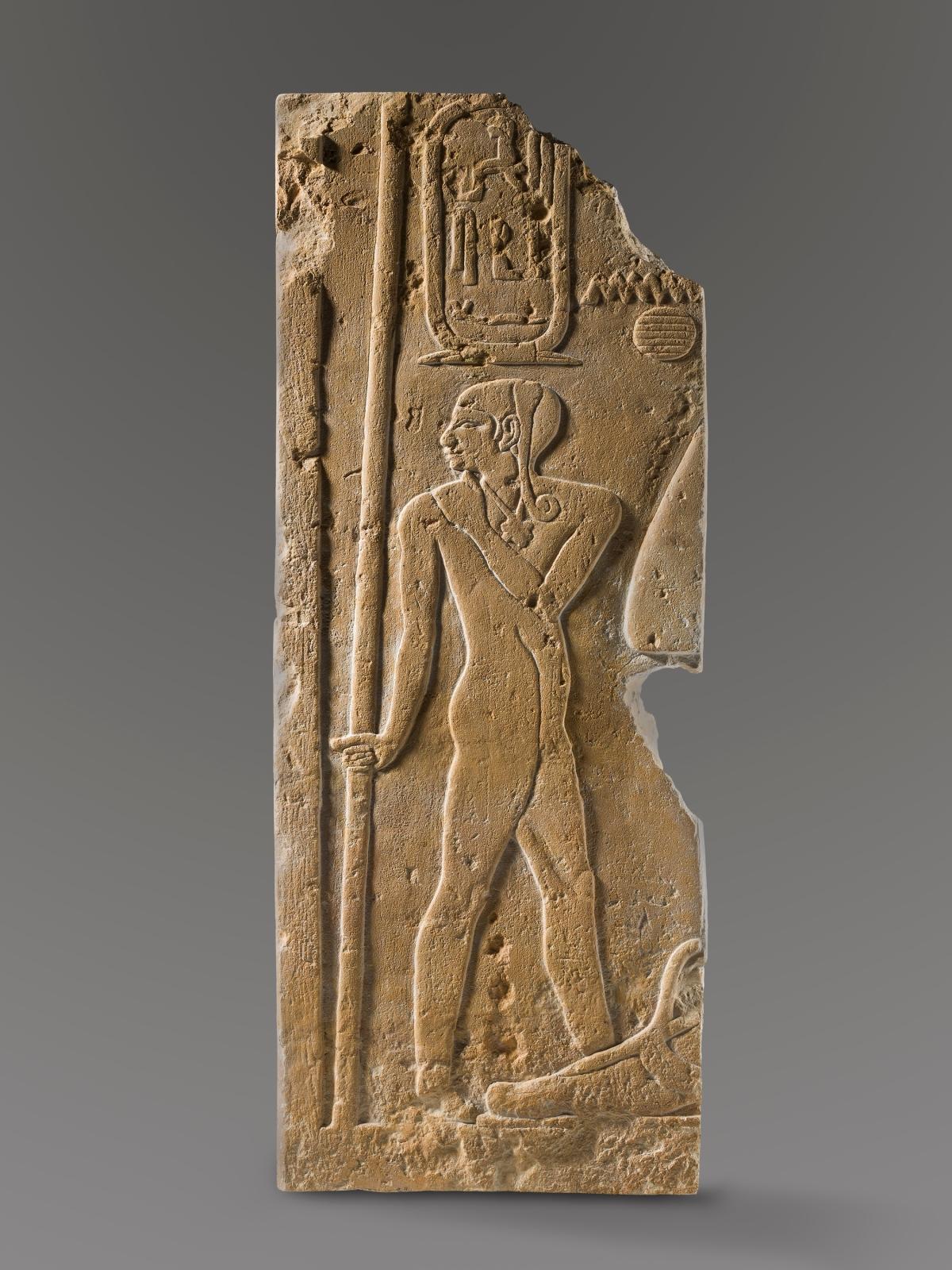
His name, Shepseskaf, can be translated approximately as “His Soul Is Noble” or “His Ka Is Noble.”
The name is interesting because it does not contain the name of the sun god Ra, unlike the names of several earlier Fourth Dynasty kings.
This may reflect a change in royal religious emphasis, although the reason is not certain.
The End of the Fourth Dynasty
Shepseskaf ruled at a turning point in Egyptian history.
The Fourth Dynasty had produced some of the greatest monuments ever constructed.
Sneferu experimented with pyramid design at Meidum and Dahshur.
Khufu built the Great Pyramid at Giza.
Djedefre constructed a pyramid at Abu Rawash.
Khafre built the second great pyramid at Giza.
Menkaure constructed the third major pyramid at Giza.
Shepseskaf inherited this monumental tradition.
However, he chose a very different type of royal tomb.
The Mastaba of Shepseskaf
Instead of building a pyramid, Shepseskaf constructed a large mastaba at Saqqara.
The monument is commonly known as Mastabat Fara'un, meaning “Pharaoh's Bench.”
It is one of the most unusual royal tombs of the Old Kingdom.
The structure is enormous and rectangular, with sloping sides.
It is approximately 100 meters long and about 70 meters wide.
The monument was originally faced with fine stone.
Its shape is sometimes compared with a gigantic sarcophagus.
Why Did Shepseskaf Build a Mastaba?
The reason remains unknown.
Several theories have been proposed.
One possibility is that Shepseskaf deliberately chose an alternative form of royal tomb.
Another possibility is that the project was completed quickly because of a relatively short reign.
It is also possible that religious traditions were changing.
The importance of the sun god Ra continued to grow during the Old Kingdom, but Shepseskaf's name and tomb do not display the same obvious solar emphasis seen in some earlier royal monuments.
However, there is no definitive evidence proving that Shepseskaf rejected solar religion.
The Location at Saqqara
Shepseskaf chose Saqqara for his tomb rather than Giza.
Saqqara was one of the most important cemeteries in ancient Egypt.
It served the ancient capital region of Memphis.
The site had already been used for royal burials for centuries.
The famous Step Pyramid of Djoser was located there.
By choosing Saqqara, Shepseskaf connected himself with an important royal funerary tradition.
The Architecture of Mastabat Fara'un
The monument was carefully constructed.
Its exterior originally had a combination of stone materials.
The lower sections were faced with granite.
The upper sections were covered with limestone.
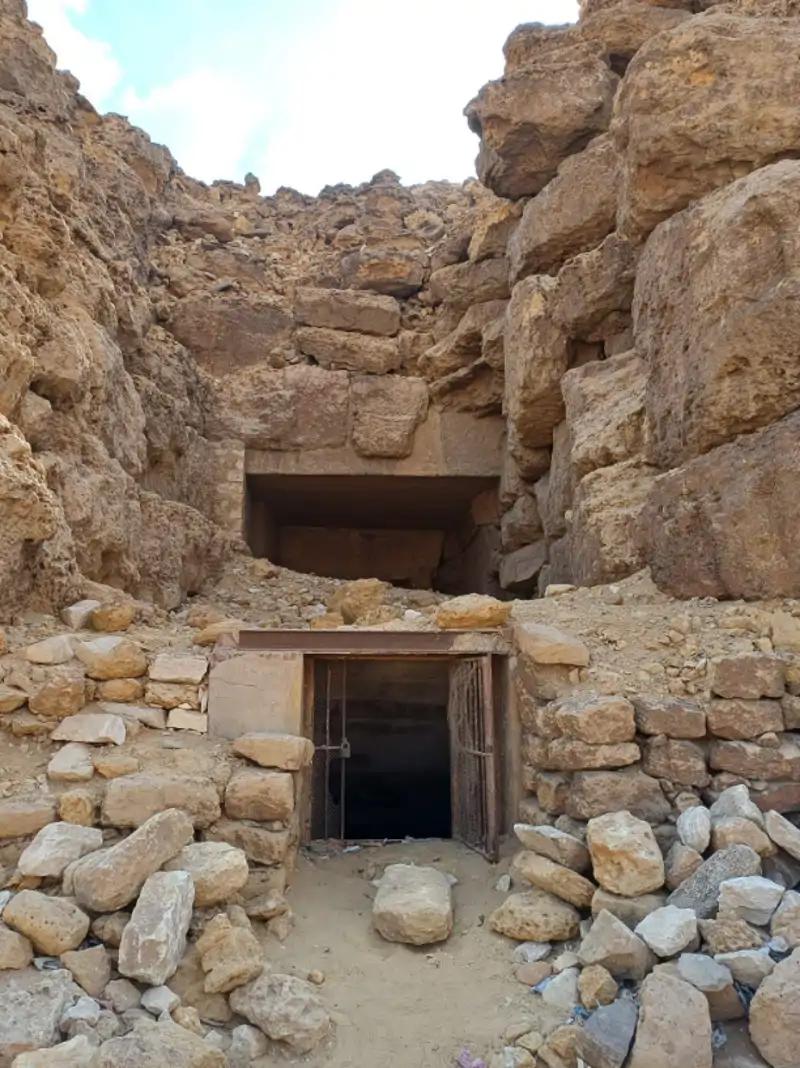
The interior contained underground chambers and corridors.
The burial chamber was located beneath the massive structure.
A descending passage provided access to the subterranean area.
The architectural design was different from the traditional pyramid complexes of his predecessors.
The Burial Chambers
Below the mastaba are a series of chambers.
The burial chamber was constructed to hold the king's sarcophagus.
The complex also contained rooms connected with funerary rituals.
These spaces were essential for the king's journey into the afterlife.
The ancient Egyptians believed that the deceased king needed protection, offerings, and religious rituals.
The tomb was therefore both a burial place and a sacred monument.
Shepseskaf's Mortuary Temple
A mortuary temple was built as part of Shepseskaf's funerary complex.
Priests would have performed rituals there after the king's death.
Offerings were presented to the deceased ruler.
These could include bread, meat, vegetables, fruit, beer, wine, incense, and other goods.
The rituals were designed to sustain Shepseskaf's ka, or life force, for eternity.
The Importance of the Ka
The concept of the ka was central to ancient Egyptian religion.
The ka was connected with a person's vital force.
After death, the ka continued to exist.
Offerings were therefore extremely important.
Food and drink placed in a funerary context were symbolically available to the deceased.
The royal tomb and temple provided a permanent place for these rituals.
Shepseskaf's name itself contains the word ka, making this aspect especially interesting.
Shepseskaf and Egyptian Religion
Shepseskaf ruled during an important period of religious development.
The Fourth Dynasty saw strong connections between kingship and solar religion.
The pharaoh was regarded as a divine ruler.
The king was associated with Horus during life and with the gods after death.
Royal funerary architecture expressed these beliefs.
Shepseskaf's unusual tomb may therefore represent an interesting variation in royal religious expression.
However, historians must be cautious about interpreting the mastaba as evidence of a religious revolution.
There is not enough evidence to make such a conclusion.
The Absence of a Pyramid
One of the most remarkable facts about Shepseskaf is that he did not build a pyramid.
This is unusual because pyramids had become the dominant form of royal burial during the Fourth Dynasty.
His decision demonstrates that Egyptian royal architecture was not completely standardized.
The pharaoh still had the authority to choose the form of his eternal monument.
The mastaba was therefore a powerful statement of royal identity.
Shepseskaf's Reign
The exact length of Shepseskaf's reign is uncertain.
Ancient Egyptian king lists provide different information.
Some sources suggest that he ruled for several years.
Other interpretations propose a somewhat longer reign.
The surviving monuments do not provide enough evidence to establish the exact number of years with complete certainty.
Regardless of the exact duration, his reign appears to have been relatively short compared with some earlier kings.
The Palermo Stone
The Palermo Stone and other Old Kingdom records preserve information about royal events and administrative activities.
However, Shepseskaf's reign is not documented in the same detail as some other periods.
This limited evidence makes his reign difficult to reconstruct.
Much of what historians know about him comes from his tomb and references in later sources.
Shepseskaf's Administration
Despite the limited historical record, Shepseskaf must have controlled a functioning government.
Building a huge royal tomb required organized labor.
Workers needed food and water.
Stone had to be quarried and transported.
Architects and craftsmen had to design and construct the monument.
Officials had to manage resources and religious institutions.
The existence of Mastabat Fara'un therefore demonstrates that the Egyptian state remained capable of large-scale construction.
Workers and Craftsmen
The people who constructed Shepseskaf's tomb included skilled specialists.
Stonecutters shaped granite and limestone.
Architects planned the structure.
Carpenters produced tools and wooden equipment.
Boat crews transported heavy materials along the Nile.
Labor teams moved stones into position.
Priests organized religious ceremonies.
Administrators supervised the entire operation.
This complex system demonstrates the sophistication of Old Kingdom Egypt.
The Egyptian Economy
The Egyptian economy was based largely on agriculture.
The annual flooding of the Nile created fertile agricultural land.
Farmers produced grain, vegetables, and other food.
The state collected part of the agricultural production.
These resources supported the royal court and construction projects.
The Nile also served as Egypt's main transportation network.
Heavy stones could be moved by boat much more efficiently than over land.
Shepseskaf's Relationship with Menkaure
Shepseskaf succeeded Menkaure, but their exact family relationship remains uncertain.
Some scholars have proposed that Shepseskaf was Menkaure's son.
Other possibilities have also been considered.
What is clear is that Shepseskaf inherited the throne after Menkaure and continued the royal traditions of the Fourth Dynasty.
His decision to build at Saqqara rather than Giza may have represented a new direction for the royal family.
The End of the Great Pyramid Tradition
Shepseskaf's reign marked the end of the Fourth Dynasty.
The period that had produced the great pyramids of Giza was coming to an end.
The next dynasty, the Fifth Dynasty, developed different royal traditions.
The pyramids of Fifth Dynasty kings were generally smaller.
However, sun temples became increasingly important.
This suggests that royal religious architecture was evolving.
Shepseskaf and the Fifth Dynasty
After Shepseskaf, the throne passed to rulers associated with the beginning of the Fifth Dynasty.
The exact succession is debated.
One important early Fifth Dynasty king was Userkaf.
Userkaf established a new royal tradition strongly connected with the cult of Ra.
The transition from the Fourth to the Fifth Dynasty was therefore an important moment in Egyptian history.
Later History of Mastabat Fara'un
Like many ancient Egyptian monuments, Shepseskaf's tomb suffered damage over time.
Stone was removed from parts of the structure.
Some areas were exposed to erosion.
The monument was also affected by later activity in the Saqqara necropolis.
Despite these changes, much of the structure survives.
Today it remains one of the most recognizable monuments at Saqqara.
Archaeological Importance
Mastabat Fara'un is extremely important for Egyptologists.
It demonstrates that royal funerary architecture could take forms other than pyramids.
It also provides information about construction techniques at the end of the Fourth Dynasty.
The monument helps researchers understand the transition between the Fourth and Fifth Dynasties.
Its location at Saqqara connects Shepseskaf with the long history of the Memphis necropolis.
Shepseskaf's Historical Reputation
Shepseskaf is much less famous than Khufu, Khafre, and Menkaure.
However, his unusual tomb makes him one of the most interesting kings of the Old Kingdom.
He lived during the final stage of the great pyramid-building era.
Rather than simply copying his predecessors, he created a different kind of royal monument.
This decision has made him an important subject of archaeological study.
What We Can Learn From Shepseskaf
Shepseskaf's reign teaches us that ancient Egyptian civilization was not static.
Architecture changed.
Religious traditions developed.
Royal priorities shifted.
Kings could choose different ways to express their authority.
The transition from the enormous pyramids of Giza to the mastaba of Shepseskaf demonstrates this change clearly.
Why Shepseskaf Matters
Shepseskaf matters because he represents the end of one of ancient Egypt's most remarkable eras.
His predecessors built monuments that still dominate the Giza Plateau.
He chose a completely different architectural form.
His tomb at Saqqara demonstrates that royal identity did not depend entirely on pyramid construction.
His reign also connects the Fourth Dynasty with the beginning of the Fifth Dynasty.
Conclusion
Shepseskaf was the final major ruler of Egypt's Fourth Dynasty and one of the most unusual kings of the Old Kingdom.
He inherited the throne after Menkaure, during a period when Egypt had already created the great pyramids of Giza.
Unlike his predecessors, Shepseskaf did not build a traditional pyramid.
Instead, he constructed the enormous Mastabat Fara'un at Saqqara.
The monument's unusual rectangular design remains one of the most fascinating examples of Old Kingdom royal architecture.
The reason for Shepseskaf's decision is still uncertain.
It may have been connected with religious changes, practical considerations, a short reign, or simply the king's personal architectural choice.
Whatever the reason, the monument demonstrates that Egyptian royal architecture was capable of significant variation.
Shepseskaf's reign also marked the end of the Fourth Dynasty.
After his death, Egypt entered the Fifth Dynasty, when the cult of the sun god Ra became even more prominent and royal pyramids became generally smaller.
Although Shepseskaf is not as famous as Khufu or Khafre, his historical importance should not be underestimated.
His Mastabat Fara'un stands as a powerful reminder that the end of the great pyramid age was not the end of Egyptian innovation. Instead, it marked the beginning of a new chapter in the long and extraordinary history of ancient Egypt.