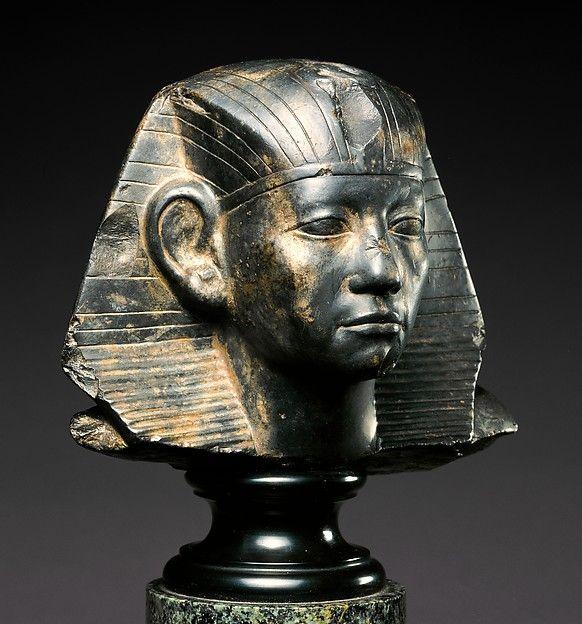
Senusret II was an important ruler of Egypt's Twelfth Dynasty and one of the pharaohs who helped maintain the prosperity and stability of the Middle Kingdom. He inherited a powerful kingdom from his father, Amenemhat II, and continued the policies of his predecessors while placing special attention on one of Egypt's most important regions: the Faiyum.
His reign was relatively peaceful compared with the military campaigns of some other Middle Kingdom kings. Instead of focusing primarily on conquest, Senusret II devoted considerable attention to agriculture, irrigation, economic development, and the organization of the Faiyum.
The Faiyum was a naturally fertile region west of the Nile Valley. It contained a large lake and extensive agricultural land. By improving water management and encouraging settlement, Senusret II helped transform the region into an important agricultural center.
His reign also produced one of the most famous archaeological sites of the Middle Kingdom: Lahun, where he built his pyramid complex and established a planned settlement for workers and administrators.
Senusret II's story is therefore a story of peaceful development, engineering, agriculture, royal architecture, administration, and economic prosperity.
Egypt Before Senusret II
Senusret II inherited a kingdom that had already become extremely powerful.
The kings of the Twelfth Dynasty had rebuilt Egypt after centuries of political division.
Amenemhat I founded the dynasty.
Senusret I strengthened the central government and expanded Egyptian influence.
Amenemhat II maintained economic prosperity and developed international trade.
By the time Senusret II became king, Egypt was stable.
The challenge was no longer simply to reunite the country.
It was to maintain prosperity and develop its resources.
The Son of Amenemhat II
Senusret II was the son of Amenemhat II.
He grew up within the royal court and probably received extensive education in administration, religion, military affairs, and royal traditions.
He inherited the responsibilities of ruling a large centralized state.
His reign probably lasted around fifteen years.
Although relatively short compared with the reigns of some other Twelfth Dynasty rulers, it was important because of his agricultural and architectural projects.
Becoming Pharaoh
Senusret II succeeded Amenemhat II.
The transition appears to have been peaceful.
There is no strong evidence of major political instability during his accession.
This continued the remarkable succession stability of the Twelfth Dynasty.
The system established by Amenemhat I had produced several generations of successful rulers.
A Period of Stability
Senusret II ruled during a relatively peaceful period.
The Egyptian state was strong.
The military protected the borders.
Trade networks remained active.
Agriculture provided abundant resources.
The government could therefore invest heavily in development projects.
Senusret II used this stability to focus on the Faiyum.
The Faiyum
The Faiyum is a fertile depression located west of the Nile Valley.
At its center was a large body of water known in ancient times as Lake Moeris.
The region received water from a branch of the Nile.
Its fertile land made it ideal for agriculture.
The Faiyum had enormous economic potential.
Why the Faiyum Was Important
The Faiyum could produce large quantities of agricultural goods.
The region contained fertile soil.
Water was available.
The surrounding land could support farming and settlement.
For the Egyptian government, developing the Faiyum meant increasing food production and strengthening the economy.
Senusret II's Agricultural Policies
Senusret II is traditionally associated with major improvements to the Faiyum's irrigation system.
The king and his administration worked to manage water levels and expand agricultural land.
Canals and embankments helped control the movement of water.
The project required careful planning.
Workers, engineers, administrators, and farmers all had to cooperate.
Water Management
The Nile was both Egypt's greatest resource and a potential danger.
Too little water could cause poor harvests.
Too much water could damage fields.
Managing water was therefore essential.
The Faiyum provided an opportunity to regulate water resources and make agriculture more productive.
Engineering Achievement
The development of the Faiyum required engineering knowledge.
Workers constructed canals.
They built embankments.
They managed water channels.
They prepared land for cultivation.
The government had to organize enormous amounts of labor.
These activities demonstrate the sophistication of Middle Kingdom administration.
Agricultural Expansion
The development of the Faiyum increased the amount of productive land.
Farmers cultivated grain.
They grew vegetables and fruit.
Livestock could also be raised.
The region became increasingly important to the Egyptian economy.
A Peaceful Strategy
Senusret II's approach was different from that of rulers who sought fame through conquest.
He could strengthen Egypt by developing resources within the country.
Instead of expanding the borders dramatically, he invested in agriculture.
This helped create long-term economic stability.
Lahun
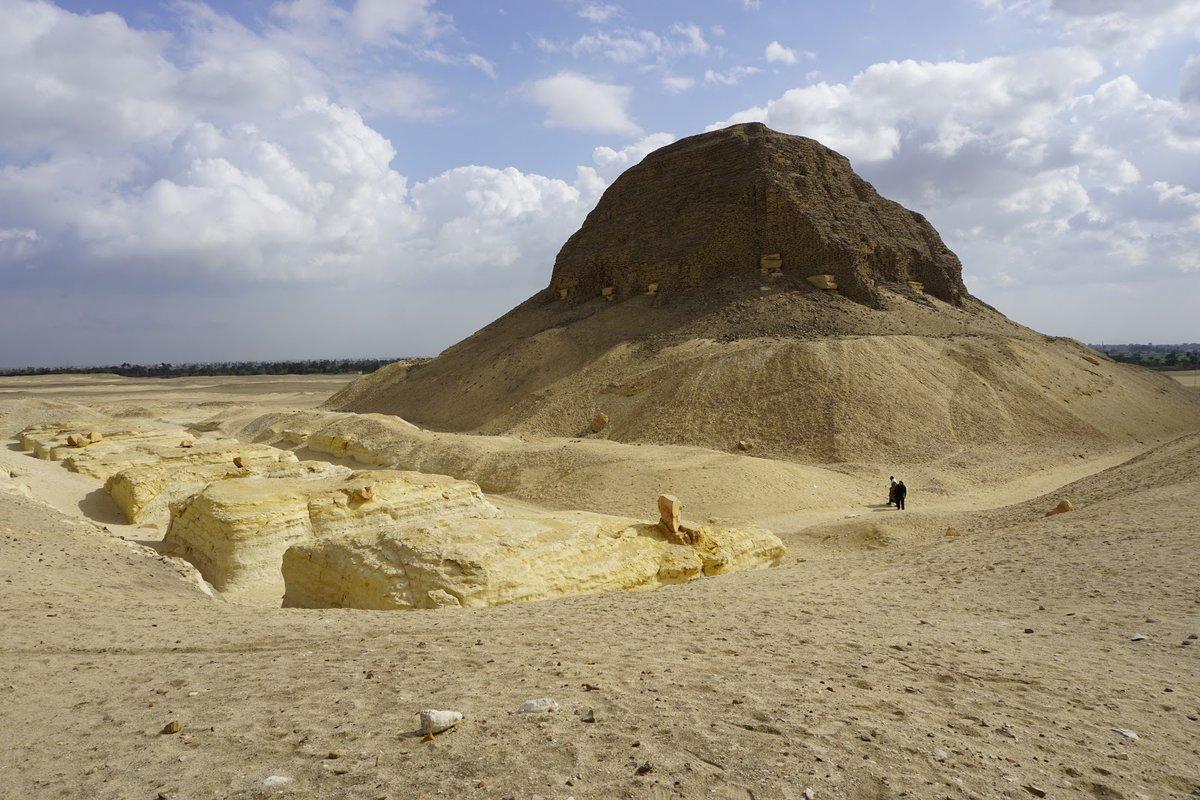
Senusret II established his royal complex at Lahun, near the Faiyum.
The site became one of the most important settlements of the Middle Kingdom.
The area included the king's pyramid, temples, administrative buildings, and a planned workers' settlement.
The Pyramid of Senusret II
Senusret II built his pyramid at Lahun.
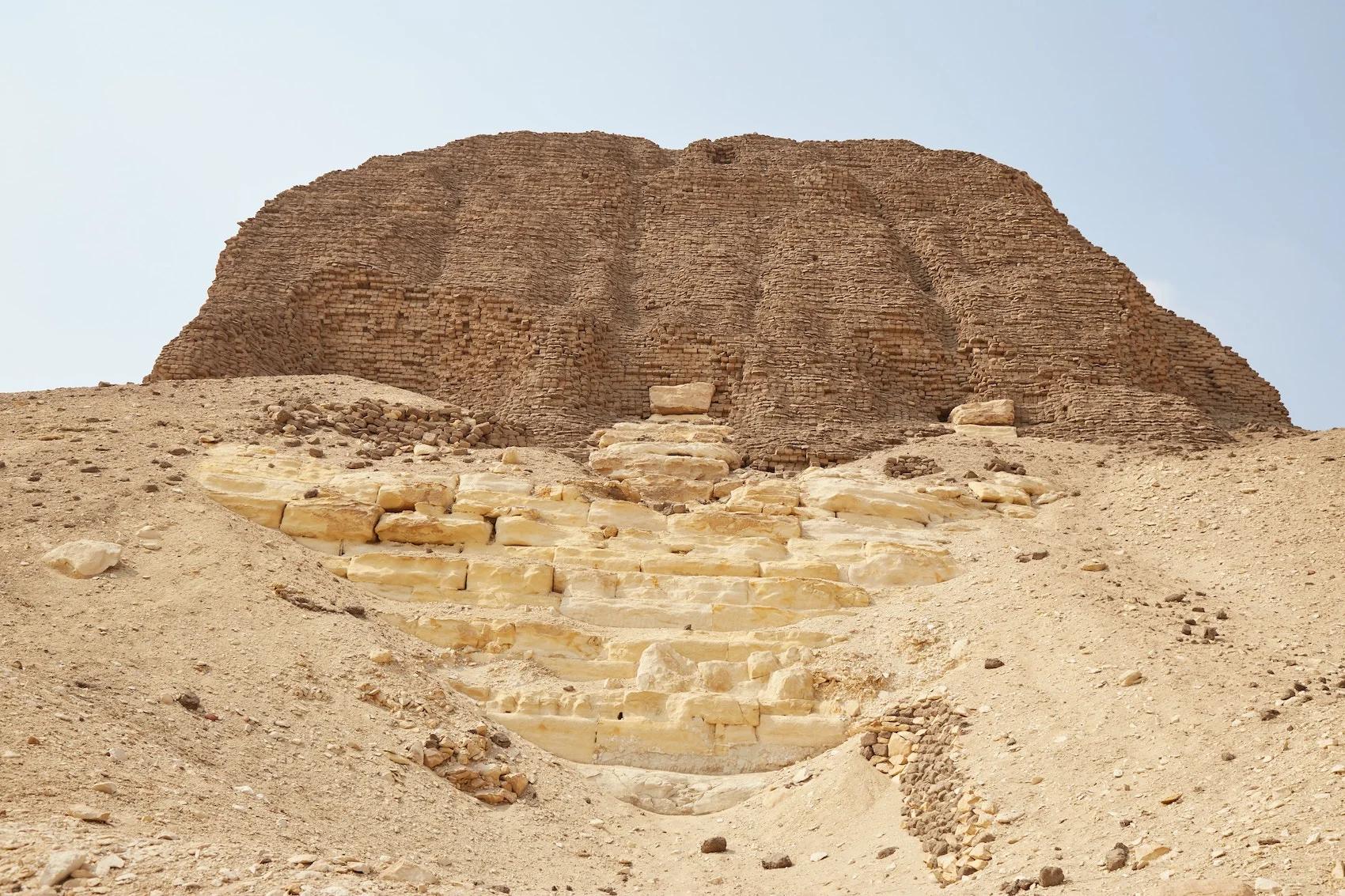
The pyramid originally had a core made partly from mudbrick and other materials, with a limestone outer casing.
This was different from the massive stone pyramids of the Old Kingdom.
Middle Kingdom kings often used new architectural methods while preserving the traditional pyramid form.
Why Lahun Was Important
Lahun was more than a royal burial site.
It was an organized settlement.
Workers and administrators lived there.
The settlement supported the construction and maintenance of the royal complex.
It also became an important administrative center.
The Lahun Workers' Town
The settlement near the pyramid is often called Kahun, although the ancient name may have been different.
Its remains provide valuable information about everyday life in Middle Kingdom Egypt.
Archaeologists discovered houses, streets, tools, documents, and other objects.
Houses
The settlement contained houses of different sizes.
The larger houses probably belonged to officials.
Smaller houses were occupied by workers and ordinary residents.
The planned layout shows that the settlement was organized by the central government.
Daily Life at Lahun
The settlement provides an unusual glimpse into the lives of ordinary Egyptians.
People cooked food.
They produced pottery.
They worked with textiles.
They raised children.
They performed religious activities.
They worked for the royal administration.
Papyri From Lahun
One of the most important discoveries at the site was a large collection of papyrus documents.
These texts contain administrative, legal, medical, mathematical, and personal information.
They are extremely valuable for understanding Middle Kingdom society.
Medical Knowledge
Some of the Lahun papyri contain medical information.
They demonstrate that Egyptian physicians possessed sophisticated knowledge of the human body and medical treatments.
The documents include treatments for various conditions.
Mathematics
Other texts demonstrate Egyptian mathematical knowledge.
Scribes used mathematics to calculate areas, quantities, and administrative resources.
These skills were essential for managing agriculture and construction.
Women's Lives
The Lahun documents also provide information about women.
Women could own property.
They could participate in legal agreements.
They could inherit possessions.
Marriage and family relationships were documented.
These records provide important evidence about the legal and social status of Egyptian women.
The Royal Administration
Senusret II relied on a large bureaucracy.
Officials supervised the Faiyum.
Scribes recorded agricultural production.
Workers were organized.
Taxes were collected.
The government monitored water management.
The development of the Faiyum required an efficient administrative system.
Agriculture and Taxation
Agricultural production created wealth.
Farmers provided grain and other products.
The government collected taxes.
These resources supported the royal court, army, temples, and construction projects.
The success of the Faiyum increased the economic strength of the state.
The Nile
The entire project depended on the Nile.
The river's annual flood provided water and fertile soil.
Egyptian engineers developed ways to manage the flood.
The Faiyum project demonstrated the ability of the Egyptian state to manipulate natural resources.
Lake Moeris
Ancient writers later described the Faiyum lake as Lake Moeris.
The exact history of its water level and size remains a subject of archaeological and geological study.
During the Middle Kingdom, the region was already an important water and agricultural system.
The God Sobek
The Faiyum had a particularly strong connection with the god Sobek.
Sobek was represented as a crocodile or a man with a crocodile head.
He was associated with water, fertility, strength, and the Nile.
The development of the Faiyum therefore had both economic and religious significance.
Religious Importance
The king's agricultural projects could be presented as part of maintaining maat.
By ensuring prosperity and controlling water, the king fulfilled his responsibility to protect Egypt.
Religion and government were closely connected.
The Cult of Osiris
Osiris remained an important god during Senusret II's reign.
The Faiyum and surrounding regions contained many religious sites.
The king's funerary complex was part of the larger Egyptian tradition of preparing for eternal life.
Royal Burial
The pyramid served as the king's eternal burial monument.
The complex included religious structures where priests could perform rituals.
Offerings were made to the deceased king.
These practices were believed to sustain the king in the afterlife.
The Pyramid's Design
Senusret II's pyramid followed the traditional pyramid form but used different construction techniques.
A mudbrick core reduced the amount of stone required.
Limestone was used for the outer casing.
Over time, much of the casing disappeared.
The pyramid was therefore vulnerable to erosion and later stone removal.
Artistic Production
The reign of Senusret II occurred during a highly sophisticated artistic period.
Artists produced statues, jewelry, reliefs, and decorated objects.
Royal art continued to emphasize strength and dignity.
Elite objects were often beautifully crafted.
Jewelry
The Twelfth Dynasty was famous for its jewelry.
Goldsmiths produced necklaces, bracelets, crowns, and other ornaments.
Precious stones were carefully cut and arranged.
Some jewelry discovered in royal contexts demonstrates remarkable craftsmanship.
Foreign Influences
Middle Kingdom Egypt had extensive foreign connections.
Luxury objects and artistic influences entered Egypt through trade.
Egyptian craftsmen sometimes incorporated foreign materials and styles.
This demonstrates the international character of the Twelfth Dynasty.
Nubia
Senusret II continued the policies of his predecessors toward Nubia.
Egypt needed to protect the southern frontier.
Nubia provided valuable resources.
Egyptian military and administrative influence remained strong.
Gold
Gold was one of Nubia's most important resources.
It was highly valued by Egyptian kings.
Gold was used in royal jewelry and religious objects.
Access to gold strengthened the wealth and prestige of the Egyptian monarchy.
The Eastern Desert
The Eastern Desert continued to be important.
Egyptian expeditions traveled through the region.
They obtained stone and minerals.
The Red Sea routes remained active.
Sinai
The Sinai remained a source of turquoise and copper.
Mining expeditions required workers, officials, and military protection.
These resources were important to Egyptian craftsmen and the army.
International Trade
Egypt remained connected with the Levant and other regions.
Timber, metals, luxury products, and other goods were exchanged.
Trade strengthened the Egyptian economy.
The peaceful conditions of Senusret II's reign helped maintain these connections.
The Levant
The Levant was especially important for timber.
Egypt lacked large quantities of high-quality timber.
Imported wood was needed for ships, furniture, coffins, and construction.
Trade with Levantine communities therefore had great economic importance.
The Red Sea
The Red Sea connected Egypt with southern trade networks.
Egyptian expeditions could reach regions associated with Punt.
Incense and other luxury goods were highly valued by Egyptian temples and elites.
The Army
Although Senusret II's reign was relatively peaceful, the army remained important.
Military forces protected Egypt's borders.
They guarded mining expeditions.
They supported Egyptian control in Nubia.
The strength of the army allowed the king to focus on economic development.
The Southern Frontier
Egypt maintained a strong presence in Nubia.
Fortifications and administrative centers helped control movement.
These defenses protected Egypt from potential attacks and secured trade routes.
The Northern Frontier
The Delta also required protection.
The eastern approaches to Egypt could be used by foreign groups.
The centralized government monitored the region.
Diplomacy
Senusret II maintained the diplomatic traditions of the Twelfth Dynasty.
Egyptian rulers exchanged goods and gifts with foreign elites.
Diplomacy helped support international trade.
The Royal Court
The royal court remained an important center of political power.
Officials served the king.
Priests managed religious ceremonies.
Scribes handled documents.
Artisans produced luxury objects.
The palace coordinated the administration of the kingdom.
The Role of Scribes
Scribes were essential.
They recorded taxes.
They wrote letters.
They managed supplies.
They documented legal agreements.
They calculated agricultural production.
The Lahun papyri show how deeply writing was integrated into Egyptian administration.
Egyptian Law
The documents from Lahun reveal a society with formal legal practices.
People could make contracts.
Property could be transferred.
Disputes could be recorded.
Marriage arrangements could be documented.
The legal system helped maintain social order.
Family Life
Family was central to Egyptian society.
Marriage was common.
Parents cared for children.
Property could be passed between generations.
The Lahun documents provide glimpses of real individuals and their concerns.
Food and Work
Workers at Lahun ate bread, beer, fish, vegetables, and other foods.
Their daily lives revolved around work and family.
Some worked directly on royal projects.
Others were craftsmen, farmers, administrators, or laborers.
The Middle Kingdom Economy
The economy depended on several interconnected systems.
Agriculture provided food.
Trade brought foreign goods.
Mining supplied valuable materials.
Craft production created tools and luxury products.
The government coordinated these activities.
Senusret II's Leadership
Senusret II's greatest strength was his ability to use the stability inherited from his predecessors.
He did not need to fight major civil wars.
He did not need to reunite Egypt.
He could focus on development.
His reign shows that successful kingship could involve improving the country's internal resources rather than pursuing constant warfare.
The Faiyum Transformation
The development of the Faiyum became one of the defining achievements associated with Senusret II.
The region became more productive.
Settlements expanded.
Administrative structures developed.
Agriculture became increasingly important.
The Faiyum would remain a major center of Egyptian life for centuries.
Senusret II and His Successor
Senusret II was eventually succeeded by his son, Senusret III.
Senusret III would become one of the most famous kings of ancient Egypt.
He dramatically strengthened Egypt's control over Nubia and reorganized the administration.
The stability inherited from Senusret II helped make these later achievements possible.
Conclusion
Senusret II was one of the most important rulers of Egypt's Twelfth Dynasty, not because he built an enormous empire through conquest, but because he understood the importance of developing Egypt's internal resources.
He inherited a prosperous kingdom from Amenemhat II.
The political system was stable.
The economy was strong.
The army protected the borders.
International trade was active.
Senusret II used these advantages to focus on development.
His greatest achievement was his association with the transformation of the Faiyum.
The region possessed enormous agricultural potential.
Through water management, irrigation, canals, embankments, and organized settlement, the Egyptian government increased the productivity of the area.
The Faiyum became one of the most important agricultural regions of Egypt.
The royal complex at Lahun demonstrates the scale of this project.
Senusret II built his pyramid there and established a planned settlement for workers and administrators.
The settlement later became famous for the papyri discovered there.
These documents provide an extraordinary glimpse into Middle Kingdom life.
They reveal information about administration, medicine, mathematics, law, family relationships, property, and everyday activities.
Few archaeological discoveries provide such detailed information about ordinary Egyptians.
Senusret II's pyramid also demonstrates the changing architectural traditions of the Middle Kingdom.
Unlike the enormous stone pyramids of the Old Kingdom, the pyramid at Lahun used a mudbrick core with limestone casing.
This approach reduced the amount of stone required while maintaining the traditional pyramid form.
His reign was also connected with the prosperity of the Twelfth Dynasty.
Trade with the Levant continued.
Egypt maintained relations with Nubia.
Mining expeditions traveled into the Sinai and Eastern Desert.
Red Sea routes remained important.
Gold, copper, turquoise, timber, incense, and other valuable resources entered Egypt.
Senusret II's peaceful reign allowed these economic networks to continue functioning.
Religion remained an essential part of his rule.
The king was responsible for maintaining maat.
The gods were believed to control fertility, water, agriculture, and the natural world.
The Faiyum had a particularly strong association with Sobek, the crocodile god connected with water and fertility.
The king's development projects therefore had both economic and religious meaning.
Senusret II also maintained the military strength established by earlier Twelfth Dynasty kings.
Nubia remained under Egyptian influence.
The southern frontier was protected.
Mining expeditions were guarded.
Trade routes were secured.
The army allowed the king to concentrate on economic development.
His greatest legacy was therefore not conquest but development.
He demonstrated that Egypt's strength could come from agriculture, engineering, administration, and economic planning.
By improving the Faiyum, he helped create a productive region that would remain important throughout Egyptian history.
His son, Senusret III, inherited this stable kingdom and became one of Egypt's greatest military rulers.
The achievements of Senusret II therefore formed an important bridge between the economic prosperity of the early Twelfth Dynasty and the military expansion of its later years.
Senusret II deserves to be remembered as a king who understood the value of investment in his country.
He strengthened agriculture.
He developed water management.
He organized settlements.
He supported trade.
He maintained the military.
He encouraged administration.
He built a royal pyramid and a remarkable settlement at Lahun.
Most importantly, he helped transform the Faiyum into a center of Egyptian prosperity.
Senusret II was the Pharaoh who showed that Egypt's greatness could be strengthened not only through war, but through agriculture, engineering, administration, and wise use of the Nile's resources. His legacy lived on in the Faiyum and in the powerful Middle Kingdom that followed him.