Netjerkare Siptah, also known as one of the final rulers associated with Egypt's Sixth Dynasty, was a mysterious pharaoh who lived during one of the most important turning points in ancient Egyptian history. His reign belongs to the final stage of the Old Kingdom, when the powerful centralized Egyptian state was beginning to weaken and Egypt was moving toward the First Intermediate Period.
Unlike famous pharaohs such as Khufu, Khafre, Menkaure, Pepi I, and Pepi II, Netjerkare Siptah left very little archaeological evidence. Almost nothing is known about his childhood, family life, political achievements, or personal character. His name is mainly preserved through later king lists and historical traditions.
The mystery surrounding Netjerkare Siptah becomes even greater because some scholars have suggested that this ruler may have been connected with the legendary Egyptian queen Nitocris. Although this identification remains uncertain, it has made Netjerkare Siptah one of the most fascinating figures of the final years of the Old Kingdom.
Netjerkare Siptah and the Sixth Dynasty
The Sixth Dynasty was one of the final dynasties of Egypt's Old Kingdom. It followed the Fifth Dynasty and included several important rulers, including Teti, Pepi I, Merenre I, and Pepi II.
During this period, Egypt was governed by a highly organized central administration. The pharaoh was considered the supreme political and religious authority. He was responsible for maintaining order, supporting temples, organizing military expeditions, collecting resources, and protecting Egypt's borders.
The royal court was centered around Memphis, one of the most important cities in ancient Egypt.
However, by the final years of the Sixth Dynasty, Egypt was changing. Provincial governors were becoming increasingly powerful, local families were gaining wealth, and the central government was facing growing economic and administrative challenges.
Netjerkare Siptah appeared during this difficult period.
The Death of Pepi II
Netjerkare Siptah's reign belongs to the period following the death of Pepi II.
Pepi II was traditionally believed to have ruled Egypt for an exceptionally long time, possibly around 94 years. Modern Egyptologists, however, debate the exact length of his reign.
His death created a difficult succession.
After such a long reign, Egypt's political structure had changed significantly. Powerful provincial families had become deeply established, and local officials had accumulated considerable influence.
The central government still existed, but it no longer possessed the same level of control that it had enjoyed during earlier periods.
A Mysterious Pharaoh
Very little is known about Netjerkare Siptah.
There are no surviving detailed biographies describing his childhood or education.
There are no major inscriptions recording great military victories.
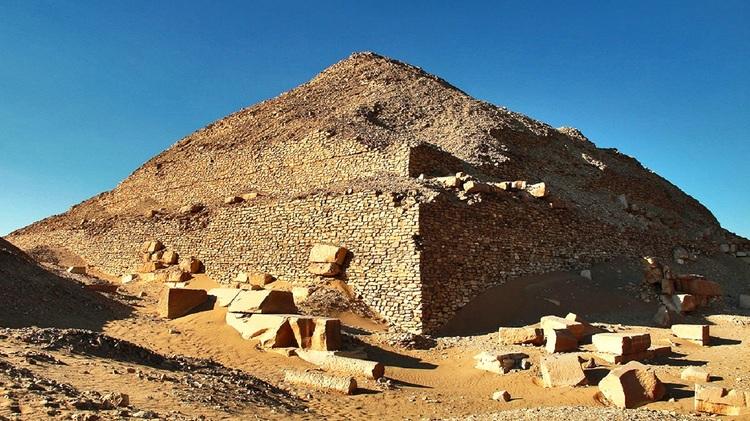
There is no large pyramid complex that can confidently be attributed to him.
His historical importance comes mainly from his position in the succession at the end of the Sixth Dynasty.
Because the evidence is so limited, historians continue to debate several important questions about him.
Was Netjerkare Siptah a man or a woman?
How long did he rule?
Was he the same person as the legendary Queen Nitocris?
What happened during his short reign?
These questions remain unresolved.
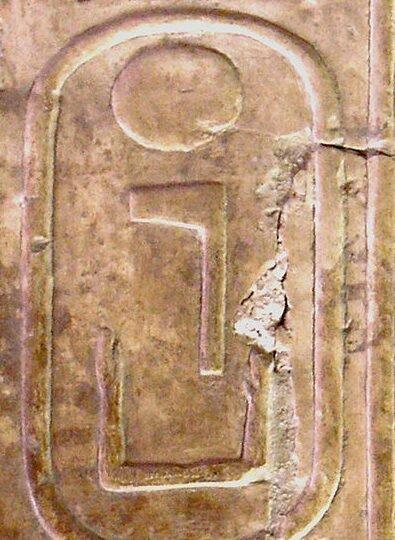
The Name Netjerkare Siptah
The royal name Netjerkare reflects the religious nature of Egyptian kingship.
Egyptian royal names were carefully chosen and often connected the king with the gods.
The element "Netjer" means "god" or "divine," while "Ka" refers to the vital spiritual force associated with a person.
The name therefore expressed the divine nature of Egyptian kingship.
The name Siptah is also known from Egyptian royal traditions, although its use and interpretation in this particular case remain subjects of scholarly discussion.
Ancient King Lists
Much of the information about Netjerkare Siptah comes from ancient Egyptian king lists.
Among the most important are the Abydos King List and the Turin Royal Canon.
These documents were created long after some of the rulers they recorded.
They provide valuable evidence for reconstructing Egyptian chronology, but they are not always complete.
Some rulers were omitted from certain lists, while others appear under different names.
The final years of the Sixth Dynasty are especially difficult because several records are damaged or incomplete.
The Abydos King List
The Abydos King List is an important record of Egyptian rulers.
It was created during the New Kingdom, many centuries after the Sixth Dynasty.
The list records kings in a particular sequence and reflects the Egyptian understanding of legitimate royal succession.
Because some rulers were deliberately excluded from later traditions, the Abydos list cannot be treated as a complete historical record.
Nevertheless, it remains extremely valuable for understanding the position of rulers near the end of the Old Kingdom.
The Turin Royal Canon
The Turin Royal Canon is another major source for Egyptian chronology.
This ancient papyrus contains the names of many kings and, in several cases, the lengths of their reigns.
Unfortunately, the papyrus has suffered extensive damage.
The section dealing with the final rulers of the Sixth Dynasty is difficult to reconstruct.
Historians therefore compare the Turin Canon with other king lists and archaeological evidence.
Netjerkare Siptah and Nitocris
The greatest mystery surrounding Netjerkare Siptah is his possible connection with Nitocris.
Nitocris is described by later ancient writers as a powerful Egyptian queen who supposedly ruled at the end of the Sixth Dynasty.
According to the famous Greek historian Herodotus, Nitocris became ruler after the murder of her brother.
She supposedly planned revenge against those responsible for his death.
However, Herodotus wrote about Egypt many centuries after the Old Kingdom.
His account therefore contains information that may have been passed down through local traditions, but it also includes stories that may have become legendary over time.
The Legend of Queen Nitocris
According to Herodotus, Nitocris was a remarkable woman.
After her brother was murdered, she became ruler of Egypt.
She supposedly planned a secret revenge against the people responsible.
She constructed a large underground chamber and invited her enemies to a banquet.
During the celebration, water was allegedly released into the chamber, killing those who had participated in her brother's murder.
After completing her revenge, Nitocris supposedly took her own life.
The story is dramatic and memorable, but there is no archaeological evidence proving that these events occurred.
Was Nitocris Really Netjerkare Siptah?
Some Egyptologists have suggested that Nitocris may represent a distorted version of the Egyptian name Netjerkare Siptah.
This theory is based partly on similarities between the names preserved in later historical traditions.
If the identification is correct, Netjerkare Siptah could have been a female ruler.
However, this remains a hypothesis rather than an established fact.
The surviving evidence does not allow historians to determine the ruler's gender with complete certainty.
This makes Netjerkare Siptah one of the most mysterious rulers in Egyptian chronology.
Egypt at the End of the Old Kingdom
Regardless of the ruler's identity, the period was extremely important.
The Old Kingdom had been an age of centralized royal authority and monumental construction.
The great pyramids of Giza had been built generations earlier.
Kings such as Djoser, Sneferu, Khufu, Khafre, Menkaure, Pepi I, and Pepi II had created an extraordinary political and religious tradition.
But by the end of the Sixth Dynasty, the political system was becoming less centralized.
The Rise of Provincial Governors
Provincial governors played an increasingly important role in Egyptian administration.
They managed agricultural production, collected resources, organized workers, and maintained local order.
During earlier periods, these officials were closely controlled by the royal government.
By the end of the Sixth Dynasty, however, many provincial families had accumulated considerable wealth and influence.
Some positions became effectively hereditary.
This allowed local elites to establish strong regional power.
The Weakening of the Central Government
The growth of provincial power gradually weakened the traditional authority of the central government.
The pharaoh remained the supreme religious figure.
However, controlling every region of Egypt became increasingly difficult.
Local governors could control large estates and economic resources.
Their tombs became larger and more impressive.
Their inscriptions increasingly emphasized their own achievements.
This suggests that political power was becoming more decentralized.
Economic Challenges
Egypt's economy depended heavily on agriculture.
The annual Nile flood was essential for producing crops.
A weak flood could reduce agricultural production and create shortages.
The central government also needed enormous resources to support the royal court, temples, officials, and funerary institutions.
Economic difficulties may therefore have contributed to the weakening of royal authority.
Environmental Changes
Some historians have suggested that environmental changes contributed to the end of the Old Kingdom.
Changes in rainfall patterns in the Nile's upstream regions could affect the annual flood.
Repeated low floods could create agricultural problems.
However, climate change alone cannot explain the end of the Old Kingdom.
Political decentralization, economic pressures, succession problems, and the growing independence of provincial elites were also important factors.
The End of Centralized Power
The final rulers of the Sixth Dynasty inherited a kingdom that was already experiencing serious political changes.
A short reign made it difficult for a ruler to rebuild the authority of the central government.
Netjerkare Siptah appears to have ruled during this unstable period.
There is no strong evidence that he was able to introduce major political reforms.
His reign therefore became part of the final stage of the Sixth Dynasty.
The First Intermediate Period
After the end of the Sixth Dynasty, Egypt entered the period historians call the First Intermediate Period.
This era was characterized by political fragmentation and the rise of regional powers.
Different areas of Egypt came under the influence of powerful local rulers.
The centralized monarchy associated with the Old Kingdom became weaker.
However, Egypt itself did not disappear.
Egyptian culture continued to develop.
Egyptian Civilization Continues
The end of the Old Kingdom was not the end of Egyptian civilization.
Farmers continued cultivating the Nile Valley.
Craftsmen continued producing pottery, jewelry, furniture, and tools.
Scribes continued recording administrative and religious information.
Temples continued functioning.
Religious traditions surrounding gods such as Ra, Osiris, Horus, and Ptah continued.
The political structure changed, but Egyptian civilization survived.
The Religious Role of the Pharaoh
Netjerkare Siptah, like other Egyptian kings, was expected to maintain maat.
Maat represented truth, balance, justice, and cosmic order.
The pharaoh was believed to act as the link between humanity and the gods.
He was responsible for ensuring that religious rituals continued.
Even during political instability, the religious ideology of kingship remained powerful.
A Pharaoh Without a Great Monument
One of the most interesting aspects of Netjerkare Siptah is the absence of a major monument associated securely with him.
Earlier kings built enormous pyramids that demonstrated their power.
Netjerkare Siptah apparently did not have enough time to construct a monumental royal complex.
His short reign and the political difficulties of the period may explain this lack of archaeological evidence.
As a result, his historical identity survives mainly through written records.
The Mystery of His Burial
The burial place of Netjerkare Siptah is unknown.
No pyramid can confidently be identified as his.
This is another indication of the uncertain nature of his reign.
A king who ruled for only a short time may not have been able to complete a large funerary monument.
The lack of a known burial also contributes to the mystery surrounding his life and death.
The Importance of Short-Reigning Kings
Kings who ruled for only a short time are often overlooked.
However, they can be extremely important for understanding political transitions.
Netjerkare Siptah is a perfect example.
He may not have built great monuments or led famous military campaigns, but he ruled during one of the most significant transitions in Egyptian history.
His reign helps historians understand how the Old Kingdom ended.
The Final Chapter of the Sixth Dynasty
The Sixth Dynasty had begun with powerful rulers and reached a period of great stability under kings such as Pepi I and Pepi II.
By the time Netjerkare Siptah appeared, the political situation had become much more complicated.
Provincial families had gained power.
The central government was under pressure.
The royal succession was unstable.
The dynasty was approaching its end.
Netjerkare Siptah therefore represents one of the final chapters of the Old Kingdom.
A Forgotten Pharaoh
Netjerkare Siptah is not as famous as the rulers of Giza.
There are no enormous monuments that dominate the modern landscape.
There are no long surviving inscriptions describing his accomplishments.
Yet his story is valuable precisely because it shows another side of ancient Egypt.
Not every pharaoh ruled during an age of prosperity and monumental construction.
Some ruled during periods of uncertainty and political change.
The Legacy of Netjerkare Siptah
The legacy of Netjerkare Siptah is mainly historical rather than monumental.
He represents the final stage of the Sixth Dynasty.
His possible connection with Nitocris has created an enduring historical mystery.
His position in the royal succession helps scholars understand the complicated transition from the Old Kingdom to the First Intermediate Period.
Although little is known about him, his reign marks a major turning point.
Conclusion
Netjerkare Siptah was one of the most mysterious rulers at the end of ancient Egypt's Sixth Dynasty.
He lived during the final stage of the Old Kingdom, shortly after the death of the extraordinarily long-reigning Pepi II.
His own reign appears to have been very short, and almost nothing is known about his personal life or political achievements.
Unlike the great pyramid builders, Netjerkare Siptah left no famous monumental complex that can be securely attributed to him.
His importance comes from his position in Egyptian history.
He ruled at a time when the centralized Egyptian state was weakening.
Provincial governors were becoming more powerful, local families were gaining wealth, and the central government was facing economic and administrative challenges.
Environmental changes may also have contributed to the instability, although historians continue to debate their exact importance.
One of the greatest mysteries surrounding Netjerkare Siptah is his possible connection with the legendary Queen Nitocris.
Some scholars believe that Nitocris may have been a later interpretation of Netjerkare Siptah, while others reject this identification.
The evidence remains too limited to provide a definitive answer.
After the final rulers of the Sixth Dynasty, Egypt entered the First Intermediate Period.
Political power became more decentralized, but Egyptian civilization continued.
Temples remained active, agriculture continued along the Nile, and Egyptian religious traditions survived.
Netjerkare Siptah therefore represents much more than a little-known king.
He stands at the boundary between two great periods of Egyptian history.
The Old Kingdom had produced some of the greatest monuments ever built, but its political system was beginning to change.
Netjerkare Siptah ruled during the final moments of that transformation.
His reign may have been brief, but his place in Egyptian history remains significant. Netjerkare Siptah represents the mystery, uncertainty, and political transformation that marked the final days of the Sixth Dynasty and the beginning of a new chapter in the history of ancient Egypt.