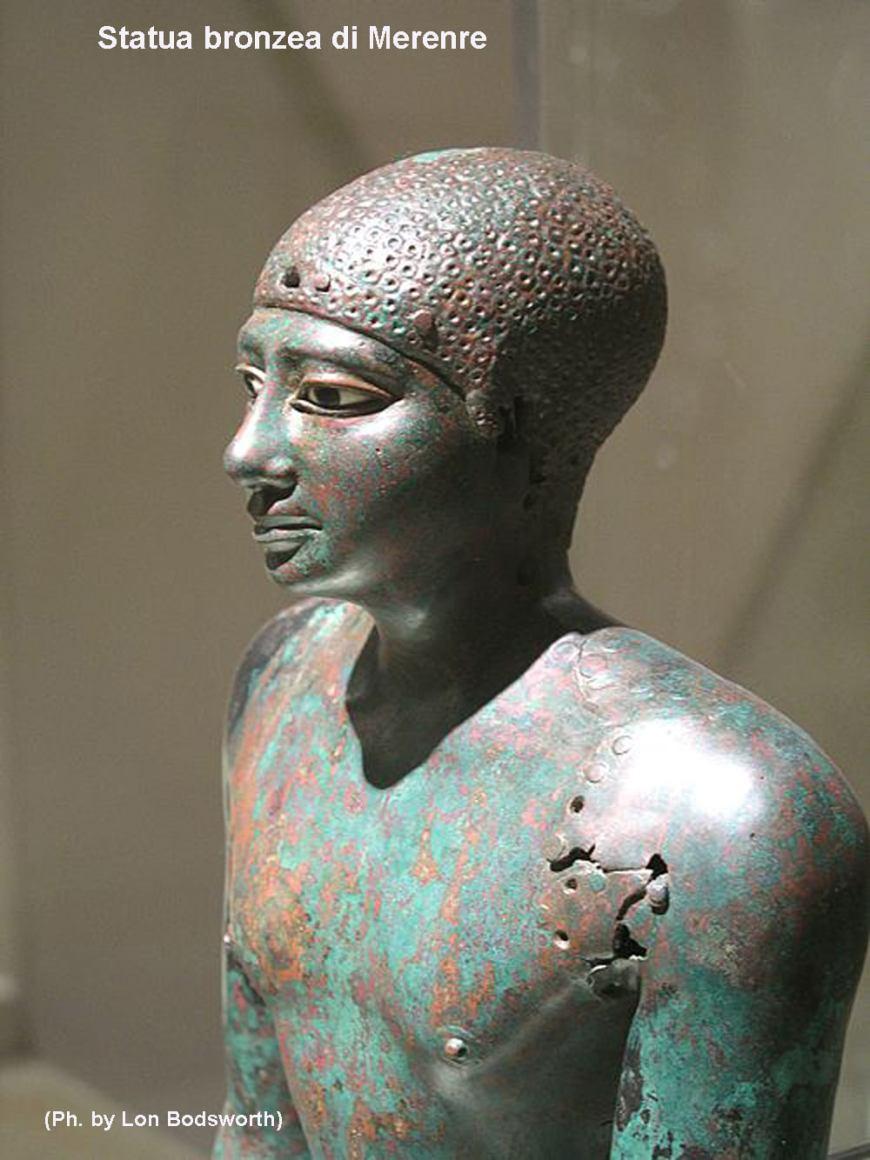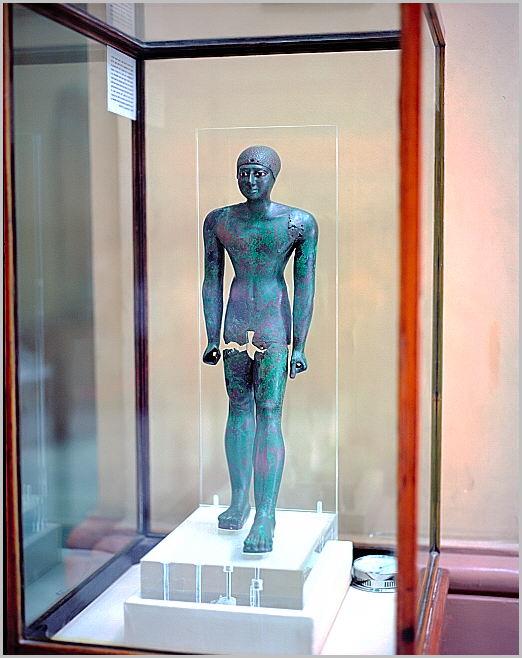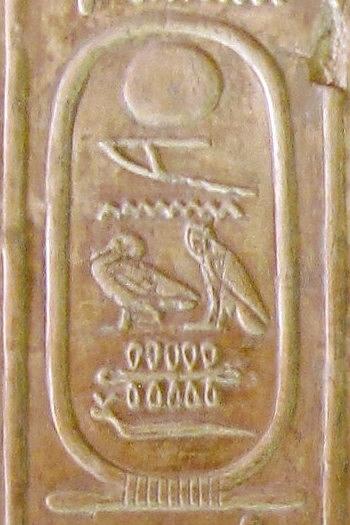
Merenre II, also known as Merenre Nemtyemsaf II, was one of the final rulers of Egypt's Sixth Dynasty. He lived during one of the most important turning points in ancient Egyptian history, when the powerful Old Kingdom was approaching its end.
Unlike famous rulers such as Khufu, Pepi I, or Pepi II, Merenre II left very little archaeological evidence behind. His reign appears to have been extremely short, probably lasting only a few months. Yet his brief time on the throne is historically important because he ruled during the final stage of the Sixth Dynasty, immediately after the death of the extraordinarily long-reigning Pepi II.
Merenre II inherited a kingdom that had once been one of the most centralized and powerful states in the ancient world. However, by the end of the Sixth Dynasty, Egypt was experiencing political and economic changes. Provincial governors had become increasingly powerful, local administrations were gaining independence, and the central government faced challenges maintaining its authority.
The story of Merenre II is therefore not primarily a story of great monuments or military victories. Instead, it is the story of a king who stood at the end of an era.
Merenre II's Family Background
Merenre II belonged to the royal family of the Sixth Dynasty.
His father was Pepi II, one of the longest-reigning pharaohs in Egyptian history.
Pepi II ruled for an extraordinarily long period according to ancient traditions, although the exact length of his reign is debated by modern Egyptologists.
Merenre II inherited the throne after his father's death.
His position was therefore connected directly to one of the most famous kings of the Old Kingdom.
However, Merenre II did not have the opportunity to establish a long-lasting royal legacy.
Becoming Pharaoh
When Pepi II died, Merenre II became king of Egypt.
His throne name was Merenre, while his Horus name and other royal titles reflected traditional Egyptian royal ideology.
The king was expected to preserve maat, the divine order of the universe.
He was also responsible for maintaining the temples, protecting Egypt's borders, supervising administration, and ensuring the continuation of royal religious rituals.
However, Merenre II inherited a difficult political situation.
A Kingdom at a Turning Point
By the end of the Sixth Dynasty, Egypt was changing.
The Old Kingdom had traditionally been characterized by strong central royal authority.
The pharaoh stood at the center of political, religious, and economic life.
But over generations, provincial officials had gained increasing power.
Local governors controlled resources, agricultural estates, and administrative centers.
Some provincial families became extremely wealthy.
Their tombs became increasingly elaborate.
This gradual decentralization created challenges for the royal government.
The Power of Provincial Governors
Provincial governors, often called nomarchs, played important roles in administering Egypt.
They collected taxes, organized agriculture, supervised local workers, and maintained regional institutions.
During the early Old Kingdom, these officials were closely controlled by the central government.
By the later Sixth Dynasty, however, many provincial families had become more independent.
Their positions sometimes became hereditary.
This meant that local power could remain within the same family for generations.
Merenre II's Difficult Inheritance
Merenre II inherited a state in which the central government still existed but faced growing regional independence.
The king's authority remained important.
Royal titles, temples, and religious institutions continued to recognize the pharaoh as the supreme ruler.
However, the practical administration of distant regions increasingly depended on powerful local officials.
Merenre II had little time to respond to these developments.
The Length of His Reign
Merenre II appears to have ruled for an extremely short period.
Ancient king lists place him after Pepi II and before the next rulers of the period.
The Turin Canon is damaged in this section, while later historical traditions provide different information.
Most reconstructions suggest that Merenre II ruled for only a few months.
Because the surviving evidence is limited, the exact length remains uncertain.
Why His Reign Was So Short
The exact circumstances of Merenre II's death are unknown.
There is no reliable evidence proving that he died violently.
Later traditions sometimes connect the final rulers of the Sixth Dynasty with political instability, but these accounts should be treated carefully.
Merenre II's short reign may simply have ended with his death before he could establish a strong political position.
The Problem of the Succession
The succession after Pepi II appears to have been complicated.
Pepi II had ruled for a very long time, and the royal court had experienced many generations of political changes.
When he died, the succession may have been vulnerable to competing interests.
Merenre II succeeded him, but his brief reign was followed by another period of uncertainty.
This instability contributed to the eventual end of the Sixth Dynasty.
Queen Nitocris and the Later Tradition
One of the most famous names associated with the end of the Sixth Dynasty is Nitocris.
Ancient Greek writers described Nitocris as a female ruler who supposedly succeeded Merenre II.
However, the historical identity of Nitocris remains highly debated.
Her name appears in later king lists, but Egyptologists have questioned whether she was a real historical queen or the result of a corruption or reinterpretation of another royal name.
Therefore, the traditional story of Nitocris should not be treated as certain historical fact.
The Legend of Nitocris
According to later Greek tradition, Nitocris was a remarkable and powerful queen.
She was said to have avenged the murder of her brother and then taken her own life.
Another story claimed that she constructed a magnificent underground chamber for a banquet and used it to punish her enemies.
These stories are fascinating, but there is no reliable archaeological evidence confirming them.
They belong more to the later historical tradition than to securely documented Sixth Dynasty history.
Merenre II and the End of the Old Kingdom
Merenre II's reign is important because it occurred immediately before the end of the Old Kingdom.
The Old Kingdom is traditionally dated from the Third Dynasty through the Sixth Dynasty.
It was an era of extraordinary royal power.
The great pyramids of Giza had been built centuries earlier.
Kings such as Djoser, Sneferu, Khufu, Khafre, Menkaure, Pepi I, and Pepi II had established a remarkable tradition of centralized government and monumental construction.
By the time of Merenre II, however, the political structure was changing.
The Decline of Central Authority
The end of the Old Kingdom was not caused by one event.
Instead, several factors probably interacted.
The growing power of provincial governors weakened the traditional centralization of government.
Economic pressures may have affected the royal administration.
Changes in the Nile flood and wider environmental conditions may also have contributed.
Political instability after the death of Pepi II added another problem.
Merenre II ruled during the final stage of this complicated transformation.
Environmental Problems
Egypt's agricultural economy depended on the Nile.
The annual flood determined the fertility of the fields.
If Nile levels were unusually low, agricultural production could decline.
This could lead to food shortages and economic problems.
Some archaeological and climatic evidence suggests that environmental instability may have occurred around the end of the Old Kingdom.
However, scholars continue to debate exactly how important climate change was in the collapse.
Economic Pressure
The Egyptian state needed enormous resources to support the royal court, temples, administrators, and provincial institutions.
Royal funerary complexes also required continuous offerings and maintenance.
As the political system became more decentralized, resources may have been increasingly controlled by local officials.
This could have reduced the economic power of the central government.
The Role of Religion
Religion remained extremely important during Merenre II's lifetime.
The pharaoh was believed to be connected with the gods.
His duty was to preserve maat and ensure that the cosmic order continued.
Even during political difficulties, temples continued their rituals.
The Egyptian religious system did not suddenly disappear when the Old Kingdom ended.
Instead, religious traditions continued into later periods.
The Legacy of Pepi II
Merenre II inherited more than a throne.
He inherited the legacy of Pepi II.
Pepi II's exceptionally long reign had created continuity, but it may also have allowed provincial families to become increasingly powerful.
By the time Merenre II became king, the political landscape was very different from the beginning of the Sixth Dynasty.
The new king had little time to reverse these developments.
Merenre II's Monuments
Very little is known about monuments built by Merenre II.
His reign was probably too short for major construction projects.
Unlike the great pyramid builders of earlier dynasties, Merenre II did not leave behind a famous monumental complex.
His lack of monuments is one reason why historians know so little about him.
The Archaeological Evidence
The archaeological evidence for Merenre II is extremely limited.
Most information about him comes from king lists and historical reconstructions.
This makes his reign particularly challenging for Egyptologists.
Unlike Pepi I or Pepi II, whose monuments and inscriptions provide extensive information, Merenre II left few direct traces.
The Abydos King List
The Abydos King List is one of the important sources for reconstructing Egypt's royal history.
It includes names of many Egyptian kings.
Merenre II's position in the succession helps historians understand where he belongs in the Sixth Dynasty.
However, king lists were created for particular political and religious purposes, so they must be compared with archaeological evidence.
The Turin Royal Canon
Another important source is the Turin Royal Canon.
This ancient Egyptian king list was written on papyrus.
Unfortunately, parts of the document are damaged.
The section concerning the final Sixth Dynasty rulers is incomplete.
Nevertheless, it provides useful evidence for reconstructing the succession.
Manetho's Account
The ancient Egyptian priest and historian Manetho wrote a history of Egypt in Greek during the Ptolemaic period.
His original work has not survived completely.
Later writers preserved parts of his account.
Manetho's chronology places rulers at the end of the Sixth Dynasty, but some details differ from archaeological evidence.
Therefore, his account must be used carefully.
The First Intermediate Period
After the end of the Sixth Dynasty, Egypt entered what historians call the First Intermediate Period.
This period lasted for several generations and was characterized by political decentralization.
Different regions developed strong local governments.
The traditional image of a single powerful central monarchy became less accurate.
However, Egypt did not collapse into complete chaos.
Local rulers continued to govern, agriculture continued, and Egyptian culture remained alive.
Life After the Old Kingdom
The end of the Old Kingdom did not mean the end of Egyptian civilization.
People continued farming along the Nile.
Temples continued operating.
Craftsmen produced pottery, jewelry, tools, and statues.
Scribes continued writing.
Local rulers maintained their own administrations.
Egyptian religious beliefs also survived.
The political system changed, but Egyptian civilization continued.
Merenre II as a Historical Symbol
Merenre II can be viewed as a symbol of the end of an extraordinary era.
His predecessors had ruled a centralized kingdom capable of organizing huge construction projects and distant expeditions.
By his reign, Egypt's political system had become more complicated.
The king still possessed religious authority, but local elites had gained considerable power.
Merenre II stood between these two worlds.
The Importance of Studying Short Reigns
Short-reigning kings such as Merenre II are sometimes overlooked because they left fewer monuments.
However, they are extremely important for understanding historical transitions.
A king with a reign of only a few months can still represent a major political change.
Merenre II helps historians understand how the Sixth Dynasty ended and how Egypt moved toward the First Intermediate Period.
What Happened to the Royal Family?
The exact fate of Merenre II's immediate family is uncertain.
The royal court continued after his death, but the succession became increasingly complicated.
The identity of some rulers and queens from this period remains debated.
This uncertainty reflects the political instability of the final years of the Sixth Dynasty.
The End of the Sixth Dynasty
Merenre II was among the final rulers of the Sixth Dynasty.
After his brief reign, Egypt entered a period in which the traditional centralized monarchy became weaker.
The Seventh and Eighth Dynasties are especially difficult to reconstruct because the historical evidence is limited.
The capital remained connected with Memphis, but regional powers became increasingly important.
Memphis and the Royal Court
Memphis had been the political heart of Egypt for centuries.
It was an important center of administration, religion, and royal culture.
The royal court of the Sixth Dynasty was closely connected to the Memphite region.
Even after the end of the Old Kingdom, Memphis remained an important Egyptian city.
Merenre II and Egyptian Kingship
Merenre II's reign demonstrates the importance of the pharaoh as both a political and religious figure.
Even when the central government was under pressure, the king continued to represent divine order.
His titles connected him to Horus, Ra, and other gods.
The survival of these traditions demonstrates the strength of Egyptian kingship as a religious institution.
The Historical Mystery of Merenre II
One of the most interesting things about Merenre II is how little we know about him.
There are no detailed autobiographical inscriptions describing his life.
There are no famous military campaigns securely attributed to him.
There is no major surviving pyramid complex that can confidently be identified as his.
Instead, he appears briefly in the historical record before disappearing.
This mystery makes him one of the lesser-known but historically important pharaohs.
Why Merenre II Matters Today
Merenre II matters because his reign helps explain the transition between the Old Kingdom and the First Intermediate Period.
His story shows that the end of an empire or centralized kingdom does not always happen suddenly.
Political systems can weaken gradually.
Local officials can become more powerful.
Economic pressures can increase.
Environmental conditions can change.
Eventually, a short reign like that of Merenre II can occur at the end of a long process of transformation.
Conclusion
Merenre II was one of the final pharaohs of Egypt's Sixth Dynasty and one of the least documented rulers of the Old Kingdom.
He inherited the throne after the death of his father, Pepi II, whose reign had lasted for an exceptionally long period according to ancient traditions.
Merenre II's own reign was extremely short, probably only a few months.
Because of this, he had little opportunity to establish major monuments or political reforms.
Nevertheless, his position in Egyptian history is extremely important.
He ruled during a period when the Old Kingdom was undergoing major changes.
The central government was becoming less powerful, while provincial governors and local elites were gaining greater independence.
Economic pressures and possible environmental changes may also have contributed to the weakening of royal authority.
After Merenre II's death, Egypt entered the complicated political period that historians call the First Intermediate Period.
Later traditions connected the succession with the mysterious queen Nitocris, but the historical details surrounding her remain uncertain.
Merenre II therefore remains a fascinating historical figure.
He was not remembered for building the largest pyramid or conquering foreign lands.
Instead, he is remembered because he stood at the end of one of ancient Egypt's greatest eras.
His short reign marked the final chapter of the Sixth Dynasty and the beginning of a new period in Egyptian history.
Merenre II's story reminds us that even a king who ruled for only a short time can occupy an important place in the history of ancient Egypt.