Shepseskare, also known as Shepseskare Isi, was a mysterious pharaoh of Egypt’s Fifth Dynasty during the Old Kingdom. His reign was probably very short, and historians still debate his exact position in the royal succession.
Unlike famous kings such as Sahure, Neferirkare Kakai, and Nyuserre Ini, Shepseskare left behind relatively few monuments. Archaeologists have discovered evidence suggesting that he began constructing a pyramid at Abusir, but the project was apparently abandoned before it was completed.
His short reign makes him one of the most intriguing rulers of the Fifth Dynasty.
Shepseskare’s Historical Background
Shepseskare ruled during the Fifth Dynasty, a period when the Egyptian state was powerful, wealthy, and highly organized.
The Fifth Dynasty is famous for its strong relationship with the sun god Ra.
Several kings built temples dedicated to Ra, and royal ideology placed great emphasis on the sun and the king’s divine nature.
The dynasty included rulers such as Userkaf, Sahure, Neferirkare Kakai, Shepseskare, Neferefre, Nyuserre Ini, Menkauhor Kaiu, Djedkare Isesi, and Unas.
Shepseskare therefore ruled in the middle of one of the most important periods of the Old Kingdom.
The Mystery of Shepseskare’s Family
One of the greatest mysteries surrounding Shepseskare is his family background.
Historians do not know with certainty who his parents were.
There is also uncertainty about his exact relationship with the other rulers of the Fifth Dynasty.
Some theories suggest that he may have been closely related to Neferirkare Kakai.
Other theories have suggested that he may have been connected to Neferefre or another branch of the royal family.
Unfortunately, surviving evidence is too limited to provide a definite answer.
Shepseskare Becomes Pharaoh
The exact circumstances of Shepseskare’s accession are also uncertain.
The traditional sequence of Fifth Dynasty rulers has been reconstructed from archaeological and historical evidence, but some parts remain debated.
Shepseskare may have come to power after Neferirkare Kakai.
However, some archaeological evidence has led scholars to question whether he actually ruled before or after Neferefre.
This uncertainty is one reason Shepseskare remains such an interesting historical figure.
A Very Short Reign
Shepseskare probably ruled for only a short time.
Ancient sources and archaeological evidence suggest a reign of perhaps only a few months or a few years.
Compared with rulers such as Sahure or Nyuserre, who ruled for much longer, Shepseskare had very little time to build major monuments.
This may explain why so little evidence survives from his reign.
A short reign would also have made it difficult to complete a large pyramid or temple complex.
The Abusir Pyramids
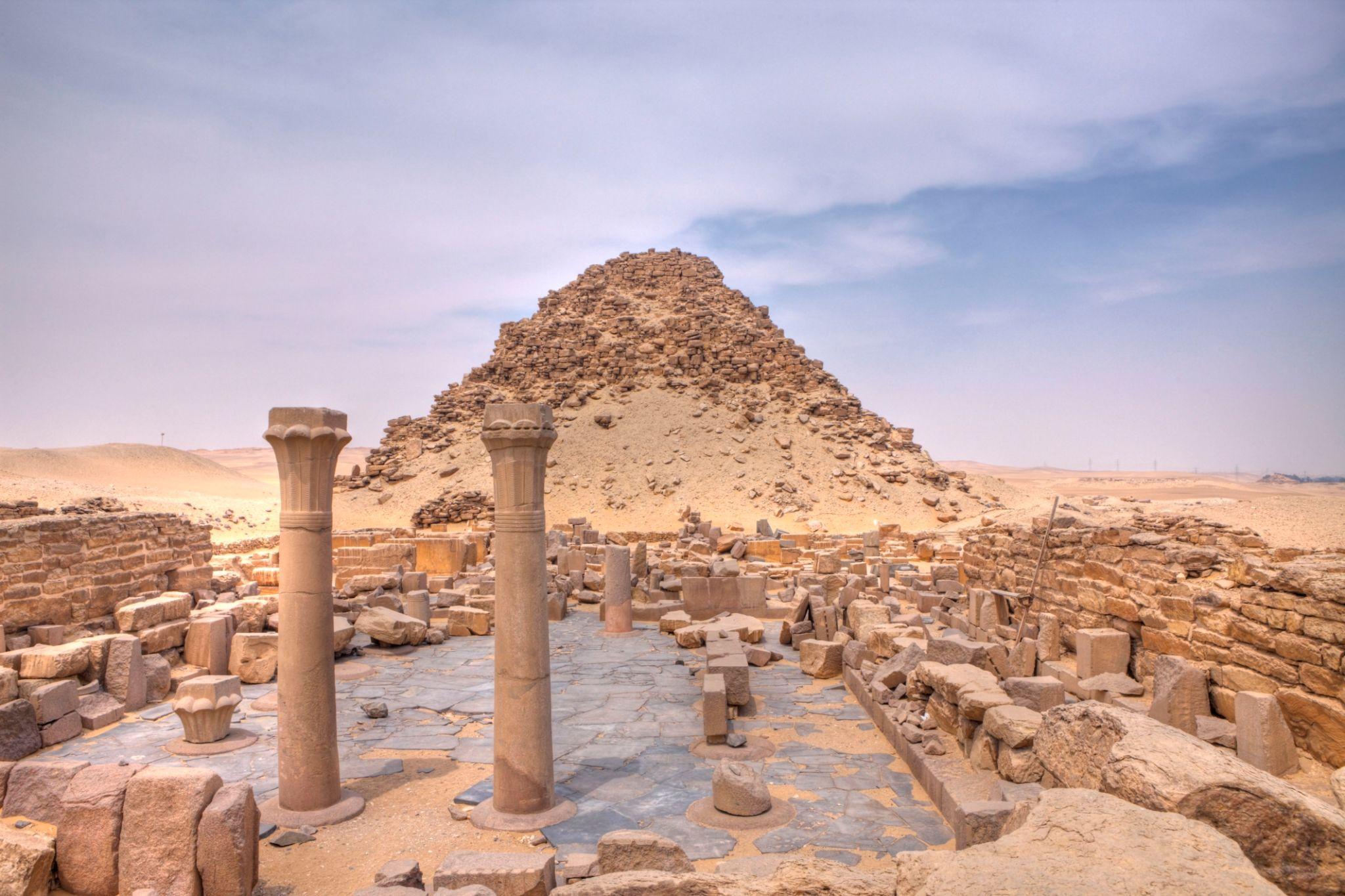
The royal cemetery at Abusir became one of the most important burial areas during the Fifth Dynasty.
Several Fifth Dynasty kings constructed pyramids there, including Sahure, Neferirkare Kakai, Neferefre, and Nyuserre Ini.
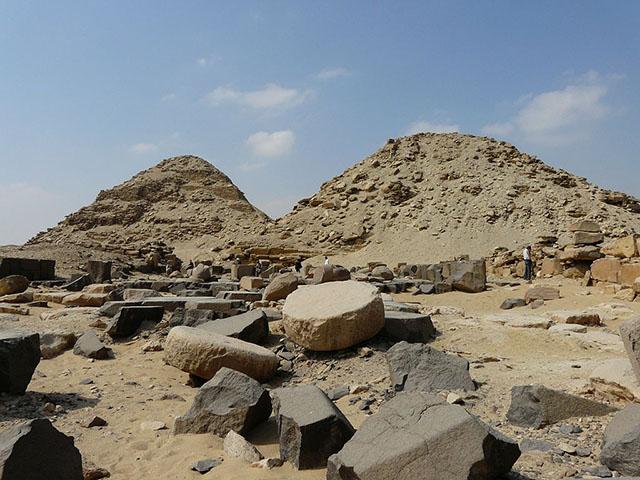
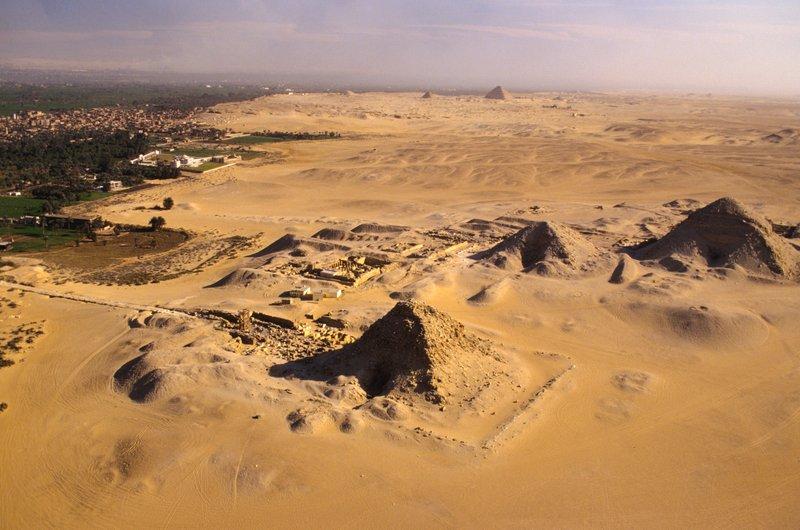
Archaeologists also discovered evidence of an unfinished pyramid that may belong to Shepseskare.
Shepseskare’s Unfinished Pyramid
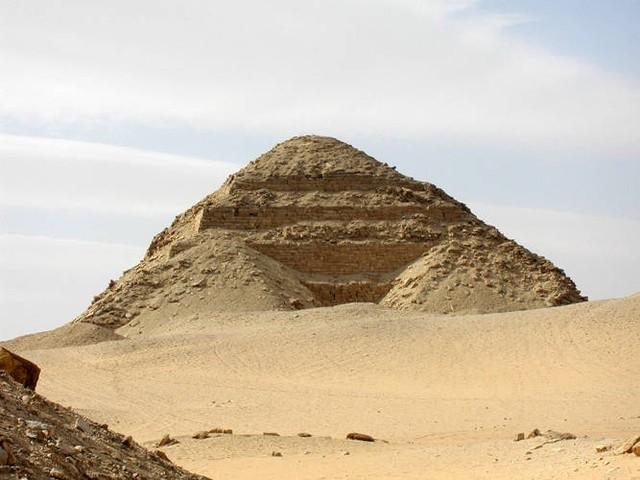
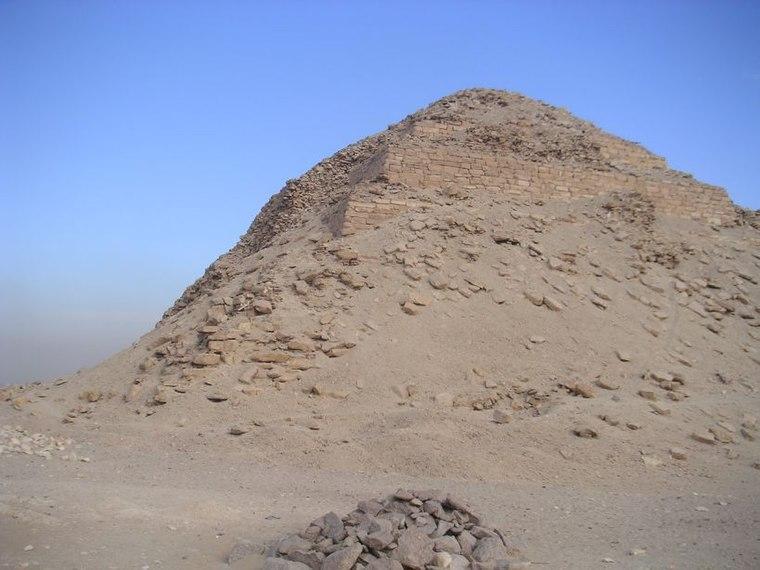
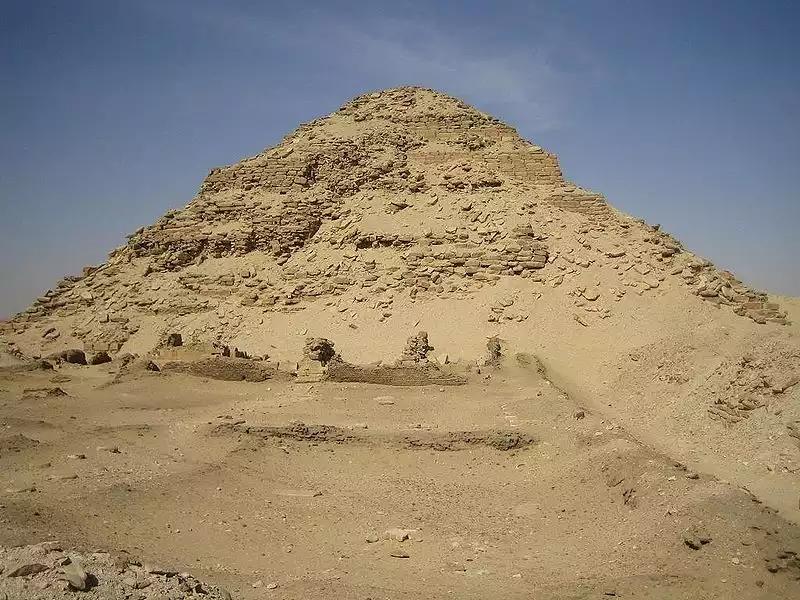
One of the most important clues about Shepseskare is an unfinished pyramid platform at Abusir.
The monument was apparently started but abandoned at an early stage.
Its location is unusual because it is not positioned exactly like the other major pyramids at Abusir.
Some researchers believe this unfinished monument may be the pyramid of Shepseskare.
If this identification is correct, it provides valuable evidence about his reign.
The unfinished state of the pyramid also supports the idea that his reign was short.
Why Was the Pyramid Abandoned?
There are several possible explanations.
The most obvious possibility is that Shepseskare died before construction could be completed.
Another possibility is that political circumstances changed.
A new king may have decided to build his own pyramid elsewhere.
The location of the unfinished monument may also have created logistical or religious problems.
Because there are no surviving records explaining why construction stopped, historians cannot be certain.
Shepseskare and the Solar Religion
The Fifth Dynasty was strongly connected to the worship of Ra.
Earlier rulers constructed solar temples in addition to their pyramids.
Shepseskare’s reign was too short for us to know exactly what religious projects he may have completed.
There is no securely identified solar temple belonging to him.
Nevertheless, his royal name and the religious traditions of the Fifth Dynasty suggest that he would have participated in the worship of Ra.
The Importance of Ra
Ra was one of the most powerful gods in ancient Egypt.
He was associated with the sun, creation, life, kingship, and renewal.
The pharaoh was closely connected with Ra.
Egyptian kings were believed to participate in the eternal solar cycle after death.
The sun’s daily journey across the sky became a symbol of death, rebirth, and eternal life.
Shepseskare and Egyptian Kingship
Like other pharaohs, Shepseskare was expected to maintain maat.
Maat represented cosmic order, justice, balance, and truth.
The king’s responsibilities included protecting Egypt, maintaining religious traditions, supporting temples, and ensuring the prosperity of the kingdom.
Even a short reign required the pharaoh to perform these religious and political duties.
Administration During His Reign
Egypt’s administration during the Fifth Dynasty was highly organized.
The king relied on viziers, priests, scribes, governors, military commanders, and estate administrators.
They managed agriculture, taxation, temples, royal estates, trade, and construction.
Shepseskare inherited this system from his predecessors.
There is no evidence that his short reign caused major administrative changes.
Egypt’s Economy
The Egyptian economy was primarily based on agriculture.
The Nile River provided water and fertile soil.
Farmers grew wheat, barley, vegetables, fruit, and flax.
The government collected agricultural products as taxes.
These resources supported the royal court, temples, workers, craftsmen, and officials.
A strong agricultural economy allowed the pharaohs to build enormous monuments.
Trade and Foreign Expeditions
Fifth Dynasty Egypt maintained trade and expedition networks with neighboring regions.
Egyptian expeditions traveled toward Nubia, Sinai, the Eastern Desert, and the Red Sea.
These regions provided valuable resources.
Gold came from areas south of Egypt.
Copper and turquoise were obtained from Sinai.
Stone and other materials were collected from the deserts.
Incense and exotic products could be acquired through long-distance trade.
Nubia and Shepseskare
Nubia was particularly important to Egyptian rulers.
Nubia provided gold and other valuable materials.
It was also strategically important because it connected Egypt with regions farther south.
Although there is no detailed record of a major Nubian campaign specifically led by Shepseskare, the Egyptian state continued to maintain interests in the region.
Shepseskare’s Tomb
No confirmed burial chamber belonging to Shepseskare has been discovered.
This is one of the major mysteries surrounding his reign.
If the unfinished pyramid at Abusir truly belonged to him, it was never completed.
His final burial may therefore have taken place in a temporary or unfinished structure.
Alternatively, his burial monument may have been destroyed or remains undiscovered.
Why So Little Is Known About Him
Shepseskare left very little evidence.
Only a small number of objects and inscriptions can confidently be connected with his reign.
This is unusual when compared with kings such as Sahure and Nyuserre, whose temples and monuments provide historians with extensive information.
The limited evidence makes Shepseskare difficult to reconstruct historically.
Every archaeological discovery connected with him is therefore extremely valuable.
Shepseskare’s Seal Impressions
Archaeologists have found evidence associated with Shepseskare in the Abusir region.
Some seal impressions bearing his royal name have helped confirm that he was a historical king rather than simply a later literary invention.
Royal seals were used to identify goods, documents, storage facilities, and official activities.
Even a small seal impression can provide important information about ancient Egyptian administration.
The Fifth Dynasty Succession
The succession of Fifth Dynasty kings is one of the most debated subjects in Old Kingdom history.
Shepseskare’s position is particularly difficult to determine.
The traditional order places him between Neferirkare and Neferefre.
However, archaeological evidence has caused some scholars to question this sequence.
The unfinished pyramid associated with Shepseskare may provide clues about the order in which the royal monuments were constructed.
Shepseskare and Neferefre
Neferefre was another Fifth Dynasty king whose reign was very short.
Because both Shepseskare and Neferefre had short reigns, historians have spent considerable effort determining which king ruled first.
Neferefre’s unfinished pyramid and mortuary temple provide much more archaeological evidence than Shepseskare’s monuments.
The relationship between the two kings remains an important subject of Egyptological research.
Nyuserre Ini
After the uncertain succession involving Shepseskare and Neferefre, Nyuserre Ini eventually became king.
Nyuserre had a much longer reign and completed important building projects at Abusir.
His monuments helped preserve information about the Fifth Dynasty.
Nyuserre’s long reign may also explain why the evidence for Shepseskare became overshadowed by the monuments of his successor.
Art and Culture
Because Shepseskare ruled for such a short period, there are few surviving examples of art specifically associated with him.
Nevertheless, the artistic traditions of his period were highly developed.
Egyptian artists created stone reliefs, statues, funerary objects, temple decorations, royal seals, and hieroglyphic inscriptions.
The art emphasized the eternal nature of the king and the importance of the gods.
Daily Life in Shepseskare’s Egypt
For ordinary Egyptians, life probably changed very little during Shepseskare’s short reign.
Farmers continued to work the fields along the Nile.
Fishermen used boats and nets.
Craftsmen worked with stone, wood, copper, and pottery.
Merchants transported goods.
Scribes recorded economic activities.
Priests performed religious ceremonies.
The Nile remained the center of Egyptian life.
Shepseskare’s Death
The circumstances of Shepseskare’s death are unknown.
His short reign suggests that he may have died unexpectedly or after a brief period on the throne.
There is no surviving account describing his death.
After his disappearance from the historical record, another king took control of Egypt.
The exact succession remains debated.
The Legacy of Shepseskare
Shepseskare’s greatest legacy is not a giant completed monument.
Instead, his importance comes from the mystery surrounding his reign.
His unfinished pyramid provides archaeologists with evidence of royal construction during the Fifth Dynasty.
His seals confirm his existence.
His position in the royal succession helps historians understand the political history of the period.
He also represents a fascinating example of how much of ancient Egyptian history has been lost.
Why Shepseskare Is Important
Shepseskare is important because he demonstrates that ancient Egyptian history was not always a simple sequence of famous kings and enormous monuments.
Some pharaohs ruled for decades and left spectacular temples.
Others ruled briefly and left only a few traces.
Shepseskare belongs to the second category.
His short reign, unfinished pyramid, and uncertain succession make him one of the most mysterious pharaohs of the Old Kingdom.
Conclusion
Shepseskare was a short-lived but fascinating pharaoh of Egypt’s Fifth Dynasty.
He ruled during the Old Kingdom, a period when Egypt possessed a powerful centralized government and a highly developed religious and architectural tradition.
Very little is known about his family, his exact reign, or the circumstances of his death.
Archaeological evidence suggests that he may have begun constructing a pyramid at Abusir, but the project was abandoned before completion.
The unfinished monument may indicate that Shepseskare died unexpectedly or that political circumstances changed soon after he became king.
His reign occurred during a complicated period of royal succession involving Neferirkare Kakai, Neferefre, and Nyuserre Ini.
Although Shepseskare left fewer monuments than his predecessors and successors, the evidence associated with him is extremely important.
His royal seals confirm his existence, while the unfinished pyramid provides clues about royal construction and the political situation of the Fifth Dynasty.
Today, Shepseskare remains one of the most mysterious rulers of ancient Egypt.
His story reminds us that even a pharaoh who left behind only a handful of monuments can still hold an important place in the history of one of the world’s greatest ancient civilizations.