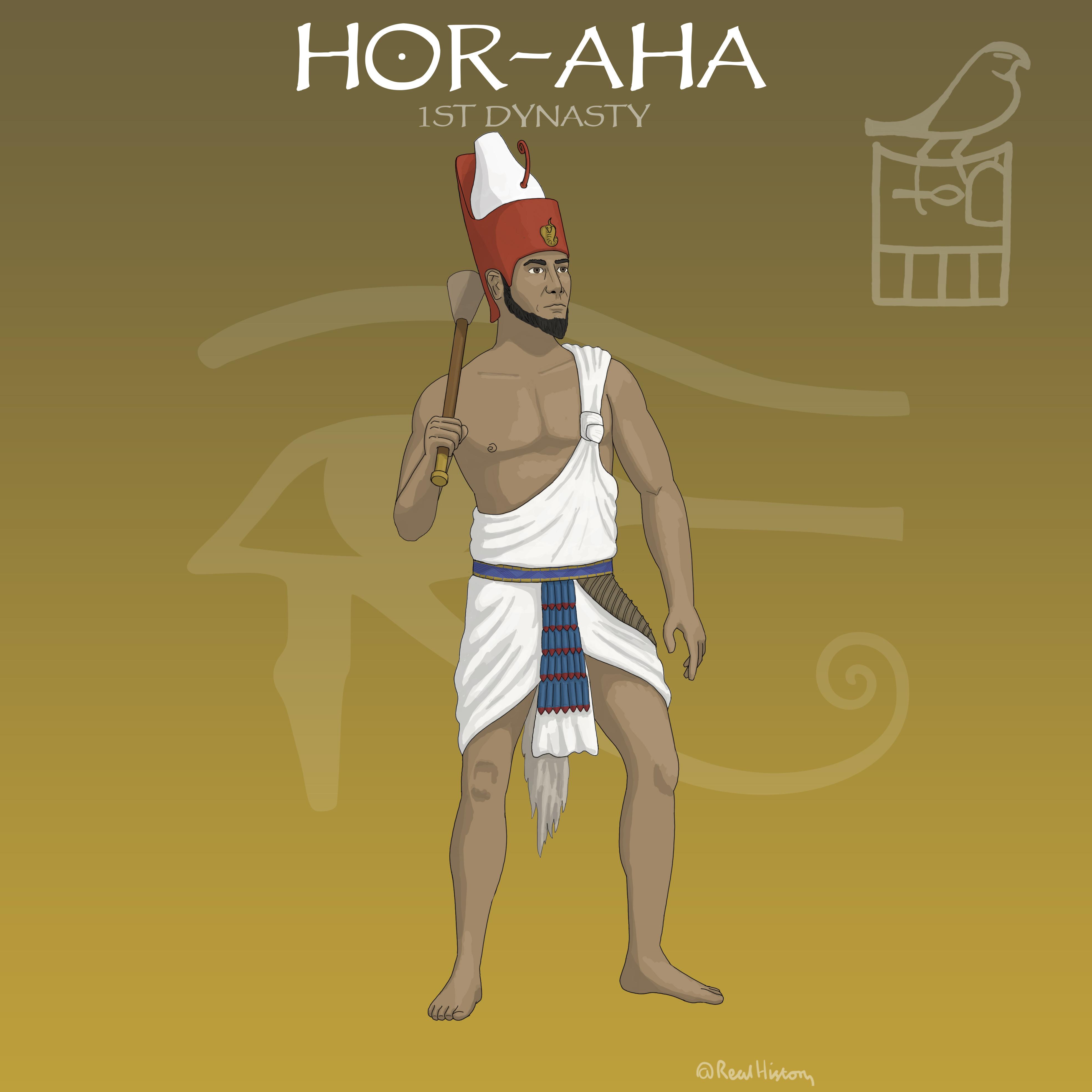
Hor-Aha was one of the earliest rulers of ancient Egypt and is generally considered the second king of the First Dynasty, following the famous ruler Narmer. He lived during the Early Dynastic Period, around the beginning of the 3rd millennium BCE, when the unified Egyptian state was still developing its political, religious, and administrative systems.
Although Hor-Aha is not as famous as later pharaohs such as Djoser, Khufu, Hatshepsut, or Ramesses II, his reign was extremely important. He ruled during the first generations after the unification of Upper and Lower Egypt, helping establish the traditions that would shape Egyptian civilization for thousands of years.
Very little is known about Hor-Aha's personal life, but archaeological evidence from Abydos, Saqqara, and other early Egyptian sites provides important information about his reign.
Who Was Hor-Aha?
The name Hor-Aha is generally translated as something like "Horus the Fighter" or "Horus the Warrior."
The name is closely connected with the ancient Egyptian god Horus, who was associated with kingship, protection, and divine authority.
Early Egyptian kings often identified themselves with Horus. The living pharaoh was considered the earthly representative of the god, while the deceased king became associated with Osiris.
Hor-Aha's royal name reflects this early religious concept of kingship.
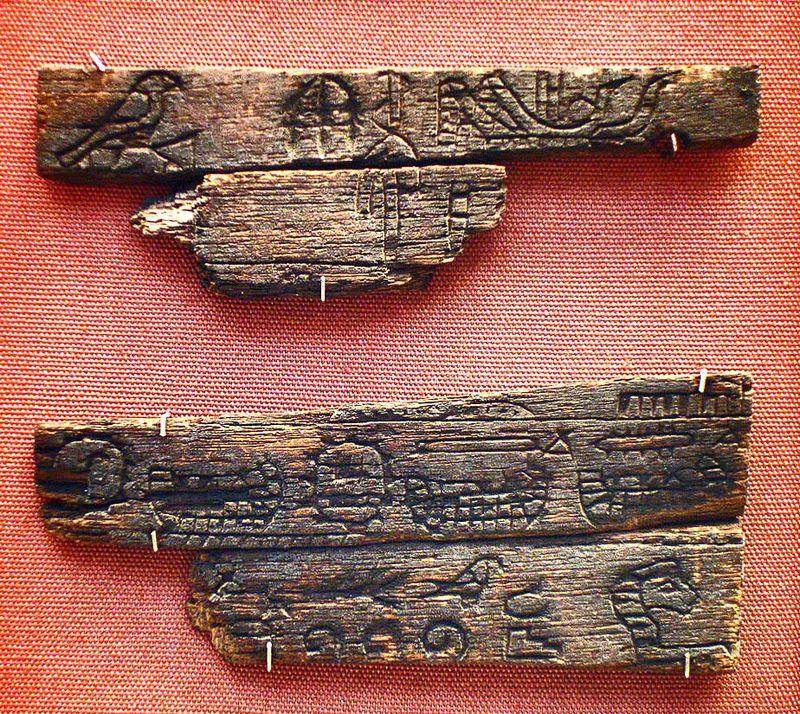
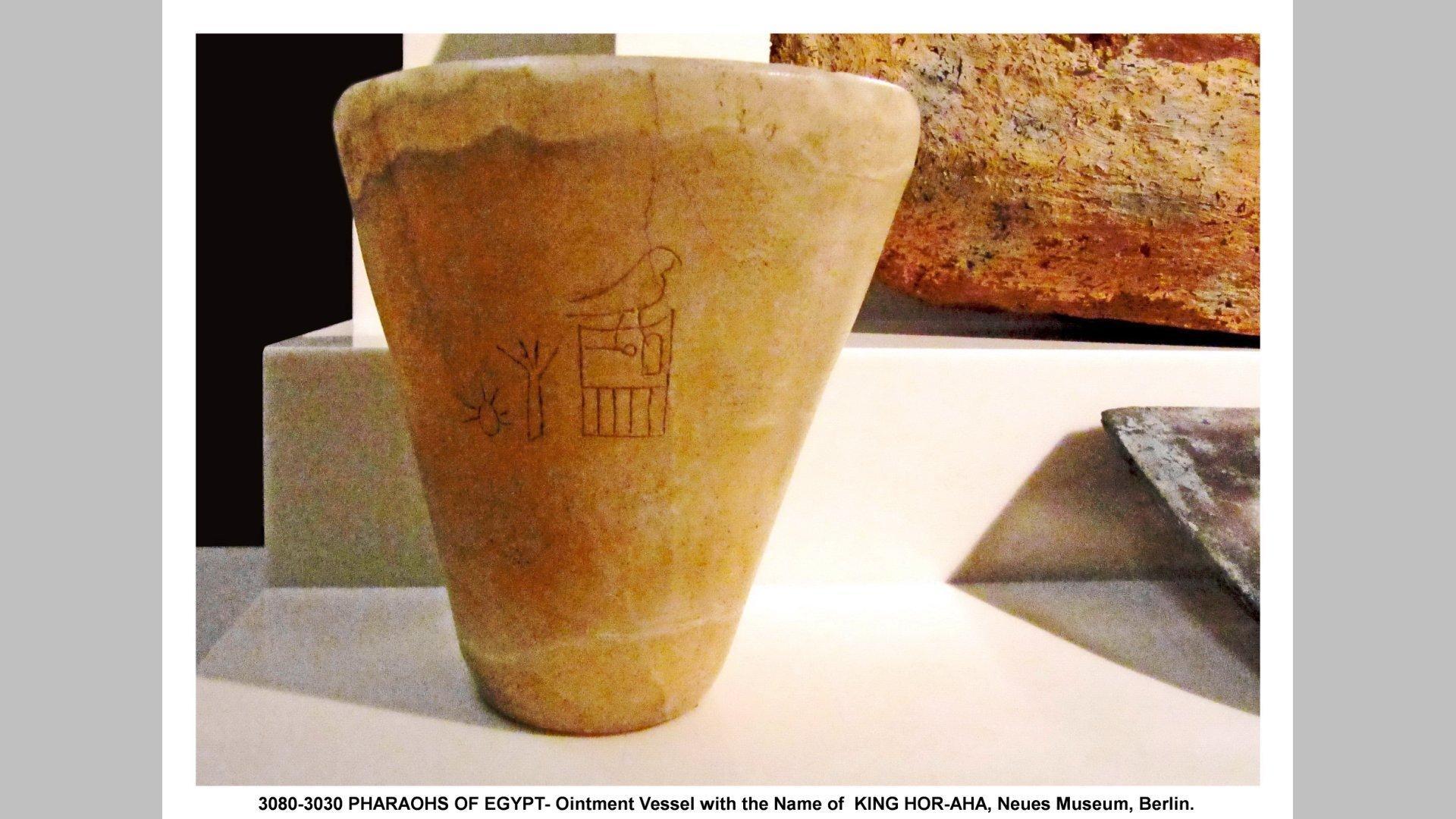
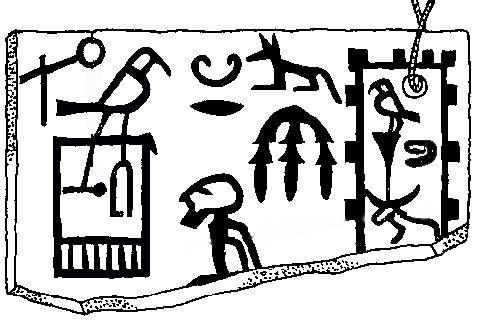
His name appears on archaeological objects, including ivory and wooden labels, providing evidence that he was a real historical ruler rather than simply a figure known from later traditions.
Hor-Aha and Narmer
One of the most interesting questions about Hor-Aha concerns his relationship with Narmer.
Narmer is traditionally associated with the unification of Upper and Lower Egypt and is often identified with the legendary king Menes.
Hor-Aha appears to have ruled immediately after Narmer.
Some historians believe Narmer was Menes and that Hor-Aha was his successor.
Other scholars have suggested that Hor-Aha himself may have been the historical ruler known as Menes.
The evidence remains uncertain.
Ancient Egyptian king lists were written much later than these early rulers, and royal names could appear differently in different historical sources.
Regardless of the exact identity of Menes, Hor-Aha clearly belonged to the earliest generation of kings who ruled a unified Egypt.
Egypt After Unification
When Hor-Aha became king, Egypt was still a relatively new unified state.
The country stretched from the southern Nile Valley to the northern Delta, and maintaining control over such a large territory required an organized government.
The king needed to manage agriculture, collect resources, control trade, appoint officials, and maintain religious institutions.
The Nile was essential to this system.
Its annual floods provided fertile land for agriculture, while the river itself served as a natural transportation route.
Hor-Aha's reign therefore took place during the important process of transforming political unification into a stable centralized kingdom.
The Beginning of the First Dynasty
The First Dynasty was one of the most important periods in Egyptian history.
During this time, the monarchy became increasingly centralized.
The king stood at the center of political and religious life.
Officials were responsible for managing regions, royal estates, agricultural production, and other resources.
Writing was increasingly used to record administrative information.
Royal tombs became more elaborate, and religious traditions became closely connected with the pharaoh.
Hor-Aha ruled during the early development of this system.
Although the surviving evidence is limited, the archaeological record shows that the Egyptian state was already becoming highly organized.
Hor-Aha’s Tomb at Abydos
Hor-Aha is strongly associated with Abydos, one of the most important archaeological and religious sites in ancient Egypt.
The royal cemetery at Umm el-Qa'ab contains the tombs of several of Egypt's earliest kings.
Hor-Aha's tomb is one of the important monuments in this cemetery.
Unlike the enormous pyramids of later pharaohs, his tomb consisted primarily of underground chambers and mud-brick structures.
This reflects an early stage in the development of Egyptian royal burial architecture.
Centuries later, kings would construct massive pyramids and eventually rock-cut tombs.
The tombs at Abydos demonstrate how Egyptian funerary traditions developed over time.
The Royal Burial Complex
Hor-Aha's burial complex appears to have contained several chambers and subsidiary burials.
Archaeological evidence from the area has led to important discussions about early Egyptian burial customs.
Some subsidiary burials may have involved members of the royal household or servants, while other interpretations suggest symbolic or ceremonial purposes.
Whatever their exact meaning, these burials demonstrate the importance of the king's afterlife.
The royal tomb was not simply a place for the body.
It was part of a religious system designed to ensure that the king could continue to exist after death.
Food, vessels, tools, and other objects could be placed in connection with the burial to support the deceased ruler.
Hor-Aha and Saqqara
Hor-Aha is also connected with archaeological evidence from Saqqara, which later became one of Egypt's most important royal cemeteries.
The First Dynasty tombs at Saqqara show that the northern part of Egypt was already an important center during the earliest dynasties.
The site would later become famous for the Step Pyramid of Djoser, but its history began much earlier.
The existence of important tombs at both Abydos and Saqqara suggests strong connections between Upper and Lower Egypt.
This was particularly important for the early unified monarchy.
The king needed to demonstrate his authority throughout the entire kingdom.
Memphis and the Unified Kingdom
The city of Memphis occupied a strategic position near the boundary between Upper and Lower Egypt.
Later Egyptian traditions associated its foundation with Menes.
The city's location allowed rulers to control access between the Nile Valley and the Delta.
Memphis eventually became one of Egypt's greatest political and religious centers.
It was also closely associated with the god Ptah.
Although it is uncertain whether Hor-Aha personally founded or developed Memphis, the growth of the city was essential to the early centralized state.
Its strategic position made it an ideal center for governing the unified kingdom.
Hor-Aha and Religion
Religion was central to Hor-Aha's authority.
The ancient Egyptians believed that the pharaoh had a special relationship with the gods.
Horus was particularly important because he represented kingship and divine protection.
The king was also responsible for maintaining maat, the divine order that kept the universe balanced.
The pharaoh's role was therefore both political and religious.
He protected the kingdom, supported temples, performed or sponsored religious rituals, and maintained the relationship between the human and divine worlds.
These ideas became fundamental to Egyptian kingship and remained important for thousands of years.
The Horus Name
One of the earliest royal traditions was the use of the Horus name.
The king's name was often written inside a rectangular frame called a serekh, which represented the royal palace.
Above the serekh stood the falcon of Horus.
This symbol communicated the king's divine identity.
Hor-Aha's name appears within this early royal tradition.
The system of royal naming would become more elaborate over time, eventually producing the famous fivefold titulary used by later pharaohs.
Hor-Aha therefore belongs to the period when the basic language of Egyptian kingship was being established.
Early Egyptian Writing
Hor-Aha ruled during the early development of Egyptian writing.
Hieroglyphic signs were already being used, but the writing system was much simpler than it would become in later periods.
Many early inscriptions were short and connected with administration, royal ceremonies, products, or religious activities.
Ivory labels and seal impressions provide some of the most useful evidence for Hor-Aha's reign.
Although these objects do not tell a complete story, they allow historians to reconstruct aspects of the early Egyptian state.
They demonstrate that writing was already becoming an important tool of royal administration.
Trade and Economic Development
The newly unified Egyptian state needed access to resources from different regions.
Egypt's location allowed it to participate in trade networks connecting the Nile Valley with neighboring areas.
Important resources could come from Nubia, Sinai, the Eastern Desert, and the Levant.
Stone, minerals, timber, oils, and other materials were valuable to the royal administration.
The centralized government could organize expeditions and control the movement of resources.
Although there are no detailed surviving records describing Hor-Aha's trade policies, his reign belongs to a period when Egypt's economic connections were expanding.
These networks helped strengthen the monarchy.
Hor-Aha as a Warrior King
The name Hor-Aha has a possible military meaning, but there is no detailed surviving record of his military campaigns.
The early Egyptian kings probably faced resistance from groups that had not been fully integrated into the new kingdom.
Maintaining control over Upper and Lower Egypt required political authority and, when necessary, military force.
The image of the king as a warrior became an important part of Egyptian royal art.
Later pharaohs frequently portrayed themselves defeating enemies and protecting Egypt.
Hor-Aha lived during the early period when this tradition was being established.
The Pharaoh's Afterlife
For Hor-Aha, death was not considered the end of kingship.
The Egyptians believed that the king could continue to exist in the afterlife.
This belief explains the importance of the royal tomb.
The burial complex was designed to protect the king's body and provide the objects and rituals necessary for his eternal existence.
The royal cemetery at Abydos became one of the most sacred places in Egypt.
Later, Abydos became especially associated with Osiris, the god of the dead and ruler of the afterlife.
Hor-Aha's burial belongs to the early development of the religious traditions that would eventually shape Egyptian funerary culture.
Hor-Aha's Historical Importance
Hor-Aha's greatest importance lies in the period in which he ruled.
He was one of the first kings of a newly unified Egypt.
The political structure created during this period became the foundation for later dynasties.
A centralized monarchy could organize agriculture, collect resources, control trade, build temples, and support large royal projects.
Over time, this system became increasingly powerful.
Several centuries later, it would support the construction of the Step Pyramid of Djoser and the enormous pyramids of Giza.
Hor-Aha did not build those monuments, but the political foundations of his era helped make them possible.
Hor-Aha's Legacy
Hor-Aha's legacy survives mainly through archaeological evidence.
His tomb at Abydos, objects bearing his name, and evidence from early dynastic sites provide a glimpse into the first generations of pharaonic rule.
He helped continue the traditions established during the formation of the unified Egyptian kingdom.
His reign contributed to the development of centralized government, royal religion, writing, and elite burial practices.
These traditions would evolve throughout Egyptian history.
The pharaoh would remain the central figure of Egyptian political and religious life for more than three thousand years.
From Hor-Aha to the Great Pyramids
The story of Hor-Aha is part of a much larger story.
The First Dynasty established the foundations of royal government.
Later dynasties developed increasingly sophisticated administrative and religious systems.
During the Third Dynasty, Djoser built the Step Pyramid at Saqqara, transforming Egyptian architecture.
Soon afterward, Sneferu experimented with new pyramid designs at Meidum and Dahshur.
Finally, during the Fourth Dynasty, Khufu built the Great Pyramid at Giza.
This remarkable development shows how Egyptian civilization evolved gradually.
The great pyramids were not created suddenly.
They were the result of centuries of political organization, religious tradition, architectural experimentation, and accumulated knowledge.
Hor-Aha belonged to the earliest stage of this extraordinary process.
Conclusion
Hor-Aha was one of the earliest pharaohs of ancient Egypt and is generally considered the second ruler of the First Dynasty, following Narmer.
His reign took place during a crucial period when the newly unified Egyptian kingdom was developing the political, economic, religious, and administrative systems that would shape Egyptian civilization.
Although little is known about his personal life or individual achievements, archaeological evidence from Abydos, Saqqara, and other early Egyptian sites provides valuable information about his reign.
His tomb at Abydos reflects the early development of royal burial traditions.
His name, connected with Horus, demonstrates the close relationship between kingship and religion.
The objects bearing his name also provide evidence of the development of early Egyptian writing and administration.
Hor-Aha ruled long before the pyramids of Giza, the temples of Karnak, and the tombs of the Valley of the Kings.
Yet he belonged to the generation that established the foundations for the civilization that eventually produced those monuments.
His reign represents an important step in the transformation of Egypt from a newly unified kingdom into one of the world's greatest ancient civilizations.
Hor-Aha may not be as famous as the pharaohs who came centuries later, but his role in the early development of unified Egypt makes him an essential figure in the story of ancient Egypt.