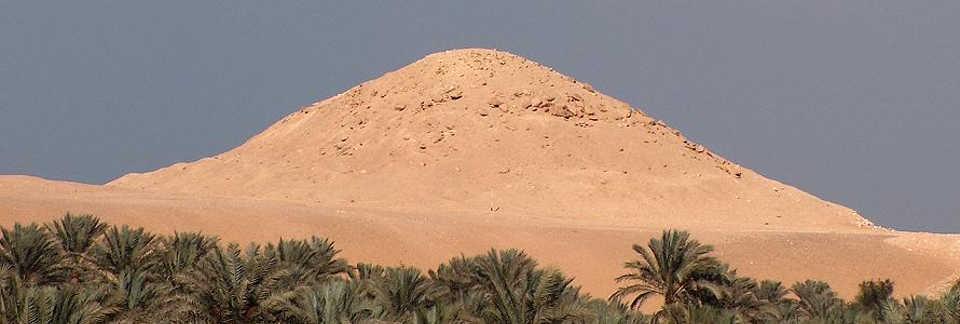
Djedkare Isesi was one of the most important pharaohs of Egypt’s Fifth Dynasty during the Old Kingdom. He ruled Egypt for a long period and introduced several important changes to royal religion, administration, foreign expeditions, and royal architecture.
Djedkare is especially interesting because his reign marked a significant transition between the traditional Fifth Dynasty system and the political and religious developments that would become more visible during the Sixth Dynasty.
Unlike earlier Fifth Dynasty kings, Djedkare did not build a traditional Sun Temple dedicated to Ra. He also chose to build his pyramid at South Saqqara, rather than continuing the concentration of royal pyramids at Abusir.
His reign was long enough to allow Egypt to conduct expeditions to distant regions, reorganize parts of the administration, and maintain a powerful central government.
Although many of his monuments are now damaged, archaeological evidence allows historians to reconstruct a fascinating picture of his reign.
Djedkare's Early Life
Very little is known about Djedkare's childhood.
His parents have not been identified with certainty.
He probably belonged to the royal family or was closely connected to the royal court.
He grew up during the later period of the Fifth Dynasty, when Egypt was still a powerful and wealthy kingdom.
As a member of the elite, Djedkare would have been familiar with royal traditions, religious ceremonies, administration, and the responsibilities of kingship.
The identity of his predecessor, Menkauhor Kaiu, is well established, but the exact family relationship between Menkauhor and Djedkare remains uncertain.
Djedkare Becomes Pharaoh
Djedkare succeeded Menkauhor and became the eighth ruler of the Fifth Dynasty.
His accession appears to have been relatively peaceful.
By this time, Egypt had developed an enormous administrative system.
Royal officials controlled taxation, agriculture, temples, construction, trade, and provincial government.
Djedkare inherited this powerful state and used it to support his long reign.
A Long Reign
Djedkare appears to have ruled for several decades.
The exact length remains debated, but evidence suggests that his reign was among the longest of the Fifth Dynasty.
This long period of stability allowed him to introduce reforms and organize major expeditions.
It also gave Egypt the opportunity to maintain its international connections.
His reign is therefore considered one of the major turning points of the Old Kingdom.
A Change in Solar Religion
One of the most important differences between Djedkare and earlier Fifth Dynasty kings was his approach to solar religion.
The rulers of the Fifth Dynasty had traditionally emphasized the worship of Ra, the sun god.
Several kings constructed large solar temples.
Djedkare, however, did not build a known solar temple.
This does not mean that he abandoned Ra completely.
Instead, it suggests that royal religious ideology was changing.
The king's relationship with the gods became less dependent on a separate solar temple.
This development became increasingly important during the later Old Kingdom.
Djedkare and Osiris
During Djedkare's reign, the importance of Osiris and funerary religion continued to grow.
Osiris was the god of the dead and resurrection.
Egyptian kings were believed to become associated with Osiris after death.
The changing emphasis in royal religion can be seen in Djedkare's funerary complex.
His pyramid was not accompanied by a solar temple in the traditional Fifth Dynasty style.
Instead, his mortuary cult focused strongly on the eternal afterlife of the king.
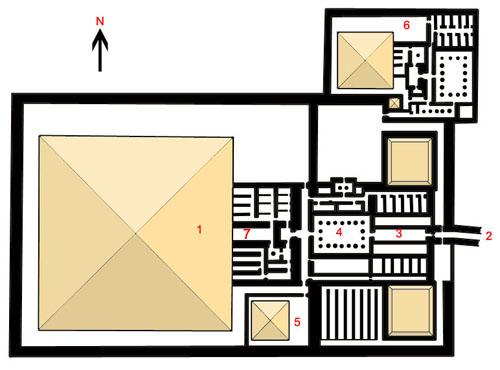
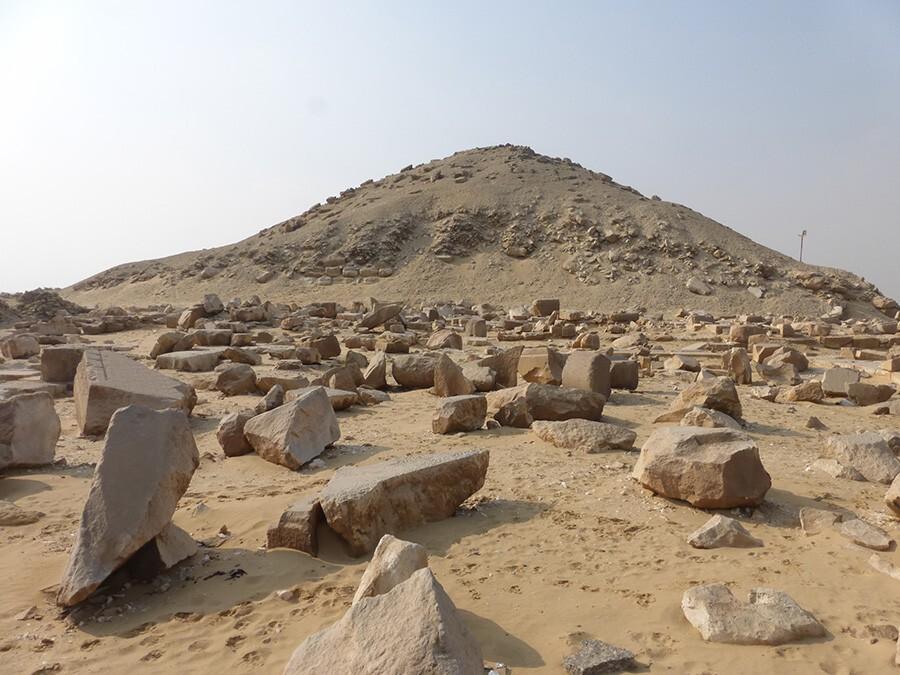
Djedkare's Pyramid
Djedkare built his pyramid at South Saqqara, an important change from the royal cemetery of Abusir.
His pyramid is known as Djedkare's Pyramid and was originally called "Djedkare Isesi is beautiful."
The monument was constructed primarily from limestone.
Like many ancient Egyptian pyramids, much of its outer casing disappeared over time.
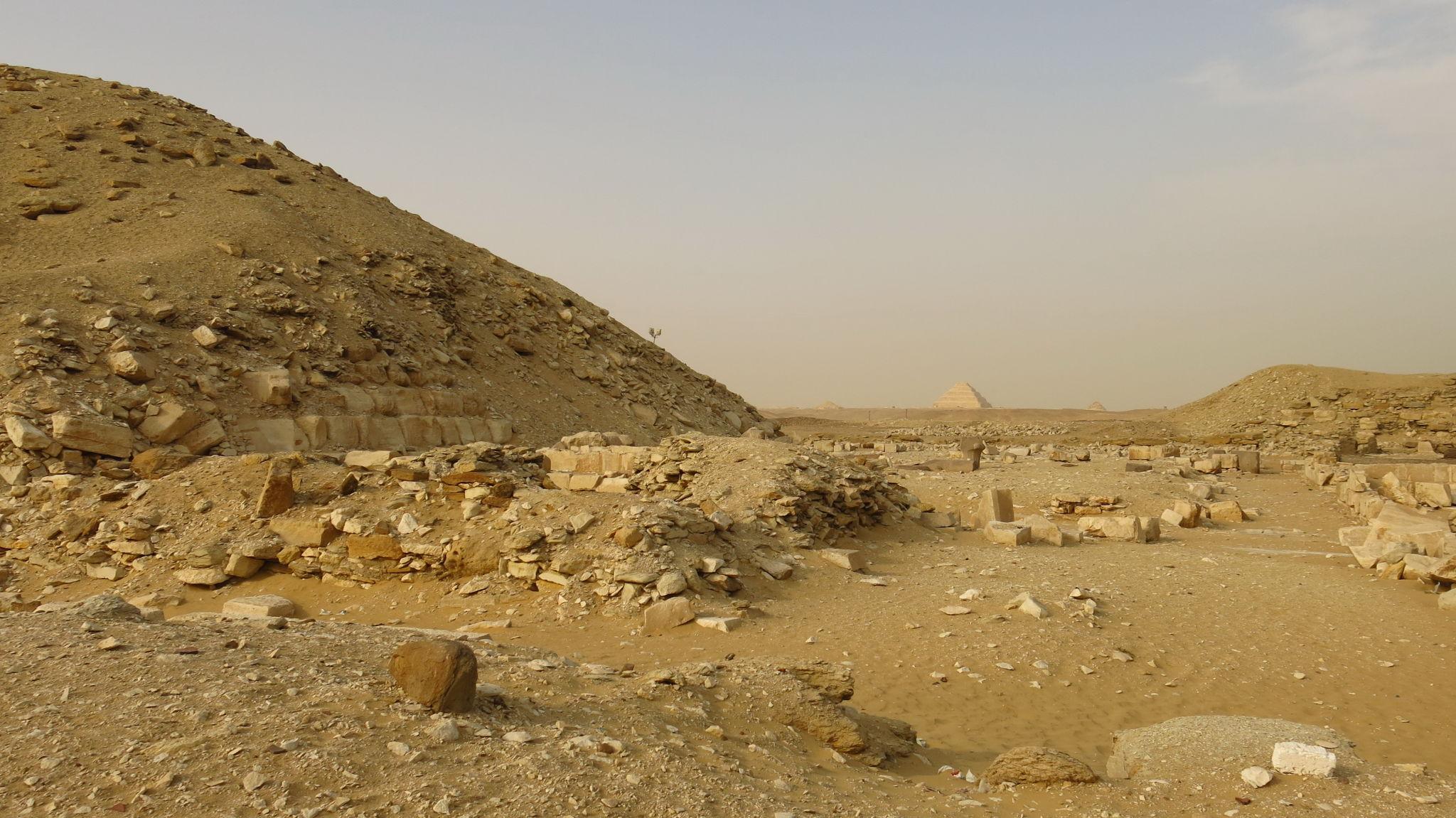
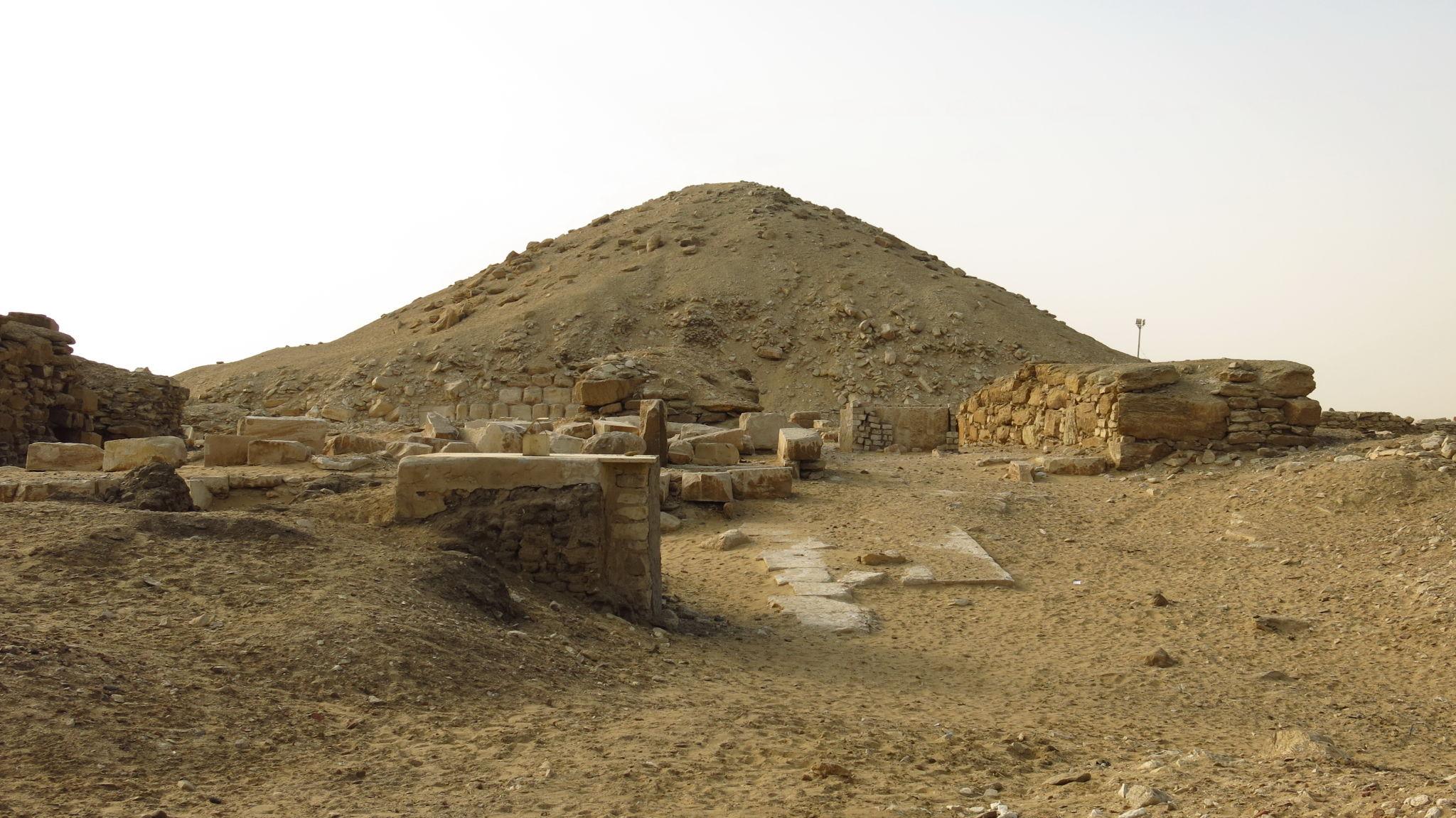
The remaining structure is now heavily ruined, but the pyramid complex remains an important archaeological site.
The Mortuary Temple
Djedkare's pyramid was accompanied by a mortuary temple.
The temple was designed for the king's funerary cult.
Priests brought food, drink, incense, and other offerings.
They also performed rituals intended to maintain Djedkare's eternal existence.
The temple contained courtyards, chambers, offering areas, and religious spaces.
Although much of the complex has been destroyed, archaeological excavations have revealed important details about its design.
The Pyramid Texts
Djedkare's reign is particularly important in the history of Egyptian funerary literature.
The Pyramid Texts became increasingly important during the later Old Kingdom.
These sacred inscriptions were placed inside royal pyramids to help protect the deceased king and guide him through the afterlife.
Djedkare's pyramid itself does not contain the earliest complete examples of Pyramid Texts, but his reign belongs to the period when these funerary traditions were developing toward their later form.
His successor Unas became the first known king to have a pyramid decorated extensively with Pyramid Texts.
Djedkare and Unas
Djedkare was succeeded by Unas, the last ruler of the Fifth Dynasty.
Unas had a relatively small pyramid at Saqqara.
Despite its modest size, Unas's pyramid became famous because of its extensive Pyramid Text inscriptions.
These texts provide some of the earliest surviving religious writings from ancient Egypt.
The transition from Djedkare to Unas therefore connects two important stages in the development of Egyptian funerary religion.
Administrative Reforms
Djedkare is believed to have introduced changes to the Egyptian administration.
The government was becoming more complex, and royal officials were gaining greater responsibilities.
Provincial administration also became increasingly important.
Officials could control estates, collect taxes, supervise agricultural production, and manage local affairs.
These developments would later contribute to the increasing influence of provincial elites during the Sixth Dynasty.
The Growing Importance of Officials
Djedkare's reign provides evidence that officials could achieve significant wealth and influence.
High-ranking officials had large tombs decorated with inscriptions describing their careers.
These autobiographical inscriptions provide historians with valuable information about Egyptian government.
They describe administrative positions, expeditions, military activities, and relationships with the king.
The increasing visibility of these officials suggests that the Egyptian state was becoming more administratively sophisticated.
Agriculture and the Nile
The Nile continued to provide the foundation of Egyptian life.
The annual flood created fertile agricultural land.
Egyptian farmers grew wheat, barley, flax, vegetables, and fruit.
The government collected agricultural taxes and used the resources to support the royal court, temples, officials, and workers.
The prosperity of Egypt depended heavily on the successful management of agriculture.
Djedkare's long reign suggests that this system remained effective.
Trade and Foreign Expeditions
Djedkare's reign was notable for long-distance expeditions.
Egyptian expeditions traveled to regions such as Nubia, Sinai, the Eastern Desert, the Red Sea region, and Punt.
These journeys were organized to obtain valuable resources.
Egypt wanted gold, copper, turquoise, incense, aromatic products, stone, and other materials.
Such expeditions could take months and required careful logistical planning.
Expeditions to Punt
The land of Punt was famous for luxury goods.
Egyptians sought incense, aromatic resins, exotic animals, and other valuable products from the region.
Although the most famous Egyptian expedition to Punt occurred much later during the reign of Hatshepsut, evidence indicates that contact between Egypt and Punt began much earlier.
Djedkare's reign belongs to this early period of Egyptian long-distance trade.
Nubia
Nubia was extremely important to Egypt.
The region was rich in gold and other natural resources.
It also provided access to trade routes connecting Egypt with central and northeastern Africa.
Egyptian officials and expedition leaders traveled southward to obtain resources and maintain Egyptian interests.
Djedkare's reign appears to have maintained these connections successfully.
Sinai and Mining
The Sinai Peninsula was another important destination for Egyptian expeditions.
Egyptians traveled there to obtain turquoise and copper.
Turquoise was used for jewelry and religious objects.
Copper was essential for tools, weapons, and construction equipment.
Mining expeditions were dangerous because of the harsh desert environment.
The Egyptian state therefore had to provide workers with food, water, tools, and security.
Djedkare's Military Activities
Egyptian rulers needed to protect the kingdom's borders and trade routes.
Djedkare's reign appears to have included military activity, particularly in relation to regions south of Egypt.
However, Egypt was not involved in constant large-scale warfare during this period.
Military expeditions were often connected to protecting trade routes and securing access to valuable resources.
Djedkare's Relationship with Maat
The pharaoh's primary ideological responsibility was to maintain maat.
Maat represented truth, justice, balance, order, and harmony.
Djedkare was expected to protect Egypt from chaos and ensure that the gods received proper worship.
The king's role was both political and religious.
Maintaining maat meant keeping the kingdom stable while preserving the relationship between humanity and the divine world.
Egyptian Religion During His Reign
Religion remained central to Egyptian society.
People worshipped many gods, including Ra, Osiris, Horus, Isis, Hathor, Anubis, Ptah, and Thoth.
Different cities had different religious traditions.
Djedkare's reign is particularly important because it reflects a gradual change in the balance between solar worship and funerary religion.
The growing importance of Osiris would become increasingly visible in later Egyptian history.
Egyptian Art Under Djedkare
The art of Djedkare's period continued the traditions of the Old Kingdom.
Statues were designed according to established artistic principles.
The king was represented as youthful, strong, and idealized.
Private officials were sometimes shown in more individualized ways.
Tomb reliefs depicted farming, hunting, fishing, crafts, offerings, and daily activities.
These scenes provide historians with valuable information about ancient Egyptian society.
Life of Ordinary Egyptians
Most Egyptians were farmers.
Their lives were strongly connected to the agricultural cycle.
During the flood season, when fields were underwater, some workers could participate in construction and other state projects.
Craftsmen produced pottery, furniture, jewelry, tools, and weapons.
Fishermen relied on the Nile for food.
Merchants and traders transported goods along the river.
Scribes managed records and government administration.
Djedkare's Officials
Several important officials lived during Djedkare's reign.
One of the most famous was Isesi-ankh, whose name reflects his connection with the king.
Other officials held positions such as vizier, overseer of the treasury, overseer of the royal works, and administrator of agricultural estates.
Their tomb inscriptions help historians understand how the Egyptian government operated.
The Changing Political Structure
Djedkare's reign occurred during a gradual transformation of Egyptian political organization.
The central government remained powerful, but provincial officials were becoming increasingly important.
Local elites controlled estates and gained wealth.
Over time, this would contribute to the decentralization of power that became more obvious toward the end of the Old Kingdom.
Djedkare's reign therefore represents an important stage in this long process.
Djedkare's Legacy
Djedkare left an important legacy.
His reign was long and stable.
He changed the location and style of royal pyramid construction.
He did not build a traditional solar temple.
He supported long-distance expeditions.
He developed the administration.
He strengthened funerary traditions.
His reign also prepared the way for the final rulers of the Fifth Dynasty and the emergence of the Sixth Dynasty.
The Death of Djedkare Isesi
After ruling Egypt for many years, Djedkare eventually died.
The exact cause of his death is unknown.
He was buried in his pyramid at South Saqqara.
His successor, Unas, became the final pharaoh of the Fifth Dynasty.
Unas continued several of Djedkare's traditions while introducing important developments in royal funerary religion.
Djedkare and the End of the Fifth Dynasty
Djedkare's reign helped shape the final phase of the Fifth Dynasty.
Although Egypt remained powerful, the relationship between the king, temples, and provincial officials was changing.
The royal focus was gradually shifting away from the exclusive solar traditions of earlier Fifth Dynasty rulers.
The importance of Osiris and funerary religion was growing.
These changes continued into the Sixth Dynasty.
Why Djedkare Isesi Is Important
Djedkare is important because he was not simply another Old Kingdom king.
His reign represents a major transition in Egyptian history.
He abandoned the tradition of constructing a separate solar temple.
He built his pyramid at South Saqqara.
He supported expeditions to distant regions.
He introduced or encouraged administrative changes.
He ruled long enough to oversee major developments in Egyptian religion and government.
Conclusion
Djedkare Isesi was one of the most influential pharaohs of Egypt's Fifth Dynasty.
His long reign brought stability to Egypt and allowed the kingdom to maintain its wealth, administration, religious institutions, and international expeditions.
One of his most important decisions was abandoning the traditional Fifth Dynasty practice of constructing a dedicated solar temple.
Instead, Djedkare focused his royal building program on his pyramid and mortuary complex at South Saqqara.
His reign also witnessed the growing importance of funerary religion and the traditions that would eventually produce the famous Pyramid Texts of his successor, Unas.
Djedkare's government relied on a sophisticated network of officials who managed agriculture, taxation, temples, trade, and royal estates.
Egyptian expeditions continued toward Nubia, Sinai, the Eastern Desert, and other distant regions in search of gold, turquoise, copper, incense, and other valuable resources.
His reign also reveals the gradual growth of provincial officials and the changing relationship between the central government and local elites.
After his death, Unas became the last ruler of the Fifth Dynasty.
Today, Djedkare Isesi is remembered as a powerful and reforming pharaoh whose reign helped bridge the traditions of the Fifth Dynasty with the political and religious developments of Egypt's later Old Kingdom.
His story is an important chapter in the history of ancient Egypt, showing how royal power, religion, administration, and foreign trade were gradually changing long before the end of the Old Kingdom.