Den was one of the most important rulers of ancient Egypt's First Dynasty. He is generally considered the fifth king of the dynasty and ruled during the Early Dynastic Period, around the beginning of the 3rd millennium BCE.
Den is particularly significant because more evidence survives from his reign than from many of the other early Egyptian kings. Archaeologists have discovered royal inscriptions, ivory labels, stone vessels, seal impressions, and other objects connected with his reign.
His long rule appears to have been a period of political development, military activity, economic growth, and administrative organization.
Den is also famous for being one of the earliest Egyptian kings to be shown wearing the Double Crown, symbolizing authority over both Upper and Lower Egypt.
Who Was Den?
Den was an early Egyptian pharaoh of the First Dynasty.
His royal name is associated with the god Horus, following one of the oldest traditions of Egyptian kingship.
The exact dates of his reign are uncertain, but ancient Egyptian king lists and archaeological evidence suggest that he ruled for a considerable period.
Later historical traditions indicate that Den may have ruled for several decades, making him one of the longer-reigning kings of the First Dynasty.
His reign occurred at a time when Egypt was becoming increasingly centralized.
The early dynastic rulers had inherited a newly unified kingdom and were responsible for maintaining its political stability.
Den appears to have strengthened the institutions established by his predecessors.
Den and the First Dynasty
The First Dynasty began after the formation of a unified Egyptian kingdom.
Kings such as Narmer, Hor-Aha, Djer, and Djet established the foundations of centralized royal government.
Den inherited this political system and developed it further.
The king controlled agricultural resources, royal estates, taxation, trade, military expeditions, and religious institutions.
The Nile was essential to the kingdom.
Its fertile floodplain supported agriculture, while the river provided the main transportation route through Egypt.
The centralized government could collect agricultural products and redistribute them to support the palace, temples, officials, craftsmen, and workers.
Den's reign demonstrates the growing sophistication of this system.
Den's Famous Tomb at Abydos
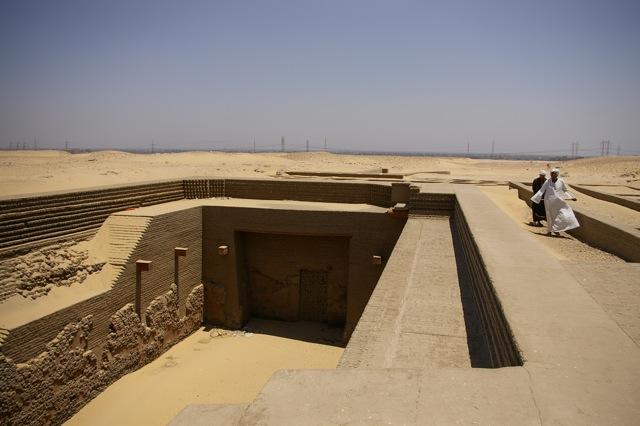
Den was buried at Abydos, in the royal cemetery of Umm el-Qa'ab.
His tomb is one of the most important royal monuments of the First Dynasty.
Unlike the later pyramids, Den's tomb was an underground burial complex constructed with stone and mud brick.
One of its most remarkable features is a stone staircase leading down into the burial chamber.
This staircase represents an important development in royal architecture.
The use of stone in the tomb demonstrates the growing ability of Egyptian architects and craftsmen to work with durable materials.
Den's tomb also provides evidence of the increasing complexity of royal funerary traditions.
Den's Stone-Floored Burial Chamber
One of the most impressive features of Den's tomb is its granite-paved burial chamber.
Granite was not locally available in the Abydos region.
It had to be transported from quarries far to the south, probably in the area of Aswan.
Moving large blocks of granite over such a long distance required considerable organization.
This demonstrates the logistical capabilities of the Egyptian state during the First Dynasty.
The stone floor also shows that royal architecture was becoming increasingly sophisticated.
Centuries later, Egyptian architects would use enormous quantities of stone to construct pyramids and temples.
Den's tomb provides an early example of this growing architectural ambition.
Den and the Double Crown
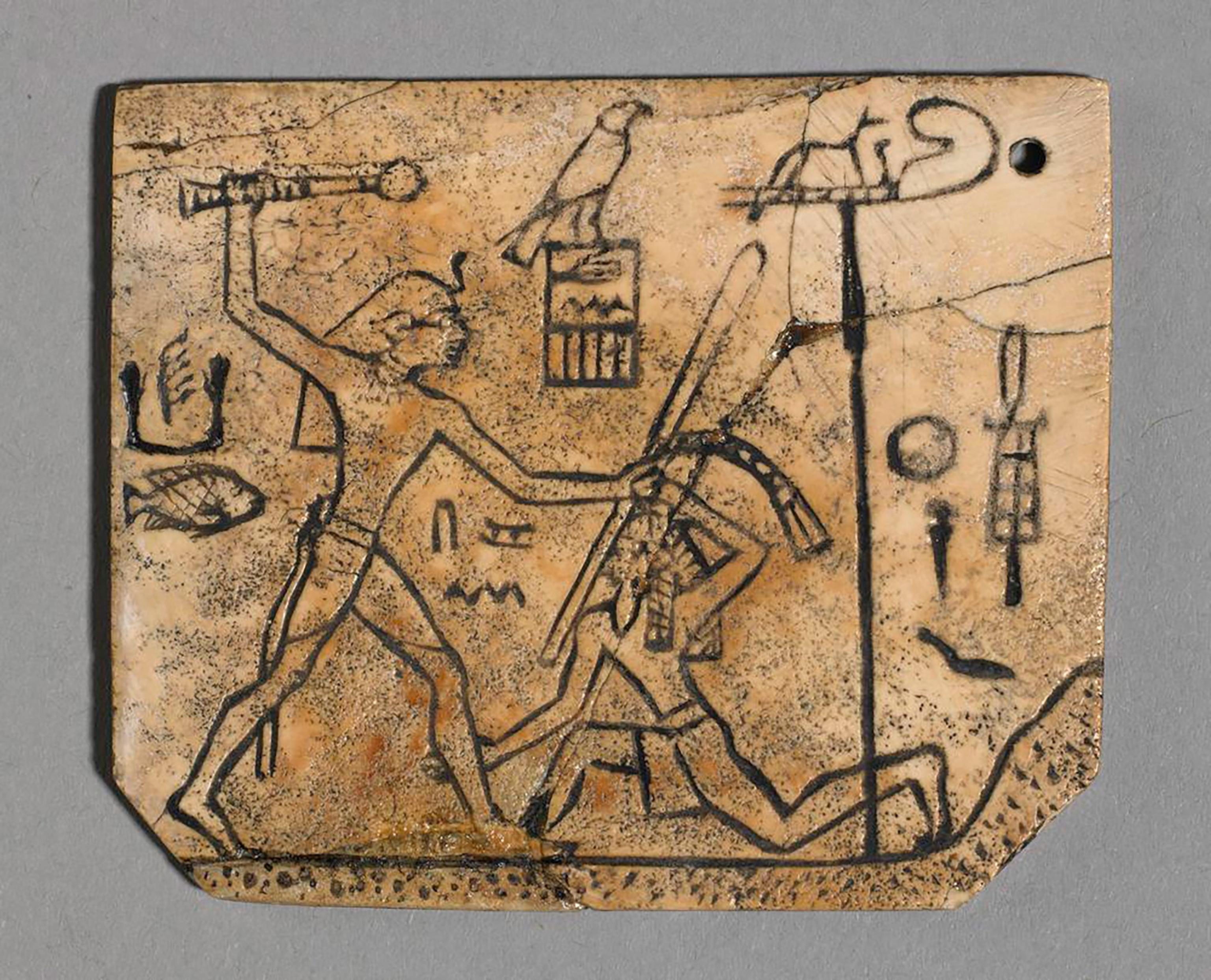
Den is especially famous for being one of the earliest Egyptian kings depicted wearing the Double Crown.
The Double Crown combined the White Crown of Upper Egypt with the Red Crown of Lower Egypt.
It represented the unity of the Egyptian kingdom.
The image of the king wearing the Double Crown communicated his authority over the entire country.
This symbolism became one of the most recognizable features of Egyptian kingship.
Later pharaohs continued to wear the Double Crown in religious and ceremonial scenes.
Den's early representation is therefore extremely important in the history of Egyptian royal imagery.
Den as a Warrior King
Several inscriptions associated with Den appear to record military campaigns.
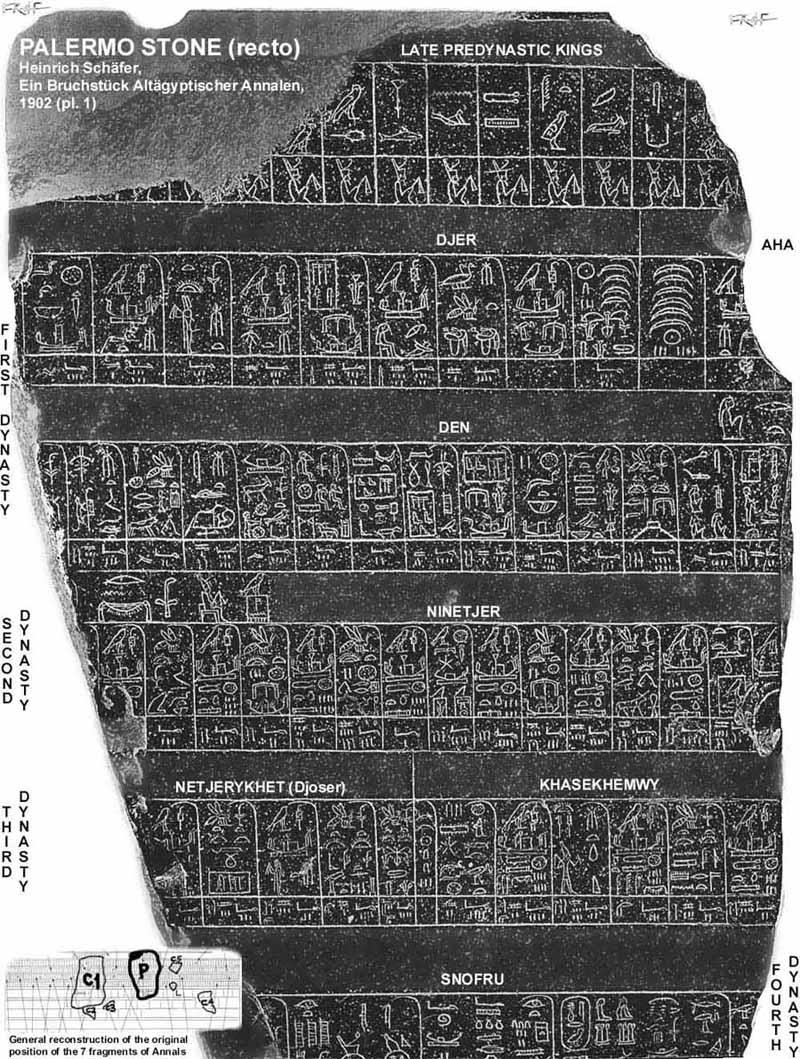
The Palermo Stone, a later historical record, preserves information about early Egyptian kings and mentions military activities during Den's reign.
Den may have conducted campaigns into neighboring regions, particularly areas to the east of Egypt.
These expeditions may have been intended to protect trade routes, secure resources, or suppress opposition.
The early Egyptian monarchy needed to maintain control over the unified kingdom and protect its borders.
Military power was an important part of royal authority.
Den's reign appears to have been a period when Egyptian military organization became more developed.
Campaigns in the Sinai
One of the regions connected with Den's activities was the Sinai Peninsula.
Sinai was rich in valuable resources, especially copper and turquoise.
Egyptian rulers organized expeditions into the region to obtain these materials.
Mining expeditions required workers, administrators, transport, and military protection.
Evidence of Egyptian activity in Sinai demonstrates that the First Dynasty had already developed the ability to organize expeditions outside the Nile Valley.
Den's reign belongs to this early period of Egyptian expansion.
Den and the Palermo Stone
The Palermo Stone is one of the most important sources for early Egyptian history.
It is a fragment of a larger historical inscription that recorded the reigns of early Egyptian kings.
Although the original monument was created centuries after Den's lifetime, it preserves valuable traditions about the First Dynasty.
The record includes information about royal events, religious ceremonies, Nile floods, and military activities.
The Palermo Stone therefore helps historians understand the broader historical context of Den's reign.
However, because it was created later, historians compare its information with contemporary archaeological evidence.
Den and Egyptian Administration
Den's reign appears to have witnessed significant developments in government administration.
The Egyptian state needed officials to manage agriculture, taxation, royal estates, trade, and religious institutions.
Writing played an increasingly important role.
Small labels made of ivory, bone, or wood were used to identify products and record information.
Seal impressions were also used to demonstrate ownership and authority.
These administrative tools helped the royal government control the resources of the kingdom.
Den's reign provides some of the clearest evidence for the growing complexity of early Egyptian administration.
Ivory Labels of Den
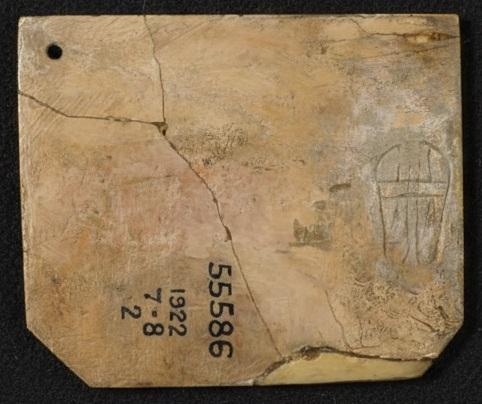
One of the most important types of archaeological evidence from Den's reign is the ivory label.
These small objects contain inscriptions and symbols that can provide information about royal activities.
Some labels may have recorded dates, products, ceremonies, or events.
One famous ivory label depicts Den in a royal scene.
The artwork provides valuable evidence about early Egyptian artistic conventions and royal symbolism.
These tiny objects may seem simple, but they are extremely important historical sources.
They show that writing was already being used for practical administrative purposes during the First Dynasty.
Den's Economic Power
Egypt's economy was based primarily on agriculture.
The annual Nile flood provided fertile soil for farming.
Crops such as wheat and barley supported the population.
The government collected agricultural surplus and redistributed resources.
This system allowed the king to support workers, officials, priests, soldiers, and craftsmen.
Den's reign appears to have benefited from the increasingly organized agricultural economy.
The ability to control resources helped the monarchy organize large construction projects and military expeditions.
Economic organization was therefore one of the foundations of royal power.
Trade with Neighboring Regions
Egypt was connected to neighboring regions through trade and diplomatic contacts.
Resources came from Nubia, Sinai, the Eastern Desert, and the Levant.
Egypt needed materials such as timber, minerals, precious stones, and other valuable goods.
The Nile made transportation within Egypt relatively efficient.
Goods from distant regions could be transported through trade networks and brought to royal centers.
Den's reign belongs to a period when these connections were becoming increasingly important.
The expansion of trade helped increase the wealth and influence of the Egyptian monarchy.
Den and Religion
Religion was at the center of Egyptian royal life.
The pharaoh was considered responsible for maintaining maat, the divine order of the universe.
He was expected to protect Egypt, support the gods, and perform or sponsor religious rituals.
The king's relationship with Horus was particularly important.
The living ruler was associated with Horus, while the deceased king was connected with Osiris.
These beliefs provided the religious foundation for royal burial.
Den's elaborate tomb reflects the importance of the king's eternal existence.
The Royal Afterlife
The Egyptians believed that the king would continue to exist after death.
The tomb therefore had to provide protection and resources for the deceased ruler.
Den's burial complex was carefully designed for this purpose.
The stone staircase led down into the burial chamber.
The use of granite demonstrated the importance of the monument.
Additional rooms and subsidiary burials were connected with the royal complex.
These features show that the Egyptians had developed complex beliefs about the afterlife even before the construction of the great pyramids.
Subsidiary Burials
Like several other First Dynasty royal tombs at Abydos, Den's burial complex was associated with numerous subsidiary graves.
The exact purpose of these burials remains debated.
Some scholars believe that servants or members of the royal household were buried to accompany the king.
Others have suggested that the burials had symbolic or ceremonial purposes.
Whatever their meaning, the graves demonstrate the importance of the king's royal household and afterlife.
Later Egyptian funerary traditions would gradually replace such practices with symbolic representations and funerary equipment.
Den and the Development of Royal Architecture
Den's tomb represents an important step in the evolution of Egyptian royal architecture.
Earlier royal tombs were relatively simple.
By Den's reign, the structures had become larger and more sophisticated.
The use of granite and the construction of a monumental staircase demonstrate growing architectural ambition.
The Egyptians were learning how to transport, cut, and organize large quantities of stone.
This knowledge would become essential for later pyramid construction.
Djoser's Step Pyramid, built several generations later, represented the next major stage.
The pyramids of the Fourth Dynasty would eventually reach unprecedented size.
Den's Long Reign
Den may have enjoyed one of the longer reigns of the First Dynasty.
A long reign would have allowed him to consolidate royal authority and strengthen administrative institutions.
It may also explain why more archaeological evidence survives from his period.
His reign appears to have been a time of political stability and expansion.
The growing complexity of his tomb and administrative records suggests that the monarchy had become stronger compared with the earliest years of the First Dynasty.
Den's Historical Importance
Den is particularly important because more evidence survives from his reign than from many of the other early kings.
His tomb provides information about royal architecture.
His ivory labels provide information about writing and administration.
His military references provide evidence for early Egyptian expansion.
His royal imagery demonstrates the development of pharaonic symbolism.
Together, these sources allow historians to understand the early Egyptian state in greater detail.
Den's Legacy
Den's legacy lies in the development of Egyptian kingship.
He helped strengthen the institutions that allowed the monarchy to control a unified kingdom.
His reign demonstrates that the Egyptian state was already capable of organizing complex economic, military, religious, and architectural activities during the First Dynasty.
The traditions established during his period would continue for thousands of years.
The Double Crown became a permanent symbol of unified Egypt.
The royal tomb became increasingly monumental.
Writing became an essential tool of government.
The pharaoh became the central figure of both political and religious life.
From Den to the Pyramids
The story of Den helps explain how Egypt eventually became capable of building the pyramids.
The earliest dynastic kings established political unity.
They developed administrative systems and organized resources.
They expanded trade and military activities.
They created increasingly elaborate royal tombs.
The next major transformation occurred during the Third Dynasty with Djoser's Step Pyramid at Saqqara.
Later, Sneferu experimented with pyramid construction at Meidum and Dahshur.
Finally, Khufu built the Great Pyramid at Giza.
The pyramids were therefore the result of centuries of development.
Den's reign was an important part of that process.
Conclusion
Den was one of the most powerful and historically important kings of Egypt's First Dynasty.
He ruled during a crucial period when the Egyptian state was becoming increasingly centralized and organized.
His tomb at Abydos is one of the most impressive royal monuments of the First Dynasty, especially because of its stone staircase and granite-paved burial chamber.
His ivory labels and other inscriptions provide valuable evidence about early Egyptian writing and administration.
His military activities demonstrate the growing ability of the Egyptian monarchy to organize expeditions beyond the Nile Valley.
His representation wearing the Double Crown is especially important because it symbolizes the unity of Upper and Lower Egypt.
Den's reign shows that the Egyptian state had already developed sophisticated political, economic, religious, and architectural traditions only a few generations after the unification of the country.
Although he lived thousands of years before the pyramids of Giza, the achievements of his reign helped establish the foundations upon which later Egyptian civilization was built.
The royal traditions, administrative systems, religious beliefs, and architectural techniques developed during the First Dynasty would continue to evolve throughout Egyptian history.
Den was therefore not simply an early pharaoh; he was one of the rulers who helped transform the young Egyptian kingdom into a strong and enduring civilization.