Nyuserre Ini, also known as Niuserre or Nyuserra, was one of the most important rulers of Egypt's Fifth Dynasty during the Old Kingdom. He ruled Egypt during a period of political development, religious change, and impressive architectural achievement.
Nyuserre is particularly famous for his long reign, his pyramid complex at Abusir, and his magnificent Sun Temple at Abu Gorab. Unlike some of his immediate predecessors, whose reigns were very short, Nyuserre ruled long enough to complete major royal building projects.
He was also closely connected to the royal family of Neferirkare Kakai and Neferefre. His rise to the throne helped stabilize the Fifth Dynasty after a complicated period of succession.
Nyuserre's Early Life
Very little is known about Nyuserre's childhood.
He was born into the royal family of the Fifth Dynasty, probably during the reign of his father, Neferirkare Kakai, although his exact parentage has been debated by Egyptologists.
His mother was most likely Khentkaus II, an influential royal woman whose funerary complex was also built at Abusir.
Nyuserre grew up in the royal environment of ancient Egypt, surrounded by priests, officials, scribes, craftsmen, and members of the royal court.
As a prince, he would have been educated in royal traditions, religious ceremonies, administration, and the responsibilities of kingship.
The Royal Family of Nyuserre
Nyuserre belonged to a remarkable royal family.
His father was Neferirkare Kakai, one of the major rulers of the Fifth Dynasty.
His mother is generally identified as Khentkaus II.
His brother was Neferefre, who ruled Egypt briefly before his death.
Nyuserre eventually succeeded Neferefre and became one of the longest-reigning kings of this part of the Fifth Dynasty.
His rise to power was especially important because the royal succession had become uncertain.
Nyuserre Becomes Pharaoh
Nyuserre became king after the short reign of Neferefre.
The exact circumstances surrounding his accession remain uncertain.
Another ruler, Shepseskare, may have ruled between Neferirkare and Neferefre or during the transition between these kings.
The chronology remains debated.
However, Nyuserre eventually secured the throne and established a stable reign.
His reign lasted considerably longer than those of Neferefre and Shepseskare, allowing him to complete major projects and strengthen the royal administration.
A Long and Successful Reign
One of the most important characteristics of Nyuserre's rule was its length.
Ancient sources and archaeological evidence indicate that he ruled for several decades.
His long reign gave him enough time to construct temples, complete unfinished royal projects, establish religious institutions, and develop his own pyramid complex.
This stability helped preserve the Fifth Dynasty.
Nyuserre's monuments demonstrate that Egypt remained prosperous and capable of organizing large-scale construction projects.
Nyuserre's Pyramid at Abusir
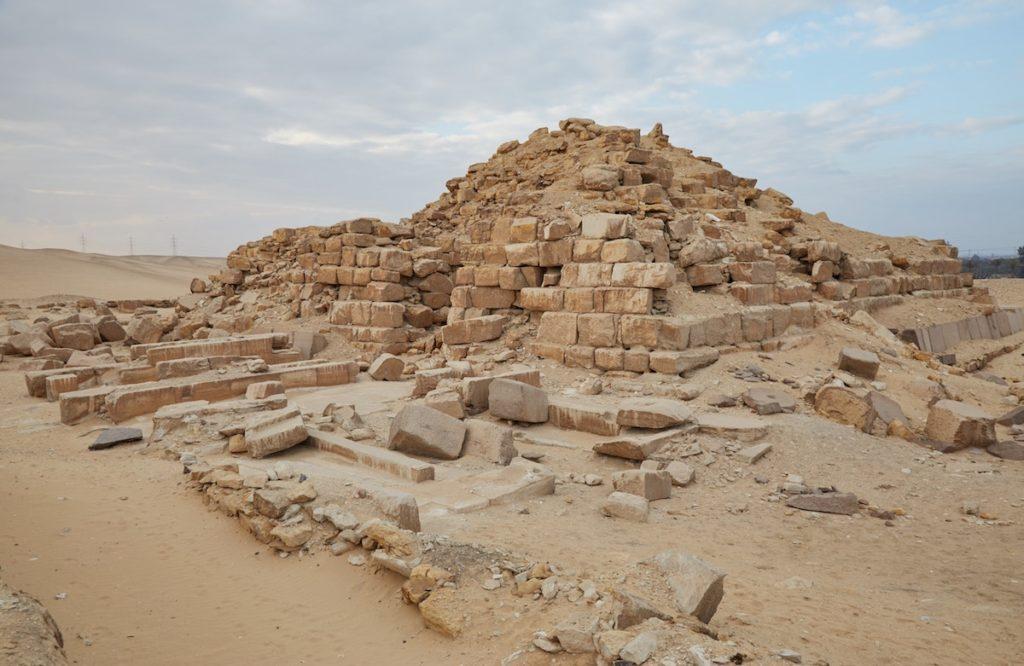
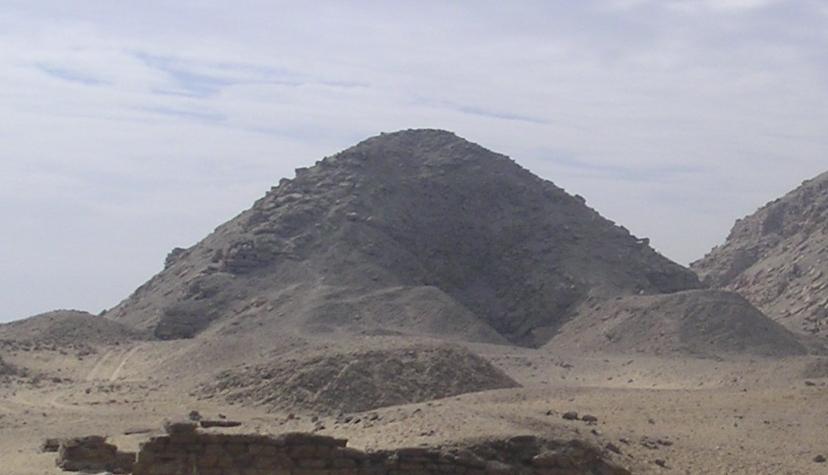
Nyuserre built his pyramid complex at Abusir, one of the most important royal cemeteries of the Fifth Dynasty.
His pyramid was constructed near the monuments of earlier kings.
The pyramid was originally much larger and more impressive than what remains today.
Like many Egyptian pyramids, it suffered from stone removal and natural deterioration over thousands of years.
Nyuserre's Mortuary Temple
Nyuserre constructed a large mortuary temple beside his pyramid.
The temple was used for the religious rituals associated with the king after death.
Priests brought offerings and performed ceremonies designed to maintain Nyuserre's eternal existence.
The complex contained courtyards, chambers, columns, offering areas, and decorated walls.
Some of the surviving reliefs provide valuable information about Egyptian religious beliefs and royal ideology.
The Sun Temple of Nyuserre
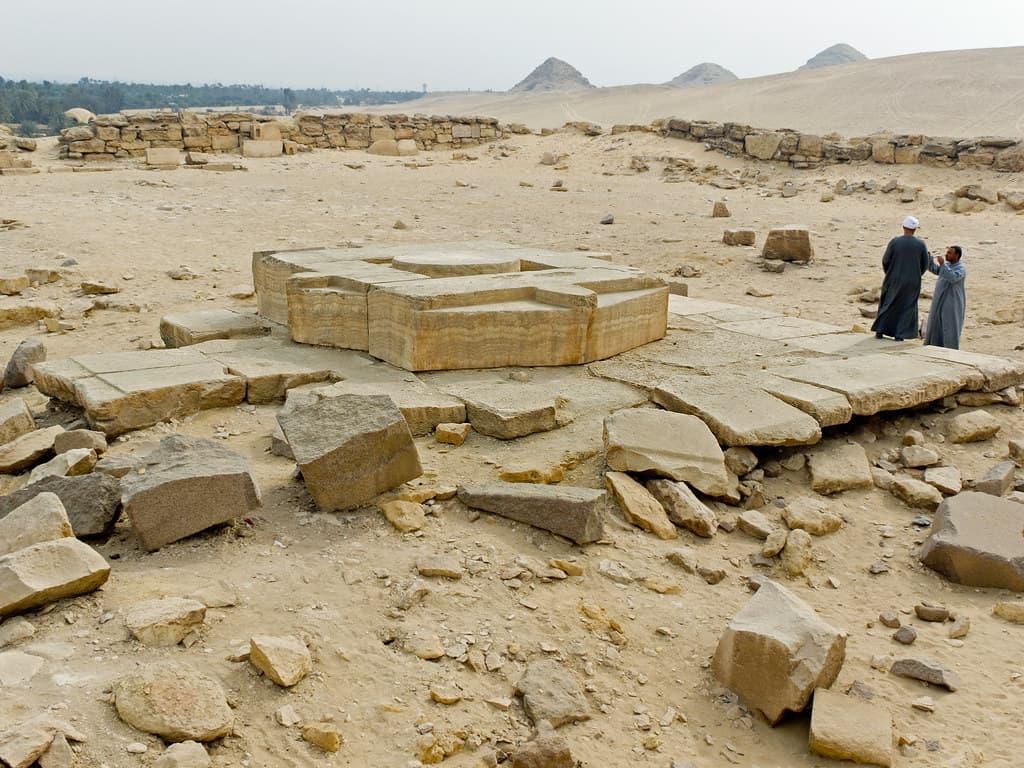
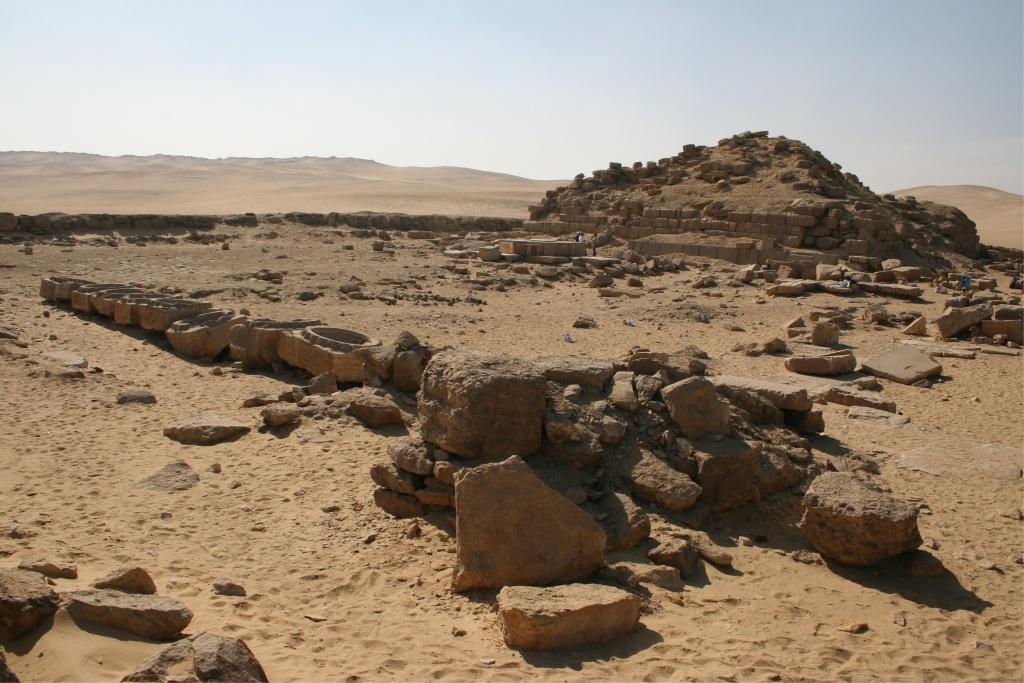
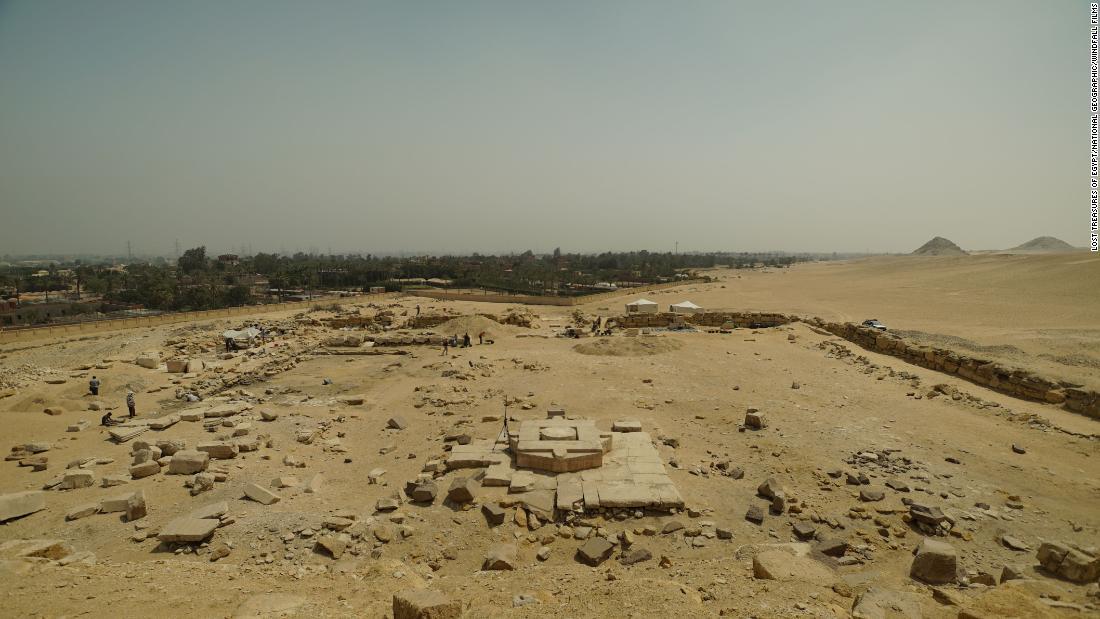
Perhaps Nyuserre's most famous monument is his Sun Temple at Abu Gorab.
The temple was dedicated to the sun god Ra.
It was built west of modern Cairo, near the royal cemetery of Abusir.
The temple demonstrates the importance of solar religion during the Fifth Dynasty.
Its most famous feature was a large stone obelisk-like structure representing the sun.
The temple also contained an enormous altar where offerings could be made to Ra.
The Worship of Ra
Ra was one of the most powerful gods in ancient Egypt.
He represented the sun, creation, life, and kingship.
During the Fifth Dynasty, the worship of Ra became especially important to the royal ideology.
Kings presented themselves as closely connected with the sun god.
Nyuserre continued this tradition through his magnificent solar temple.
The temple provided a place where priests could worship Ra and perform rituals on behalf of the king.
The Sun Temple's Importance
Nyuserre's Sun Temple is important because it provides rare evidence about Fifth Dynasty religious architecture.
Unlike a pyramid, which was primarily associated with the king's burial, a solar temple focused on the worship of the sun god.
The complex included open spaces that allowed sunlight to illuminate the sacred area.
The enormous stone altar was used for offerings.
The architecture reflected the importance of the sun and the eternal cycle of life.
Nyuserre and the Afterlife
Ancient Egyptians believed that death was not the end of existence.
The deceased could live forever in the afterlife if the proper rituals were performed.
The pharaoh was believed to have a special divine destiny.
Nyuserre's pyramid and mortuary temple were therefore not simply monuments.
They were part of a religious system designed to guarantee his eternal existence.
Priests continued performing rituals for the deceased king long after his physical death.
Nyuserre and Osiris
The worship of Osiris became increasingly important during the Old Kingdom.
Osiris was associated with death, resurrection, and eternal life.
Egyptian kings were connected with both the solar cycle of Ra and the funerary traditions associated with Osiris.
Nyuserre's funerary complex reflects this combination of religious beliefs.
The king was expected to become an eternal ruler in the afterlife.
Nyuserre and Maat
One of the central responsibilities of the Egyptian pharaoh was maintaining maat.
Maat represented truth, justice, balance, harmony, and cosmic order.
The king was believed to protect Egypt from chaos.
This religious idea was also political.
A successful pharaoh was expected to maintain peace, support temples, protect trade routes, and ensure the prosperity of the kingdom.
Nyuserre's long reign suggests that his administration was able to preserve a relatively stable state.
Nyuserre's Administration
Nyuserre ruled over a highly organized government.
The administration included viziers, scribes, priests, treasury officials, estate managers, military commanders, and regional administrators.
These officials controlled taxation, agriculture, construction, temples, and royal estates.
The king depended on this bureaucracy to manage the enormous resources required for royal monuments.
The Growth of Temple Institutions
During the Fifth Dynasty, temples became increasingly important economic institutions.
They owned land, livestock, workshops, and storage facilities.
Priests and administrators managed these resources.
Nyuserre's temples required large numbers of workers and officials.
The temple economy helped support religious activities while also contributing to the wider Egyptian economy.
Agriculture and the Nile
The Nile remained the foundation of Egyptian civilization.
The annual flood deposited fertile soil along the riverbanks.
Farmers grew wheat, barley, flax, vegetables, and fruit.
Agricultural production supported the population and provided food for workers involved in large construction projects.
The government collected taxes in the form of agricultural products and redistributed them through royal and temple institutions.
Trade During Nyuserre's Reign
Egypt maintained extensive trade networks during the Fifth Dynasty.
Expeditions traveled to areas including Nubia, Sinai, the Eastern Desert, and the Red Sea.
Egyptians searched for gold, copper, turquoise, stone, incense, and other valuable materials.
These resources were essential for temples, palaces, statues, jewelry, weapons, and religious objects.
Nyuserre's long reign allowed the Egyptian state to maintain these networks.
Nubia and Foreign Relations
Nubia was strategically important to Egypt.
It provided gold and access to regions farther south.
Egyptian expeditions traveled into Nubia for trade and resource collection.
The relationship between Egypt and Nubia was complex, involving trade, diplomacy, and sometimes military pressure.
There is no evidence that Nyuserre faced a major foreign invasion that threatened Egypt itself.
His reign appears to have been relatively stable.
Sinai and Mining Expeditions
The Sinai Peninsula was another important source of resources.
Egyptian expeditions traveled there to obtain turquoise and copper.
These materials were valuable for jewelry, tools, weapons, and religious objects.
Mining expeditions required organization and protection.
Officials were responsible for supplying workers with food, water, tools, and transportation.
The success of these expeditions demonstrated the strength of Egypt's administration.
Nyuserre's Royal Art
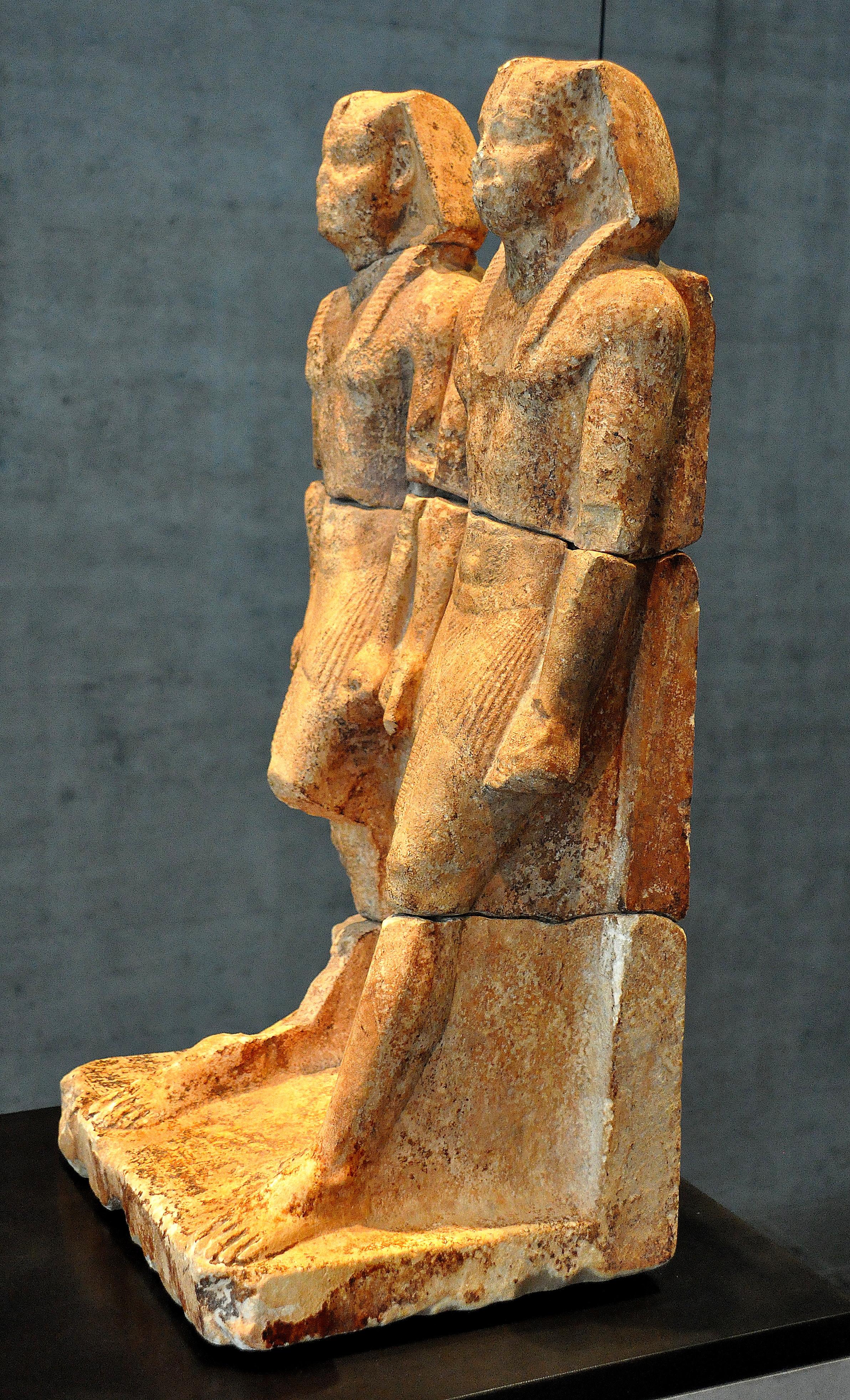
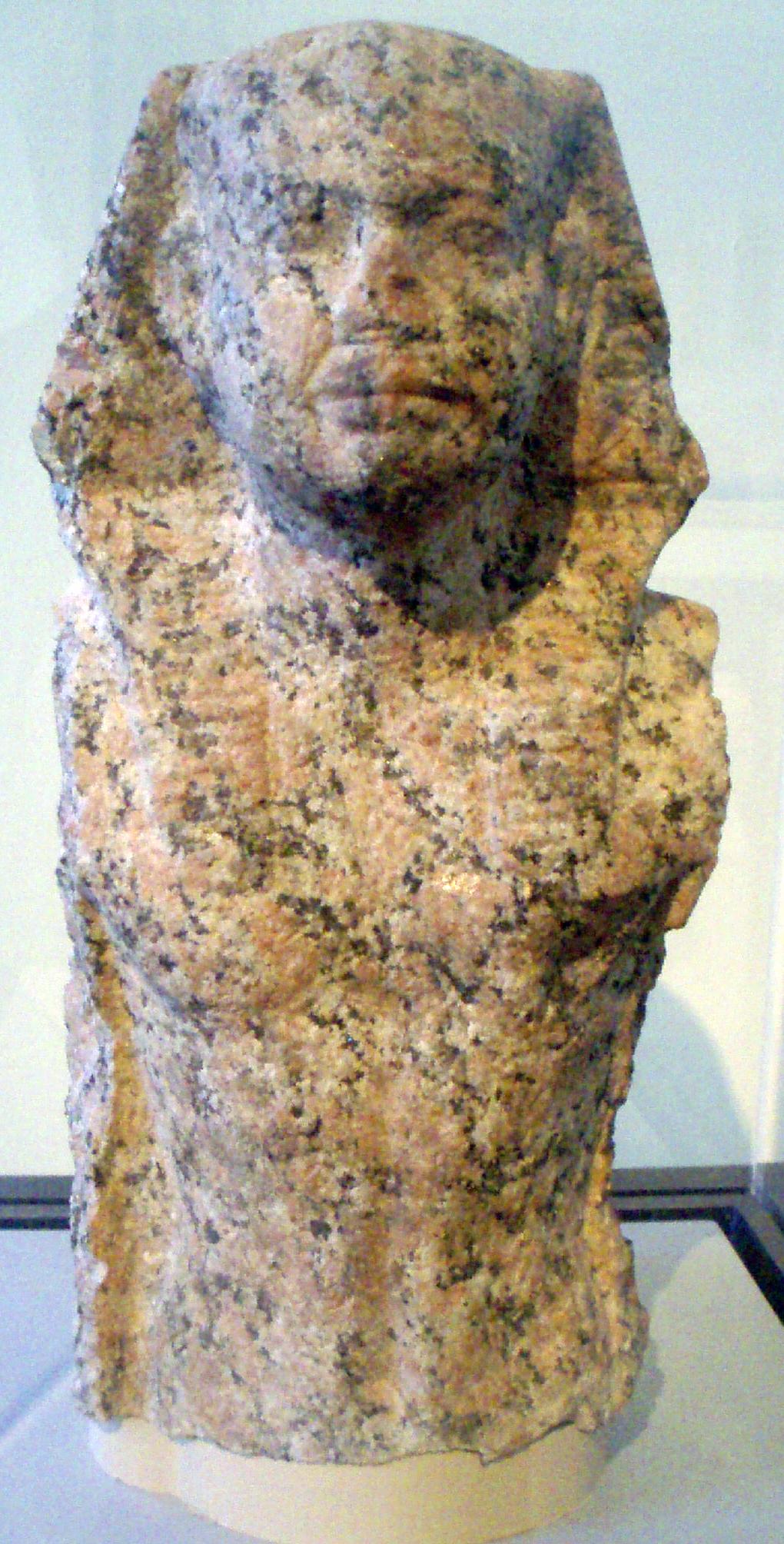
Nyuserre's reign produced some excellent examples of Old Kingdom art.
Egyptian artists created statues, reliefs, hieroglyphic inscriptions, and decorative objects.
Royal art followed traditional principles.
The king was normally represented as youthful, powerful, and idealized.
This style was not necessarily intended to show his exact physical appearance.
Instead, it communicated the eternal strength of kingship.
Reliefs from Nyuserre's Monuments
Reliefs from Nyuserre's temples provide information about ancient Egyptian life.
They show religious ceremonies, royal processions, animals, plants, boats, agricultural activities, offerings, and foreign lands.
These scenes were not simply decoration.
They were part of the religious function of the temple.
Images were believed to have a powerful connection with the eternal world.
Nyuserre's Family and Queens
Nyuserre had several members of the royal family associated with his court.
His queen is traditionally identified as Reputneb, although the evidence for the family structure remains incomplete.
Royal women played important roles in the palace and religious institutions.
Queens could be connected to major temples and participate in royal rituals.
Daily Life Under Nyuserre
Most Egyptians lived as farmers, craftsmen, fishermen, laborers, merchants, or administrators.
Farmers worked according to the agricultural cycle.
During periods when farming activity was limited, some workers could participate in state construction projects.
Craftsmen produced pottery, tools, furniture, jewelry, statues, and building materials.
Scribes handled administration and record keeping.
The Nile connected towns, villages, temples, and royal estates.
Egyptian Religion During His Reign
Religion was deeply connected with everyday life.
People worshipped many gods, including Ra, Osiris, Isis, Horus, Anubis, Hathor, Ptah, and Thoth.
Different regions had their own religious traditions.
The pharaoh served as the highest religious authority.
He was responsible for maintaining the relationship between Egypt and the gods.
Nyuserre's Building Projects
Nyuserre is especially remembered for his building activities.
He worked on his own pyramid complex but also completed or expanded projects connected with earlier kings.
His long reign allowed him to finish monuments that had remained incomplete after the deaths of his predecessors.
This was particularly important for the royal family of Abusir.
Completing His Brother's Legacy
Neferefre died before completing his pyramid complex.
Nyuserre appears to have played an important role in completing parts of the unfinished royal projects.
This was not only an act of family loyalty.
It also had religious significance.
The Egyptian king was expected to ensure that deceased members of the royal family received proper funerary rituals.
Completing these monuments helped preserve the royal cult.
The Importance of Abusir
Abusir became one of the most important royal cemeteries of the Fifth Dynasty.
The area contains the monuments of several kings and queens.
Among them are the pyramids of Sahure, Neferirkare Kakai, Neferefre, and Nyuserre Ini.
The site provides an extraordinary picture of Fifth Dynasty architecture and royal religion.
Nyuserre's monuments are among the most important remains at the site.
Nyuserre's Death
After a long reign, Nyuserre eventually died.
The exact circumstances of his death are unknown.
He was buried in his pyramid complex at Abusir.
His mortuary cult continued after his death, with priests responsible for offerings and rituals.
His successors continued the Fifth Dynasty, although Egypt gradually entered a new phase of political development.
Nyuserre's Historical Legacy
Nyuserre left a much stronger archaeological record than several of his immediate predecessors.
His pyramid complex survived in ruins.
His Sun Temple at Abu Gorab provides valuable evidence of Fifth Dynasty solar worship.
His reliefs and architectural remains reveal important details about royal religion, administration, and artistic traditions.
His long reign also helped stabilize the royal succession.
Why Nyuserre Ini Is Important
Nyuserre is important because he represents one of the most successful rulers of the Fifth Dynasty.
He inherited a complicated royal situation but managed to establish a long and productive reign.
He completed major architectural projects.
He strengthened the royal cult.
He maintained Egypt's religious and administrative traditions.
His monuments continue to provide historians with valuable information about Old Kingdom civilization.
Conclusion
Nyuserre Ini was one of the most important pharaohs of Egypt's Fifth Dynasty.
He inherited the throne after a period of uncertain succession and short-lived rulers.
Unlike Neferefre and Shepseskare, Nyuserre ruled for many years, giving him enough time to stabilize the kingdom and complete important royal projects.
His pyramid complex at Abusir remains an important monument of the Old Kingdom.
His Sun Temple at Abu Gorab is even more significant because it provides rare evidence of Fifth Dynasty solar religion and the worship of Ra.
Nyuserre also continued the funerary traditions of his royal family and helped preserve the monuments of earlier rulers.
His reign was supported by a powerful administrative system based on agriculture, taxation, temples, trade, and royal estates.
Egyptian expeditions continued to Nubia, Sinai, and the Eastern Desert, bringing valuable resources into the kingdom.
Today, Nyuserre Ini is remembered as a powerful and productive ruler whose monuments provide a fascinating window into the civilization of ancient Egypt.
His pyramid, temples, statues, and reliefs continue to tell the story of a pharaoh who helped preserve the strength of the Fifth Dynasty and left one of the most remarkable architectural legacies of Egypt's Old Kingdom.