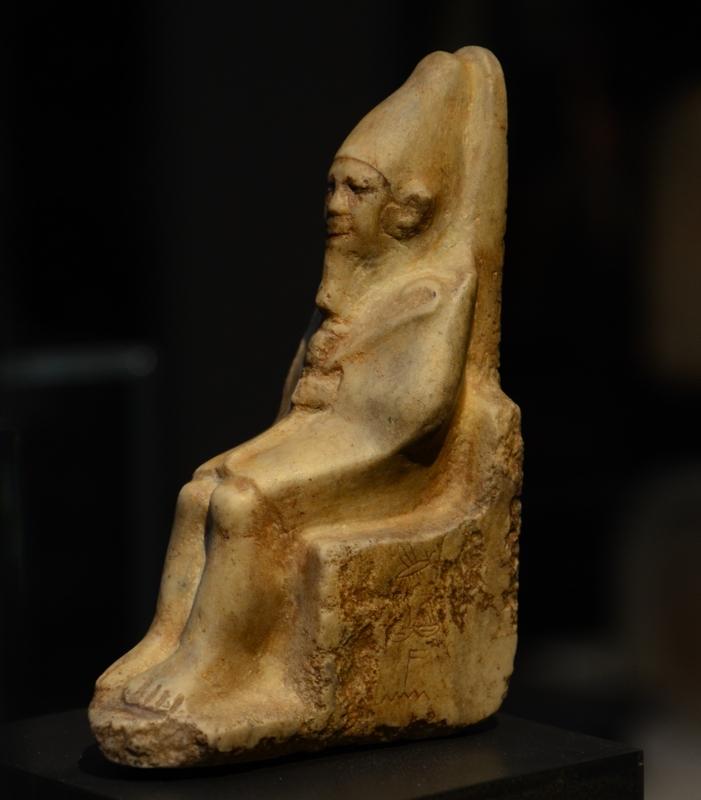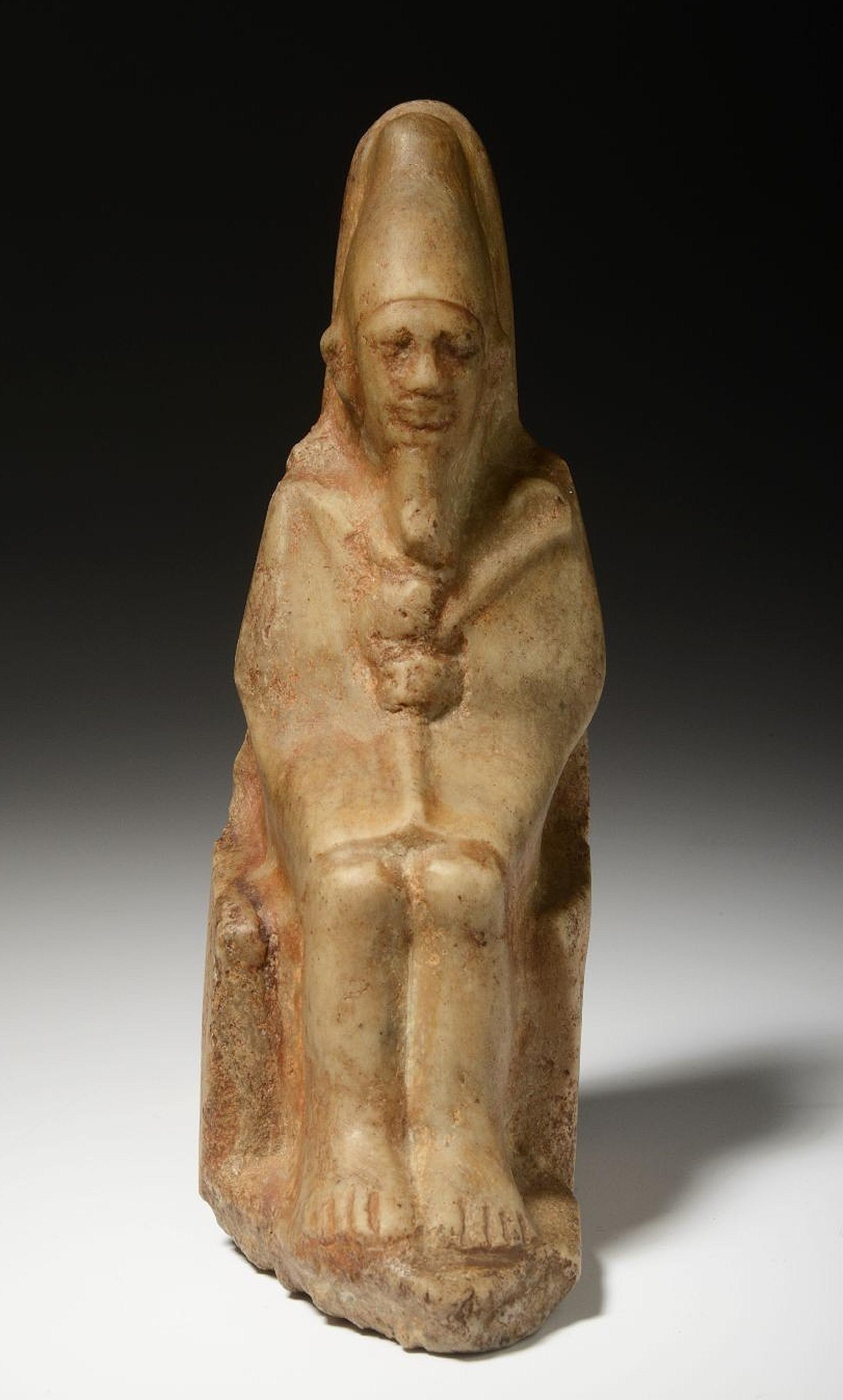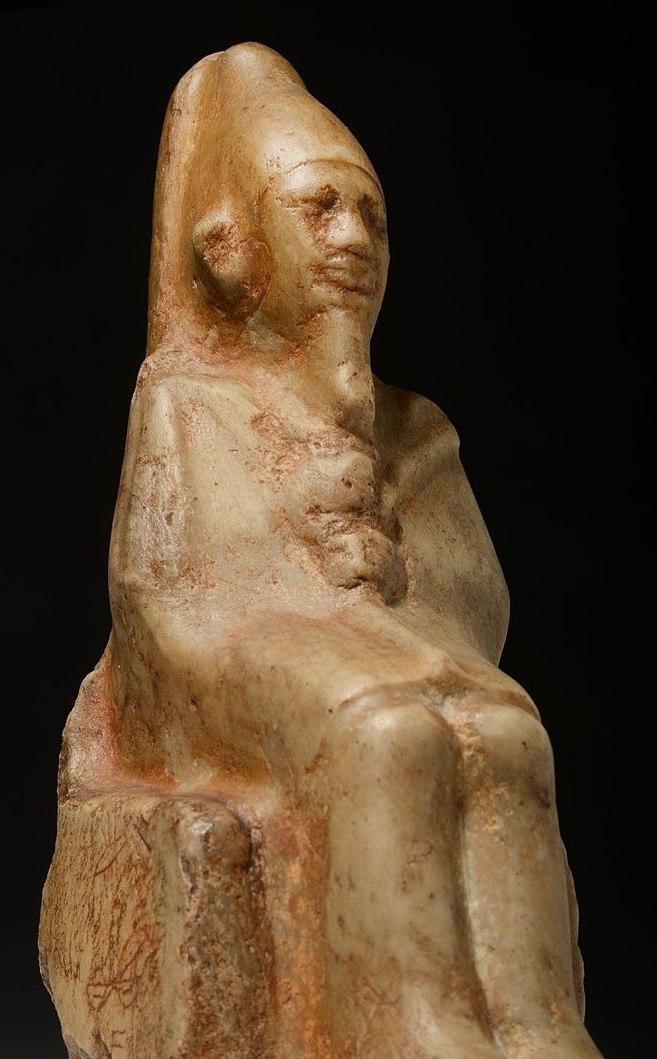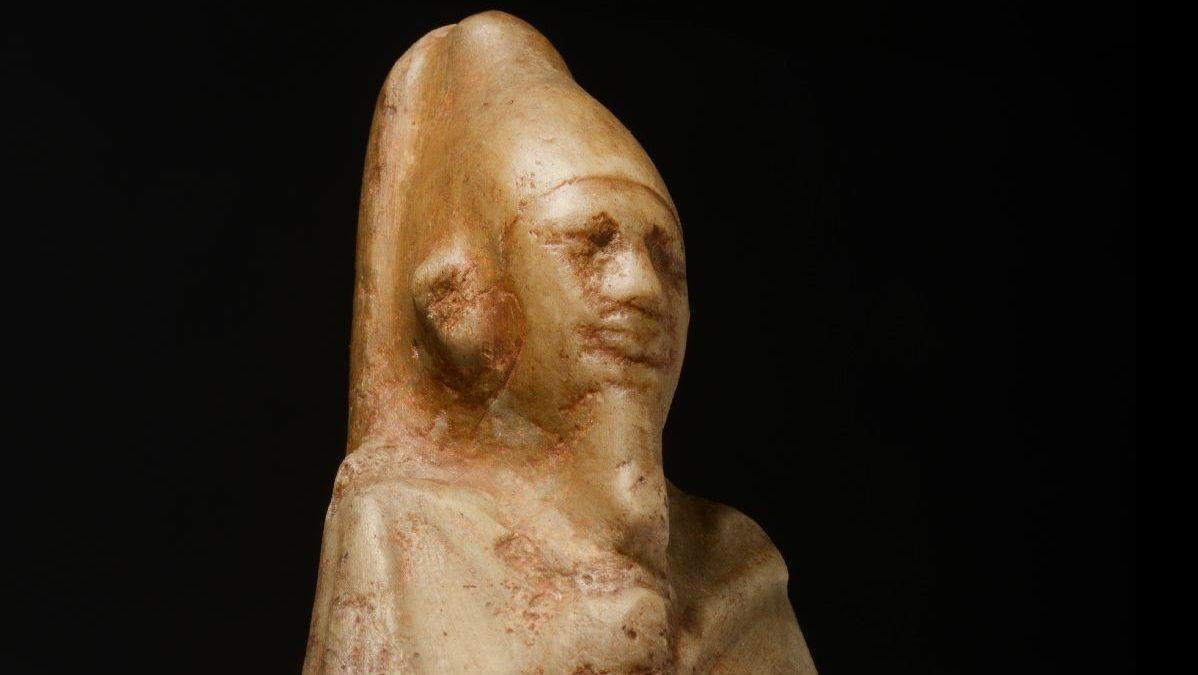
Nynetjer, also spelled Ninetjer or Nynetjeru, was an important ruler of ancient Egypt and is generally considered the third king of Egypt’s Second Dynasty. He ruled during the Early Dynastic Period, probably in the early 3rd millennium BCE.
Nynetjer is one of the better-documented rulers of the Second Dynasty. Unlike some of his predecessors, several inscriptions and royal objects connected with his reign have survived. These sources provide valuable information about early Egyptian administration, religious ceremonies, royal authority, and the development of the Egyptian state.
His reign is also interesting because later historical records suggest that Egypt may have experienced administrative or political changes toward the end of his rule.
Who Was Nynetjer?
Nynetjer's name is generally interpreted as meaning “He Who Belongs to the God” or “The Divine One Belongs.” The exact translation of the name remains debated because the earliest Egyptian writing system was highly symbolic.
Like other early Egyptian kings, Nynetjer used a Horus name displayed inside a serekh.
The serekh represented the royal palace facade and was traditionally topped by the falcon of Horus.
This symbol connected the king with Horus and communicated his divine authority.
Nynetjer inherited this royal tradition from the rulers of the First Dynasty and continued it during the Second Dynasty.
Nynetjer and the Second Dynasty
The Second Dynasty began with Hotepsekhemwy, followed by Raneb, and then Nynetjer.
The dynasty continued the political and religious institutions developed during the First Dynasty.
The Egyptian kingdom was already centralized.
The pharaoh controlled agricultural resources, royal estates, trade, religious institutions, and government officials.
The Nile River connected Upper and Lower Egypt and provided the primary transportation route.
Nynetjer inherited this established political structure.
His reign appears to have been an important period in the continued development of the Egyptian state.
The Turin and Later King Lists
Nynetjer is particularly important because his name appears in later Egyptian king lists.
The Abydos King List, Saqqara King List, and Turin Royal Canon were compiled much later than his lifetime.
These records help historians reconstruct the sequence of Egyptian rulers.
Nynetjer is generally placed as the third king of the Second Dynasty.
However, the exact length of his reign and the precise chronology remain subjects of scholarly debate.
Some ancient records suggest that he ruled for a long time.
Other interpretations produce shorter dates.
The surviving archaeological evidence is therefore compared with later historical traditions.
The Palermo Stone
One of the most important sources for Nynetjer's reign is the Palermo Stone and related fragments.
The Palermo Stone is part of a larger historical inscription that recorded events from the reigns of early Egyptian kings.
Although the surviving stone was created centuries after Nynetjer's lifetime, it preserves information about earlier rulers.
The record includes royal ceremonies, religious events, and other activities.
These entries provide historians with valuable information about the organization of the early Egyptian monarchy.
Royal Ceremonies
Nynetjer's reign appears to have included several important royal ceremonies.
Religious festivals were essential to Egyptian kingship.
The pharaoh was expected to maintain the relationship between the human world and the gods.
Ceremonies could reinforce royal legitimacy and demonstrate the king's power.
The ancient records associated with Nynetjer mention religious and royal events.
These references show that ceremonial activity was already an important part of government.
The pharaoh's authority was expressed not only through administration but also through ritual.
The Sed Festival
The Sed Festival was one of the most important royal ceremonies in ancient Egypt.
Its purpose was to renew the king's strength and legitimacy.
In later periods, the festival was traditionally celebrated after thirty years of rule.
It could then be repeated at intervals.
The exact form of the festival during Nynetjer's reign is not completely understood.
However, early royal records suggest that traditions of royal renewal were already developing.
These ceremonies reinforced the idea that the king possessed the strength necessary to continue ruling Egypt.
Nynetjer and the Egyptian State
Nynetjer ruled at a time when the Egyptian state was becoming increasingly sophisticated.
The government needed officials to organize agriculture, taxation, trade, construction, and religious institutions.
The king stood at the top of this hierarchy.
Royal estates provided food and materials.
Officials supervised workers and managed resources.
Seal impressions helped identify goods and administrative authorities.
Writing was becoming an essential tool of government.
Nynetjer's reign provides evidence of this increasingly organized administration.
The Egyptian Economy
The economy of Nynetjer's Egypt depended primarily on agriculture.
The annual Nile flood created fertile land along the river.
Farmers cultivated wheat, barley, flax, vegetables, and other crops.
Agricultural production supported the population and generated a surplus.
The central administration collected part of this surplus.
Food and materials were then distributed to the palace, officials, craftsmen, and religious institutions.
This system allowed the Egyptian state to support a large centralized government.
Trade and Resources
Egypt did not possess all the resources required by its growing society.
The government therefore organized trade and expeditions.
Copper and turquoise were obtained from the Sinai Peninsula.
Stone and minerals came from the Eastern Desert.
Nubia provided access to valuable resources and southern trade routes.
Egypt also maintained contacts with regions of the eastern Mediterranean.
These connections allowed the Egyptian state to acquire materials for tools, weapons, jewelry, and monuments.
Nynetjer's reign belongs to this period of expanding economic connections.
Nynetjer and Writing
Writing was becoming increasingly important during Nynetjer's reign.
Hieroglyphs were used to record royal names, titles, administrative information, and religious activities.
Stone vessels and other objects sometimes carried royal inscriptions.
Seal impressions were also used to identify administrative institutions.
Although early Egyptian writing was still relatively short and symbolic, it was already powerful enough to support a centralized government.
Over the following centuries, Egyptian writing would develop into a sophisticated system capable of recording complex religious and literary works.
Stone Vessels
One of the most common types of archaeological evidence from early Egyptian royal reigns is the inscribed stone vessel.
Stone vessels could be used for religious ceremonies, storage, or elite burials.
Some were inscribed with royal names.
These objects provide evidence about the distribution of royal authority.
The presence of Nynetjer's name on such objects shows that his administration controlled valuable materials and ceremonial goods.
Stone vessels were also important symbols of royal wealth and craftsmanship.
Nynetjer and Memphis
Memphis was one of the most important cities in ancient Egypt.
Its location allowed the king to control the Nile Valley and Delta.
The city became an important administrative and religious center.
The nearby cemetery of Saqqara was increasingly used for elite burials.
Several large underground structures from the Second Dynasty have been discovered in the area.
Nynetjer's reign belongs to the period when Memphis and Saqqara were becoming central to Egyptian political and religious life.
Saqqara and the Royal Tomb
The exact location of Nynetjer's royal burial is uncertain.
Some scholars have suggested that his tomb may have been located at Saqqara.
Large underground galleries and burial structures discovered there have been connected with Second Dynasty rulers.
However, assigning individual monuments to specific kings can be difficult.
Later construction and reuse have disturbed many early remains.
Nevertheless, Saqqara clearly played an important role in the royal traditions of the Second Dynasty.
Abydos
Abydos remained another important royal center.
The early kings of Egypt had been buried in the cemetery of Umm el-Qa'ab.
Abydos later became closely associated with Osiris, the god of the dead.
The sacred character of the site continued to grow throughout Egyptian history.
The relationship between Abydos and royal ancestors remained an important part of Egyptian religious tradition.
Nynetjer ruled during the period when these traditions were developing.
Nynetjer and Religion
Religion was central to the identity of the Egyptian state.
The king was believed to maintain the balance between humans and the gods.
Major gods included Horus, Ra, Ptah, Osiris, Nekhbet, and Wadjet.
Different regions of Egypt had their own local religious traditions.
The pharaoh represented the unity of the kingdom and had an important role in supporting religious institutions.
Nynetjer continued these traditions.
His reign demonstrates the close relationship between political power and religious authority.
Possible Political Changes
One of the most interesting questions surrounding Nynetjer's reign concerns the political organization of Egypt.
Later interpretations of the Palermo Stone have led some Egyptologists to suggest that Nynetjer may have divided administrative responsibilities between Upper and Lower Egypt toward the end of his reign.
Some scholars have proposed that the kingdom may have been temporarily divided after his death.
However, this interpretation remains debated.
There is not enough evidence to say with certainty that Egypt experienced a permanent political division.
The evidence instead suggests that the organization of the state may have changed.
Why Might Egypt Have Been Divided?
Managing a large unified kingdom was difficult.
Egypt stretched for hundreds of kilometers along the Nile.
Different regions had different economic and political interests.
As the population and administrative system grew, the central government needed increasingly complex methods of organization.
A temporary division of authority may have been an administrative response.
However, historians do not know exactly what happened.
The Second Dynasty continued after Nynetjer, suggesting that the Egyptian state remained intact.
Nynetjer's Successors
After Nynetjer's reign, the sequence of Second Dynasty rulers becomes difficult to reconstruct.
Several kings are known from archaeological evidence and later king lists.
These include rulers such as Weneg, Sened, Peribsen, and Khasekhemwy, although the exact order and relationships between some of them remain debated.
This period may have experienced political and religious changes.
The reign of Khasekhemwy, the final ruler of the Second Dynasty, eventually restored a stronger sense of political unity.
Peribsen and Religious Change
One of the most interesting developments after Nynetjer was the royal use of the god Seth.
King Peribsen replaced the traditional Horus symbol with the animal associated with Seth in his royal serekh.
This has led to many theories about religious and political conflict.
Some historians once believed that Egypt experienced a major civil war between followers of Horus and Seth.
Modern scholarship is more cautious.
The evidence may represent regional differences, political changes, or religious developments rather than a full-scale civil war.
Nynetjer's reign provides important context for understanding these later changes.
Nynetjer's Historical Importance
Nynetjer was an important ruler because his reign provides evidence for the increasing complexity of the Egyptian state.
His name appears in historical records and on archaeological objects.
His reign included royal ceremonies and religious activities.
His administration controlled agricultural resources, trade, and valuable materials.
The development of Memphis and Saqqara continued.
At the same time, later changes in political organization may have begun during or after his reign.
These factors make Nynetjer one of the most interesting kings of the Second Dynasty.
From Nynetjer to the Old Kingdom
The Second Dynasty eventually prepared Egypt for the great achievements of the Old Kingdom.
Political institutions became stronger.
Royal religion became increasingly sophisticated.
Administration became more complex.
Writing expanded.
Craftsmanship developed.
The ability to organize large numbers of workers increased.
By the time Djoser became king, Egypt was capable of constructing the Step Pyramid at Saqqara.
This monument represented a dramatic transformation in Egyptian architecture.
The pyramids of Giza would follow generations later.
Nynetjer's reign formed part of the long foundation behind these achievements.
Nynetjer's Legacy
Nynetjer left a significant legacy even though few large monuments survive from his reign.
His name appears in some of the earliest historical records of Egypt.
His reign demonstrates the strength of the centralized monarchy.
His association with royal ceremonies shows the growing importance of ritual in Egyptian kingship.
The possible administrative changes of his reign also provide insight into the challenges of governing a unified Egypt.
Most importantly, his reign belongs to a crucial period when Egyptian civilization was transforming into a highly organized state.
Conclusion
Nynetjer was one of the most important rulers of Egypt's Second Dynasty and is generally considered its third king.
He ruled during the Early Dynastic Period, when the Egyptian monarchy was developing rapidly.
His reign is better documented than those of some other early rulers, thanks to inscriptions, stone vessels, seal impressions, and later historical records.
Nynetjer's name appears in ancient Egyptian king lists and is also connected with information preserved on the Palermo Stone.
His reign included important religious and royal ceremonies.
The Egyptian economy continued to depend on the Nile, while trade networks connected the kingdom with neighboring regions.
Memphis and Saqqara became increasingly important centers of administration and elite burial.
One of the most interesting questions surrounding Nynetjer concerns possible changes to the political organization of Egypt toward the end of his reign.
Although some historians have suggested that the country may have experienced a temporary division, the evidence remains uncertain.
What is clear is that the Egyptian state continued to survive and develop.
Later rulers eventually strengthened the monarchy again, leading Egypt toward the great architectural achievements of the Old Kingdom.
Nynetjer therefore stands as an important bridge between the earliest formation of the Egyptian kingdom and the more powerful centralized state that would soon produce the Step Pyramid and, later, the Great Pyramids of Giza.