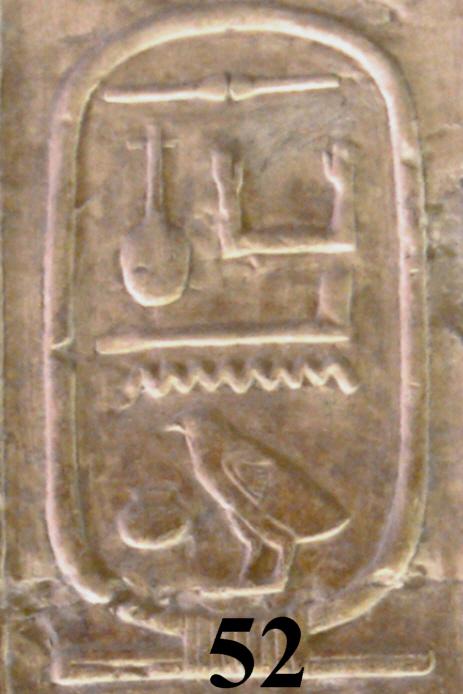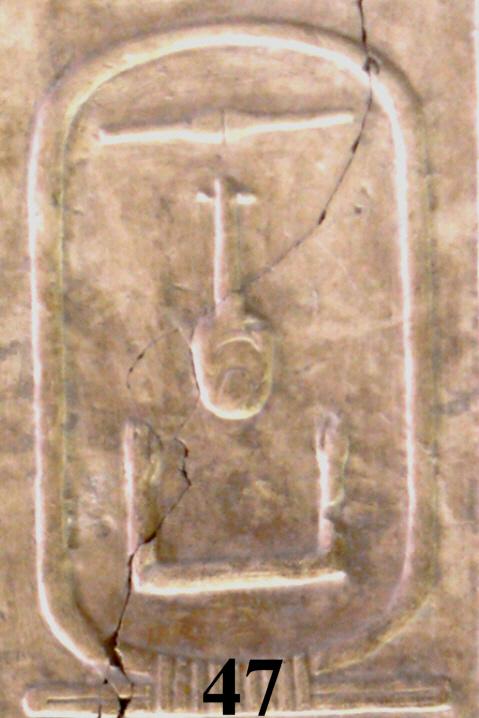
Neferkamin was one of the little-known rulers associated with Egypt’s Eighth Dynasty, during the politically unstable period known as the First Intermediate Period. He is one of the many Egyptian kings whose name survived in ancient royal records, while almost all details about his life and reign have disappeared.
Unlike the famous pharaohs who built enormous pyramids, conquered foreign lands, or left behind monumental temples, Neferkamin appears to have ruled for only a short time. No securely identified pyramid, temple, statue, or detailed biography can be confidently attributed to him.
Nevertheless, his story is important because Neferkamin represents a fascinating chapter in the transformation of ancient Egypt. He lived during the period between the great centralized kingdom of the Old Kingdom and the powerful reunified state of the Middle Kingdom.
His reign was probably brief, but it belonged to a period when the idea of Egyptian kingship was struggling to survive political fragmentation.
Egypt Before Neferkamin
Long before Neferkamin became king, Egypt had developed a highly organized centralized government.
The pharaoh stood at the center of Egyptian political and religious life.
He was regarded as the ruler of the Two Lands, Upper and Lower Egypt, and as an important connection between humanity and the gods.
Royal officials administered agricultural lands, collected taxes and resources, supervised workers, managed temples, and organized trade.
The Nile River was the foundation of this system.
Its annual flood deposited fertile soil along the riverbanks, allowing farmers to grow crops that supported Egypt's population.
The river also served as the country's main transportation route.
The Great Old Kingdom
The Old Kingdom became famous for its monumental pyramids.
During the Fourth Dynasty, Pharaoh Sneferu developed increasingly sophisticated pyramid designs.
His successors Khufu, Khafre, and Menkaure built the magnificent pyramid complexes at Giza.
These monuments required enormous resources.
Stone was quarried from distant locations.
Workers transported huge blocks.
Architects planned complex structures.
Administrators organized supplies.
Priests performed religious rituals.
The construction of the pyramids demonstrated the extraordinary power of Egypt's centralized government.
By the time Neferkamin ruled, this political system had weakened dramatically.
The Sixth Dynasty
The centralized monarchy continued during the Fifth and Sixth Dynasties.
However, provincial officials gradually became more powerful.
Egypt was divided into administrative regions called nomes.
Each region had officials responsible for administration and agricultural production.
Over generations, many of these positions became hereditary.
Local families accumulated land, wealth, and influence.
Temples also became major economic institutions.
The king remained the symbolic ruler of Egypt, but political and economic power was increasingly distributed among regional elites.
Pepi II and the End of the Old Kingdom
The final major ruler of the Sixth Dynasty was Pepi II, whose throne name was Neferkare.
Ancient Egyptian traditions describe his reign as exceptionally long.
During the later part of his reign, provincial governors became increasingly independent.
The central government struggled to maintain its authority.
After Pepi II died, Egypt experienced a period of political instability.
Several kings followed one another rapidly.
The Sixth Dynasty eventually came to an end.
The country entered the period known as the First Intermediate Period.
Neferkamin belonged to this uncertain era.
The Eighth Dynasty
The Eighth Dynasty was probably centered at Memphis.
Its kings attempted to preserve the traditions of the Old Kingdom.
They continued to use royal titles.
They maintained traditional religious practices.
They presented themselves as legitimate pharaohs.
But their practical political authority was much weaker than that of the great pyramid builders.
The Eighth Dynasty appears to have contained numerous short-lived rulers.
Neferkamin was one of them.
The Meaning of Neferkamin
The name Neferkamin contains elements associated with traditional Egyptian royal naming practices.
“Nefer” commonly carried meanings related to beauty, goodness, or perfection.
“Kamin” is associated with the name of the god Min, an ancient Egyptian deity connected with fertility, masculinity, and agricultural abundance.
The name therefore reflects the religious world of ancient Egypt, in which royal names often invoked divine powers.
A King With Almost No Biography
Very little is known about Neferkamin personally.
His parents are unknown.
His wife is unknown.
His children are unknown.
His childhood is unknown.
His political policies are unknown.
His military campaigns are unknown.
His burial place has not been securely identified.
Even the exact length of his reign remains uncertain.
This lack of information is typical of several rulers of the Eighth Dynasty.
Ancient King Lists
The survival of Neferkamin's name is important.
Ancient Egyptian scribes preserved lists of kings for religious and historical purposes.
The Abydos King List, created during the New Kingdom, contains the names of many earlier rulers.
Another important source is the Turin Royal Canon, a damaged papyrus that once contained information about Egyptian kings and their reigns.
These sources help modern historians reconstruct the complicated royal succession of the First Intermediate Period.
However, they do not provide detailed biographies for rulers such as Neferkamin.
A Short Reign
Neferkamin appears to have ruled for only a brief period.
This was common during the Eighth Dynasty.
Rapid royal succession created political uncertainty.
Short reigns also made it difficult for kings to complete major construction projects.
A pyramid complex required years of work.
It required stone, labor, food, administrators, priests, and craftsmen.
A ruler who remained on the throne for only a short time would have had little opportunity to create a monumental legacy.
The Weakening of Central Government
The most important political development of this period was the decline of centralized authority.
Provincial governors controlled increasingly large amounts of land.
Local families gained wealth.
Temples controlled agricultural estates.
The central government had fewer resources available.
The pharaoh continued to possess enormous religious significance, but his practical control over distant regions was increasingly limited.
The Power of Provincial Governors
Provincial governors played a major role in the changing political landscape.
During the Old Kingdom, they had represented the central government.
Over time, their positions became hereditary.
Their tombs became increasingly elaborate.
Their inscriptions sometimes emphasized their ability to provide food and maintain order within their communities.
This suggests that local leaders were becoming important sources of political authority.
Memphis and Royal Tradition
Memphis remained an important center of Egyptian kingship.
The city had been closely associated with the monarchy since the earliest dynasties.
It was also the principal cult center of Ptah.
The Memphite religious tradition emphasized creation and divine craftsmanship.
For an Eighth Dynasty king, maintaining connections with Memphis helped preserve the traditions of the Old Kingdom.
Neferkamin ruled within this broader political and religious environment.
The Nile and Daily Life
Although the royal government was weakening, ordinary Egyptian life continued.
Farmers cultivated fields along the Nile.
Wheat and barley remained essential crops.
Craftsmen produced pottery, tools, jewelry, statues, and funerary objects.
Merchants transported goods between different regions.
Priests continued to maintain temples.
Scribes continued to record administrative and religious information.
Egyptian society was changing, but it was not disappearing.
Environmental Problems
Environmental conditions may also have contributed to the instability of the First Intermediate Period.
Changes in rainfall patterns could influence the Nile flood.
A lower flood could reduce agricultural production.
Reduced harvests could create food shortages and social tensions.
However, environmental factors were not the only cause of Egypt's political transformation.
The growing independence of provincial elites was another major factor.
Religion in Neferkamin's Egypt
Religion remained at the center of Egyptian culture.
Ra continued to be worshiped as a major solar deity.
Horus remained closely connected with the pharaoh.
Osiris became increasingly important in funerary beliefs.
Ptah remained influential in Memphis.
Min was also an important deity, particularly associated with fertility and agricultural abundance.
Religious traditions survived despite political fragmentation.
The Pharaoh and Maat
The Egyptian king was traditionally responsible for maintaining maat.
Maat represented truth, justice, balance, and cosmic order.
The pharaoh's duty was to preserve harmony between the human and divine worlds.
During political instability, the ideal of maat became especially significant.
Even when Egypt was divided politically, the concept of a unified and orderly kingdom remained central to Egyptian ideology.
Funerary Beliefs
Ancient Egyptians believed that death was not the end of existence.
The deceased could continue living in the afterlife.
Offerings, prayers, and rituals were necessary.
Royal funerary practices were especially important because the king had a unique religious role.
However, the weakening of the monarchy meant that royal funerary monuments were much less impressive than those of earlier dynasties.
No Known Monument
No major surviving monument can be confidently attributed to Neferkamin.
This is not surprising.
The rulers of the Eighth Dynasty generally left fewer monumental remains than their Old Kingdom predecessors.
Political instability reduced the resources available to the royal court.
The rapid succession of rulers also made long-term building projects difficult.
Why So Little Survives
The absence of monuments does not necessarily mean that Neferkamin left nothing behind.
Ancient buildings were often dismantled.
Stone blocks were reused in later structures.
Mudbrick monuments could disappear over time.
Later cemeteries could cover earlier remains.
Documents were lost.
As a result, archaeological evidence for short-lived rulers can be extremely limited.
The First Intermediate Period
The First Intermediate Period is sometimes described as a time of collapse.
But this description is too simple.
Egyptian culture continued.
Local governments became stronger.
Art continued to develop.
Religious traditions survived.
Craft production continued.
Writing remained important.
The period was more accurately a time of political decentralization and transformation.
Herakleopolis
During the First Intermediate Period, Herakleopolis Magna became an important political center in northern and central Egypt.
Its rulers controlled significant territories.
They continued to use traditional elements of pharaonic kingship.
At the same time, political power was growing in Upper Egypt.
Thebes gradually emerged as the major southern rival.
The Rise of Thebes
Thebes became increasingly influential during this period.
Its rulers gained control over larger parts of Upper Egypt.
The city's religious importance also grew.
Eventually, the Theban rulers challenged the political authority of Herakleopolis.
The conflict eventually led to the reunification of Egypt.
Neferkamin ruled before this final stage of the struggle.
Mentuhotep II and the Reunification
The political division of Egypt eventually ended under the Theban king Mentuhotep II.
He defeated his rivals and reunited the country.
The Middle Kingdom began.
Central government was restored.
The monarchy became stronger.
Royal construction projects expanded.
Trade and military activity increased.
Egypt entered another period of prosperity.
Neferkamin belonged to the generation of rulers who lived before this transformation.
Neferkamin's Place in Egyptian History
Neferkamin is important because he represents the survival of Egyptian kingship during a difficult period.
His name reflects traditional religious ideas.
His position within the Eighth Dynasty demonstrates the continuation of royal succession.
Even when political authority was fragmented, Egyptians still recognized the pharaoh as an essential institution.
The monarchy survived until the country could eventually be reunified.
Why Is Neferkamin Forgotten?
The answer lies largely in the historical evidence.
His reign was probably short.
Few monuments survive.
The First Intermediate Period is poorly documented.
Later Egyptians sometimes remembered earlier kings selectively.
Archaeological remains were destroyed or reused.
As a result, Neferkamin became one of the forgotten names of ancient Egypt.
A Forgotten Pharaoh With a Lasting Legacy
Neferkamin did not leave behind a Great Pyramid.
He did not establish an empire.
He did not become famous for military conquest.
He did not create a monumental temple complex.
His greatest historical legacy may simply be the survival of his name.
That name provides another piece of evidence for understanding the complicated royal succession of the Eighth Dynasty.
Conclusion
Neferkamin was a little-known Egyptian ruler associated with the Eighth Dynasty and the First Intermediate Period.
His life remains almost completely unknown.
We do not know his parents.
We do not know his wife.
We do not know his children.
We do not know his military achievements.
We do not know the exact length of his reign.
His burial place has not been securely identified.
Yet his name survived through Egyptian royal traditions.
Neferkamin ruled during a dramatic turning point.
The centralized state that had built the pyramids of Giza was weakening.
Provincial governors were becoming more powerful.
Local families controlled land and agricultural resources.
Temples possessed substantial estates.
The royal court had fewer resources available for monumental construction.
Environmental pressures may also have contributed to economic difficulties.
Despite these challenges, Egypt remained culturally and religiously strong.
The Nile continued to sustain agricultural communities.
Temples continued to operate.
Priests continued their rituals.
Scribes continued writing.
Craftsmen continued producing works of art.
Egyptian religious beliefs remained powerful.
Most importantly, the institution of pharaoh survived.
Neferkamin's royal identity belonged to a tradition that stretched back thousands of years.
The king was still connected with the gods.
He was still expected to maintain maat.
He was still regarded as an essential guardian of Egypt's cosmic order.
The First Intermediate Period was therefore not simply a story of destruction.
It was a period of political transformation.
Local rulers gained strength.
Regional identities became more important.
The central monarchy weakened.
But Egyptian civilization adapted.
Eventually, the rulers of Thebes became powerful enough to reunify the country.
Mentuhotep II established the Middle Kingdom.
Egypt once again became a centralized and prosperous kingdom.
Neferkamin lived before that great recovery.
His reign was probably brief, and his physical legacy has almost completely disappeared.
But his name remains a valuable fragment of Egyptian history.
Neferkamin may have been a forgotten pharaoh, but his story represents the endurance of Egyptian kingship during one of the country's most uncertain periods.