Merenre I, also known as Merenre Nemtyemsaf I, was an important pharaoh of Egypt's Sixth Dynasty and the son of the powerful King Pepi I. Although his reign was relatively short compared with that of his father, Merenre played an important role in maintaining Egypt's authority, particularly in Nubia and the southern regions.
His reign took place during the later period of the Old Kingdom, when Egypt was still a highly organized and wealthy civilization. The king's government controlled a vast agricultural economy based on the Nile, maintained trade routes, organized expeditions, and continued the construction of royal monuments.
Merenre is especially remembered for his connection with Nubia, where Egyptian officials conducted important expeditions. He is also associated with several famous officials, including Weni the Elder and Harkhuf, whose autobiographical inscriptions provide some of the most valuable information about Egypt's relations with Africa during this period.
Merenre's reign was brief, but the evidence from his time reveals a fascinating picture of a young pharaoh trying to maintain the achievements of his powerful father.
Merenre's Early Life
Merenre was born into one of the most important royal families of the Sixth Dynasty.
His father was Pepi I, one of the longest-reigning and most successful kings of the Old Kingdom.
His mother was probably Ankhesenpepi I, although the exact details of his parentage have been debated by Egyptologists.
Growing up in the royal court would have exposed Merenre to the religious traditions, administrative systems, and political responsibilities of Egyptian kingship.
He would have been prepared to become the next ruler of one of the world's most powerful ancient states.
Becoming Pharaoh
When Pepi I died, Merenre inherited the throne.
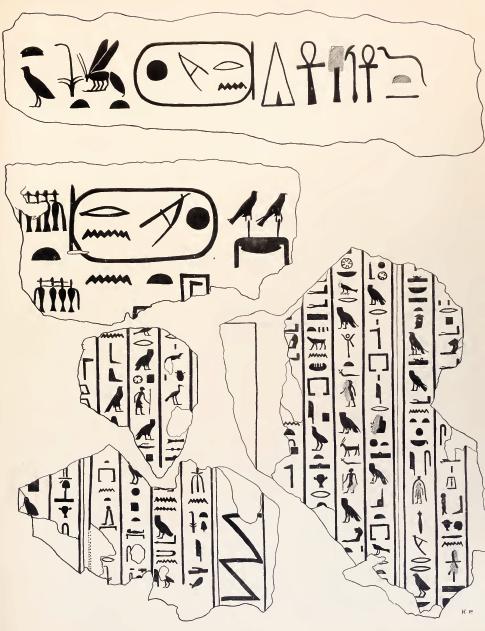
He adopted the royal name Nemtyemsaf, while his throne name was Merenre, meaning approximately "Beloved of Ra."
His accession continued the royal tradition established by his father.
Merenre became king at a time when the Egyptian state was still powerful, but the influence of provincial officials was growing.
Maintaining the loyalty of regional leaders was therefore an important part of his reign.
The Meaning of Merenre's Name
The name Merenre expressed the king's relationship with the sun god Ra.
Ra was one of the most important gods in ancient Egyptian religion.
The sun represented life, renewal, and cosmic order.
By identifying himself as beloved of Ra, Merenre presented himself as a divinely chosen ruler whose authority was supported by the gods.
This connection between the king and Ra was a central part of Old Kingdom royal ideology.
Merenre's Short Reign
Merenre ruled for only a relatively short time.
The exact length remains uncertain, but most historians agree that his reign was much shorter than that of his father.
Despite its short duration, his reign was important.
Egypt continued to organize expeditions, maintain relations with Nubia, and manage its extensive administrative system.
The young king appears to have relied heavily on experienced officials who had already served under Pepi I.
Merenre and Nubia
One of the most important aspects of Merenre's reign was Egypt's relationship with Nubia.
Nubia was located south of Egypt and contained valuable natural resources.
Gold, stones, animal products, and other goods could be obtained from the region.
Nubia was also important because it provided access to trade routes leading deeper into Africa.
Egyptian kings had long been interested in controlling these routes.
Merenre continued this tradition.
The Importance of the Nile
The Nile connected Egypt with Nubia.
Ships could travel southward along the river and transport soldiers, officials, supplies, and trade goods.
This made the Nile an essential highway for Egyptian expansion.
During Merenre's reign, Egyptian officials traveled deep into Nubia.
Their activities helped maintain Egyptian influence over the region.
Merenre and Weni
One of the most important officials connected with Merenre was Weni the Elder.
Weni had already served Pepi I and continued his career under Merenre.
His autobiography provides valuable information about military campaigns and royal administration.
Weni appears to have been a trusted servant of the king.
His long career demonstrates how experienced officials could remain powerful across different royal reigns.
Weni's Role in Nubia
Weni was involved in expeditions and military activities.
His inscriptions describe the organization of large forces.
These operations required soldiers, ships, supplies, commanders, and administrators.
The ability of the Egyptian government to coordinate these resources demonstrates the continuing strength of the Old Kingdom state.
Weni's career also shows how important personal loyalty between the king and senior officials could be.
Harkhuf: The Famous Explorer
Another important official during Merenre's reign was Harkhuf, also spelled Harkuf.
Harkhuf was an Egyptian governor and expedition leader based at Elephantine, near the southern border of Egypt.
He conducted several expeditions into Nubia and regions farther south.
His tomb inscription provides remarkable information about these journeys.
Harkhuf's Expeditions
Harkhuf traveled south on multiple expeditions.
His journeys were probably connected with trade, diplomacy, and the acquisition of valuable goods.
He brought back products from Africa that were highly valued by the Egyptian royal court.
These may have included incense, ebony, animal skins, ivory, exotic animals, and other luxury goods.
His journeys also helped strengthen Egypt's knowledge of the lands south of Nubia.
Harkhuf and the Young King
One of the most famous stories associated with Merenre concerns Harkhuf's relationship with the royal court.
Harkhuf's tomb inscription mentions a letter he received from the young king Pepi II, who later succeeded Merenre.
The letter celebrated Harkhuf's return from an expedition.
The king was especially excited about an unusual person or exotic creature that Harkhuf was bringing back from Africa.
This famous inscription provides a rare glimpse into the personality of a young Egyptian king.
The "Dancing Dwarf"
The inscription is often associated with a dancing dwarf or pygmy-like person brought from the southern regions.
The king was extremely interested in seeing this unusual individual.
The episode is important because it demonstrates the fascination of the Egyptian royal court with people, animals, and products from distant African regions.
It also shows how long-distance expeditions could bring exotic discoveries back to Egypt.
Merenre and African Trade
Merenre's reign demonstrates the importance of Egypt's connections with Africa.
Egypt was not isolated from the rest of the continent.
Merchants and officials traveled south along the Nile.
They established relationships with local communities and obtained valuable products.
These connections helped enrich the Egyptian royal court and temples.
Gold and Nubia
Gold was one of the most valuable resources available south of Egypt.
Egyptian rulers prized gold because it was associated with the gods and did not tarnish.
Gold was used for jewelry, religious objects, statues, and royal decoration.
Nubia and neighboring regions became major sources of Egyptian gold.
Maintaining access to these areas was therefore an important economic priority.
Egyptian Military Power
Merenre inherited a strong military tradition from Pepi I.
Egyptian forces were used to protect the country's borders and trade routes.
Military campaigns could also support expeditions into Nubia.
The army included infantry and naval forces.
The Nile fleet was particularly important because it allowed soldiers and supplies to travel quickly through southern Egypt and Nubia.
Merenre and the Southern Frontier
The southern frontier was one of the most important strategic areas of Egypt.
Elephantine, near modern Aswan, served as a major administrative and military center.
From there, Egyptian officials could monitor movement along the Nile.
The region also served as a gateway between Egypt and Nubia.
Merenre's government relied on experienced officials to maintain this frontier.
The Role of Elephantine
Elephantine became increasingly important during the Old Kingdom.
Its location made it a natural meeting point between Egypt and Nubia.
Trade goods passed through the region.
Military expeditions were organized there.
Officials stationed at Elephantine played an important role in maintaining Egyptian interests in the south.
Harkhuf's career is a perfect example.
Merenre's Pyramid
Merenre built a pyramid at Saqqara.
The monument was probably intended to serve as his eternal resting place.
Like the pyramids of his father and grandfather, it was part of a larger funerary complex.
However, the pyramid has survived in a heavily damaged condition.
Its original name and architectural details are known only partially.
Pyramid Texts
Merenre's pyramid contained Pyramid Texts.
These religious inscriptions were intended to protect the king after death.
They describe his transformation into an eternal being and his relationship with the gods.
The texts reveal the continued importance of Osiris and Ra.
Through these sacred writings, Merenre was expected to join the divine world.
Merenre and Osiris
Osiris was central to Egyptian ideas of resurrection.
The deceased king was identified with Osiris.
After death, Merenre was expected to overcome the dangers of the afterlife and become an eternal divine ruler.
The Pyramid Texts helped provide the necessary religious protection.
Merenre and Ra
At the same time, Merenre maintained his relationship with the solar god Ra.
The king could participate in the daily solar cycle.
Ra's journey through the sky and underworld represented eternal renewal.
This combination of solar and Osirian beliefs was central to royal funerary religion during the Sixth Dynasty.
Merenre's Statues
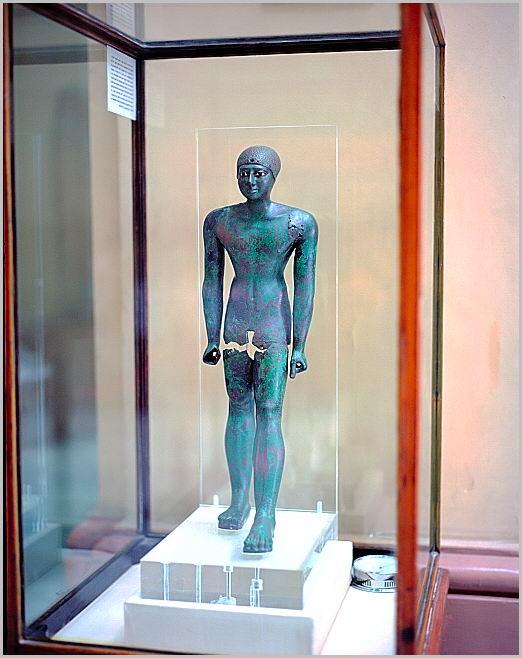
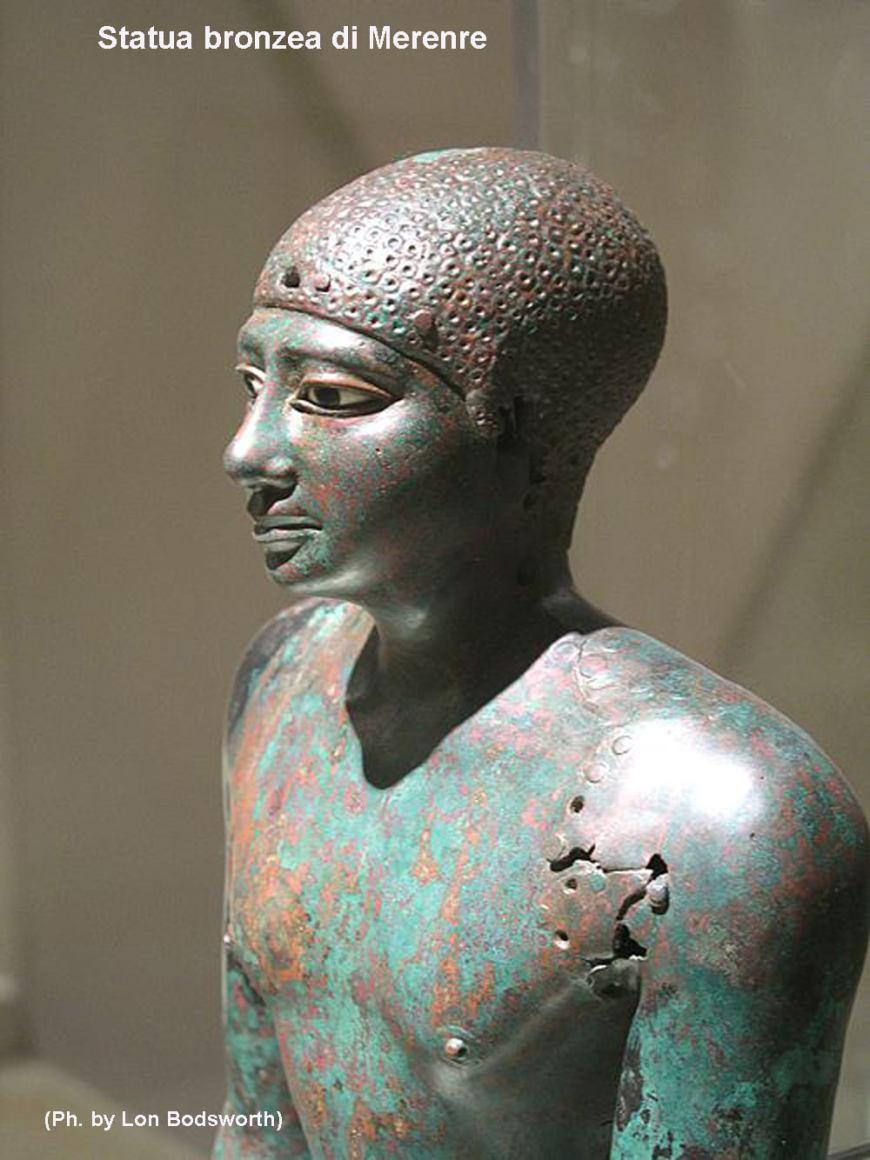
A famous statue associated with Merenre has survived.
The statue represents the young king and demonstrates the high level of Egyptian royal sculpture.
The image emphasizes youth, strength, and idealized royal appearance.
Such statues were not simply portraits.
They served religious purposes and provided a permanent image of the king's presence.
Egyptian Art Under Merenre
Art during Merenre's reign continued the traditions of the Old Kingdom.
Royal figures were represented according to established conventions.
Private tombs contained detailed scenes of farming, hunting, fishing, animal husbandry, and craft production.
These images provide historians with valuable information about everyday life.
Agriculture During Merenre's Reign
Egypt's economy remained based on agriculture.
The annual Nile flood created fertile soil.
Farmers cultivated wheat, barley, vegetables, fruit, and flax.
The state collected agricultural taxes.
These resources supported the royal court, temples, military, and administration.
The agricultural system remained the foundation of Egyptian civilization.
Everyday Egyptian Life
Most Egyptians lived close to the Nile.
Farmers worked the land.
Fishermen harvested fish from the river.
Craftsmen produced pottery, furniture, tools, jewelry, and textiles.
Workers transported goods by boat.
Scribes recorded information for government offices and temples.
Although Merenre's royal court was far removed from ordinary village life, the success of his government depended on the work of millions of people throughout Egypt.
Religion and Temples
Religion remained deeply connected with government.
Temples received offerings and controlled agricultural estates.
Priests performed rituals for the gods.
The king was believed to be responsible for maintaining maat, the divine order of the universe.
By supporting temples and religious ceremonies, Merenre fulfilled an important part of his role as pharaoh.
Merenre and Maat
Maat represented truth, justice, harmony, and cosmic balance.
The pharaoh was expected to preserve maat.
A successful king protected Egypt from disorder and ensured that the gods continued to favor the country.
Merenre's military campaigns and administrative activities could therefore be understood as part of his responsibility to maintain order.
Provincial Officials
During Merenre's reign, provincial officials continued to grow in importance.
Governors managed local regions and agricultural estates.
Some families became extremely powerful.
This development helped Egypt function efficiently across a large territory.
However, the increasing independence of provincial elites would later become a major political challenge.
Merenre and the Future of the Old Kingdom
Merenre ruled during the later Old Kingdom.
At this point, Egypt remained prosperous and powerful.
However, the political structure was slowly changing.
Local officials were gaining greater influence.
The royal government increasingly depended on provincial elites.
These developments would become more significant after the end of the Sixth Dynasty.
Merenre's reign therefore stands near an important turning point in Egyptian history.
The Death of Merenre
Merenre died while still relatively young.
The exact circumstances of his death are unknown.
His short reign meant that many of his plans may never have been completed.
He was buried at Saqqara.
His death marked the end of another generation of Sixth Dynasty leadership.
Pepi II Becomes King
After Merenre's death, his younger half-brother Pepi II became king.
Pepi II was still very young when he came to the throne.
His mother, Ankhesenpepi II, became one of the most important figures in the royal court.
Pepi II would eventually become one of the longest-reigning kings in Egyptian history.
Merenre's Legacy
Merenre's greatest legacy is connected with Egypt's southern frontier.
His reign continued the expansion of Egyptian contacts with Nubia and the regions farther south.
Officials such as Harkhuf provide remarkable evidence of these connections.
His pyramid and Pyramid Texts also preserve valuable evidence about Egyptian religion.
Although he ruled for only a short time, Merenre maintained many of the policies of his father.
The Importance of Harkhuf's Tomb
Harkhuf's tomb at Qubbet el-Hawa near Aswan is one of the most important archaeological sources for Merenre's reign.
Its inscriptions describe Harkhuf's expeditions and his service to the kings.
The texts reveal that Egyptian officials were traveling deep into Africa.
They also show how the royal court valued exotic goods and diplomatic relationships.
Egypt and Africa
Merenre's reign provides an important reminder that ancient Egypt was deeply connected with Africa.
Nubia was not simply a foreign land.
It was part of a complex network of trade, diplomacy, warfare, and cultural exchange.
Egyptian officials interacted with many communities south of the first cataract.
Goods and people moved along the Nile.
These relationships continued for thousands of years.
Conclusion
Merenre I was a young but important pharaoh of Egypt's Sixth Dynasty and the son of the powerful King Pepi I.
Although his reign was relatively short, he inherited a strong kingdom and continued many of his father's policies.
His reign is particularly important because of Egypt's expanding contacts with Nubia and central Africa.
Officials such as Weni the Elder and Harkhuf organized military and commercial expeditions that brought valuable resources back to Egypt.
Gold, ebony, ivory, animal products, incense, and other exotic goods reached the Egyptian royal court through these southern routes.
The famous inscriptions of Harkhuf provide a fascinating glimpse into these expeditions and even preserve evidence of the excitement of the young royal court when exotic discoveries were brought back from Africa.
Merenre also continued the religious traditions of the Sixth Dynasty.
His pyramid at Saqqara contained Pyramid Texts designed to guide him safely into the afterlife.
His royal identity connected him with Ra, while his funerary beliefs connected him with Osiris.
Although Merenre died relatively young, his reign helped maintain Egyptian influence in the south and preserved the strength of the Old Kingdom.
He was succeeded by his younger brother Pepi II, who would rule Egypt for many years.
Today, Merenre I is remembered as a young pharaoh whose short reign played an important role in Egyptian exploration, Nubian relations, royal religion, and the continuing story of the Sixth Dynasty.