Mentuhotep IV, also known as Nebtawyra Mentuhotep IV, was the final ruler of Egypt's Eleventh Dynasty and one of the lesser-known kings of the early Middle Kingdom. Although his reign was short and very little is known about his personal life, Mentuhotep IV played an important role in Egyptian history because his reign marked the transition from the Eleventh Dynasty to the powerful Twelfth Dynasty.
Mentuhotep IV inherited a unified Egypt that had been restored by his famous ancestor Mentuhotep II. His predecessor, Mentuhotep III, had strengthened the country through trade, exploration, quarrying, and large expeditions. By the time Mentuhotep IV became king, Egypt had recovered much of the political stability that had been lost during the First Intermediate Period.
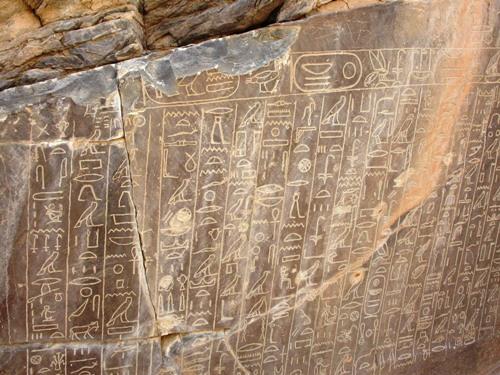
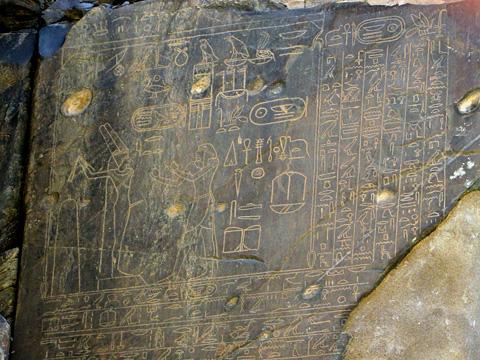
However, Mentuhotep IV's reign was brief, and his position appears to have been less secure than that of his predecessors. The most important surviving evidence from his reign comes from inscriptions in Wadi Hammamat, an important desert route in Egypt's Eastern Desert.
These inscriptions provide valuable information about one of the largest quarrying expeditions of the period and introduce an important figure who would soon change the course of Egyptian history: Amenemhat, the future founder of the Twelfth Dynasty.
Mentuhotep IV therefore stands at a fascinating point in Egyptian history. He was the last king of a dynasty that had reunited Egypt, and during his reign the foundations were being laid for a new royal dynasty that would govern Egypt during one of its greatest periods.
Egypt Before Mentuhotep IV
To understand Mentuhotep IV, it is important to understand the achievements of the Eleventh Dynasty.
Several generations earlier, Egypt had been divided during the First Intermediate Period.
The Old Kingdom had collapsed.
Local governors had become powerful.
Different regions were controlled by competing political families.
The most important rivalry developed between Herakleopolis in northern Egypt and Thebes in Upper Egypt.
The Theban rulers gradually became stronger.
Intef I expanded their authority.
Intef II continued the struggle and captured important territory.
Intef III maintained Theban power.
Then came Mentuhotep II.
Mentuhotep II defeated the northern rulers and reunited Egypt.
This victory created the Middle Kingdom.
The Middle Kingdom
The Middle Kingdom became one of the most successful periods in Egyptian history.
Central government was restored.
Agriculture became more stable.
Trade expanded.
Military power increased.
Construction projects flourished.
Egyptian literature developed.
The kings once again controlled enormous resources.
Mentuhotep III continued this development by organizing large expeditions through the Eastern Desert and toward the Red Sea.
Mentuhotep IV inherited this stronger and more organized Egypt.
A Short Reign
Mentuhotep IV probably ruled for only a few years.
His exact dates are debated, but his reign is generally placed near the end of the twentieth century BC.
Because his reign was short, relatively few monuments survive.
Unlike Mentuhotep II, he did not leave behind an enormous royal complex.
Unlike later Twelfth Dynasty kings, he did not have enough time to create a large architectural legacy.
Most of what historians know about him comes from inscriptions connected with his expeditions.
The Royal Name
Mentuhotep IV's throne name was Nebtawyra.
His birth name was Mentuhotep.
Like the other rulers of the dynasty, his name connected him with the traditions of the Theban royal family and the god Montu.
The royal name emphasized his position as ruler of the Two Lands.
By this time, the idea of a united Egypt was central to the identity of the Middle Kingdom.
The Wadi Hammamat Expedition
The most important event of Mentuhotep IV's reign was an expedition to Wadi Hammamat.
Wadi Hammamat lies in the Eastern Desert between the Nile Valley and the Red Sea.
It was famous for its valuable stone.
Egyptians had used the area for centuries.
The region contained dark volcanic stone and other materials suitable for royal monuments and statues.
Reaching the quarries required crossing a difficult desert environment.
A Massive Expedition
Mentuhotep IV's government organized a very large expedition.
Ancient inscriptions indicate that thousands of men participated in the mission.
The expedition required soldiers, workers, administrators, engineers, and specialists.
Food and water had to be transported.
The workers needed protection from the harsh desert environment.
The journey itself was a major logistical operation.
This expedition demonstrates that the centralized Egyptian state remained capable of organizing enormous projects.
The Desert Journey
The Eastern Desert was extremely difficult to cross.
There were no large rivers.
Water sources were limited.
Temperatures could become dangerously high.
Travelers needed to follow known routes and locate wells.
The government therefore had to plan the expedition carefully.
The workers and soldiers could not simply walk into the desert without preparation.
Water was perhaps the most important resource.
The success of the expedition shows the impressive organizational ability of Egyptian officials.
The Role of Amenemhat
One of the most important people mentioned in the inscriptions of Mentuhotep IV's reign was a powerful official named Amenemhat.
Amenemhat served as an important administrator and appears to have been responsible for organizing the expedition.
His achievements would soon become extremely important.
After Mentuhotep IV's death, Amenemhat became the founder of the Twelfth Dynasty.
This makes the Wadi Hammamat inscriptions especially valuable.
They provide a glimpse of the political world immediately before the rise of Amenemhat I.
A Famous Miracle
One of the most fascinating stories from Mentuhotep IV's reign concerns a miraculous event during the expedition.
According to the inscription, a pregnant woman named Rudjedet or a similar figure gave birth during the journey.
The newborn child was associated with a remarkable event involving the discovery of a natural spring.
The story presented the event as a sign of divine favor.
The details of the story are preserved in later historical traditions and inscriptions, although the exact interpretation remains debated.
The purpose of such stories was to demonstrate that the gods supported the king's expedition.
Divine Protection
Religion played an important role in Egyptian royal expeditions.
The desert was a dangerous environment.
The Egyptians believed that the gods controlled the forces of nature.
A successful expedition could therefore be interpreted as evidence of divine support.
The inscriptions of Mentuhotep IV emphasize the role of the gods in protecting the expedition and providing the resources needed to complete the mission.
The Importance of Stone
Why was the expedition so important?
Stone was essential to Egyptian royal ideology.
Pharaohs built temples, statues, shrines, monuments, and funerary complexes from stone.
A king's ability to obtain high-quality stone demonstrated his power.
It showed that the government could mobilize labor over enormous distances.
Stone also created monuments that were intended to survive for eternity.
For Mentuhotep IV, the Wadi Hammamat expedition was therefore both an economic and political project.
Quarrying Technology
Egyptian quarry workers used stone tools and metal tools to extract blocks.
Workers followed natural cracks in the rock.
They created channels and separated blocks from the surrounding stone.
The blocks were then transported toward the Nile.
From there, they could be moved by boat to construction sites.
The process required enormous amounts of labor.
The Egyptian Administration
The expedition also reveals the sophistication of Middle Kingdom administration.
Officials needed to record workers.
Supplies had to be distributed.
Routes had to be planned.
Security had to be maintained.
Quarries had to be organized.
Stone had to be transported.
The government had to communicate between the desert and the Nile Valley.
This complex organization could only function because Egypt once again had a strong centralized state.
The Power of the King
Mentuhotep IV's expedition demonstrated that the king remained capable of commanding enormous resources.
Even though his reign was short, his government could organize thousands of people.
This suggests that the political structure created by Mentuhotep II and strengthened by Mentuhotep III remained functional.
The king still controlled the country's major resources.
The Problem of Succession
The biggest mystery surrounding Mentuhotep IV is the succession.
We know that after his reign, Amenemhat I became king.
But exactly how this transition happened remains uncertain.
There is no universally accepted explanation.
Some theories suggest that Amenemhat may have been a powerful official who gradually gained political authority.
Other interpretations suggest that he may have been connected to the royal family.
Some later traditions portray the rise of Amenemhat as part of a divine plan.
The evidence is not sufficient to provide a completely certain answer.
Amenemhat I
Amenemhat I became the first ruler of the Twelfth Dynasty.
His rise marked a major transformation in Egyptian history.
The Eleventh Dynasty ended.
The Twelfth Dynasty began.
Amenemhat I strengthened the central government and established a new royal capital in the north.
He also reorganized Egypt's political system and strengthened control over the provinces.
The foundations of his reign were partly inherited from the Eleventh Dynasty.
The End of the Eleventh Dynasty
Mentuhotep IV was therefore the final king of the Eleventh Dynasty.
His reign represents the end of a dynasty that had transformed Egyptian history.
The dynasty began during the political fragmentation of the First Intermediate Period.
It eventually reunited Egypt.
It established the Middle Kingdom.
And finally, under Mentuhotep IV, it gave way to a new dynasty.
This was a major historical transition.
The Legacy of Mentuhotep II
Mentuhotep IV could only rule a unified Egypt because Mentuhotep II had achieved the reunification.
The great achievement of Mentuhotep II created the political foundation for the Middle Kingdom.
Mentuhotep III then strengthened that foundation.
Mentuhotep IV inherited the results.
Even though he ruled briefly, he continued important state projects.
The Legacy of Mentuhotep III
Mentuhotep III had organized large expeditions toward the Red Sea.
His policies expanded Egypt's economic connections.
Mentuhotep IV continued this tradition.
The Wadi Hammamat expedition demonstrated that the government still had the ability to mobilize enormous resources.
This continuity is important.
It shows that the Middle Kingdom state did not collapse when Mentuhotep III died.
Religion During His Reign
Religion remained central to Egyptian government.
The pharaoh was believed to be responsible for maintaining maat.
Temples required offerings.
Priests performed rituals.
The king's success was associated with divine support.
The desert expeditions were therefore not purely economic.
They were also religious missions.
The gods were believed to control the success of the journey.
Montu and the Theban Tradition
The god Montu remained important to the royal family.
The name Mentuhotep connected the king with Montu.
The Theban origin of the dynasty remained part of its identity.
However, the political center of Egypt was gradually shifting.
The future Twelfth Dynasty would place greater emphasis on northern Egypt and establish new administrative centers.
The Changing Political Landscape
The transition from the Eleventh to the Twelfth Dynasty may have reflected broader political changes.
Thebes had been the center of the reunification movement.
But once Egypt was unified, the northern part of the country became increasingly important.
The Nile Delta and Middle Egypt were economically valuable.
The new dynasty needed to control the entire country more directly.
Amenemhat I would build a political system designed to achieve this.
The Importance of Wadi Hammamat
The Wadi Hammamat inscriptions are among the most valuable records of Mentuhotep IV's reign.
They provide information about the king, the expedition, the officials, the workers, and the challenges of traveling through the Eastern Desert.
They also reveal the ideological language of Middle Kingdom kingship.
The king is presented as powerful, protected by the gods, and capable of overcoming difficult circumstances.
The Egyptian View of Nature
The Egyptians viewed the natural world through both practical and religious perspectives.
A desert was a dangerous environment.
But it was also a place containing valuable resources.
Stone, minerals, and trade routes made the desert economically important.
The king's ability to control these resources demonstrated his authority.
Successful expeditions could therefore be presented as victories over the forces of nature.
Daily Life
For most Egyptians, life remained connected to agriculture.
The Nile was still the center of civilization.
Farmers grew grain and vegetables.
Fishermen worked along the river.
Craftsmen produced tools, pottery, textiles, and jewelry.
Scribes worked in government offices and temples.
Soldiers served in the army.
Workers were recruited for royal projects.
The stability of the Middle Kingdom allowed Egyptian society to recover from the disruptions of earlier centuries.
Economic Development
Egypt's economy benefited from its natural resources.
The Nile Valley provided fertile farmland.
The Eastern Desert provided stone and minerals.
Nubia provided access to valuable resources and trade routes.
The Red Sea provided connections with distant lands.
The government could coordinate these different economic regions.
Mentuhotep IV's reign shows that this system was still functioning.
Military Organization
Soldiers accompanied major expeditions.
Their job was not only to fight enemies.
They also protected workers and officials.
The desert contained potential dangers, including hostile groups.
The presence of armed forces allowed quarrying expeditions to operate more safely.
The military therefore played an important role in economic activity.
The Short Reign
Mentuhotep IV's reign was short compared with the long reigns of some earlier rulers.
This may explain why so little monumental architecture survives from his reign.
The king did not have enough time to establish a large number of major building projects.
Nevertheless, the surviving inscriptions reveal a surprisingly active government.
The Mystery of His Death
The exact circumstances of Mentuhotep IV's death are unknown.
There is no reliable evidence describing his final days.
He disappeared from the historical record, and Amenemhat I soon became king.
This uncertainty has encouraged historians to debate whether the transition was peaceful or involved political conflict.
There is currently no definitive answer.
Was Amenemhat a Usurper?
Some theories have suggested that Amenemhat may have taken the throne from Mentuhotep IV's family.
However, this remains speculative.
Amenemhat later presented himself as a legitimate king.
Egyptian royal ideology often emphasized divine approval and legitimate succession.
Without clearer evidence, the exact political circumstances should remain uncertain.
The Prophecy of Neferti
A later Egyptian literary work known as the Prophecy of Neferti describes a king named Ameny who would restore order to Egypt.
Many scholars associate this figure with Amenemhat I.
The text may have been written or shaped during the Twelfth Dynasty to legitimize the new royal family.
If so, it provides an example of how later rulers explained the transition from one dynasty to another.
The Beginning of a New Era
With the rise of Amenemhat I, Egypt entered the Twelfth Dynasty.
This dynasty became one of the most successful in Egyptian history.
Its rulers strengthened the central government.
They expanded agriculture.
They developed irrigation.
They strengthened Egyptian control in Nubia.
They built temples and fortifications.
They promoted trade.
The Middle Kingdom reached its peak during the Twelfth Dynasty.
Mentuhotep IV therefore stood at the doorway to this new era.
His Place in Egyptian History
Mentuhotep IV is sometimes overlooked because his reign was short.
However, his historical position is fascinating.
He was the last king of a dynasty that had reunited Egypt.
He ruled a country that had recovered from political fragmentation.
He organized one of the great quarrying expeditions of the Middle Kingdom.
He was connected with Amenemhat I, the founder of the next dynasty.
His reign therefore connects two major chapters of Egyptian history.
Why Mentuhotep IV Matters
Mentuhotep IV matters because he represents continuity.
The Eleventh Dynasty did not simply disappear.
Its political institutions continued.
Its administrative system remained powerful.
Its expeditionary traditions continued.
Its religious traditions survived.
Amenemhat I inherited many of these achievements.
The Twelfth Dynasty therefore built upon the foundations established during the Eleventh Dynasty.
Conclusion
Mentuhotep IV was the final king of Egypt's Eleventh Dynasty and an important figure in the transition between two great periods of Egyptian history.
He inherited a unified Egypt created by Mentuhotep II.
His predecessor, Mentuhotep III, had strengthened the economy through trade and large-scale expeditions.
Mentuhotep IV continued these policies.
His most famous achievement was the large expedition to Wadi Hammamat in the Eastern Desert.
The mission required thousands of workers, soldiers, administrators, and specialists.
It was an enormous logistical undertaking.
The expedition had to cross one of Egypt's harshest landscapes.
Water had to be supplied.
Food had to be transported.
Routes had to be planned.
Workers needed protection.
Stone had to be quarried and transported back to the Nile Valley.
The inscriptions from the expedition provide an extraordinary picture of the organizational power of the Middle Kingdom state.
They also introduce Amenemhat, a powerful official who would soon become the founder of the Twelfth Dynasty.
This connection makes Mentuhotep IV particularly important.
His reign may have been short, but it stood directly at the turning point between the Eleventh and Twelfth Dynasties.
The Eleventh Dynasty had begun during a period of division.
Its rulers had transformed Thebes into a powerful political center.
Mentuhotep II reunited Egypt.
Mentuhotep III strengthened the newly reunited kingdom.
Mentuhotep IV maintained the expeditionary and administrative traditions of his predecessors.
Then the dynasty came to an end.
Amenemhat I became king.
The Twelfth Dynasty began.
The political transformation was enormous.
The new dynasty would strengthen the central government even further and lead Egypt into one of its most prosperous eras.
Mentuhotep IV therefore deserves to be remembered not because he ruled for a long time, but because of where his reign stands in Egyptian history.
He was the final link between the great Theban rulers and the powerful kings of the Twelfth Dynasty.
His story also demonstrates the importance of officials in ancient Egypt.
Amenemhat's appearance in the records of Mentuhotep IV shows how powerful administrators could become central figures in the monarchy.
The Wadi Hammamat expedition is therefore more than a story about quarrying stone.
It is a window into the organization of the Egyptian state, the religious beliefs of the Middle Kingdom, the importance of desert resources, and the political transition that would soon transform Egypt.
Mentuhotep IV may not have left behind a monument as famous as the temple of Mentuhotep II.
He may not have ruled long enough to become one of Egypt's most celebrated kings.
But his reign preserved the strength of the Middle Kingdom and helped carry Egypt from one dynasty to another.
His name stands at the end of the Eleventh Dynasty and at the beginning of a new chapter.
The king who followed him, Amenemhat I, would establish the Twelfth Dynasty and lead Egypt toward a new period of prosperity and power.
Mentuhotep IV was therefore a king of transition.
He inherited the united Egypt created by his ancestors and passed on a functioning state to the dynasty that followed.
His reign demonstrates that history is not always shaped by the longest or most famous rulers.
Sometimes a short reign can stand at the center of a major transformation.
Mentuhotep IV was one of those rulers.
He was the last king of the Eleventh Dynasty, the organizer of one of the great Middle Kingdom desert expeditions, and the final link between the reunification of Egypt and the rise of the powerful Twelfth Dynasty.