Menkauhor Kaiu, also known simply as Menkauhor, was an ancient Egyptian pharaoh who ruled during the Fifth Dynasty of the Old Kingdom. Although he is not as famous as Khufu, Khafre, or Menkaure, Menkauhor played an important role in maintaining the traditions of royal power and solar religion during one of Egypt’s most remarkable periods.
His reign probably lasted only a few years, and relatively little is known about his personal life. However, archaeological discoveries, inscriptions, statues, and later records provide evidence that he was a legitimate pharaoh who continued the religious and architectural traditions established by earlier Fifth Dynasty rulers.
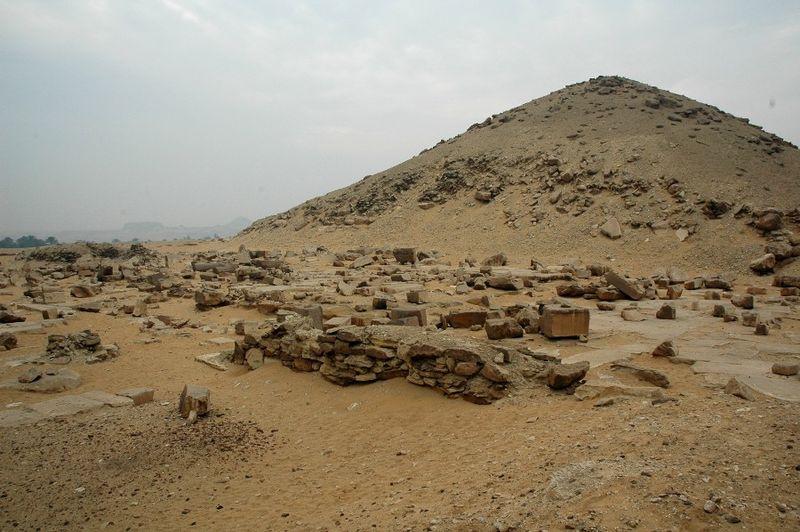
Menkauhor is particularly interesting because his pyramid has not been identified with complete certainty. For many years, scholars believed that a small ruined pyramid in North Saqqara belonged to him. The monument is known today as the Headless Pyramid, or Lepsius XXIX.
His story is therefore a combination of historical evidence, archaeological mystery, and the religious traditions of ancient Egypt.
Menkauhor's Place in Egyptian History
Menkauhor ruled during the later part of Egypt's Fifth Dynasty.
The Fifth Dynasty began with Userkaf and included several important kings such as Sahure, Neferirkare Kakai, Shepseskare, Neferefre, Nyuserre Ini, Menkauhor Kaiu, Djedkare Isesi, and Unas.
Menkauhor came to the throne after Nyuserre Ini, one of the longest-reigning kings of the dynasty.
His reign occurred during a period when Egypt was still wealthy and politically organized, but the religious and political structure of the Old Kingdom was gradually changing.
Menkauhor's Early Life
Very little is known about Menkauhor's childhood.
No surviving historical text gives us a detailed biography of his early years.
He was almost certainly born into the Egyptian elite and may have been a member of the royal family.
However, his exact parentage remains uncertain.
Some Egyptologists have proposed different possibilities regarding his relationship with Nyuserre Ini and other Fifth Dynasty rulers.
Because the surviving evidence is limited, it is safer to say that Menkauhor belonged to the royal circle without assigning him a definite family relationship.
Menkauhor Becomes Pharaoh
Menkauhor became king after Nyuserre Ini.
The transition appears to have been relatively stable.
Unlike the uncertain succession involving Shepseskare and Neferefre earlier in the dynasty, there is no strong evidence that Menkauhor's accession created a major political crisis.
He inherited an established state with an experienced bureaucracy.
The royal administration already controlled agriculture, taxation, temples, trade, construction, and provincial government.
This allowed Menkauhor to continue the traditions of his predecessors.
The Meaning of His Name
The name Menkauhor can be understood as something like "Enduring are the Souls of Horus."
The name reflects the importance of the god Horus in Egyptian kingship.
Horus was traditionally associated with the living king.
The pharaoh was believed to embody the earthly form of Horus while ruling Egypt.
After death, the king became closely connected with Osiris.
This religious concept formed an important part of Egyptian royal ideology.
Menkauhor and the Sun God Ra
Menkauhor ruled during a dynasty famous for its strong connection to Ra, the sun god.
Earlier Fifth Dynasty kings had built special solar temples dedicated to Ra.
These temples emphasized the king's relationship with the sun and the divine order of the universe.
Menkauhor appears to have continued these traditions.
Ancient sources indicate that he was associated with a solar temple, although the exact location and archaeological identification of the monument remain uncertain.
Menkauhor's Solar Temple
A solar temple attributed to Menkauhor has not been securely identified.
This is one of the mysteries surrounding his reign.
Earlier rulers such as Userkaf, Sahure, and Nyuserre left clearer evidence of their religious architecture.
Menkauhor's monuments have largely disappeared or remain unidentified.
However, historical sources preserve the memory of a solar temple associated with his reign.
This suggests that the worship of Ra continued to be an important part of royal religion.
The Forgotten Pyramid
Menkauhor's pyramid is another major mystery.
For many years, Egyptologists suggested that the Headless Pyramid at North Saqqara belonged to Menkauhor.
The pyramid is called the "Headless Pyramid" because its upper structure has disappeared.
Only the lower part of the monument survives.
Its original name and owner were not preserved clearly enough to provide absolute certainty.
For a long time, however, scholars connected it with Menkauhor because of its location and chronological position.
Why Is the Pyramid Important?
The Headless Pyramid is important because it may represent the burial monument of a relatively obscure Fifth Dynasty king.
If it truly belonged to Menkauhor, it would provide valuable information about his funerary beliefs and architectural program.
The monument appears to have been built on a relatively modest scale compared with the enormous pyramids of Giza.
This reflects the changing architectural traditions of the Fifth Dynasty.
By this period, Egyptian kings were still building pyramids, but the religious importance of the accompanying temples and rituals was becoming increasingly significant.
The Discovery of Menkauhor's Name
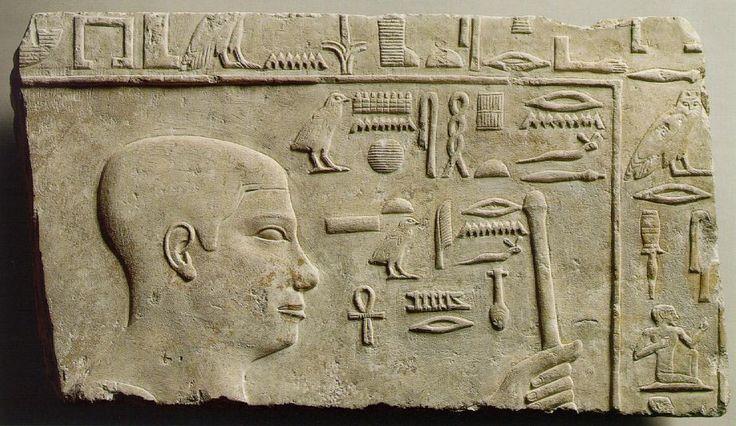
Menkauhor's name has survived in several archaeological and historical contexts.
His name appears in royal lists and inscriptions.
A particularly important piece of evidence comes from a royal statue discovered at the temple of Maatkare Hatshepsut at Deir el-Bahari.
The statue represents Menkauhor and provides a rare surviving image of the king.
Menkauhor's Statue
The surviving statue of Menkauhor is one of the most important objects connected with him.
It shows the king in a traditional Egyptian royal style.
Like other pharaohs, Menkauhor is represented as youthful and idealized.
The statue demonstrates that royal sculpture continued to follow highly standardized artistic traditions during the Fifth Dynasty.
It also gives modern historians a rare visual representation of this otherwise poorly documented king.
Menkauhor's Relationship with the Gods
Religion was central to Egyptian kingship.
Menkauhor was expected to maintain proper relationships with the gods and ensure that Egypt remained in harmony with the divine world.
The king was responsible for supporting temples, appointing priests, providing offerings, and performing religious ceremonies.
These responsibilities were not merely symbolic.
Ancient Egyptians believed that the stability of the universe depended partly on the king's ability to maintain the proper order.
Maat and Royal Responsibility
One of the most important concepts in Egyptian civilization was maat.
Maat represented truth, justice, balance, order, and harmony.
The pharaoh was expected to preserve maat.
This meant protecting the country, maintaining religious traditions, supporting agriculture, and ensuring that temples received their resources.
Menkauhor inherited these responsibilities from his predecessors.
His reign continued the long tradition of Egyptian divine kingship.
Egypt's Government Under Menkauhor
The Egyptian state during the Fifth Dynasty was highly organized.
The king relied on officials such as viziers, scribes, priests, treasury officials, estate administrators, governors, and military officials.
These officials managed the kingdom's resources.
They collected taxes, supervised farms, organized workers, maintained temples, and recorded economic transactions.
Menkauhor's government inherited a system that had developed over generations.
Agriculture and the Nile
The Nile River remained the foundation of Egyptian civilization.
The annual flood deposited fertile soil along the riverbanks.
Farmers grew wheat, barley, flax, vegetables, and fruit.
The government collected part of the agricultural production as taxation.
These resources supported temples, royal estates, workers, and government officials.
The agricultural system allowed Egypt to maintain its large population and support monumental construction.
Trade and Natural Resources
Menkauhor's Egypt continued to obtain resources from outside the Nile Valley.
Egyptian expeditions traveled to regions such as Sinai, Nubia, the Eastern Desert, and the Red Sea region.
These expeditions sought valuable resources including copper, turquoise, gold, stone, and incense.
Such expeditions required careful organization.
Workers needed food, water, tools, transportation, and protection.
The Egyptian state was capable of managing these complex operations.
Nubia and Egypt
Nubia was an important region south of Egypt.
It was rich in gold and other natural resources.
It also provided access to trade routes leading farther into Africa.
Egyptian rulers maintained economic and political interests in Nubia throughout the Old Kingdom.
There is no strong evidence of a major war between Menkauhor and Nubia.
His reign appears to have been relatively peaceful.
Sinai Mining Expeditions
Sinai was another important source of natural resources.
Egyptians traveled there to obtain turquoise and copper.
Turquoise was highly valued for jewelry and religious objects.
Copper was used for tools and weapons.
Mining expeditions were difficult because the desert environment was harsh.
The success of these expeditions demonstrated the organizational strength of the Egyptian administration.
Menkauhor and Egyptian Art
The Fifth Dynasty produced some of the finest examples of Old Kingdom art.
Menkauhor's surviving statue demonstrates the artistic standards of his time.
Royal figures were usually shown with idealized bodies and calm expressions.
Artists followed established proportions and symbolic conventions.
The goal was not simply to create a realistic portrait.
The image represented the eternal power of kingship.
Daily Life During Menkauhor's Reign
Most Egyptians never saw the pharaoh personally.
Their lives centered around agriculture, family, religion, and local communities.
Farmers worked the fields.
Fishermen worked on the Nile.
Craftsmen produced tools and household goods.
Builders and laborers worked on temples and royal monuments.
Scribes recorded taxes and administrative information.
Priests performed rituals in temples.
The Nile connected all these aspects of Egyptian life.
Religion and the Afterlife
Ancient Egyptians believed strongly in life after death.
They believed that the deceased needed proper funerary rituals, offerings, and protection.
The pharaoh had an especially important role in this religious system.
His pyramid and mortuary temple were designed to support his eternal existence.
Menkauhor would have been expected to receive offerings and rituals after death.
Priests maintained the royal cult for generations.
Osiris and the Dead King
Osiris was the god of resurrection and the afterlife.
Egyptian kings were increasingly connected with Osiris after death.
At the same time, the king maintained a relationship with the solar god Ra.
The combination of solar and Osirian beliefs became an important part of Old Kingdom royal religion.
Menkauhor's funerary traditions would have reflected these beliefs.
Menkauhor's Reign and the Changing Old Kingdom
Menkauhor ruled during a period of gradual change.
The early Fifth Dynasty had been strongly focused on the worship of Ra and the construction of solar temples.
Later Fifth Dynasty rulers began to emphasize other aspects of royal religion.
By the reigns of Djedkare Isesi and Unas, the traditional religious system was evolving.
Menkauhor therefore represents an important transitional figure in Egyptian history.
The End of Menkauhor's Reign
The exact length of Menkauhor's reign is uncertain.
He probably ruled for several years, but not as long as some of the dynasty's longest-reigning kings.
Eventually, he died and was succeeded by Djedkare Isesi.
Djedkare would later introduce important changes to royal religious and administrative traditions.
Menkauhor's Successor: Djedkare Isesi
Djedkare Isesi became one of the most important rulers of the later Fifth Dynasty.
His reign was longer and marked by important changes.
Djedkare abandoned the tradition of building a solar temple.
He also moved the royal burial area toward South Saqqara.
These developments marked a new stage in the evolution of Egyptian royal ideology.
Menkauhor therefore stands near an important turning point in Old Kingdom history.
Menkauhor in Later Egyptian History
Menkauhor's name remained known long after his death.
He appears in ancient Egyptian king lists.
His name was also preserved through religious and administrative traditions.
Interestingly, later Egyptians sometimes remembered him as an important royal ancestor.
His royal cult may have survived for generations.
This demonstrates that even a king with few surviving monuments could remain part of Egypt's historical memory.
Why Menkauhor Is Important
Menkauhor is important because he represents one of the lesser-known rulers of the Fifth Dynasty.
His reign helps historians understand the transition between the great solar temple builders and the later rulers who changed royal religious traditions.
His possible pyramid at Saqqara remains an archaeological mystery.
His surviving statue provides rare evidence of his appearance.
His name in ancient king lists confirms his place in the royal succession.
Conclusion
Menkauhor Kaiu was a relatively obscure but historically important pharaoh of Egypt's Fifth Dynasty.
He ruled during the later part of the Old Kingdom and inherited a powerful and highly organized Egyptian state.
Although little is known about his childhood, family, and exact political achievements, archaeological evidence confirms that he was a legitimate king who continued the religious and administrative traditions of the Fifth Dynasty.
Menkauhor was closely connected with the worship of the sun god Ra, a central feature of Fifth Dynasty royal ideology.
His pyramid remains uncertain, with the so-called Headless Pyramid at North Saqqara traditionally associated with him.
His surviving statue provides a rare image of the king and demonstrates the artistic quality of Old Kingdom royal sculpture.
During his reign, Egypt continued to benefit from agriculture, trade, mining, and expeditions to regions such as Nubia and Sinai.
After Menkauhor's death, Djedkare Isesi succeeded him and introduced important changes to royal religious and architectural traditions.
Today, Menkauhor remains one of the more mysterious pharaohs of ancient Egypt.
Although he did not leave behind monuments as famous as the pyramids of Giza, his name represents an important chapter in the history of the Fifth Dynasty and the continuing evolution of Egyptian kingship, religion, and architecture.