Pharaoh Huni was one of the final rulers of Egypt’s Third Dynasty and an important figure in the transition between the early Old Kingdom and the great age of pyramid building. Although he is not as famous as Djoser, Khufu, Sneferu, or Ramesses II, Huni ruled during a crucial period when Egyptian architects were developing the techniques that would eventually lead to the famous pyramids of Giza.
Very little is known about Huni’s personal life, family, or political achievements. Most of the information about him comes from later Egyptian historical traditions and archaeological evidence. His exact reign is uncertain, but he is generally considered the last king of the Third Dynasty, immediately before Sneferu, the founder of the Fourth Dynasty.
Huni’s story is especially important because his reign appears to have been connected with the architectural transition from the stepped pyramids of the Third Dynasty to the smooth-sided pyramids of the Fourth Dynasty.
Who Was Huni?
Huni was a king of ancient Egypt who ruled near the end of the Third Dynasty, during the early Old Kingdom.
His name appears in ancient Egyptian king lists and on a limited number of archaeological objects. Unlike later pharaohs, Huni did not leave behind extensive inscriptions describing his military campaigns, religious achievements, or personal history.
This lack of written evidence has made his reign difficult to reconstruct.
Historians are not completely certain about the length of his rule or the exact details of his family background. His position in the royal succession, however, is generally understood as the final stage of the Third Dynasty.
Huni inherited a kingdom that had already become highly centralized and capable of organizing enormous construction projects.
The previous reigns had transformed Egyptian architecture. Djoser had built the Step Pyramid at Saqqara, while later rulers experimented with additional pyramid designs.
Huni ruled during the final phase of this important period of experimentation.
Egypt During Huni’s Reign
The Third Dynasty was a turning point in Egyptian history.
Earlier royal tombs were generally rectangular mastabas. During the reign of Djoser, Egyptian architects transformed this traditional design into the monumental Step Pyramid.
This achievement demonstrated the increasing power of the Egyptian monarchy and the ability of the government to organize large numbers of workers and resources.
The pyramid was more than a tomb. It was part of a religious complex designed to support the king’s eternal existence.
Huni inherited this tradition.
During his time, Egyptian architects continued experimenting with the shape and construction of royal pyramids.
These experiments eventually produced the smooth-sided pyramids of the Fourth Dynasty.
Huni therefore ruled during an important stage in the development of Egyptian civilization.
Huni and the Pyramid of Meidum
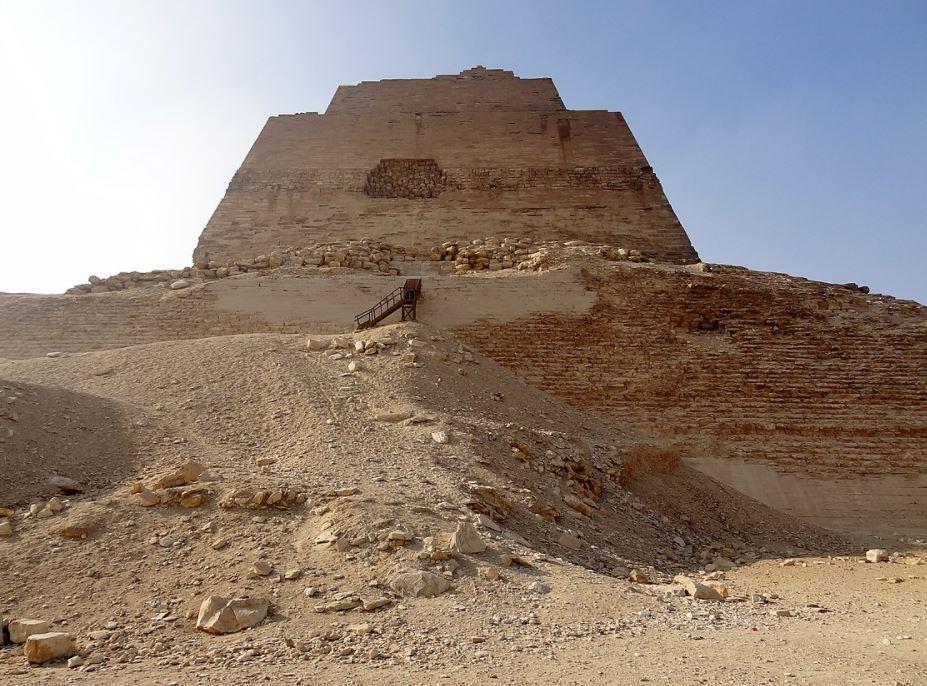
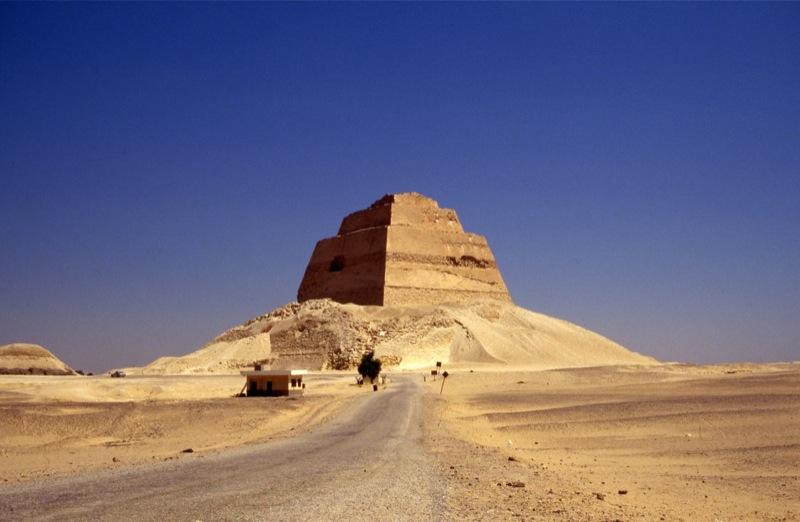
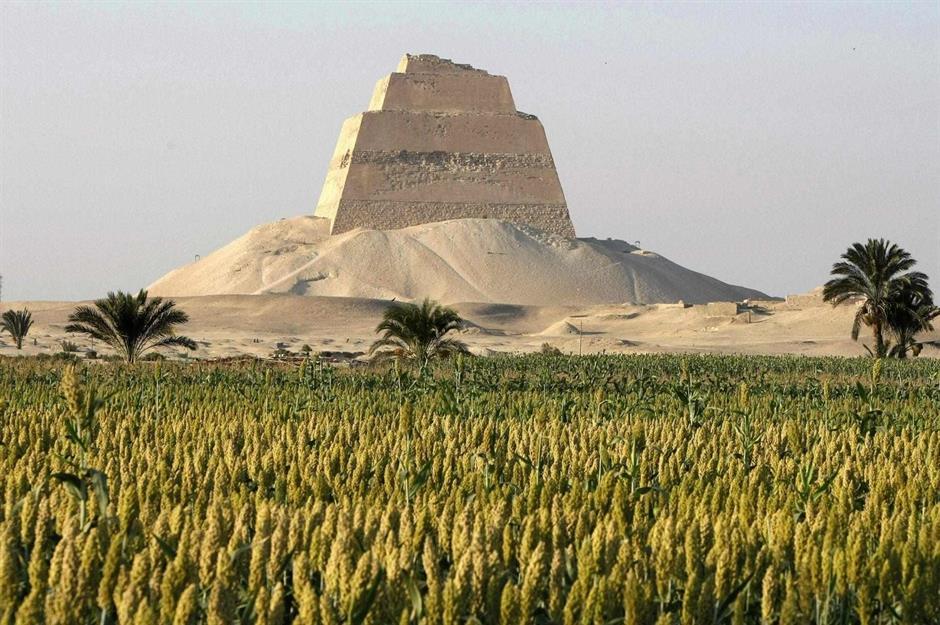
Huni is traditionally associated with the Pyramid of Meidum, one of the most unusual pyramids in Egypt.
The monument is located near the modern village of Meidum, south of Cairo and near the entrance to the Faiyum region.
Today, the pyramid looks very different from the famous pyramids of Giza.
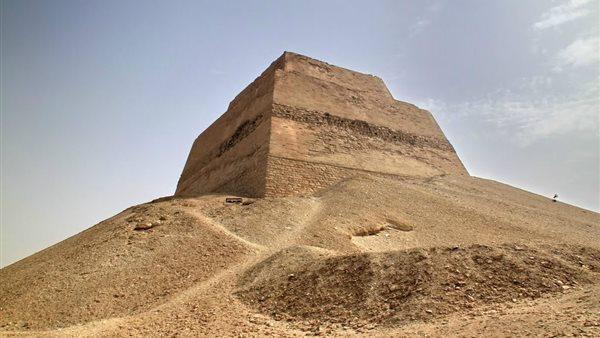
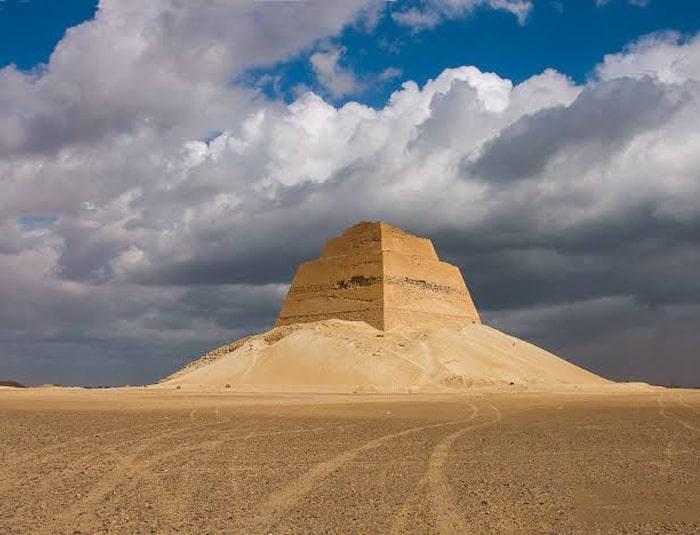
Its central core rises above the desert, surrounded by the remains of collapsed outer layers.
The monument has sometimes been called the “False Pyramid” because of its unusual appearance.
The exact history of the pyramid remains debated.
Huni is traditionally credited with beginning the project, while his successor Sneferu is believed to have completed or substantially modified it.
This makes the Pyramid of Meidum particularly important because it may represent a transition between two generations of Egyptian pyramid builders.
The Evolution of the Pyramid
The Pyramid of Meidum appears to have been constructed in several stages.
It may originally have been designed as a stepped pyramid, following the tradition established during the Third Dynasty.
Later, the monument was transformed into a structure with smooth outer sides.
This architectural change was extremely significant.
Egyptian builders were moving away from the traditional stepped form and toward the true pyramid shape that would later dominate the royal cemeteries of Dahshur and Giza.
The project demonstrates that pyramid construction was a gradual process.
Egyptian architects did not immediately discover the perfect method for building a large smooth-sided pyramid.
Instead, they experimented with different designs and construction techniques over several generations.
Huni’s period was part of this important process.
Why Did the Pyramid Change?
The transformation of the Meidum Pyramid created significant engineering challenges.
Building a large structure with smooth outer sides required a strong internal core and carefully planned layers of stone.
If the outer material was placed incorrectly or the underlying structure was not strong enough, the monument could become unstable.
The surviving remains of Meidum show that much of its outer structure eventually collapsed.
The exact reason for the collapse remains debated.
Structural problems, changes in construction, environmental factors, and later stone removal may all have contributed to the pyramid’s present appearance.
Whatever the cause, the monument provides valuable evidence about the difficulties faced by early Egyptian architects.
Huni and Sneferu
Huni’s historical story is closely connected with Sneferu, who became the first king of the Fourth Dynasty.
Sneferu was one of the greatest pyramid builders in Egyptian history.
He constructed or developed several major pyramids, including the Bent Pyramid and the Red Pyramid at Dahshur.
The transition from Huni to Sneferu therefore marks an important moment in Egyptian architectural history.
The exact family relationship between the two kings is not completely certain, although later traditions and historical interpretations connect them.
What is more important is that Sneferu inherited a powerful and well-organized state.
The architectural experiments of Huni’s period helped prepare the way for Sneferu’s achievements.
The Meidum Funerary Complex
The Pyramid of Meidum was part of a larger royal funerary complex.
The complex included a mortuary temple, causeway, and other structures associated with the king’s burial and religious cult.
The surrounding cemetery also contains important private tombs belonging to members of the royal court.
These tombs provide valuable information about Egyptian society during the transition from the Third to the Fourth Dynasty.
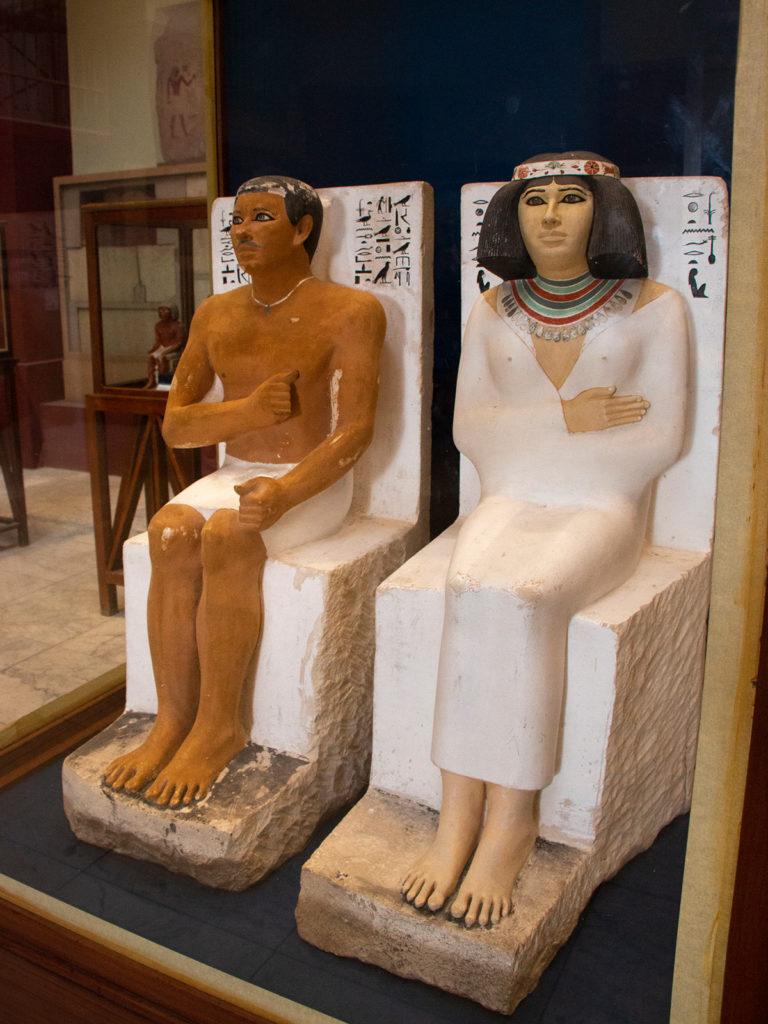
One of the most famous discoveries from the area is the pair of painted limestone statues known as Rahotep and Nofret.
The statues are among the finest surviving examples of Old Kingdom Egyptian art.
They demonstrate the high level of artistic skill achieved by Egyptian craftsmen during this period.
The Meidum Geese
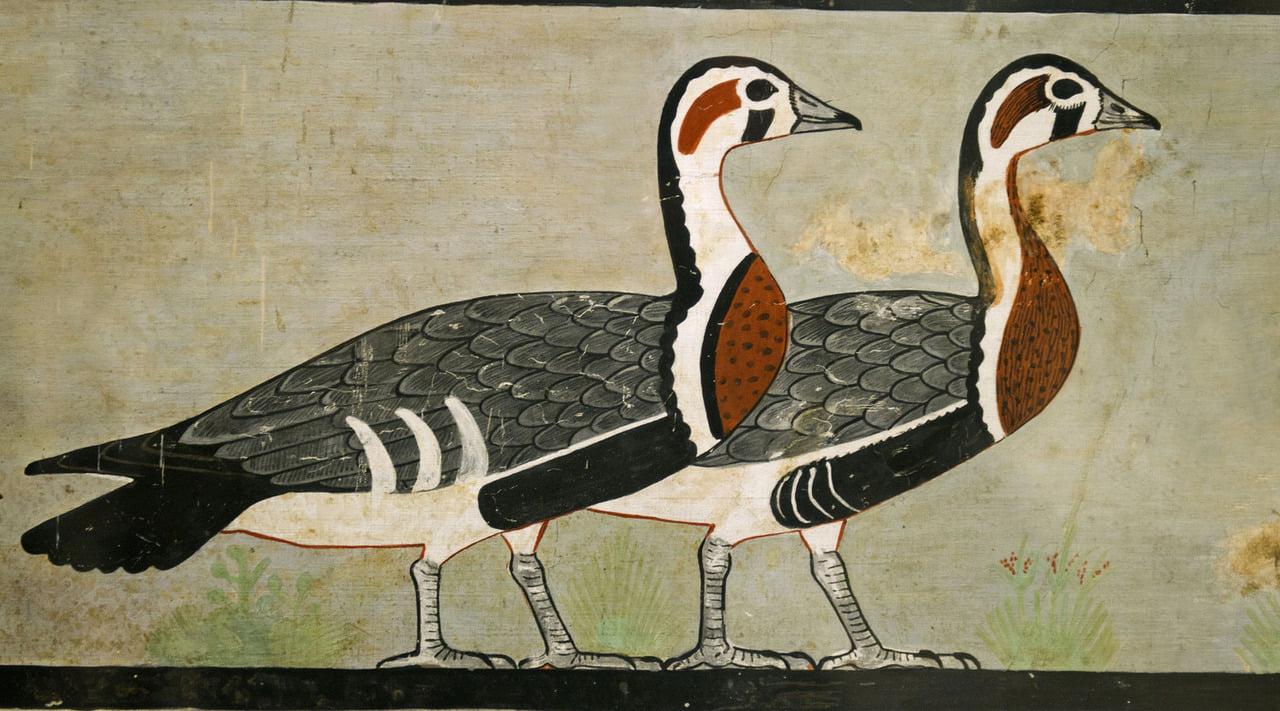
Another famous discovery connected with Meidum is the painting commonly known as the Meidum Geese.
The artwork depicts several geese in remarkable detail and naturalistic style.
It was found in the tomb of Nefermaat, an important official and member of the royal family.
The painting demonstrates the sophistication of Old Kingdom Egyptian art.
Although it is not a direct monument of Huni himself, its discovery at Meidum highlights the importance of the region during the period associated with Huni and Sneferu.
The tombs around the pyramid also show how closely royal monuments were connected with the lives of important officials.
Huni and Egyptian Religion
Religion played a central role in the life of the Egyptian king.
The pharaoh was considered a divine ruler and was responsible for maintaining maat, the cosmic order that governed the universe.
After death, the king was expected to continue his existence in the divine world.
The pyramid and its surrounding complex were designed to support this eternal existence.
The burial chamber protected the king’s remains, while the mortuary temple provided a place for rituals and offerings.
The pyramid itself symbolized the king’s connection with the heavens and his journey toward the divine realm.
Huni’s association with a major pyramid project therefore reflects the religious importance of royal architecture during the Old Kingdom.
The Mystery of Huni’s Tomb
Despite the importance of the Pyramid of Meidum, there is no confirmed burial of Huni.
This creates an important historical mystery.
If Huni began the pyramid, was it intended to become his final resting place?
Did Sneferu later take control of the project?
Was Huni eventually buried somewhere else?
There is no definitive answer.
The absence of a royal mummy or clear inscription identifying Huni’s burial means that historians must remain cautious.
The pyramid’s connection with Huni is based on historical traditions and archaeological interpretation rather than an absolutely certain burial identification.
This uncertainty is one of the reasons Huni remains a fascinating figure.
Huni’s Role in the Development of the Pyramids
Huni’s importance becomes clearer when his reign is placed within the long history of Egyptian pyramid construction.
Djoser’s Step Pyramid represented a revolutionary beginning.
Sekhemkhet continued the stepped-pyramid tradition.
Khaba experimented with another pyramid design.
Huni’s period witnessed the development of the structure at Meidum.
Sneferu later perfected the smooth-sided pyramid through several ambitious experiments.
His Red Pyramid became one of the earliest successful true pyramids.
After Sneferu came Khufu, whose Great Pyramid at Giza became the largest and most famous pyramid ever constructed.
This sequence demonstrates that the pyramids of Giza were the result of generations of architectural experimentation.
Huni belonged to one of those important generations.
The End of the Third Dynasty
Huni is generally considered the last ruler of the Third Dynasty.
After his death, Sneferu became king and established the Fourth Dynasty.
The beginning of the Fourth Dynasty marked a new era of Egyptian monumental architecture.
Sneferu’s reign was particularly important because he built several pyramids and developed techniques that eventually allowed Egyptian architects to construct stable smooth-sided pyramids.
The achievements of Sneferu and his successors were made possible by the knowledge accumulated during earlier generations.
Huni therefore stands at an important historical turning point.
His period connected the experimental architecture of the Third Dynasty with the great pyramid-building projects of the Fourth Dynasty.
Huni’s Legacy
Huni is not remembered through enormous inscriptions or a perfectly preserved royal tomb.
Instead, his legacy survives through an architectural tradition.
The Pyramid of Meidum represents one of the most important stages in the development of the Egyptian pyramid.
Its unusual design reveals the challenges that ancient builders faced.
Its connection with both Huni and Sneferu demonstrates how royal construction projects could continue across different reigns.
The monument also provides evidence of the growing power of the Egyptian state.
A project of this scale required large numbers of workers, engineers, craftsmen, administrators, and religious officials.
It required the organization of stone quarries, transportation systems, food supplies, and construction teams.
The ability to organize such a project demonstrates the sophistication of the Egyptian government during the Old Kingdom.
Why Huni Matters Today
Huni may be one of Egypt’s lesser-known pharaohs, but his historical importance should not be underestimated.
He ruled at a moment when Egyptian architecture was undergoing a major transformation.
The ancient Egyptians were moving from stepped monuments toward the smooth-sided pyramids that would become the symbol of their civilization.
The monument associated with Huni at Meidum provides physical evidence of this transformation.
Visitors who see the pyramid today are looking at more than an ancient ruin.
They are seeing an experiment in engineering that helped shape the future of Egyptian architecture.
The pyramid stands as a reminder that the Great Pyramid of Giza was not an isolated achievement.
It was the result of centuries of experimentation, innovation, and accumulated knowledge.
Conclusion
Huni, the final generally recognized king of Egypt’s Third Dynasty, ruled during one of the most important transitional periods in ancient Egyptian history.
Although very little is known about his personal life or political achievements, his period played an important role in the development of royal architecture.
The Pyramid of Meidum, traditionally associated with Huni and later connected with Sneferu, represents an important step between the early stepped pyramids and the true smooth-sided pyramids of the Fourth Dynasty.
Its unusual appearance, complex construction history, and connection with two generations of rulers make it one of Egypt’s most fascinating monuments.
Huni’s reign helped bridge the gap between the architectural revolution of Djoser and the great pyramid-building achievements of Sneferu and Khufu.
His story reminds us that ancient Egypt’s greatest monuments were not created overnight.
They were the result of generations of experimentation.
From Djoser’s Step Pyramid to the pyramids of Dahshur and finally the magnificent monuments of Giza, Egyptian architects continually refined their ideas.
Huni was part of that remarkable journey.
Although his pyramid may never have reached the form originally intended, the remains at Meidum continue to preserve his place in the history of ancient Egypt.
Huni may not be one of the most famous pharaohs, but his era helped create the architectural foundations for the pyramids that would become eternal symbols of ancient Egypt.