Hotepsekhemwy was an early ruler of ancient Egypt and is generally considered the first king of Egypt’s Second Dynasty. He ruled during the Early Dynastic Period, shortly after the end of the First Dynasty, probably around the late 4th or early 3rd millennium BCE.
His reign marked an important transition in Egyptian history. The First Dynasty had established the foundations of the unified Egyptian state, and Hotepsekhemwy inherited a kingdom that already possessed a centralized monarchy, royal administration, religious institutions, and established traditions of kingship.
Although very little is known about his personal life or specific achievements, archaeological discoveries bearing his name provide valuable information about the early Second Dynasty.
Who Was Hotepsekhemwy?
The name Hotepsekhemwy is generally translated as “The Two Powers Are at Peace” or “The Two Powers Are Pleased.”
The name is particularly interesting because the “Two Powers” may refer to important divine or political forces within the Egyptian state.
The word Hotep is associated with peace, satisfaction, or being pleased.
Sekhemwy refers to the “Two Powers.”
The meaning of the name may therefore have carried an important political or religious message.
After the First Dynasty, Egypt may have experienced political tensions or divisions.
The name Hotepsekhemwy could have symbolized reconciliation and stability.
However, the exact historical meaning of the name remains uncertain.
The Beginning of the Second Dynasty
Hotepsekhemwy became king after Qa'a, the final ruler of the First Dynasty.
The transition between the two dynasties is not completely understood.
Later Egyptian historical traditions provide different versions of the early kings, while archaeological evidence from this period is relatively limited.
Despite this uncertainty, Hotepsekhemwy is traditionally regarded as the founder of the Second Dynasty.
His reign demonstrates that the Egyptian monarchy survived the end of the First Dynasty.
The institutions created by earlier rulers continued to function.
The king remained the central political and religious authority.
This continuity was one of the most important characteristics of ancient Egyptian civilization.
Egypt at the Beginning of the Second Dynasty
When Hotepsekhemwy became king, Egypt was already a highly organized agricultural society.
The Nile River was the foundation of the economy.
Its annual flood deposited fertile soil along the riverbanks, allowing farmers to grow crops such as wheat and barley.
The central government collected agricultural resources and redistributed them.
Royal estates supplied food and materials to the palace.
Officials managed taxation, agriculture, transportation, trade, and religious institutions.
Hotepsekhemwy inherited this administrative system.
His main responsibility was likely to preserve the unity and stability of the kingdom.
The Meaning of His Royal Name
Hotepsekhemwy's name is particularly significant because it may reflect the political situation of early Second Dynasty Egypt.
The phrase “The Two Powers Are at Peace” has sometimes been interpreted as a reference to reconciliation.
The “Two Powers” may have had religious meanings, possibly referring to divine forces.
They may also have represented political divisions within Egypt.
However, there is no definitive evidence proving that Egypt was experiencing a major civil war during his reign.
Historians therefore treat this interpretation cautiously.
What is certain is that the name itself emphasizes peace, stability, and harmony.
These were extremely important concepts in Egyptian kingship.
The Pharaoh and Maat
The ancient Egyptian king was responsible for maintaining maat, the divine order of the universe.
Maat represented balance, harmony, justice, truth, and stability.
The pharaoh's role was to protect Egypt and ensure that chaos did not overcome order.
A royal name emphasizing peace would have fit naturally into this ideology.
Hotepsekhemwy's name may have communicated that the king had restored or maintained harmony within the kingdom.
This concept would remain central to Egyptian royal ideology for thousands of years.
Evidence from Royal Seals
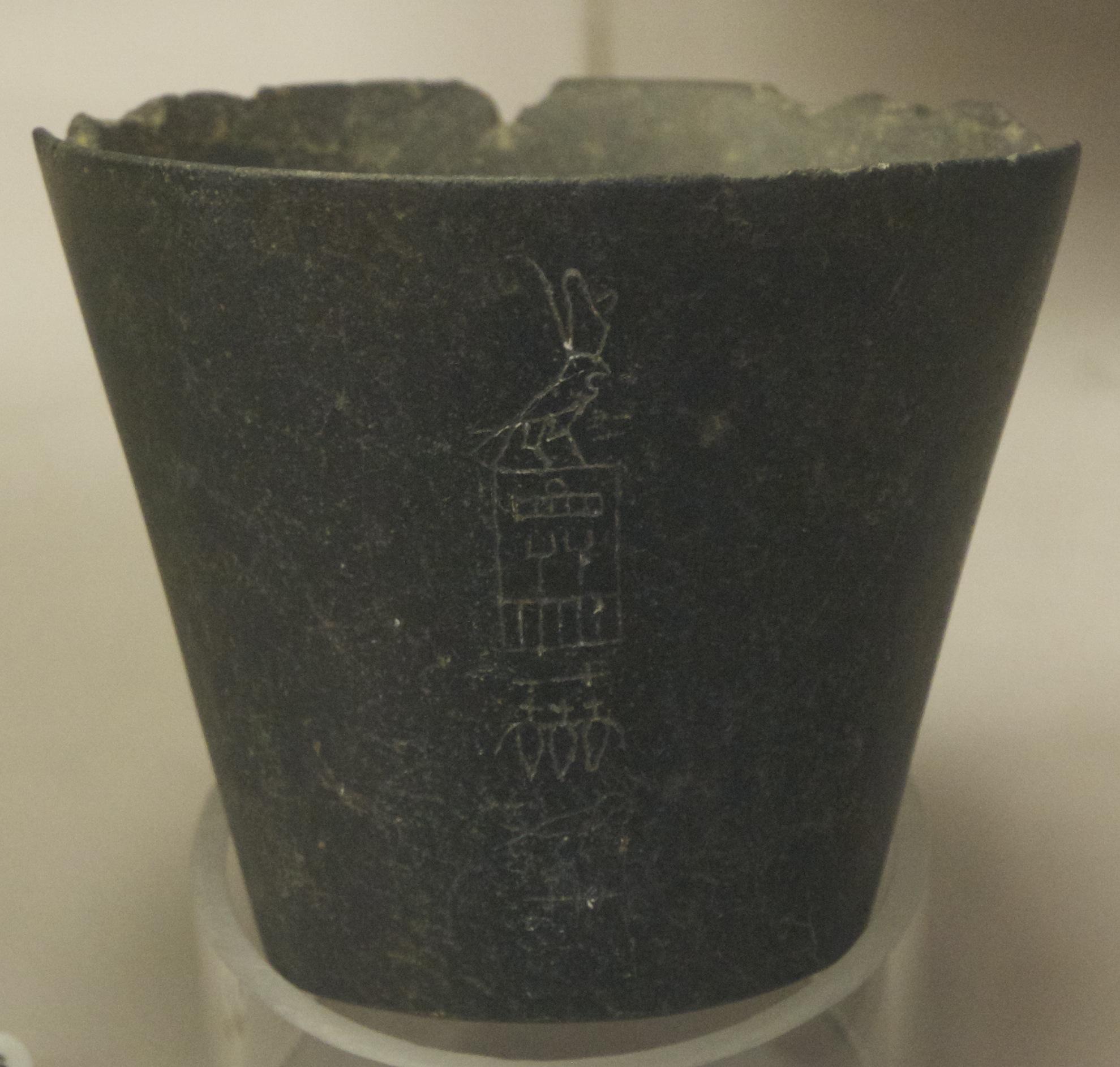
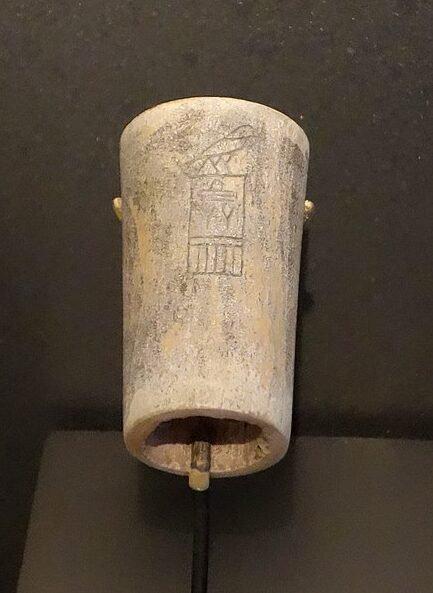
Very little survives from Hotepsekhemwy's reign, but archaeologists have discovered objects bearing his name.
Seal impressions are particularly important.
Ancient Egyptians used seals to identify containers, goods, documents, and administrative institutions.
A seal could be pressed into wet clay, leaving behind an impression.
The name of the king or an official could appear on the seal.
These objects provide evidence that the royal administration continued to operate during Hotepsekhemwy's reign.
They also demonstrate that writing and bureaucracy remained important tools of government.
Hotepsekhemwy and Saqqara
Hotepsekhemwy is associated with archaeological evidence from Saqqara, which became one of Egypt's most important cemeteries.
Saqqara was located near the ancient city of Memphis.
Its strategic position made it an important royal and elite cemetery.
Although the famous Step Pyramid of Djoser would not be built until centuries later, Saqqara was already being used during the Early Dynastic Period.
Large underground tombs were constructed for important officials.
These monuments demonstrate the continuing importance of Memphis and the northern part of Egypt.
Hotepsekhemwy's reign belongs to this early stage of Saqqara's development.
Abydos and the Royal Tradition
Abydos remained an important royal cemetery during the Second Dynasty.
The early kings of Egypt had been buried in the Umm el-Qa'ab cemetery near Abydos.
The site became closely associated with royal ancestors.
Later, Abydos became one of Egypt's most sacred religious centers because of its connection with Osiris.
The early royal burials helped establish the site's importance.
Hotepsekhemwy's reign therefore continued a long tradition of royal association with Abydos, even though evidence for his exact burial place is uncertain.
Hotepsekhemwy's Tomb
The exact location of Hotepsekhemwy's royal tomb has not been conclusively identified.
Some archaeological evidence has led scholars to consider possible burial structures at Saqqara, but the identification remains uncertain.
This is one reason why Hotepsekhemwy is less well understood than later Egyptian kings.
Unlike famous pharaohs whose tombs and monuments are clearly identified, the archaeological record of the earliest Second Dynasty is incomplete.
Nevertheless, the surviving seals and inscriptions confirm his historical existence and royal status.
Religion During His Reign
Religion remained at the center of Egyptian life.
The pharaoh was believed to have a special relationship with the gods.
Horus was one of the most important deities associated with kingship.
The living king was traditionally connected with Horus, while the deceased king was associated with Osiris.
The king was expected to maintain temples, perform religious rituals, and protect Egypt from chaos.
Hotepsekhemwy continued these traditions.
His royal name, emphasizing peace and power, fits naturally into the religious language of Egyptian kingship.
The Role of Horus
The god Horus was closely connected with the Egyptian monarchy.
Early kings used a Horus name as part of their royal identity.
The king was seen as the earthly manifestation of Horus.
This tradition helped establish the pharaoh's divine legitimacy.
Hotepsekhemwy inherited this royal ideology from the First Dynasty.
His reign shows the continuity between the political traditions of the First and Second Dynasties.
Even though the dynasty changed, the basic concept of divine kingship remained intact.
Memphis and the Egyptian State
The city of Memphis was strategically located near the boundary between Upper and Lower Egypt.
Its position made it ideal for controlling the unified kingdom.
Memphis eventually became one of the most important political and religious centers in Egypt.
The city was closely associated with the god Ptah.
The growth of Memphis was essential to the development of a centralized Egyptian state.
Hotepsekhemwy ruled from within this broader political landscape.
Although there is limited direct evidence about his activities at Memphis, the city's importance continued during the Second Dynasty.
The Egyptian Economy
The economy of Hotepsekhemwy's Egypt depended primarily on agriculture.
Farmers cultivated the fertile land along the Nile.
The central government collected part of the agricultural surplus.
These resources supported the royal court, temples, officials, craftsmen, and workers.
The government also managed royal estates.
Writing and sealing systems helped officials track goods and maintain control over resources.
The administrative system developed during the First Dynasty continued into the Second Dynasty.
Hotepsekhemwy therefore inherited a functioning economic structure.
Trade and Foreign Connections
Egypt maintained connections with neighboring regions.
Trade routes extended toward Nubia, Sinai, the Eastern Desert, and the Levant.
Egypt needed resources such as copper, turquoise, stone, timber, and luxury goods.
The government organized expeditions and controlled the movement of these materials.
The Nile made transportation within Egypt relatively efficient.
These economic networks strengthened the central government and increased the resources available to the royal court.
Hotepsekhemwy ruled during a period when these traditions were already well established.
Early Egyptian Writing
The Second Dynasty continued the development of Egyptian writing.
Hieroglyphic signs were used to record royal names, administrative information, religious references, and the ownership of goods.
The surviving inscriptions from Hotepsekhemwy's reign are limited, but they demonstrate the continued importance of writing.
Seal impressions are especially valuable because they reveal how writing was integrated into administration.
Over the following centuries, Egyptian writing would become much more sophisticated.
It would eventually be used for literature, religious texts, legal documents, historical inscriptions, and personal letters.
Hotepsekhemwy and Royal Administration
The survival of royal seals bearing Hotepsekhemwy's name demonstrates that the central administration remained active.
Officials needed to control the collection and distribution of resources.
They also needed to manage royal estates, religious institutions, and trade.
The king was at the top of this administrative hierarchy.
The bureaucracy that developed during the Early Dynastic Period became one of the defining features of Egyptian civilization.
Hotepsekhemwy helped preserve this system during the transition from the First Dynasty to the Second Dynasty.
Was His Reign Peaceful?
The name Hotepsekhemwy has encouraged historians to consider whether his reign followed a period of political conflict.
The idea that his name means “The Two Powers Are at Peace” has sometimes been interpreted as evidence of reconciliation.
However, there is no clear archaeological proof of a major civil war immediately before his reign.
The meaning may instead have been religious or symbolic.
The king could have been presenting himself as a ruler who maintained harmony between different divine powers or regions.
Therefore, it is safer to say that his name emphasized peace and stability rather than claiming that it definitely ended a civil war.
Hotepsekhemwy's Reign and Stability
Whatever political circumstances surrounded his accession, the Second Dynasty continued.
This itself was an important achievement.
The Egyptian monarchy survived the transition from one dynasty to another.
Administrative systems continued.
Royal religious traditions remained intact.
Agriculture and trade continued to support the kingdom.
This stability allowed later rulers to build upon the foundations of the Early Dynastic Period.
Hotepsekhemwy therefore played an important role in preserving the continuity of Egyptian civilization.
His Successor
Hotepsekhemwy was eventually succeeded by Raneb, also known as Nebre.
Raneb continued the Second Dynasty and is particularly associated with developments in royal and religious traditions.
The succession demonstrates that the monarchy continued to function after Hotepsekhemwy.
The Second Dynasty would eventually produce several more rulers before the beginning of the Third Dynasty.
Hotepsekhemwy's Historical Importance
Hotepsekhemwy may appear to be an obscure king compared with famous pharaohs such as Khufu, Hatshepsut, or Ramesses II.
However, his reign is historically important because it represents the beginning of the Second Dynasty.
The transition from the First Dynasty to the Second Dynasty demonstrates the durability of the Egyptian state.
The political system did not collapse when the ruling dynasty changed.
Instead, the monarchy continued to operate.
Hotepsekhemwy helped preserve the institutions that had been created by the earliest pharaohs.
From Hotepsekhemwy to Djoser
The developments of the Second Dynasty eventually prepared Egypt for the revolutionary architectural achievements of the Third Dynasty.
By the time Djoser became king, Egypt possessed a highly centralized government capable of organizing enormous construction projects.
Djoser's Step Pyramid at Saqqara transformed royal architecture.
Instead of a relatively simple mud-brick tomb, the king's burial complex became a massive stone monument.
This transformation was possible because Egypt had spent centuries developing centralized administration, skilled craftsmanship, religious traditions, and royal authority.
Hotepsekhemwy ruled near the beginning of this long process.
Hotepsekhemwy's Legacy
The surviving evidence from Hotepsekhemwy is limited, but his historical legacy is significant.
He was the first king of the Second Dynasty.
His reign preserved the traditions of centralized Egyptian kingship.
His name emphasized peace and power.
His seals demonstrate the continuation of royal administration.
His period also belongs to the continuing development of Saqqara, Memphis, and the sacred royal traditions of Abydos.
Although his monuments are not as famous as the pyramids of later kings, he was part of the foundation of the civilization that eventually produced them.
Conclusion
Hotepsekhemwy was the first pharaoh of Egypt's Second Dynasty and an important ruler of the Early Dynastic Period.
He inherited a kingdom whose political and administrative institutions had been developed during the First Dynasty.
His reign represents an important moment of continuity in Egyptian history.
His name, often translated as “The Two Powers Are at Peace,” may have expressed ideas of harmony, stability, and reconciliation, although the exact historical meaning remains uncertain.
Archaeological discoveries, especially royal seal impressions, provide evidence that the Egyptian administration continued to function during his reign.
Religion remained central to kingship, with the pharaoh connected to Horus and responsible for maintaining maat, the divine order of the universe.
The cities and cemeteries associated with early dynastic Egypt, including Memphis, Saqqara, and Abydos, continued to play important roles.
Hotepsekhemwy ruled long before the great pyramids of Giza and the temples of the New Kingdom.
Yet his reign formed part of the long process that created the political stability, administrative organization, religious traditions, and architectural knowledge necessary for those later achievements.
As the first king of the Second Dynasty, Hotepsekhemwy helped preserve the continuity of the Egyptian monarchy and carried the traditions of the earliest pharaohs into a new era of ancient Egyptian civilization.