Pharaoh Djoser, also known by his ancient Egyptian name Netjerikhet, was one of the most important rulers of ancient Egypt and one of the most influential kings of the Early Old Kingdom. He ruled during the 3rd Dynasty, around the 27th century BCE, and is best remembered as the pharaoh who commissioned the famous Step Pyramid at Saqqara.
The Step Pyramid was the first large-scale pyramid built in Egypt and represented a revolutionary development in ancient architecture. Before Djoser's reign, Egyptian kings were generally buried in rectangular tombs called mastabas. Under Djoser, this traditional form was transformed into a monumental stepped structure built largely from stone.
His reign therefore marked a turning point in Egyptian history and helped establish the architectural tradition that eventually led to the great pyramids of Giza.
Who Was Djoser?
Djoser's birth and family background are not completely known. Historical records from this early period are limited, and Egyptologists continue to debate some details of his family and succession.
Djoser is generally associated with the king whose Horus name was Netjerikhet, meaning something like "Divine of the Body." The name Djoser became associated with him in later periods.
He succeeded Khasekhemwy, the final ruler of Egypt's 2nd Dynasty. Khasekhemwy had helped stabilize Egypt after a period of political conflict, leaving Djoser with a stronger and more unified kingdom.
Djoser inherited a growing centralized state capable of organizing large numbers of workers and resources. This political and economic strength was essential for the enormous construction projects that followed.
Although Djoser is best known for his pyramid, his reign also represents an important stage in the development of Egyptian government, religion, architecture, and royal power.
The Rise of Monumental Stone Architecture
The most important change associated with Djoser's reign was the development of monumental stone architecture.
Earlier Egyptian rulers had built large tombs, temples, and ceremonial structures, but mudbrick remained an important construction material. Djoser's reign introduced a new level of ambition.
His royal complex at Saqqara was built primarily from limestone, creating a permanent monument on a scale that had never been seen before in Egypt.
The man traditionally credited with designing this revolutionary project was Imhotep, Djoser's chief architect and one of the most famous officials in ancient Egyptian history.
Imhotep was more than an architect. He was an administrator, religious official, and trusted member of Djoser's court.
He became so famous in later Egyptian history that he was eventually worshipped as a deity associated with wisdom and healing.
The Step Pyramid of Djoser
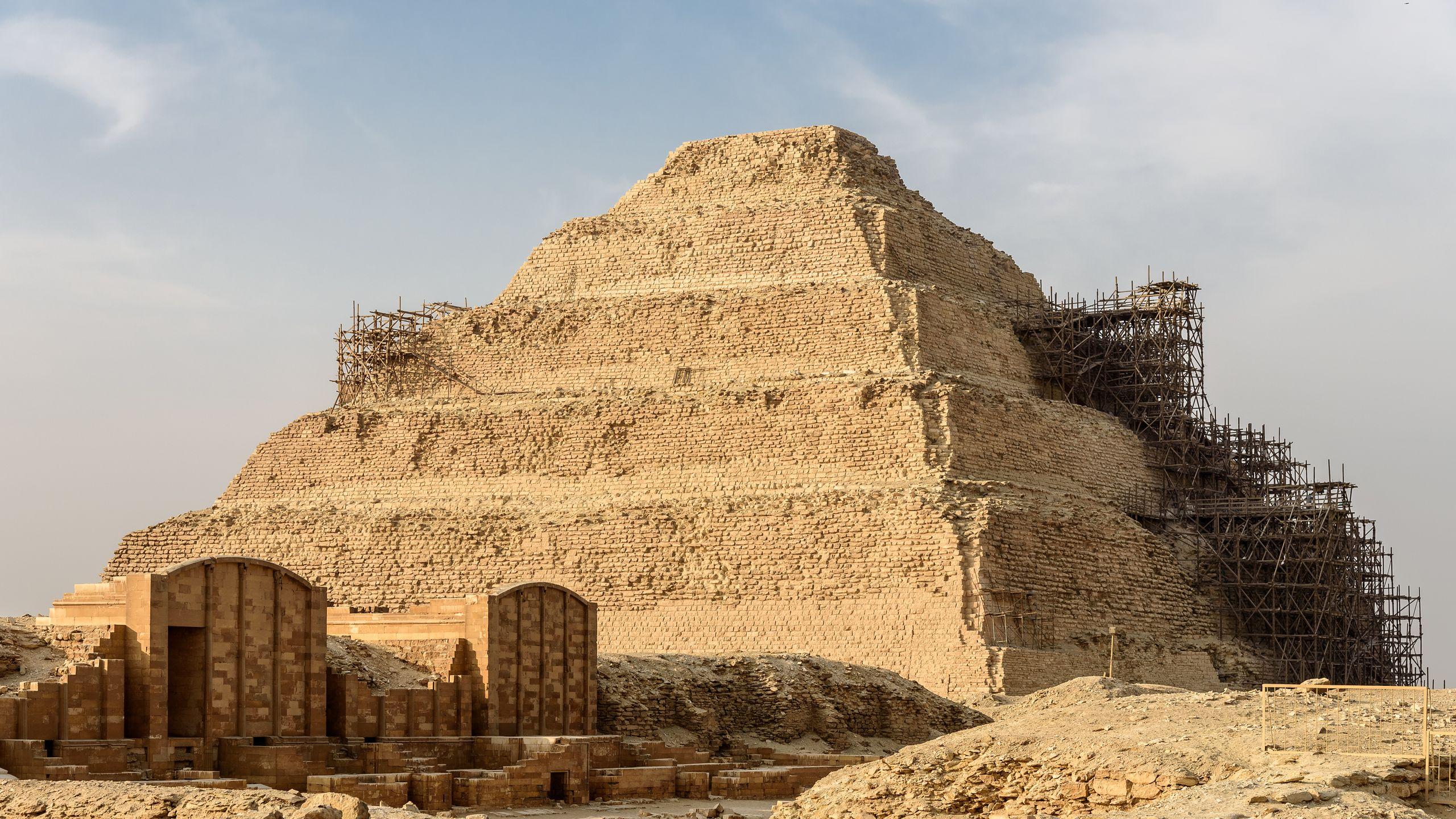
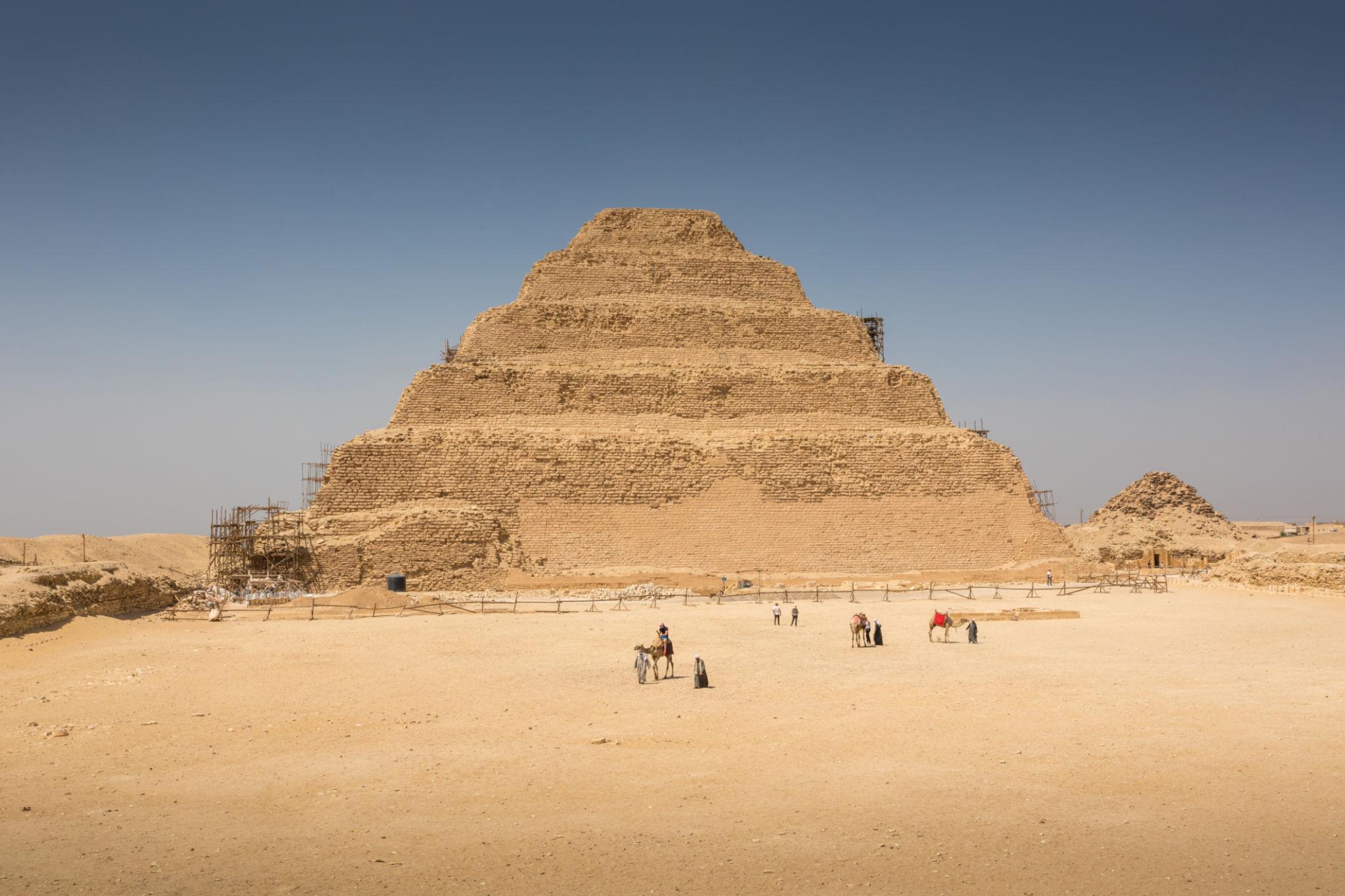
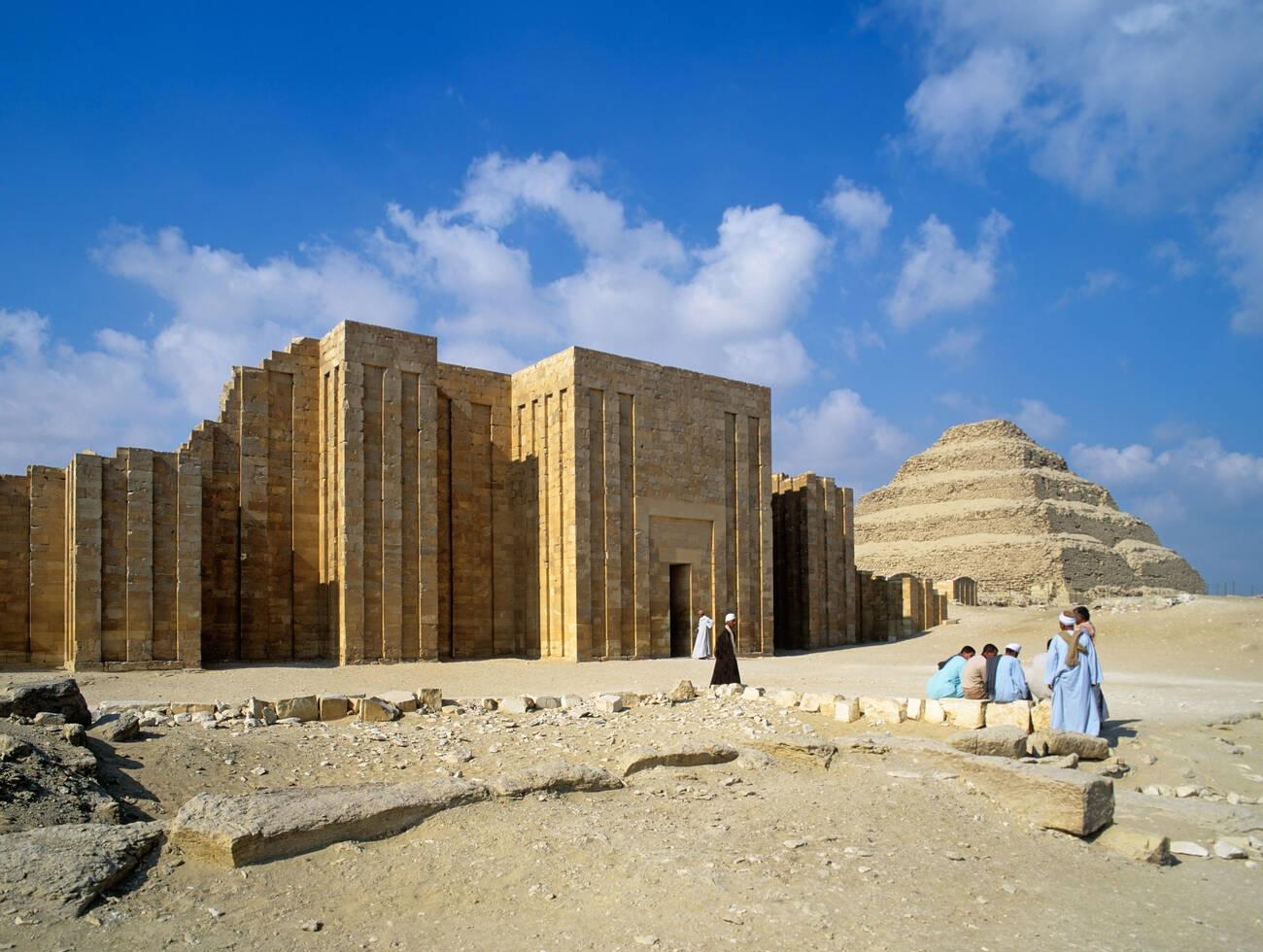
Djoser's most famous achievement is the Step Pyramid at Saqqara, located south of modern Cairo.
The pyramid originally began as a large rectangular mastaba. However, the architects expanded the structure several times, eventually creating six enormous levels rising one above another.
The final monument reached approximately 62 meters in height.
The transformation from a simple mastaba into a six-step pyramid was an extraordinary architectural experiment.
It demonstrated that Egyptian architects were beginning to understand how stone could be used to create monumental structures that were both stable and visually powerful.
The Step Pyramid was not simply a tomb. It was the centerpiece of a huge royal funerary complex designed to support the king's eternal existence.
The Saqqara Funerary Complex
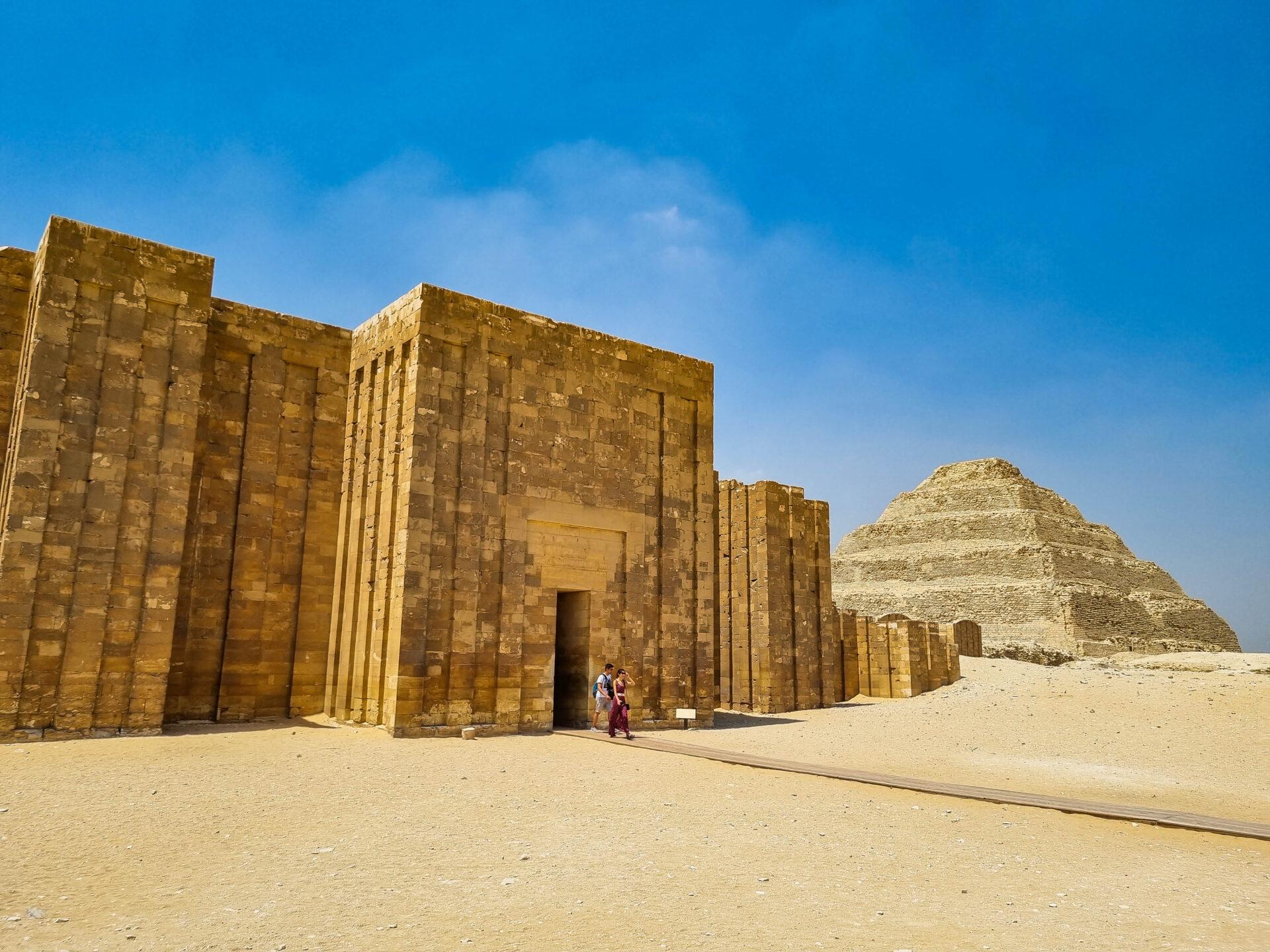
The Step Pyramid stood inside a massive complex surrounded by a long limestone enclosure wall.
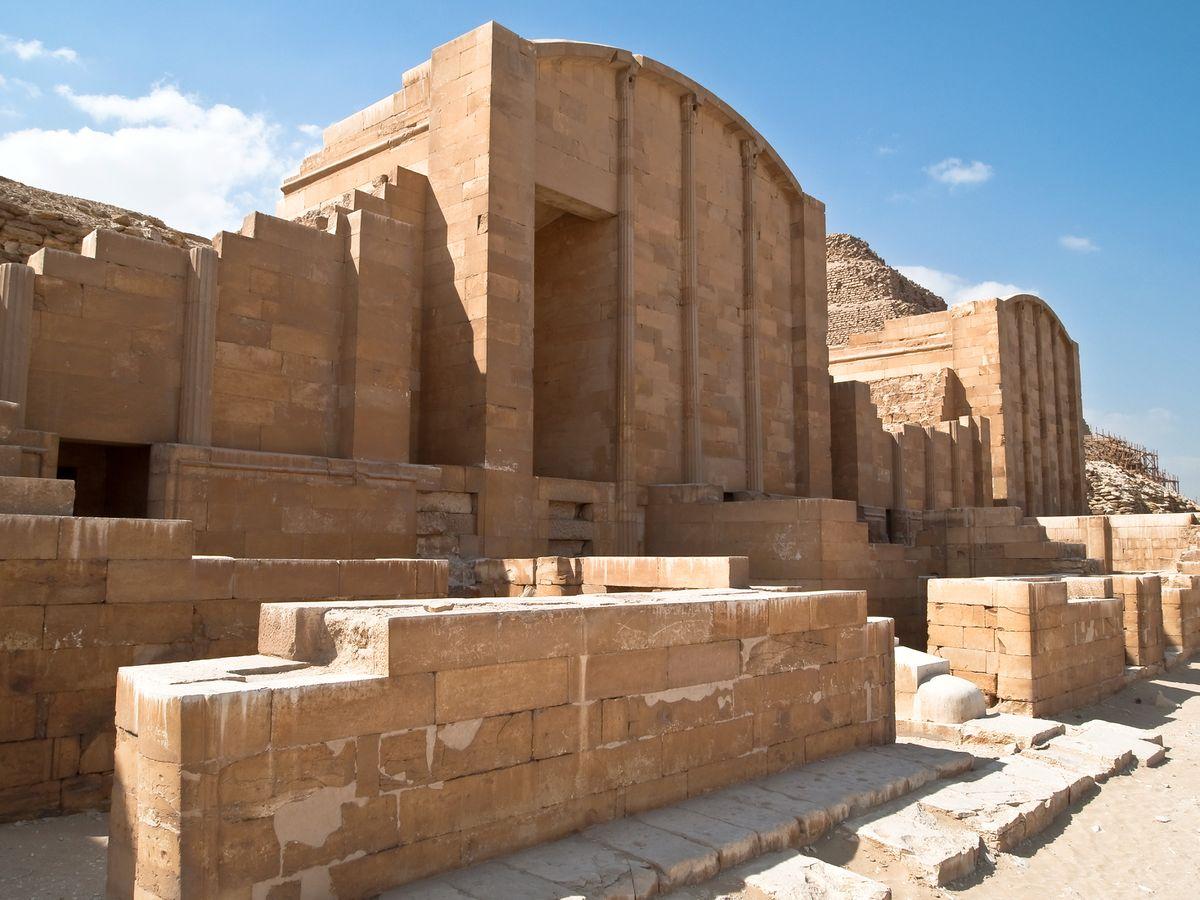
The complex included courtyards, temples, ceremonial buildings, chapels, underground galleries, and symbolic structures.
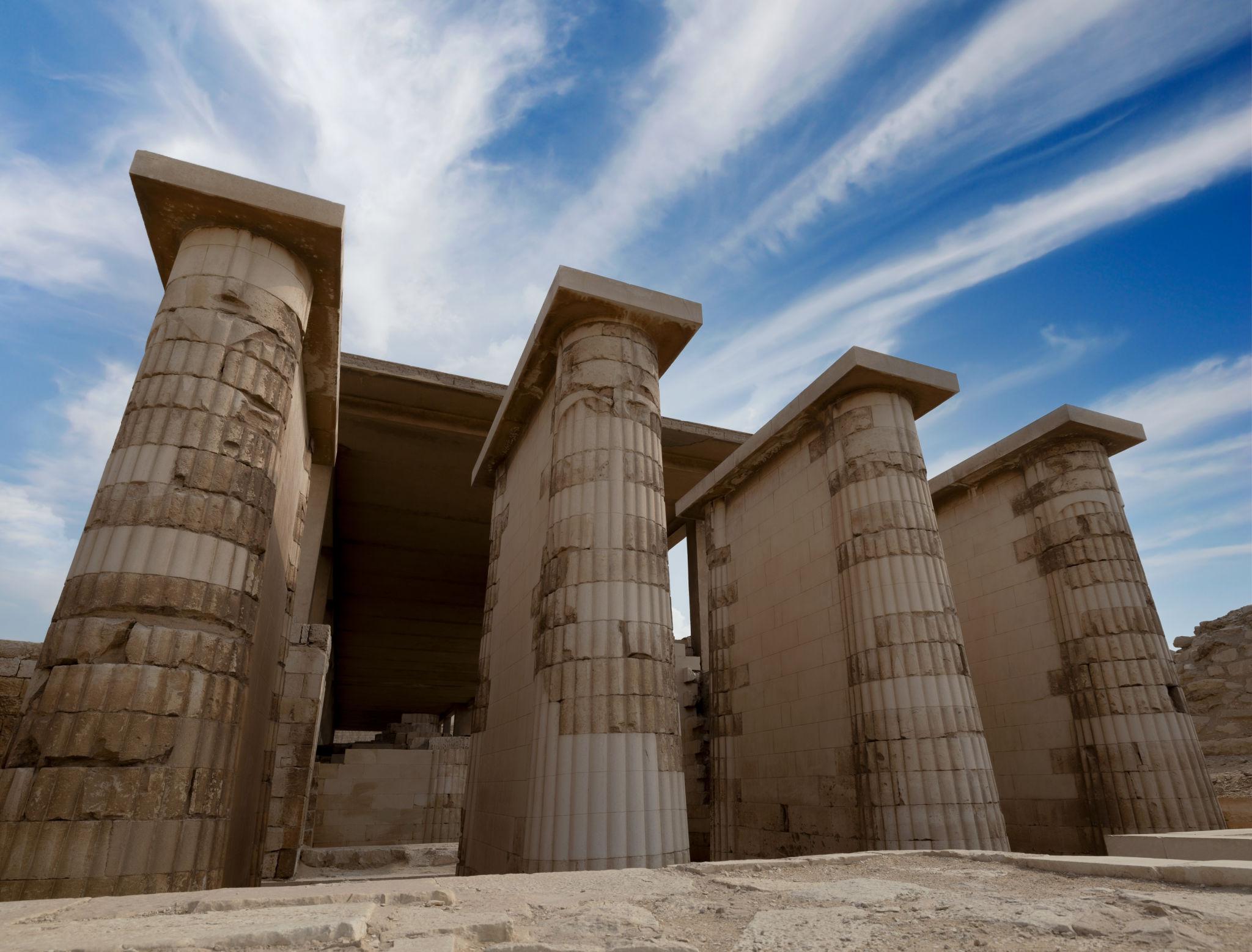
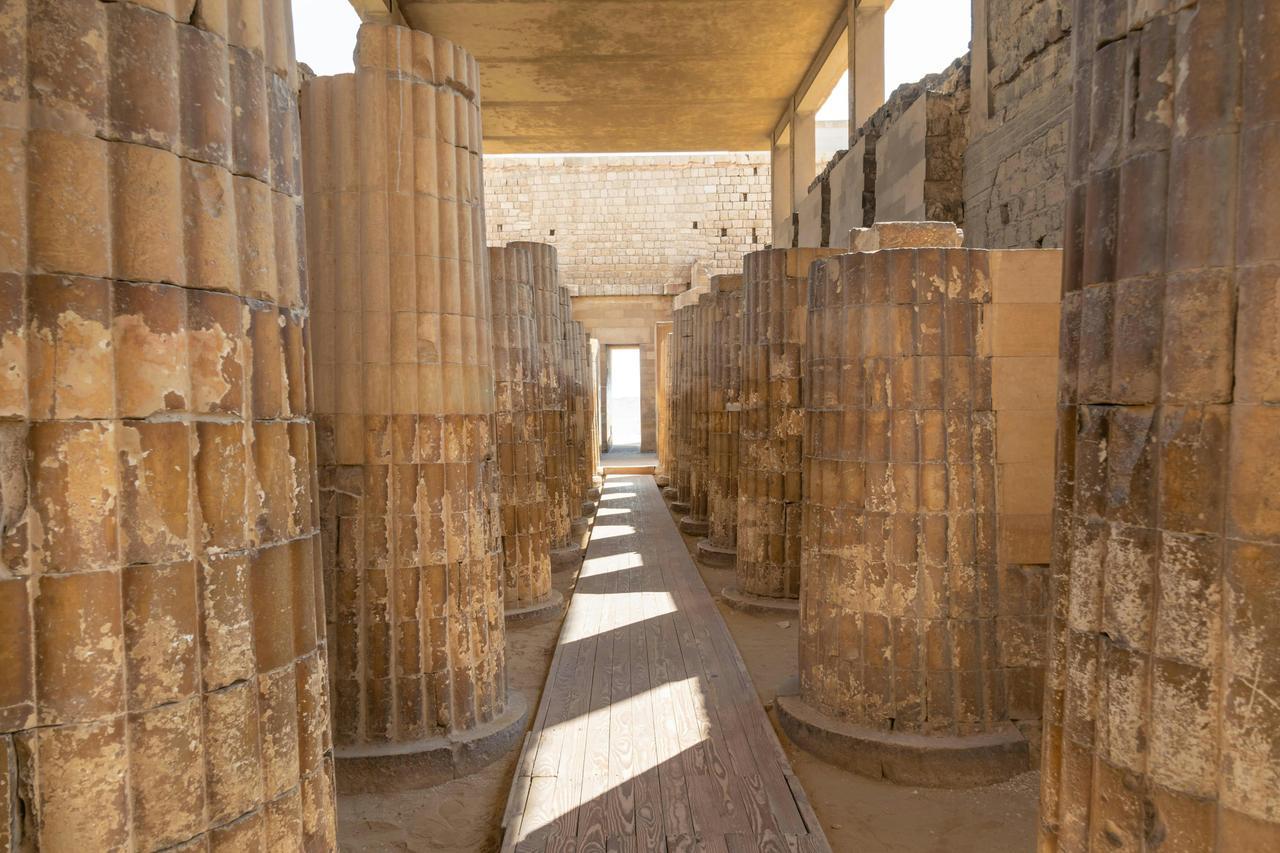
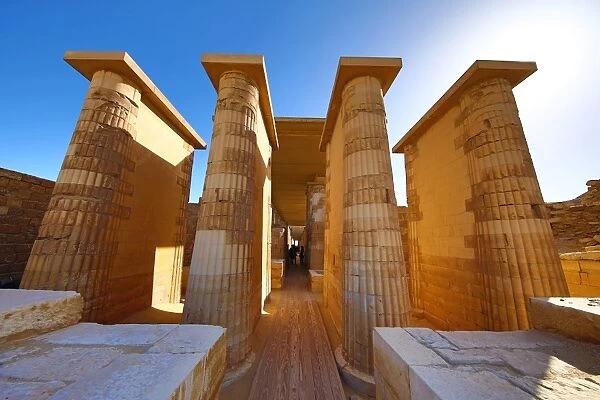
One of its most impressive features is the entrance colonnade, where stone columns were designed to resemble natural plant forms.
These columns demonstrate how Egyptian architects translated traditional materials such as reeds and wood into permanent stone architecture.
The complex also included a large ceremonial courtyard associated with the Heb-Sed festival, an important royal ceremony.
The Heb-Sed was intended to renew the king's strength and confirm his ability to continue ruling Egypt.
By including spaces connected with this ceremony, Djoser's monument symbolically allowed his kingship to continue forever.
Djoser and the Egyptian Religion
Religion played a central role in ancient Egyptian kingship.
Egyptians believed that the pharaoh was responsible for maintaining maat, the divine order that kept the universe, society, and nature in balance.
The king was not simply a political ruler. He had an important religious role connecting humanity with the gods.
After death, the pharaoh was expected to continue his existence in the afterlife.
Djoser's pyramid complex was therefore designed as an eternal home for his royal spirit.
The underground sections contain a complicated network of corridors, chambers, galleries, and burial areas.
The central burial chamber was located deep beneath the pyramid.
The entire complex was designed around the idea that Djoser would continue to exist as an eternal divine king.
The pyramid's upward shape may also have symbolized the king's journey toward the heavens.
The Role of Imhotep
Imhotep's relationship with Djoser is one of the most famous partnerships in Egyptian history.
As Djoser's chief architect and official, Imhotep is traditionally credited with designing the Step Pyramid and its surrounding complex.
His achievement was extraordinary because he transformed traditional Egyptian building methods into a new form of monumental architecture.
The success of the project made Imhotep famous for generations.
Centuries after his death, Egyptians remembered him as an exceptionally wise man. During later periods, he became associated with medicine and healing and was eventually worshipped as a god.
His name therefore survived for thousands of years, making him one of the earliest historical individuals whose reputation continued long after his death.
Djoser's Royal Power
The construction of the Step Pyramid demonstrates the growing power of the Egyptian state.
A monument of this size required enormous amounts of stone, food, tools, transportation, and human labor.
Thousands of workers and craftsmen would have been involved in quarrying, transporting, shaping, and placing the limestone.
Administrators had to organize supplies and coordinate the different stages of construction.
This means that Djoser's pyramid is also evidence of the development of centralized Egyptian government.
The monument could only have been built by a state with strong administrative institutions and the ability to mobilize resources on a national scale.
Djoser's reign therefore represents an important stage in the emergence of the highly organized Egyptian civilization that would dominate the Nile Valley for thousands of years.
Djoser and the Development of the Pyramid
The Step Pyramid became the foundation for the later development of Egyptian pyramids.
After Djoser, Egyptian architects continued experimenting with pyramid design.
During the 4th Dynasty, Pharaoh Sneferu constructed several major pyramids, including the Bent Pyramid and the Red Pyramid at Dahshur.
These experiments eventually led to the smooth-sided pyramid.
The greatest example was the Great Pyramid of Giza, built for Pharaoh Khufu.
Khafre and Menkaure later built their own great pyramids at Giza.
Although these pyramids look very different from Djoser's Step Pyramid, they belong to the same architectural tradition.
Djoser's monument can therefore be considered one of the most important foundations of Egypt's pyramid-building era.
The Mystery of Djoser's Burial
The exact history of Djoser's burial remains uncertain.
His pyramid contains extensive underground chambers, but the monument was damaged and entered many times over the centuries.
Like many royal tombs in Egypt, it was vulnerable to ancient looting and later disturbance.
Human remains have been discovered in the complex, but identifying them conclusively as Djoser's remains has been difficult.
Despite these uncertainties, archaeological evidence strongly connects the Step Pyramid and its complex with Djoser.
The monument itself remains one of the clearest surviving expressions of his reign and royal ideology.
The Rediscovery of Saqqara
For thousands of years, the Step Pyramid remained a remarkable feature of the Egyptian landscape.
Over time, sand and debris covered parts of the complex, while natural deterioration and human activity damaged other sections.
Modern archaeologists began systematically studying Saqqara and uncovering the remains of Djoser's complex.
Excavations revealed the pyramid, enclosure walls, underground galleries, ceremonial buildings, columns, inscriptions, and other architectural elements.
Restoration projects have helped stabilize and preserve the site.
Today, visitors can explore parts of the ancient complex and see firsthand the architectural innovations that changed Egyptian history.
Saqqara has become one of Egypt's most important archaeological destinations and an essential stop for anyone interested in the origins of the pyramids.
Djoser's Legacy
Djoser's greatest legacy is the transformation of Egyptian royal architecture.
Before his reign, royal tombs were mainly rectangular mastabas.
After his reign, the pyramid became the ultimate symbol of Egyptian kingship.
The Step Pyramid established the idea that a royal tomb could become a vast architectural complex combining religion, ceremony, symbolism, and monumental design.
Djoser's reign also demonstrated the growing strength of the Egyptian state and its ability to organize enormous national projects.
His partnership with Imhotep produced one of the earliest great architectural achievements in human history.
The influence of the Step Pyramid continued through later generations and eventually contributed to the development of the pyramids at Dahshur and Giza.
Why Djoser Is Important Today
Djoser is not as widely known as some later Egyptian kings such as Khufu, Ramses II, or Tutankhamun, but his historical importance is enormous.
He ruled during a period when Egypt was developing the political, religious, and technological foundations that would support some of the greatest monuments of the ancient world.
The Step Pyramid represents a moment when Egyptian architecture moved from traditional rectangular tombs toward monumental stone pyramids.
It also demonstrates the extraordinary skills of Egyptian architects, craftsmen, administrators, and laborers.
Most importantly, it shows the power of an ancient civilization capable of transforming a religious vision into a permanent stone monument.
The Pharaoh Who Changed Egypt
Today, the Step Pyramid of Djoser remains one of the most important monuments at Saqqara.
Standing before the pyramid, visitors are looking at a structure that is more than four thousand years old and represents the beginning of Egypt's great pyramid tradition.
Djoser's monument connects the early Old Kingdom with the later pyramids of Sneferu, Khufu, Khafre, and Menkaure.
His story is also the story of Imhotep, the brilliant architect who helped transform a traditional mastaba into the world's first monumental step pyramid.
Djoser understood the importance of architecture, religion, and royal symbolism. His pyramid was designed to preserve his power and identity for eternity.
His name survived because his monument survived.
The sands of Saqqara could not completely erase the achievements of the king who transformed Egyptian architecture.
More than 4,500 years later, the Step Pyramid continues to dominate the landscape and attract visitors from around the world.
Djoser, or Netjerikhet, therefore remains one of the most important pharaohs in ancient Egyptian history.
He was the king who helped begin the age of pyramids, the ruler whose monument changed Egyptian architecture forever, and the pharaoh whose vision at Saqqara became the foundation for some of the greatest monuments ever built.
The story of Djoser is ultimately the story of innovation, royal power, religious belief, and human ambition—a story carved into stone and preserved for thousands of years at Saqqara.