Djedkare Shemai was one of the lesser-known rulers of ancient Egypt's Eighth Dynasty, a group of kings who ruled during the politically complicated period known as the First Intermediate Period. His reign was probably very short, and almost nothing is known about his personal life, family, military activities, or achievements.
Yet Djedkare Shemai is historically important because he belonged to a period when Egypt was undergoing a major transformation. The centralized political system of the Old Kingdom had weakened, powerful local rulers had gained influence, and the traditional authority of the pharaoh was becoming increasingly difficult to maintain.
The story of Djedkare Shemai is therefore not the story of a famous conqueror or pyramid builder. Instead, it is the story of a mysterious king who ruled during one of the most uncertain periods in Egyptian history.
Egypt After the Old Kingdom
To understand Djedkare Shemai, we must first look at the decline of the Old Kingdom.
For centuries, Egypt had been ruled by powerful kings who controlled a highly centralized state.
The pharaoh stood at the center of government, religion, and administration.
Kings such as Djoser, Sneferu, Khufu, Khafre, Menkaure, Teti, Pepi I, and Pepi II had created a powerful royal tradition.
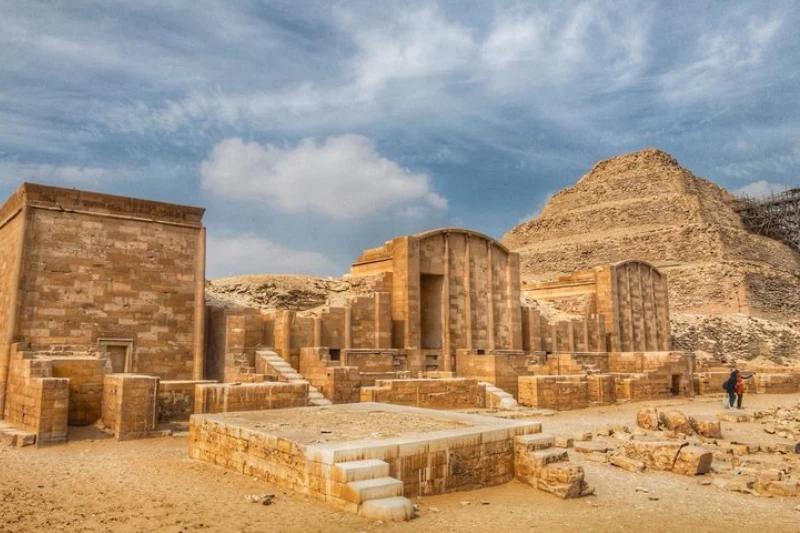
The pyramids of Giza and Saqqara demonstrated the extraordinary resources available to the monarchy.
But the political system gradually began to change.
The Long Reign of Pepi II
The reign of Pepi II, also known by his throne name Neferkare, was particularly important.
Ancient traditions describe him as one of the longest-reigning monarchs in world history.
His long reign provided stability for Egypt for many decades.
However, during the later years of the Sixth Dynasty, provincial governors became increasingly powerful.
Local families accumulated wealth.
Administrative positions became hereditary.
The central government gradually lost some of its ability to control distant regions.
When Pepi II finally died, Egypt faced a difficult succession.
The End of the Sixth Dynasty
The final rulers of the Sixth Dynasty appear to have held the throne for relatively short periods.
The historical records are incomplete, and Egyptologists continue to debate the exact sequence of events.
Eventually, the Sixth Dynasty ended.
Egypt entered the period known as the First Intermediate Period.
This was a time when political power became decentralized.
Different regions were increasingly controlled by local leaders.
Djedkare Shemai belonged to the dynasty that followed this troubled transition.
The Eighth Dynasty
The Eighth Dynasty is one of the least understood dynasties of ancient Egypt.
Unlike the great dynasties of the Old Kingdom, it left relatively few monuments.
The kings associated with the dynasty appear to have ruled mainly from the Memphis region.
Their authority was probably much weaker than that of earlier Old Kingdom pharaohs.
Several kings may have ruled for only a few months or years.
Djedkare Shemai appears to have been one of these short-reigning rulers.
The Name Djedkare Shemai
The name Djedkare was already known in Egyptian royal history.
One of the most famous earlier kings to use the name was Djedkare Isesi, a powerful Fifth Dynasty ruler.
The later Djedkare Shemai was a completely different king.
His name should therefore not be confused with Djedkare Isesi.
The word "Djed" is associated with stability and endurance in Egyptian religious thought.
The djed pillar, for example, symbolized stability and was closely connected with the god Osiris.
The name therefore carried an important religious meaning.
Who Was Djedkare Shemai?
Unfortunately, almost nothing is known about Djedkare Shemai's personal identity.
We do not know exactly when he was born.
We do not know the names of his parents.
We do not know whether he had a large royal family.
No major military campaign is securely associated with him.
No major temple or pyramid can confidently be attributed to his reign.
His historical existence is primarily preserved through Egyptian royal traditions.
Evidence from King Lists
One of the main sources for the rulers of the Eighth Dynasty is the Abydos King List.
The list was created during the New Kingdom, long after Djedkare Shemai's lifetime.
It records a sequence of Egyptian kings that later Egyptians considered part of their legitimate royal history.
The appearance of Djedkare Shemai in such a list is important because it demonstrates that later Egyptians remembered his name.
However, the list does not provide a detailed biography.
The Turin Royal Canon
Another important source is the Turin Royal Canon.
This ancient papyrus contains the names of Egyptian kings and, in many cases, the lengths of their reigns.
Unfortunately, the papyrus is damaged, particularly in sections dealing with the First Intermediate Period.
As a result, information about Djedkare Shemai is extremely limited.
The missing portions of the document make it difficult to determine precisely how long he ruled.
A Very Short Reign
The rulers of the Eighth Dynasty are generally believed to have had short reigns.
Djedkare Shemai was probably no exception.
A short reign would have made it difficult to undertake major construction projects.
Building a pyramid required years of planning, quarrying, transportation, engineering, and religious preparation.
A king who ruled for only a brief period might not have had the opportunity to begin a major royal monument.
This may explain why almost no architecture survives from his reign.
The Political Situation
The political situation during Djedkare Shemai's time was very different from the age of Khufu.
The central government had lost much of its traditional power.
Local rulers controlled important regions.
The pharaoh remained a religious symbol, but his practical authority was increasingly limited.
This political decentralization was one of the defining characteristics of the First Intermediate Period.
The Governors of Upper Egypt
Upper Egypt became especially important during the First Intermediate Period.
Local governors controlled cities, agricultural estates, and trade routes.
Some became powerful enough to act almost like independent rulers.
Their tomb inscriptions reveal their growing confidence and political importance.
They still recognized the pharaoh, but they often emphasized their own local achievements.
This was very different from the political culture of the early Old Kingdom.
Memphis and the Northern Kingdom
The Eighth Dynasty was probably centered around Memphis.
Memphis had been one of the most important cities in Egypt for centuries.
It was the traditional administrative center of the Old Kingdom.
Even when royal authority weakened, Memphis remained a major religious and political center.
Djedkare Shemai's association with the Eighth Dynasty suggests that his court was probably connected with the Memphite region.
Religion During the First Intermediate Period
Political instability did not mean that Egyptian religion disappeared.
The gods remained central to daily life.
People continued worshiping Osiris, Ra, Ptah, Hathor, Anubis, and many other deities.
The belief in the afterlife remained extremely important.
The royal ideology also continued, even though the political power of individual kings was weaker.
Djedkare Shemai would still have been expected to maintain maat.
The Meaning of Maat
Maat represented truth, justice, balance, and cosmic order.
Egyptian kings were traditionally responsible for maintaining maat.
They were expected to protect Egypt from disorder and ensure that the gods received proper offerings.
During periods of political instability, the concept of maat became even more important.
The idea of restoring order would later become a central theme in the reunification of Egypt.
The Economy of Egypt
The Egyptian economy depended heavily on agriculture.
The Nile provided fertile soil and water.
Farmers produced grain and other crops that supported the population.
The state collected resources from agricultural estates.
During the First Intermediate Period, economic control became more fragmented.
Local rulers increasingly controlled resources within their own territories.
This reduced the ability of the central government to mobilize resources for enormous royal projects.
The Nile Flood
The annual Nile flood was essential to Egyptian agriculture.
When the flood was strong and regular, crops could flourish.
When floods were unusually low, agricultural production could suffer.
Some scholars believe that environmental changes contributed to the political difficulties of the First Intermediate Period.
However, the evidence suggests that climate was only one factor among many.
Political decentralization and economic changes were equally important.
Trade and Foreign Relations
Egypt continued to trade with neighboring regions during the First Intermediate Period.
Trade routes connected Egypt with Nubia, the eastern Mediterranean, and desert regions.
However, the weakening of the central government may have reduced its ability to organize large state-sponsored expeditions.
Local rulers could increasingly control trade routes and resources.
This further strengthened regional political power.
Why Did the Old Kingdom Collapse?
The end of the Old Kingdom was not caused by one single event.
Historians consider several factors.
The power of provincial governors increased.
The central administration became less effective.
Economic pressures may have grown.
Environmental conditions may have affected agricultural production.
The succession after Pepi II was unstable.
Together, these factors weakened the traditional political system.
Djedkare Shemai ruled in the aftermath of this transformation.
Djedkare Shemai and Royal Legitimacy
Even during political fragmentation, the title of pharaoh remained powerful.
Being recognized as king provided religious and political legitimacy.
Djedkare Shemai therefore continued a tradition that had existed for thousands of years.
His royal name connected him with the ancient ideology of divine kingship.
Although his practical power may have been limited, his position still carried enormous symbolic importance.
A King Without a Monument
One of the most striking aspects of Djedkare Shemai's history is the absence of a known monumental complex.
Earlier pharaohs had left enormous pyramids.
The great pyramids of Giza required enormous amounts of labor and resources.
By Djedkare Shemai's time, such projects were increasingly difficult to organize.
The absence of a pyramid may therefore reflect the changing political and economic circumstances of Egypt.
The Importance of Small Pieces of Evidence
When studying a poorly documented king like Djedkare Shemai, even a single inscription or name can be valuable.
A royal name can establish that a ruler existed.
A king list can provide information about succession.
A damaged papyrus can help reconstruct chronology.
Archaeological remains can reveal the economic conditions of the period.
Egyptologists combine these small pieces of evidence to reconstruct the past.
The Problem of Ancient Egyptian Chronology
Egyptian chronology is not always straightforward.
The ancient Egyptians did not leave a single complete historical timeline.
Instead, historians rely on king lists, inscriptions, monuments, archaeological layers, and later historical writers.
Some documents are damaged.
Others omit certain rulers.
Some rulers may have ruled simultaneously in different regions.
This is particularly important when studying the First Intermediate Period.
Djedkare Shemai's Place in History
Djedkare Shemai was not a famous conqueror.
He did not build one of Egypt's great pyramids.
He did not leave behind extensive inscriptions.
His reign probably did not last long.
Nevertheless, his position in Egyptian history is important.
He represents the continuing tradition of kingship during one of Egypt's most politically fragmented eras.
The First Intermediate Period
The First Intermediate Period lasted for several generations.
It was a time of political fragmentation, but it was also a period of cultural development.
Local artistic traditions became more important.
Provincial centers flourished.
Religious beliefs continued to evolve.
Literary traditions developed.
The period should therefore not be described simply as an age of chaos.
It was a period of transformation.
The Rise of Thebes
One of the most important developments during the First Intermediate Period was the growing power of Thebes.
The rulers of Thebes eventually became strong enough to challenge northern political authorities.
This competition would ultimately lead to the reunification of Egypt.
The process took generations.
Djedkare Shemai ruled before that reunification occurred.
The Road to the Middle Kingdom
The political struggles of the First Intermediate Period eventually produced a new centralized state.
The rulers of the Eleventh Dynasty, especially Mentuhotep II, played a crucial role in reunifying Egypt.
The Middle Kingdom that followed became another major period of Egyptian civilization.
It was characterized by strong royal authority, monumental architecture, literature, and renewed economic expansion.
Djedkare Shemai belonged to the earlier generation that lived through the beginning of this transformation.
Why His Story Matters
The story of Djedkare Shemai teaches us an important lesson about ancient history.
Famous rulers are not the only people who matter.
Sometimes a ruler who left almost no physical evidence can tell us something extremely important about a historical transition.
Djedkare Shemai represents the weakening of the Old Kingdom's centralized political system.
His existence demonstrates that Egyptian kingship continued even when the political structure surrounding it had changed dramatically.
A Forgotten Pharaoh
For modern visitors to Egypt, Djedkare Shemai is almost invisible.
There is no famous monument bearing his name.
Tourists rarely encounter his story.
Yet his reign belongs to an important chapter in Egyptian history.
He was part of the long chain of rulers connecting the Old Kingdom with the First Intermediate Period.
His name survived because Egyptian scribes considered him worthy of inclusion in royal traditions.
Legacy
The legacy of Djedkare Shemai is therefore mainly historical.
He represents a time when Egypt was divided politically but still united culturally by language, religion, traditions, and the ancient idea of kingship.
His reign shows that the Egyptian state could weaken without Egyptian civilization disappearing.
The institutions of religion, agriculture, writing, and local government continued.
Eventually, these traditions helped Egypt recover and enter the Middle Kingdom.
Conclusion
Djedkare Shemai was one of the mysterious kings of Egypt's Eighth Dynasty and one of the lesser-known rulers of the First Intermediate Period.
Almost nothing is known about his personal life or achievements.
His reign was probably short, and no major monument can confidently be attributed to him.
Yet his historical importance should not be underestimated.
Djedkare Shemai ruled during a time when Egypt was undergoing a dramatic transformation.
The centralized political system created during the Old Kingdom had weakened.
The powerful provincial governors who had developed during the later Sixth Dynasty were becoming increasingly independent.
Economic pressures and possible environmental changes may have contributed to the instability.
The traditional authority of the pharaoh remained important, but the practical power of the central government was much weaker than it had been during the great pyramid-building era.
Djedkare Shemai's royal name demonstrates that the ideology of Egyptian kingship survived.
Even during a politically fragmented period, the pharaoh continued to represent divine authority and the maintenance of maat.
His name was preserved in later Egyptian king lists, ensuring that his place in the royal succession was not completely forgotten.
The First Intermediate Period eventually came to an end when the rulers of Upper Egypt succeeded in reunifying the country.
The rise of the Eleventh Dynasty and the achievements of Mentuhotep II opened the way to the Middle Kingdom.
Djedkare Shemai lived before that reunification, during the uncertain period when Egypt's political future was still unclear.
His story is therefore not one of great conquest or monumental construction.
It is a story of survival, uncertainty, and political transformation.
Djedkare Shemai may have been a forgotten pharaoh, but his place in the history of ancient Egypt helps us understand the difficult transition between the centralized Old Kingdom and the fragmented world of the First Intermediate Period.