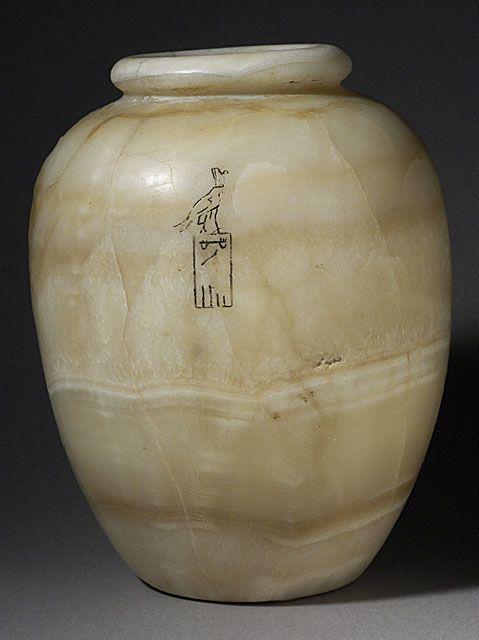
Thamphthis is one of the most mysterious names associated with the kings of ancient Egypt. He is traditionally placed near the end of Egypt's Fourth Dynasty, the dynasty famous for producing the great pyramids of Giza.
Unlike famous rulers such as Khufu, Khafre, and Menkaure, there is very little archaeological evidence that can be confidently connected with Thamphthis. His name appears mainly in much later historical traditions and king lists, while contemporary monuments and inscriptions have not yet provided clear evidence proving that he ruled Egypt.
For this reason, Thamphthis occupies a fascinating position between history and historical tradition. His story shows how difficult it can be to reconstruct the chronology of ancient Egypt when surviving evidence is incomplete.
Who Was Thamphthis?
Thamphthis is the Greek form of a name preserved in later historical sources.
He is generally placed within the Fourth Dynasty, probably after Shepseskaf, although the exact order of rulers at the end of the dynasty is debated.
The ancient Egyptian king lists do not all agree about the rulers who followed Menkaure.
Some traditions mention Shepseskaf, followed by another ruler associated with the end of the dynasty.
Other traditions preserve names that may represent different versions of the same historical individuals.
Thamphthis is therefore difficult to place with certainty.
The Fourth Dynasty
To understand Thamphthis, it is important to understand the world in which he was supposedly king.
The Fourth Dynasty was one of the most extraordinary periods in ancient Egyptian history.
It was the age of the great pyramids.
Sneferu experimented with pyramid construction at Meidum and Dahshur.
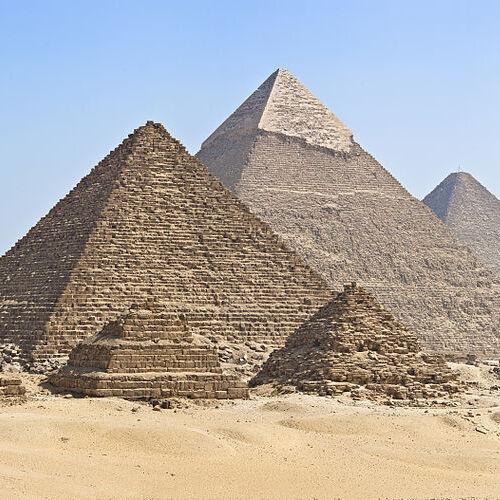
Khufu built the Great Pyramid at Giza.
Djedefre constructed his royal monument at Abu Rawash.
Khafre built the second great pyramid at Giza.
Menkaure built the third great pyramid.
These monuments demonstrate the enormous political and economic power of the Egyptian state.
The End of the Pyramid-Building Era
By the time of the final rulers of the Fourth Dynasty, Egypt was entering a period of transition.
The enormous pyramids of Khufu and Khafre represented an extraordinary concentration of royal resources.
Menkaure's pyramid was significantly smaller.
His successor, Shepseskaf, abandoned the traditional pyramid form entirely and built a massive mastaba at Saqqara.
This change suggests that royal funerary traditions were evolving.
It was during this transitional period that Thamphthis is traditionally placed.
Thamphthis in Ancient Sources
The main evidence for Thamphthis comes from later historical traditions rather than contemporary inscriptions.
One of the most important sources for the name is the work of the Egyptian historian Manetho.
Manetho was a priest who lived during the Ptolemaic period, many centuries after the Fourth Dynasty.
He compiled a history of Egypt and organized its rulers into dynasties.
His original work has not survived completely.
Instead, later writers preserved portions of his king lists.
The name Thamphthis survives through these later references.
Manetho's History
Manetho's history was extremely important because it organized Egyptian history into dynasties.
His chronological system influenced later historians and remains useful today.
However, Manetho wrote approximately two thousand years after the Fourth Dynasty.
His information may have been based on older Egyptian traditions, temple records, king lists, or oral traditions.
Because the original work is lost, historians must reconstruct his information from later quotations.
This makes the historical identity of Thamphthis uncertain.
The Turin King List and Other Sources
Ancient Egyptian king lists provide another important source for reconstructing royal chronology.
The Turin Royal Canon, written on papyrus during the New Kingdom, lists many Egyptian rulers.
Other lists, such as the Abydos King List and the Saqqara King List, preserve additional royal names.
However, the lists do not always agree.
Some rulers were omitted for political or religious reasons.
Others may have been remembered under different names.
This creates difficulties when historians attempt to identify obscure kings such as Thamphthis.
Was Thamphthis a Real King?
The question of whether Thamphthis actually ruled Egypt remains unresolved.
There is currently no securely identified contemporary monument bearing his name.
No confirmed pyramid has been attributed to him.
No royal tomb has been conclusively identified as his.
No large collection of inscriptions records his activities.
This lack of evidence has caused many Egyptologists to question whether Thamphthis was an independent historical king.
He may have been a genuine ruler whose monuments disappeared.
Alternatively, his name may preserve a distorted memory of another king.
Another possibility is that he ruled for such a short time that very little evidence survived.
Why Evidence Can Disappear
The absence of archaeological evidence does not automatically prove that a king never existed.
Ancient monuments were frequently destroyed, dismantled, or reused.
Stone from old temples and tombs was often incorporated into later buildings.
Royal monuments could also disappear beneath desert sand.
Short reigns produced fewer monuments.
Political changes could lead later rulers to remove the names of earlier kings.
Therefore, the lack of evidence for Thamphthis must be interpreted carefully.
The Problem of Royal Names
Ancient Egyptian kings had several names and titles.
A pharaoh's birth name was different from his throne name.
Greek historians often recorded Egyptian names in forms that were very different from their original pronunciation.
Over centuries, names could be transformed as they passed from Egyptian writing into Greek and later languages.
Thamphthis may therefore represent a Greek rendering of an Egyptian royal name that is not yet securely identified.
This is one reason why his identity remains uncertain.
Thamphthis and Shepseskaf
Shepseskaf is generally considered the last clearly established ruler of the Fourth Dynasty.
His tomb, Mastabat Fara'un, survives at Saqqara.
Later historical traditions sometimes place Thamphthis after Shepseskaf.
If Thamphthis did exist as an independent ruler, his reign may have occurred during a very short transitional period.
This could explain why his archaeological footprint is so limited.
The Political Situation
The final years of the Fourth Dynasty are difficult to reconstruct.
The great pyramid-building projects had consumed enormous resources.
The royal family was large and contained many competing branches.
Succession may not always have been straightforward.
Different members of the royal family may have possessed claims to the throne.
However, there is insufficient evidence to describe this period as a definite civil war or political collapse.
Egypt remained a powerful and organized state.
The transition to the Fifth Dynasty appears to have been relatively successful.
The Rise of the Fifth Dynasty
After the Fourth Dynasty, Egypt entered the Fifth Dynasty.
The first ruler is generally identified as Userkaf.
The Fifth Dynasty placed increased emphasis on the worship of Ra, the sun god.
Several kings built solar temples near the royal cemetery of Abusir.
Pyramids continued to be constructed, but they were generally smaller than those of the Fourth Dynasty.
This change represents an important transformation in royal religious architecture.
Thamphthis and the Solar Tradition
If Thamphthis truly belonged to the end of the Fourth Dynasty, he lived during a period when solar religion was becoming increasingly important.
The pharaoh was traditionally associated with Horus, but connections with Ra became increasingly prominent.
Royal names, monuments, and temples reflected this development.
The transition from the Fourth to Fifth Dynasty therefore involved changes in the way kings expressed their divine legitimacy.
The Giza Pyramids and Thamphthis
Thamphthis is historically connected with the generation that followed the great pyramid builders.
The Giza Plateau had already been transformed by the monuments of Khufu, Khafre, and Menkaure.
These monuments represented the height of royal architectural power.
By the time of the later Fourth Dynasty, royal construction was taking new forms.
The shift from enormous pyramids to smaller or different funerary monuments suggests that the role of royal architecture was changing.
Ancient Egyptian Administration
Even a short-lived king would have inherited an impressive administrative system.
Egypt was divided into administrative districts known as nomes.
Officials managed agricultural production.
The state collected taxes and stored grain.
Royal estates provided food and resources.
Craftsmen worked in specialized workshops.
Quarries supplied stone for royal construction.
Boats transported materials along the Nile.
This system allowed Egypt to support large monuments and religious institutions.
The Importance of the Nile
The Nile River was central to Egyptian civilization.
It provided water, fertile agricultural land, transportation, and communication.
The annual flood deposited fertile soil along the valley.
Agricultural production supported the population and the royal government.
Stone from distant quarries could be transported by boat.
For a ruler like Thamphthis, if he existed, controlling the Nile Valley would have been essential to maintaining royal authority.
Religion and the Pharaoh
The Egyptian king was more than a political ruler.
He had an essential religious role.
The pharaoh was responsible for maintaining maat, the principle of truth, justice, balance, and cosmic order.
Temples performed rituals on behalf of the gods.
The king was traditionally presented as the intermediary between humans and the divine world.
After death, the pharaoh was expected to join the gods and continue his eternal existence.
These beliefs shaped Egyptian royal architecture.
The Afterlife
Egyptian royal tombs were designed to support the king after death.
The burial chamber protected the body.
Funerary texts and rituals helped guide the deceased.
Offerings sustained the king's spiritual existence.
The royal monument also served as a place where priests could continue rituals.
Whether Thamphthis had a royal tomb remains unknown.
No monument has yet been securely identified as his.
Why His Tomb Has Not Been Found
There are several possible explanations.
His tomb may have been destroyed.
It may have been built from materials that did not survive.
It may remain undiscovered.
It may have been reused by another ruler.
Or Thamphthis may never have ruled independently.
Archaeological research continues to examine the monuments of the late Fourth Dynasty and early Fifth Dynasty.
Future discoveries could potentially change our understanding of this mysterious king.
Thamphthis in Modern Egyptology
Modern Egyptology does not treat Thamphthis in the same way as Khufu or Khafre.
There is abundant archaeological evidence for those rulers.
Their pyramids, statues, inscriptions, and funerary complexes survive.
Thamphthis, by contrast, is mainly known from later historical traditions.
This makes him a good example of the difference between historical tradition and archaeological evidence.
Historians must compare literary sources with physical evidence before accepting a reconstruction.
The Mystery of Thamphthis
The mystery surrounding Thamphthis is what makes him fascinating.
Was he a real pharaoh?
Did he rule for a very short time?
Was his name corrupted over centuries?
Did later historians misunderstand the succession at the end of the Fourth Dynasty?
These questions remain open.
Egyptology is an evolving field.
New excavations, inscriptions, and scientific techniques can sometimes transform long-standing interpretations.
What We Know With Confidence
There are several things we can say with confidence.
The Fourth Dynasty ended after the reign of the great pyramid builders.
Shepseskaf was a historical king who built Mastabat Fara'un at Saqqara.
The Fifth Dynasty followed and introduced new forms of royal religious architecture.
Later Egyptian and Greek traditions preserve the name Thamphthis.
However, there is no secure archaeological evidence establishing his reign.
This distinction is important when writing about ancient Egyptian history.
Why Thamphthis Matters
Even though his historical existence is uncertain, Thamphthis is important because he illustrates the challenges of reconstructing ancient history.
Ancient Egypt lasted for thousands of years.
Many records have disappeared.
Temples were destroyed.
Tombs were robbed.
Stone was reused.
Names changed as languages evolved.
Historical traditions sometimes preserved information that archaeology has not yet confirmed.
Thamphthis stands at the center of this problem.
Conclusion
Thamphthis remains one of the most mysterious figures associated with ancient Egypt's Fourth Dynasty.
He is traditionally placed near the end of the dynasty, after the reign of Shepseskaf, but his exact position in Egyptian history remains uncertain.
Unlike Khufu, Khafre, or Menkaure, Thamphthis has left no securely identified pyramid, tomb, temple, or collection of contemporary inscriptions.
Most of what we know about him comes from much later historical traditions, particularly material derived from the writings of Manetho.
This creates an important historical mystery.
Thamphthis may have been a genuine king whose monuments disappeared.
He may have ruled for only a short period.
His name may preserve a distorted memory of another ruler.
Or later historians may have reconstructed the royal succession differently from the way it actually occurred.
Whatever the answer, his traditional position places him during a fascinating period.
The great pyramids of Giza had already been constructed, and Egypt was moving toward the religious and political traditions of the Fifth Dynasty.
The age of the enormous pyramids was ending, while the importance of solar worship and new forms of royal architecture was growing.
Thamphthis therefore represents more than a mysterious name in an ancient king list. He represents one of the gaps in our knowledge of ancient Egypt—a reminder that even after more than a century of Egyptological research, many chapters of pharaonic history remain waiting to be discovered.