Pharaoh Sekhemkhet was one of the lesser-known kings of ancient Egypt, but his short reign played an important role in the development of Egyptian pyramid architecture. He ruled during the 3rd Dynasty of the Old Kingdom, around the 27th century BCE, shortly after the famous Pharaoh Djoser.
Sekhemkhet is best remembered for the unfinished monument known as the Buried Pyramid at Saqqara. Although the pyramid was never completed, it provides valuable information about the early development of pyramid construction and the organization of the Egyptian state.
His story is also surrounded by mystery. Unlike later pharaohs such as Khufu, Hatshepsut, Tutankhamun, and Ramesses II, very few written records survive from Sekhemkhet's reign. As a result, much of what historians know about him comes from archaeology.
Who Was Sekhemkhet?
Sekhemkhet was a king of Egypt's 3rd Dynasty and is generally placed after Djoser in the royal succession. His ancient Egyptian name, Sekhemkhet, is usually translated as something similar to "Powerful of Body."
His exact family relationship with Djoser remains uncertain. Some historians have suggested that he may have been a close relative or possibly a son of Djoser, but there is no definitive evidence establishing his exact relationship.
What is clear is that Sekhemkhet inherited a kingdom that had already begun to experience major changes.
His predecessor Djoser had transformed Egyptian royal architecture by constructing the Step Pyramid at Saqqara. This monument represented a revolutionary shift from traditional rectangular mastaba tombs to monumental stone pyramids.
Sekhemkhet continued this architectural tradition by beginning his own pyramid complex at Saqqara.
The Beginning of a New Architectural Tradition
Before the 3rd Dynasty, Egyptian royal tombs were generally built as large rectangular structures known as mastabas.
Djoser's architects transformed this traditional design into the famous Step Pyramid by placing several levels on top of one another.
This new style became an important symbol of royal power.
Sekhemkhet appears to have followed the same general concept. His own pyramid was planned as a stepped structure and was located near Djoser's monument.
The similarities between the two projects suggest that Sekhemkhet's architects were continuing the architectural experiments that had begun under Djoser.
However, Sekhemkhet's project was never completed.
The Buried Pyramid of Sekhemkhet
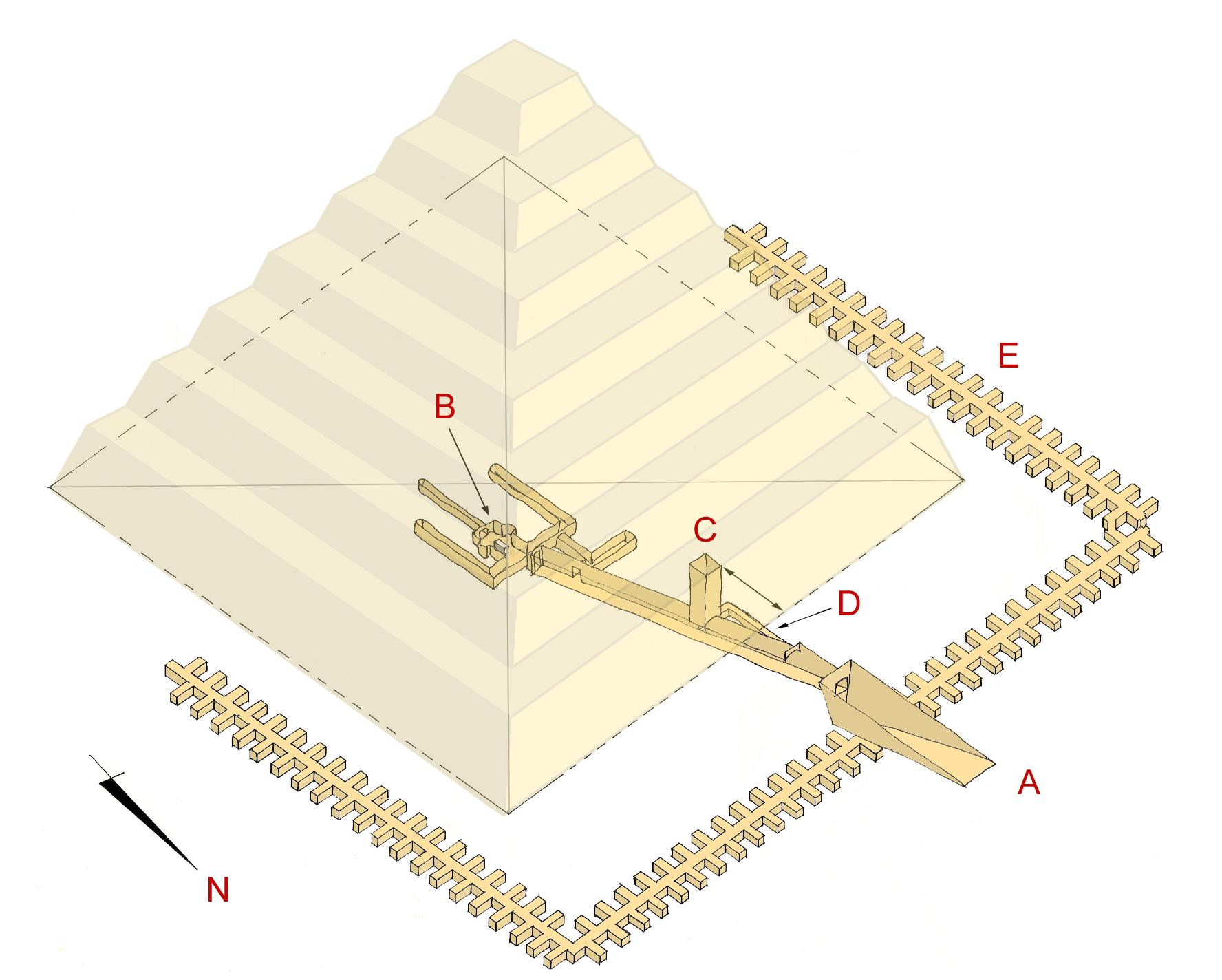
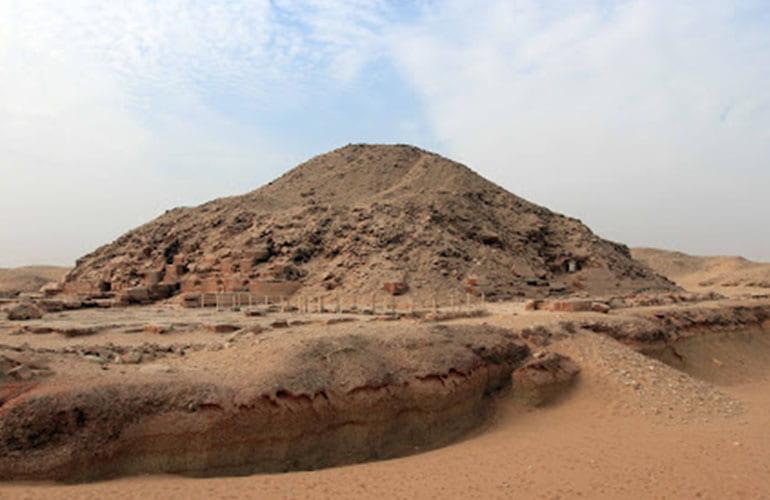
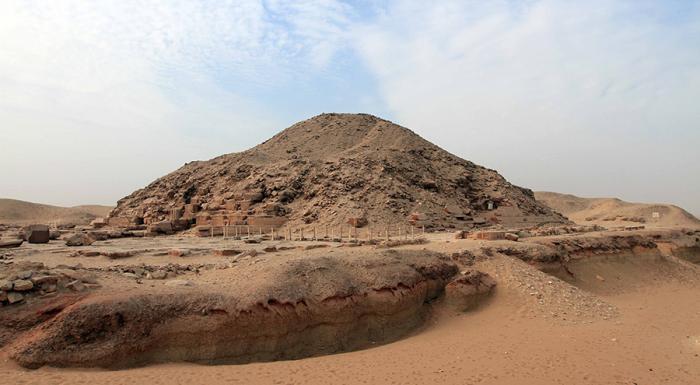
Sekhemkhet's most famous monument is the Buried Pyramid at Saqqara, located close to the Step Pyramid of Djoser.
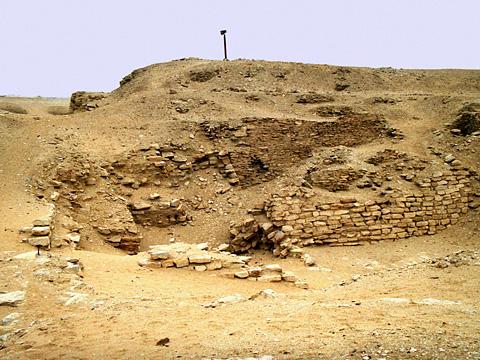
The monument received its modern name because much of the pyramid remained unfinished and buried beneath the desert.
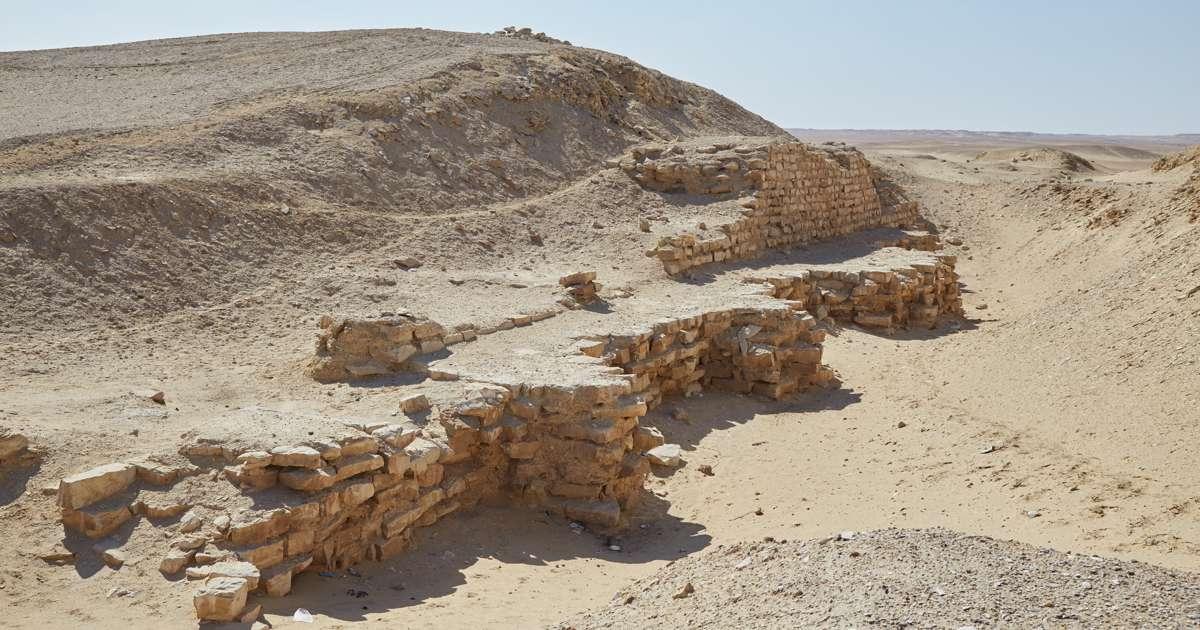
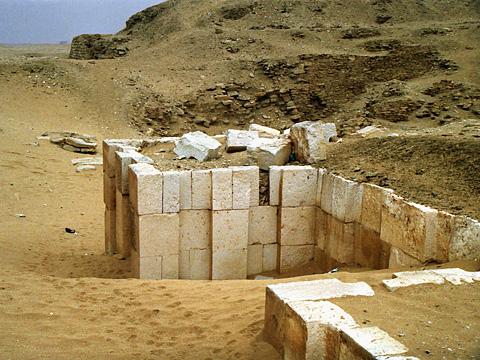
Archaeological excavations revealed that the pyramid had been planned as a large stepped structure. However, construction stopped before it reached its intended final height.
The unfinished condition of the monument makes it particularly valuable to archaeologists.
A completed pyramid shows the final product of Egyptian engineering. Sekhemkhet's pyramid, on the other hand, preserves evidence of the construction process.
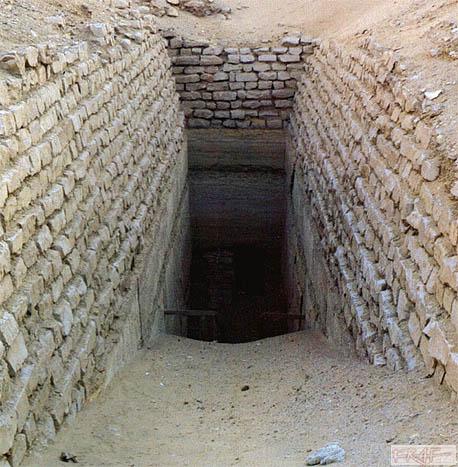
Researchers can study the foundations, unfinished sections, underground passages, and other architectural elements to understand how early Egyptian builders developed their pyramids.
The monument therefore represents an important stage between Djoser's Step Pyramid and the later smooth-sided pyramids of Egypt.
The Pyramid Complex
Sekhemkhet's pyramid was not designed as an isolated tomb.
Like other royal pyramids, it was planned as part of a larger funerary complex.
The complex included an enclosure wall, ceremonial areas, underground chambers, passages, and other structures connected with the king's religious cult.
The enclosure was intended to separate the sacred royal complex from the outside world.
Inside, the various buildings and courtyards had religious and symbolic functions.
The complex was designed to support Sekhemkhet's eternal existence after death.
This reflects a fundamental belief in ancient Egyptian religion: the pharaoh did not simply disappear after death. He was expected to continue living in the divine world and to play an eternal role in maintaining cosmic order.
The Underground Chambers
One of the most fascinating parts of Sekhemkhet's monument lies beneath the pyramid.
The underground complex contains corridors and chambers leading toward the burial area.
The central burial chamber was designed to protect the king's remains and provide a sacred space for his eternal existence.
The complexity of the underground design demonstrates that Egyptian architects already possessed impressive engineering skills during the 3rd Dynasty.
Creating underground corridors and chambers beneath a massive stone monument required careful planning and organization.
These structures also reflect the religious importance of the royal burial.
For ancient Egyptians, the tomb was not simply a place for a dead body. It was an essential part of the king's journey into the afterlife.
The Mysterious Alabaster Sarcophagus
One of the most intriguing discoveries inside Sekhemkhet's pyramid was a large alabaster sarcophagus.
The sarcophagus was discovered inside the underground burial chamber and featured a distinctive sliding lid.
Because it appeared to be sealed, archaeologists initially expected to find the remains of Sekhemkhet inside.
However, when the sarcophagus was opened, it did not contain the expected royal mummy.
This created an important archaeological mystery.
Why was the sarcophagus empty?
Several explanations have been proposed.
The pyramid may never have been completed and Sekhemkhet may never have been buried there. The burial could have been disturbed in antiquity, or the sarcophagus may have been prepared for the king but never used.
The lack of a confirmed burial makes Sekhemkhet's story even more mysterious.
Despite the uncertainty, the sarcophagus remains one of the most interesting discoveries connected with his monument.
Royal Treasures
Archaeological excavations around the pyramid complex also revealed valuable objects, including pieces of gold jewelry.
These discoveries demonstrate that the monument was associated with the wealth and craftsmanship of Egypt's royal court.
The ancient Egyptian artisans were already capable of producing sophisticated jewelry and decorative objects during the early Old Kingdom.
Gold was particularly important because it was associated with the gods and was believed to be imperishable.
The presence of valuable objects at the site also shows the importance of royal funerary traditions during Sekhemkhet's time.
Why Was the Pyramid Never Finished?
The unfinished state of Sekhemkhet's pyramid raises one of the most important questions about his reign.
Why did construction stop?
The most likely explanation is that Sekhemkhet ruled for only a short period.
A royal pyramid required many years of construction.
Workers had to quarry enormous amounts of stone, transport the material, build the structure, construct underground chambers, decorate the complex, and prepare the religious facilities.
If a pharaoh died after only a few years on the throne, there may not have been enough time to complete such an enormous project.
The unfinished pyramid therefore may be evidence of Sekhemkhet's short reign rather than a sign of a failed project.
It also demonstrates how closely royal construction projects were connected to the lifetime of the pharaoh.
Sekhemkhet and Ancient Egyptian Religion
Religion was central to Egyptian kingship.
The ancient Egyptians believed that the pharaoh was responsible for maintaining maat, the divine order that kept the universe in balance.
The king was also connected with the gods and was expected to continue his role after death.
The pyramid was therefore both a tomb and a religious monument.
Its rising form may have symbolized the king's ascent toward the heavens.
The underground chambers provided a protected place for the king's body, while the surrounding complex allowed rituals to continue in his honor.
Even though Sekhemkhet's pyramid was unfinished, its design clearly followed the religious principles that shaped Egyptian royal monuments.
The Influence of Djoser
Sekhemkhet's monument cannot be separated from the achievements of Djoser.
Djoser's Step Pyramid was the first major pyramid in Egyptian history and represented a dramatic architectural breakthrough.
Sekhemkhet's project continued this tradition.
Both pyramids were built at Saqqara, both were designed as stepped structures, and both were surrounded by large funerary complexes.
This suggests that Sekhemkhet's architects were building on ideas developed during Djoser's reign.
However, the later development of Egyptian pyramids would take a different direction.
During the 4th Dynasty, Pharaoh Sneferu experimented with several designs, including the Bent Pyramid and Red Pyramid at Dahshur.
These experiments eventually produced the smooth-sided pyramids that became famous at Giza.
The Great Pyramid of Khufu was therefore the result of generations of architectural experimentation.
Sekhemkhet's unfinished monument represents one of the important steps in this long process.
The Discovery of the Pyramid
For thousands of years, Sekhemkhet's monument remained hidden beneath the sands of Saqqara.
Because it was unfinished, it did not dominate the landscape in the same way as Djoser's Step Pyramid.
Modern archaeological exploration eventually brought the monument back to attention.
During the 20th century, Egyptian archaeologist Zakaria Goneim excavated the site and revealed important sections of the pyramid complex.
The discovery attracted considerable attention because archaeologists rarely have the opportunity to study such an early pyramid in an unfinished condition.
The excavations revealed the pyramid's foundations, underground chambers, enclosure walls, and other architectural features.
The work helped researchers understand how pyramid construction developed during Egypt's early Old Kingdom.
Sekhemkhet's Importance to Archaeology
Although Sekhemkhet did not leave behind a completed pyramid, his monument is extremely important to Egyptology.
The unfinished structure provides evidence about ancient construction techniques.
Archaeologists can observe how stone was placed, how the pyramid was planned, and how the underground chambers were organized.
The monument also demonstrates the growing power of the Egyptian government.
A project of this size required large numbers of workers, skilled craftsmen, administrators, engineers, and religious officials.
It required the government to collect resources, transport stone, provide food, and coordinate thousands of individual tasks.
The Buried Pyramid therefore provides evidence not only about architecture but also about the development of the Egyptian state.
Sekhemkhet's Legacy
Sekhemkhet was probably not one of Egypt's longest-reigning kings, and his name was largely forgotten for thousands of years.
Yet his unfinished pyramid preserved his place in history.
His monument represents an important stage in the development of Egyptian pyramid architecture.
It shows how the architectural ideas introduced under Djoser continued to evolve.
It also provides a fascinating example of what happens when a major royal building project is interrupted by the death of its ruler.
The Buried Pyramid remains an important part of the Saqqara archaeological landscape and an essential monument for understanding the early Old Kingdom.
Conclusion
Sekhemkhet, the powerful but mysterious king of Egypt's 3rd Dynasty, left behind one of the most intriguing unfinished monuments of ancient Egypt.
His reign followed the revolutionary achievements of Djoser and continued the development of monumental stone architecture.
The Buried Pyramid at Saqqara was intended to become a magnificent royal monument, but construction stopped before it could be completed.
Its unfinished walls, underground chambers, mysterious alabaster sarcophagus, and surviving archaeological evidence provide a unique window into the early history of pyramid building.
Sekhemkhet's story is also a reminder that some of the most valuable archaeological discoveries are not always the largest or most famous monuments.
His unfinished pyramid helps historians understand how ancient Egyptian architects experimented with new ideas before eventually creating the great pyramids of Dahshur and Giza.
Today, visitors to Saqqara can explore the remains of this remarkable monument and discover the story of a pharaoh who ruled more than 4,500 years ago.
Although Sekhemkhet's reign was short and much of his life remains unknown, his architectural ambition survived.
His pyramid may never have been completed, but it became an important link in the extraordinary history of Egyptian pyramid construction.
From Djoser's Step Pyramid to Sneferu's experiments and finally to the Great Pyramid of Khufu, the story of Egyptian pyramids was built one generation at a time.
Sekhemkhet was one of those important early generations—a forgotten pharaoh whose unfinished pyramid still speaks to us across thousands of years.