Neferkare Neby, also known as Neferkare III, was an ancient Egyptian king who ruled during the uncertain period between the end of the Old Kingdom and the beginning of the First Intermediate Period. He is generally placed among the rulers of Egypt's Eighth Dynasty, although the exact chronology of this period remains debated.
Neferkare Neby is one of the rare kings of this troubled era for whom we possess more than a single appearance in a king list. His name survives in the Abydos King List, and it is also connected with contemporary inscriptions associated with Queen Ankhesenpepi II. These inscriptions are particularly important because they tell us that Neferkare Neby planned a pyramid and funerary monument for himself.
Despite this evidence, almost nothing is known about his actual reign. There are no surviving accounts of major battles, foreign expeditions, administrative reforms, or great architectural achievements. His pyramid has never been securely located, and it appears that the project may never have progressed very far.
Neferkare Neby's story is therefore the story of a king who lived at a crucial moment in Egyptian history but left only a small archaeological footprint.
Egypt After Pepi II
To understand Neferkare Neby, it is necessary to understand the political situation that came before him.
For generations, Egypt had been ruled by the powerful kings of the Old Kingdom. The Sixth Dynasty included rulers such as Teti, Pepi I, Merenre I, and Pepi II.
Pepi II's extraordinarily long reign provided political continuity for many decades. However, during the later Sixth Dynasty, the structure of Egyptian government gradually changed.
Provincial officials became more powerful.
Local families accumulated wealth.
Administrative positions increasingly became hereditary.
The central government in Memphis still represented the traditional authority of the pharaoh, but its ability to control every region of Egypt was becoming weaker.
When Pepi II eventually died, the succession became unstable.
The End of the Sixth Dynasty
After Pepi II, several rulers appear to have occupied the throne for relatively short periods.
Among them was Merenre II, followed by the mysterious ruler associated with Netjerkare Siptah.
The historical records from this period are incomplete, and Egyptologists disagree about the exact sequence and duration of several reigns.
Eventually, the Sixth Dynasty came to an end.
Egypt entered the period traditionally called the First Intermediate Period.
Neferkare Neby belongs to this broader era of political uncertainty.
The Eighth Dynasty
Neferkare Neby is usually placed within the Eighth Dynasty.
The Eighth Dynasty is one of the least understood dynasties in Egyptian history.
Unlike the Fourth Dynasty, which produced the great pyramids of Giza, or the Eighteenth Dynasty, which produced famous rulers such as Hatshepsut and Tutankhamun, the Eighth Dynasty left comparatively little evidence.
The kings appear to have ruled primarily from the Memphite region.
Their authority may have been limited compared with the great kings of the Old Kingdom.
Several rulers probably held the throne for only short periods.
This political instability makes Neferkare Neby particularly difficult to study.
The Name Neferkare Neby
The royal name Neferkare had already been used by earlier Egyptian kings.
The name is generally understood as expressing the idea that the Ka of Ra is beautiful or perfect.
The addition of Neby distinguishes this king from other rulers who used the throne name Neferkare.
His full royal identity is sometimes written as Djedankh Neferkare Neby.
This name can be interpreted approximately as expressing the idea that Neferkare Neby is enduring in life.
Like other Egyptian royal names, it communicated religious and political ideas about the king's eternal existence.
Evidence for Neferkare Neby
One of the most valuable pieces of evidence for Neferkare Neby comes from Queen Ankhesenpepi II.
Ankhesenpepi II had been one of the most important royal women of the Sixth Dynasty.
She was connected with several kings and belonged to a powerful royal family.
An inscription associated with her funerary monument mentions Neferkare Neby.
This is extremely important because it provides evidence from a contemporary context rather than relying entirely on much later king lists.
Ankhesenpepi II
Ankhesenpepi II was a remarkable woman.
She was the wife of Pepi I and the mother of Merenre I.
She later became associated with the royal succession during the reign of Pepi II.
Her tomb and sarcophagus preserve valuable information about the royal family.
The appearance of Neferkare Neby's name in connection with her monument suggests that he had an important relationship with the royal household.
Some Egyptologists have proposed that Ankhesenpepi II may have been Neferkare Neby's mother.
If this interpretation is correct, Neferkare Neby may have been the son of Merenre I and Ankhesenpepi II.
However, the exact family relationship remains a matter of scholarly discussion.
A King Connected to an Earlier Royal Family
If Neferkare Neby was indeed a son of Merenre I and Ankhesenpepi II, his accession would demonstrate the continued importance of the old Sixth Dynasty royal family.
This would make sense politically.
Even after the end of the Sixth Dynasty, members of the former royal family could still possess legitimacy.
The royal court may have continued to rely on dynastic connections to maintain the authority of the monarchy.
Neferkare Neby could therefore represent an attempt to preserve the old royal tradition during a period of political fragmentation.
The Pyramid of Neferkare Neby
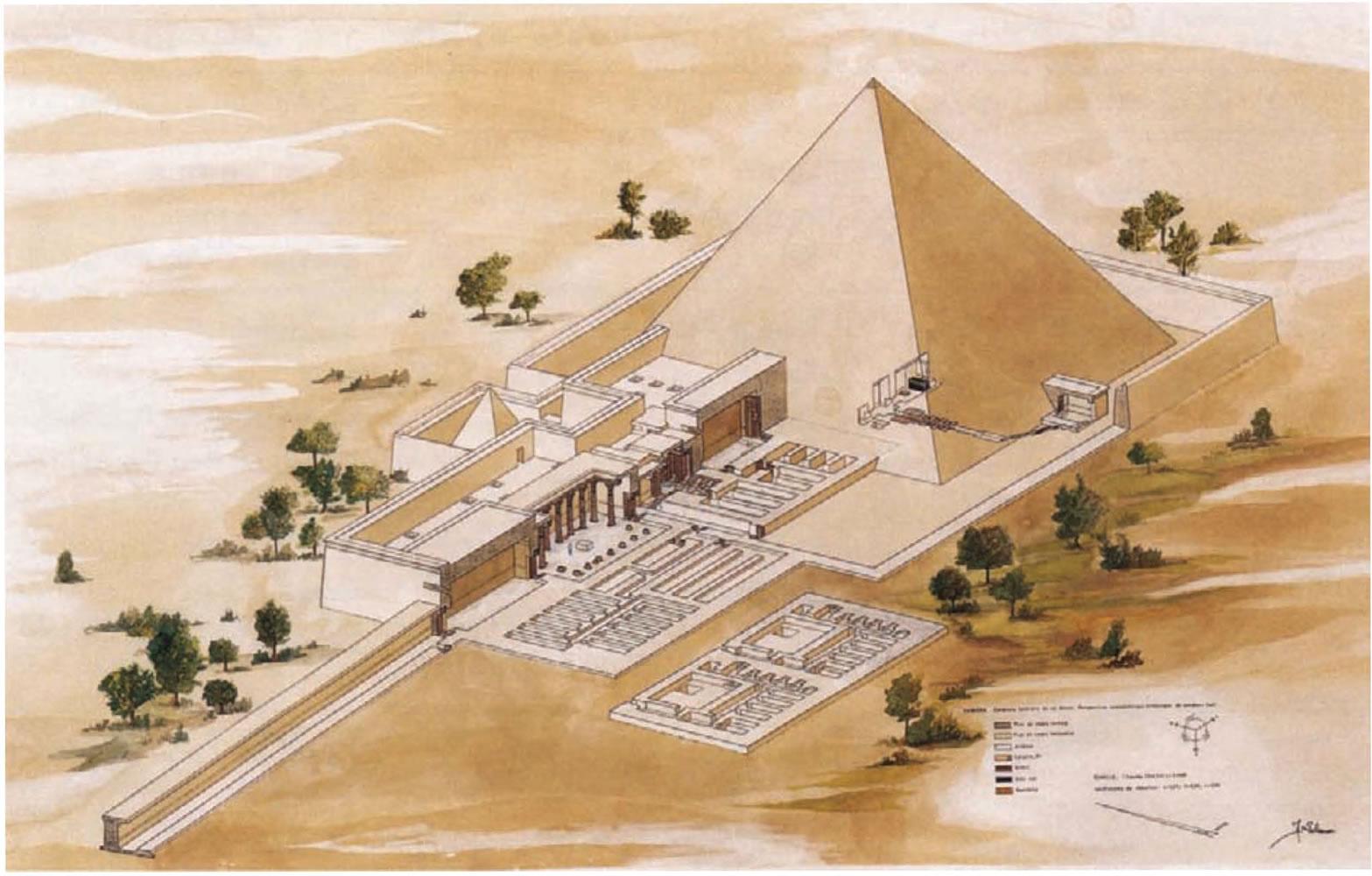
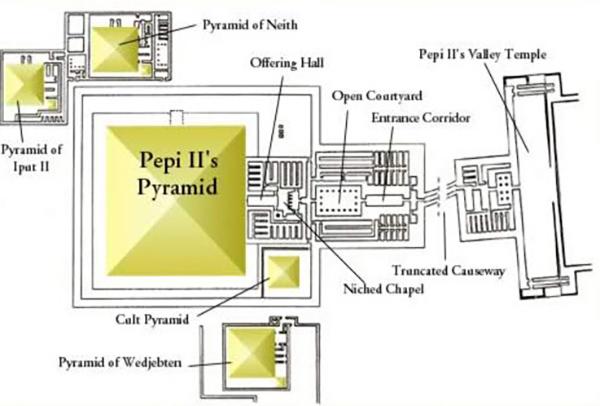
Perhaps the most fascinating fact about Neferkare Neby is that he planned to build a pyramid.
The inscription connected with Ankhesenpepi II records the king's intention to construct a royal pyramid.
The pyramid was apparently given a name connected with the idea of life enduring.
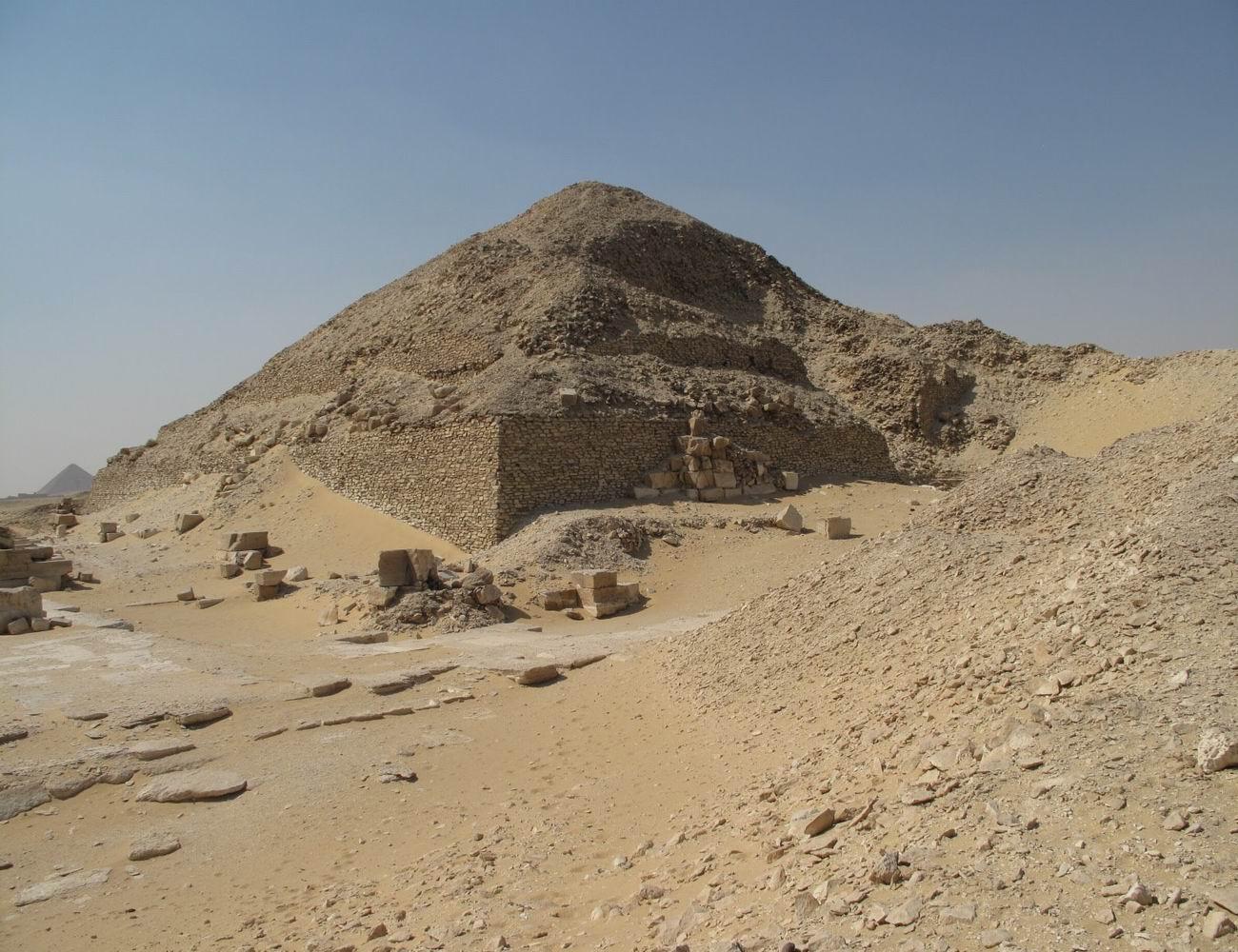
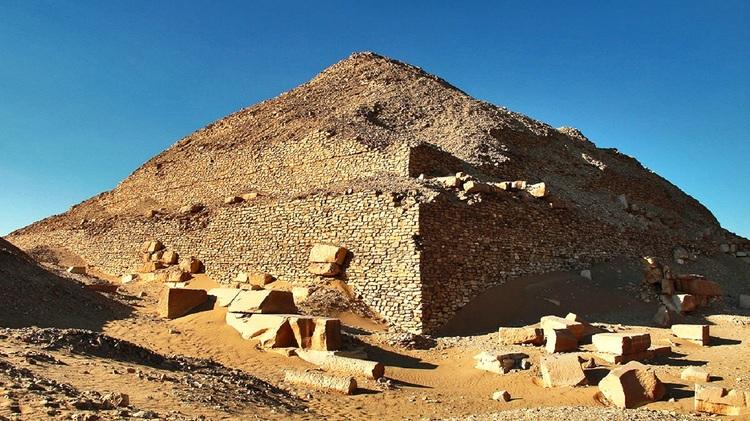
Unfortunately, the location of this pyramid has never been securely identified.
It may have been intended for the Saqqara region, close to the traditional royal necropolis.
Why Was His Pyramid Never Found?
There are several possible explanations.
First, Neferkare Neby's reign may have been extremely short.
Building a pyramid required enormous resources and many years of work.
Second, the political and economic situation of Egypt may have made large royal construction projects increasingly difficult.
Third, the pyramid may have remained unfinished.
A small or incomplete royal monument could have disappeared beneath later construction, erosion, or agricultural activity.
Therefore, the absence of a surviving pyramid does not necessarily mean that the project was never started.
Royal Architecture in a Difficult Period
The pyramids of the Old Kingdom were symbols of centralized royal power.
They required large workforces, organized transportation systems, skilled craftsmen, and substantial economic resources.
By Neferkare Neby's time, the political environment was very different.
The central government no longer possessed the same unquestioned authority.
Regional elites controlled significant resources.
This made large monumental projects more difficult.
The planned pyramid of Neferkare Neby therefore reflects both continuity and change.
The Importance of the Abydos King List
Neferkare Neby's name also appears on the Abydos King List.
The list was created centuries after his lifetime, during the New Kingdom.
It records a sequence of Egyptian rulers and provides valuable information about how later Egyptians understood their royal history.
Neferkare Neby's appearance on the list confirms that later Egyptian tradition remembered him as a legitimate ruler.
However, the king list does not tell us much about his actual achievements.
The Turin Canon
The Turin Royal Canon is another important source for Egyptian chronology.
Unfortunately, the section corresponding to many rulers of the Eighth Dynasty is damaged.
Neferkare Neby's name is generally associated with a major lacuna in the papyrus.
This means that the document cannot provide a secure reign length for him.
The missing information is one of the reasons his reign remains so mysterious.
How Long Did Neferkare Neby Rule?
The exact length of Neferkare Neby's reign is unknown.
There is no reliable surviving record giving a specific number of years.
Because he appears among the rulers of the Eighth Dynasty, historians generally assume that his reign was relatively short.
However, the absence of evidence makes precise dating impossible.
This is common for rulers of the First Intermediate Period.
A Period of Political Fragmentation
The First Intermediate Period was not simply a period of complete chaos.
Instead, Egypt became politically decentralized.
Powerful local rulers controlled different regions.
In Upper Egypt, local governors became increasingly influential.
In Lower Egypt, Memphis and other northern centers retained importance.
Different political authorities competed for influence.
Neferkare Neby ruled during this complicated environment.
The Power of Local Governors
During the Old Kingdom, provincial officials had been servants of the central state.
By the end of the Sixth Dynasty and during the First Intermediate Period, many became powerful local leaders.
Their tombs contain inscriptions describing their accomplishments.
Some controlled large agricultural estates.
Others organized military forces.
Their influence meant that the pharaoh could no longer rely on the same centralized system that had supported the great pyramid builders.
The Economy of Egypt
Agriculture remained the foundation of Egyptian life.
The Nile provided water and fertile soil.
Farmers produced grain, vegetables, fruit, and other crops.
The state collected part of the agricultural production as taxes.
These resources supported the royal court, temples, officials, and workers.
When central authority weakened, the distribution of resources could also become more fragmented.
Local elites gained greater control over agricultural wealth.
The Nile and Environmental Conditions
Environmental changes may also have affected Egypt during the transition from the Old Kingdom to the First Intermediate Period.
The Nile flood was essential for agriculture.
A series of low floods could create food shortages and economic stress.
Researchers have proposed that climatic changes in northeastern Africa may have contributed to the difficulties of the period.
However, environmental factors were probably only one part of a much larger political and economic transformation.
Religion During Neferkare Neby's Reign
Religion remained central to Egyptian society.
The pharaoh was traditionally responsible for maintaining maat, the divine order.
The gods were believed to control the forces of nature and the fate of the kingdom.
The king was expected to maintain temples and religious rituals.
Even during the political difficulties of the First Intermediate Period, Egyptian religious beliefs continued.
The idea of the afterlife remained especially important.
The Royal Afterlife
Egyptian kings believed that death was not the end of existence.
The deceased ruler was expected to join the gods.
He could become associated with Osiris, the god of the dead, and with Ra, the sun god.
This explains why royal funerary monuments were so important.
A pyramid was not simply a tomb.
It was part of a complex religious system designed to support the king's eternal existence.
Neferkare Neby's Unfinished Legacy
If his pyramid was never completed, Neferkare Neby's funerary ambitions reveal an important historical reality.
The royal tradition continued even when political power was weakening.
The king still wanted to establish a permanent monument.
He still expected to be remembered.
He still participated in the ancient traditions of divine kingship.
But the resources available to him were probably much more limited than those available to earlier rulers.
The Royal Family and Political Legitimacy
Dynastic connections were extremely important during unstable periods.
A ruler who could demonstrate descent from an earlier royal family had an important source of legitimacy.
If Neferkare Neby was connected to Ankhesenpepi II and Merenre I, this would have strengthened his claim to the throne.
It would also explain why a king of the Eighth Dynasty was commemorated in connection with an important Sixth Dynasty queen.
Neferkare Neby and Merenre I
Merenre I was one of the important rulers of the Sixth Dynasty.
He succeeded Pepi I and ruled for a relatively short period before his death.
He was closely connected to Ankhesenpepi II.
If Neferkare Neby was their son, his reign would represent a continuation of this royal line.
This possibility makes his otherwise obscure reign much more significant.
However, it is important to emphasize that the exact genealogy is not completely certain.
The Meaning of His Story
Neferkare Neby's story demonstrates how difficult it can be to reconstruct ancient history.
A famous pharaoh may leave hundreds of inscriptions and enormous monuments.
A short-reigning king may leave only a few lines of text.
Yet those few lines can reveal important information about royal family relationships, political legitimacy, architecture, and religious beliefs.
Neferkare Neby is a perfect example.
A Forgotten King
Today, most people know the names of Khufu, Tutankhamun, Ramses II, and Hatshepsut.
Very few people recognize Neferkare Neby.
Yet he was an actual historical king whose name survived through ancient Egyptian records.
His story is important because it represents one of the less visible chapters of Egyptian history.
He ruled not during the height of pyramid building but during a period when the old political system was struggling to survive.
The End of the Old Kingdom Legacy
Although the Old Kingdom had officially ended, its traditions remained powerful.
Kings continued using ancient royal titles.
They continued associating themselves with Ra and other gods.
They continued planning pyramids and funerary monuments.
They continued presenting themselves as legitimate successors of earlier pharaohs.
Neferkare Neby was part of this continuation.
From Memphis to Regional Power
The political center of Egypt remained connected with Memphis, but regional centers became increasingly important.
Local rulers developed their own political identities.
Upper Egypt in particular became increasingly powerful.
Eventually, rulers from Thebes would play a major role in reunifying the country.
The political struggles of the First Intermediate Period ultimately prepared the way for the Middle Kingdom.
The Rise of the Middle Kingdom
The First Intermediate Period eventually ended when Egyptian rulers restored political unity.
The Eleventh Dynasty, particularly under Mentuhotep II, played a major role in reunifying Egypt.
The Middle Kingdom that followed would become another great era of Egyptian civilization.
Neferkare Neby lived generations before this reunification.
His reign therefore belongs to the beginning of a long political transformation.
Why Neferkare Neby Matters
Neferkare Neby is important for several reasons.
He provides evidence of the continuing royal tradition after the Sixth Dynasty.
His connection with Ankhesenpepi II provides information about the royal family.
His planned pyramid demonstrates that traditional royal funerary practices continued.
His appearance on the Abydos King List confirms that later Egyptians remembered him.
Most importantly, his reign helps historians understand the difficult transition from the Old Kingdom to the First Intermediate Period.
Conclusion
Neferkare Neby was a mysterious Egyptian king who ruled during the early First Intermediate Period, probably as one of the rulers of the Eighth Dynasty.
He lived at a time when Egypt was undergoing one of the greatest political transformations in its history.
The powerful centralized state created during the Old Kingdom had weakened.
Provincial governors had become more independent.
Local families controlled increasing amounts of wealth.
The royal court struggled to maintain the political system that had once allowed pharaohs to build enormous pyramids and control the entire Nile Valley with extraordinary efficiency.
Neferkare Neby appears to have belonged to the old royal tradition.
His name is preserved in the Abydos King List, and contemporary evidence connects him with Queen Ankhesenpepi II, one of the most influential women of the Sixth Dynasty.
Some scholars believe that Ankhesenpepi II may have been his mother and that his father may have been Merenre I, although this genealogy remains uncertain.
One of the most fascinating facts about Neferkare Neby is that he planned to build a pyramid.
His funerary monument was apparently intended to demonstrate his royal status and guarantee his eternal existence.
However, the location of the pyramid remains unknown, and the project may never have advanced beyond its earliest stages.
This unfinished monument reflects the changing political circumstances of Egypt.
The traditions of royal pyramid building survived, but the centralized economic power that had supported the great monuments of the Old Kingdom was disappearing.
Neferkare Neby's reign was therefore brief and obscure, but historically meaningful.
He represents a bridge between the royal traditions of the Sixth Dynasty and the fragmented political world of the First Intermediate Period.
His story also reminds us that ancient Egyptian history was not made only by the famous pyramid builders and great conquerors.
Many lesser-known kings played their part in the long story of Egypt.
Neferkare Neby may have left behind only a few traces, but those traces provide a fascinating glimpse into a kingdom struggling to preserve its ancient traditions during one of the most uncertain periods in Egyptian history.