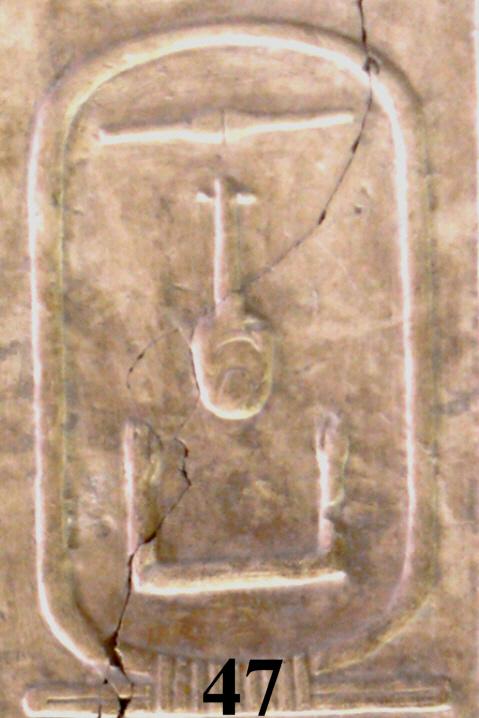
Neferkamin was one of the little-known kings associated with Egypt’s Eighth Dynasty, a dynasty that ruled during the uncertain years of the First Intermediate Period. Unlike the famous pharaohs of the Old Kingdom, Neferkamin left behind very little evidence, and almost nothing is known about his personal life, family, military campaigns, or major achievements.
Yet his name is an important piece of the history of ancient Egypt.
Neferkamin belonged to a generation of rulers who attempted to preserve the ancient institution of Egyptian kingship after the centralized political system of the Old Kingdom had begun to weaken. His reign was probably very short, and his authority may have been limited mainly to the region around Memphis.
His story is therefore a story of a forgotten king living during a major political transformation.
Egypt Before Neferkamin
For hundreds of years, ancient Egypt had been governed by a powerful centralized monarchy.
The pharaoh was more than simply a king. He was the political leader of Egypt, the supreme religious authority, and the symbolic link between humanity and the gods.
Royal officials managed agriculture, taxation, labor, trade, and temple estates.
This centralized organization allowed Egyptian kings to build enormous monuments.
The Step Pyramid of Djoser, the pyramids of Sneferu, and the great pyramids of Giza all demonstrate the power of the Old Kingdom state.
But this system gradually weakened.
The Long Reign of Pepi II
The Sixth Dynasty reached its final period under Pepi II, whose throne name was Neferkare.
Pepi II traditionally has been described as one of the longest-reigning kings in Egyptian history.
Whether the ancient figure for his reign is completely accurate remains debated, but his reign was certainly exceptionally long.
During this time, provincial officials became increasingly powerful.
Local governors controlled large areas of agricultural land.
Administrative positions increasingly became hereditary.
Regional elites accumulated wealth and influence.
The central government remained important, but its ability to control every part of Egypt gradually declined.
The End of the Old Kingdom
After Pepi II's death, Egypt entered a period of political uncertainty.
The succession of kings became difficult to reconstruct.
Several rulers appear to have reigned for short periods.
The central administration weakened.
Provincial rulers gained more independence.
Eventually, the Sixth Dynasty ended.
Egypt entered the historical period known as the First Intermediate Period.
Neferkamin belonged to this turbulent era.
The Eighth Dynasty
The Eighth Dynasty is one of the most mysterious dynasties in Egyptian history.
Its rulers were probably based around Memphis.
They continued the traditions of the Old Kingdom and maintained the ancient institution of pharaoh.
However, their actual political power was probably much weaker than that of earlier kings.
Many of the dynasty's rulers appear to have had extremely short reigns.
Neferkamin was one of these obscure rulers.
The Name Neferkamin
The royal name Neferkamin combines the Egyptian word nefer, meaning "beautiful," "good," or "perfect," with the name of the deity Min.
Min was an ancient Egyptian god associated with fertility, male power, and agricultural abundance.
The use of Min's name in royal terminology reflects the continuing importance of religious symbolism in Egyptian kingship.
The name itself therefore tells us something about the religious world of the period, even though little is known about the king personally.
A King With Almost No Biography
There is no surviving ancient biography describing Neferkamin's life.
We do not know where he was born.
We do not know who his parents were.
We do not know whether he had a wife or children.
There is no reliable account of military campaigns under his command.
There are no famous diplomatic achievements connected with his reign.
This makes Neferkamin one of the most mysterious rulers of ancient Egypt.
The Royal Lists
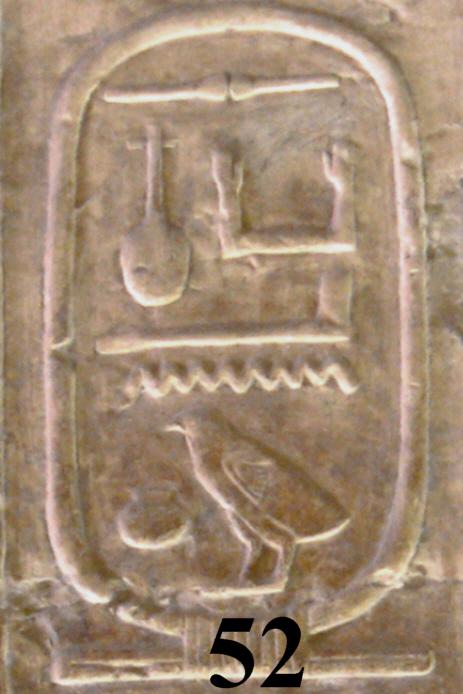
One of the main ways we know about the rulers of the Eighth Dynasty is through later Egyptian king lists.
The Abydos King List, created during the New Kingdom, records numerous Egyptian rulers from earlier periods.
Neferkamin appears in the tradition of Eighth Dynasty kings.
This is important because the list demonstrates that later Egyptians remembered his place in the royal succession.
However, a king list is not the same thing as a biography.
It preserves names and succession, but usually provides little information about what individual rulers actually accomplished.
The Turin Royal Canon
The Turin Royal Canon is another important source for Egyptian chronology.
This ancient papyrus lists many Egyptian kings and sometimes gives the duration of their reigns.
Unfortunately, parts of the document are damaged.
The sections dealing with the First Intermediate Period are particularly difficult to interpret.
Because of these problems, historians cannot always establish precise dates or reign lengths for rulers such as Neferkamin.
A Short Reign
Neferkamin appears to have ruled for a very short period.
The Eighth Dynasty contains several kings whose reigns may have lasted only months or a few years.
Such rapid changes in leadership would have made it difficult for the monarchy to establish long-term political stability.
A king who ruled only briefly also had little opportunity to construct a large royal monument.
Why Did the Kings Rule for Such Short Periods?
There was probably no single reason.
The weakening of central authority created competition among powerful officials.
Different political groups may have supported different candidates for the throne.
Regional rulers could become independent.
Economic difficulties could also weaken the monarchy.
As a result, the royal court may have experienced frequent changes in leadership.
Neferkamin's short reign was likely part of this larger instability.
Memphis and the Eighth Dynasty
Memphis was one of the oldest and most important cities in Egypt.
It had been an administrative and religious center since the earliest dynasties.
The city was especially associated with Ptah, the great creator god.
The Memphite priesthood played an important role in Egyptian religious life.
The Eighth Dynasty's association with Memphis demonstrates that the old royal tradition had not completely disappeared.
Even when Egypt was politically fragmented, Memphis remained an important center.
The Rise of Local Governors
During the First Intermediate Period, provincial governors became increasingly powerful.
Egypt was divided into administrative districts known as nomes.
Each nome had officials responsible for local administration.
Over generations, these officials accumulated land, wealth, and influence.
Some positions became hereditary.
Their tombs became increasingly elaborate.
Their inscriptions sometimes describe themselves as protectors of their communities.
This represented a significant shift in Egyptian political organization.
The Changing Balance of Power
During the Old Kingdom, provincial governors were primarily servants of the pharaoh.
By the First Intermediate Period, some governors could act almost independently.
They controlled local agricultural resources.
They could organize workers.
Some had access to armed forces.
They could influence local religious institutions.
The pharaoh remained a powerful religious symbol, but the practical authority of the central government was increasingly limited.
Agriculture and the Nile
Egypt's economy depended on agriculture.
The Nile River flooded the valley every year, depositing fertile soil.
Farmers grew wheat, barley, vegetables, fruit, and other crops.
The agricultural surplus supported cities, temples, officials, and the royal court.
If the Nile flood was weak, agricultural production could decline.
This could create food shortages and economic pressure.
Environmental Changes
Some historians have suggested that environmental changes may have contributed to the instability surrounding the end of the Old Kingdom.
Changes in rainfall patterns in northeastern Africa could affect the Nile flood.
Periods of drought could put pressure on agricultural communities.
However, climate alone cannot explain the political changes.
The growth of powerful provincial elites and the weakening of central administration were also major factors.
Religion During Neferkamin's Era
Political instability did not destroy Egyptian religion.
People continued to worship the traditional gods.
Horus remained strongly connected with kingship.
Ra remained the great solar deity.
Osiris became increasingly important in funerary beliefs.
Ptah remained central at Memphis.
Min continued to be worshiped as a god associated with fertility and abundance.
The religious traditions of Egypt survived the political changes.
The Pharaoh and Maat
The pharaoh was traditionally responsible for maintaining maat.
Maat represented truth, justice, balance, and cosmic order.
The king's role was to prevent chaos and preserve harmony between the human and divine worlds.
During periods of political fragmentation, the idea of maat became especially important.
Later rulers would present the reunification of Egypt as a restoration of order.
Funerary Beliefs
Ancient Egyptians believed that death was a transition to another form of existence.
The deceased needed food, offerings, prayers, and magical protection.
Royal funerary traditions were especially elaborate during the Old Kingdom.
Kings built pyramids and large temple complexes to guarantee their eternal existence.
By the time of Neferkamin, however, the political and economic situation made enormous royal monuments much more difficult to construct.
No Known Pyramid
There is no securely identified pyramid belonging to Neferkamin.
This is understandable given the short reigns and limited resources of many Eighth Dynasty kings.
A pyramid required enormous organizational resources.
Stone had to be quarried and transported.
Workers needed food and accommodation.
Priests and administrators had to maintain the complex.
A short-reigning king might not have had the opportunity to complete such a project.
The Decline of Monumental Architecture
The reduction of royal construction during this period is an important historical clue.
Earlier kings had invested heavily in monumental architecture.
The Eighth Dynasty kings appear to have had much fewer resources.
Instead of massive pyramids, the archaeological record contains smaller and more localized monuments.
This reflects the changing structure of Egyptian society.
Neferkamin and the First Intermediate Period
Neferkamin's reign belongs to the early phase of the First Intermediate Period.
This was a period when Egypt's political structure became decentralized.
However, it was not simply a period of destruction.
Local cultures flourished.
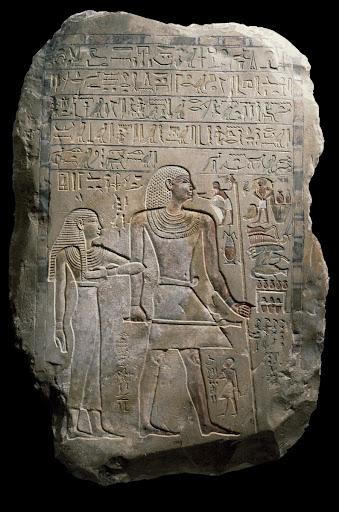
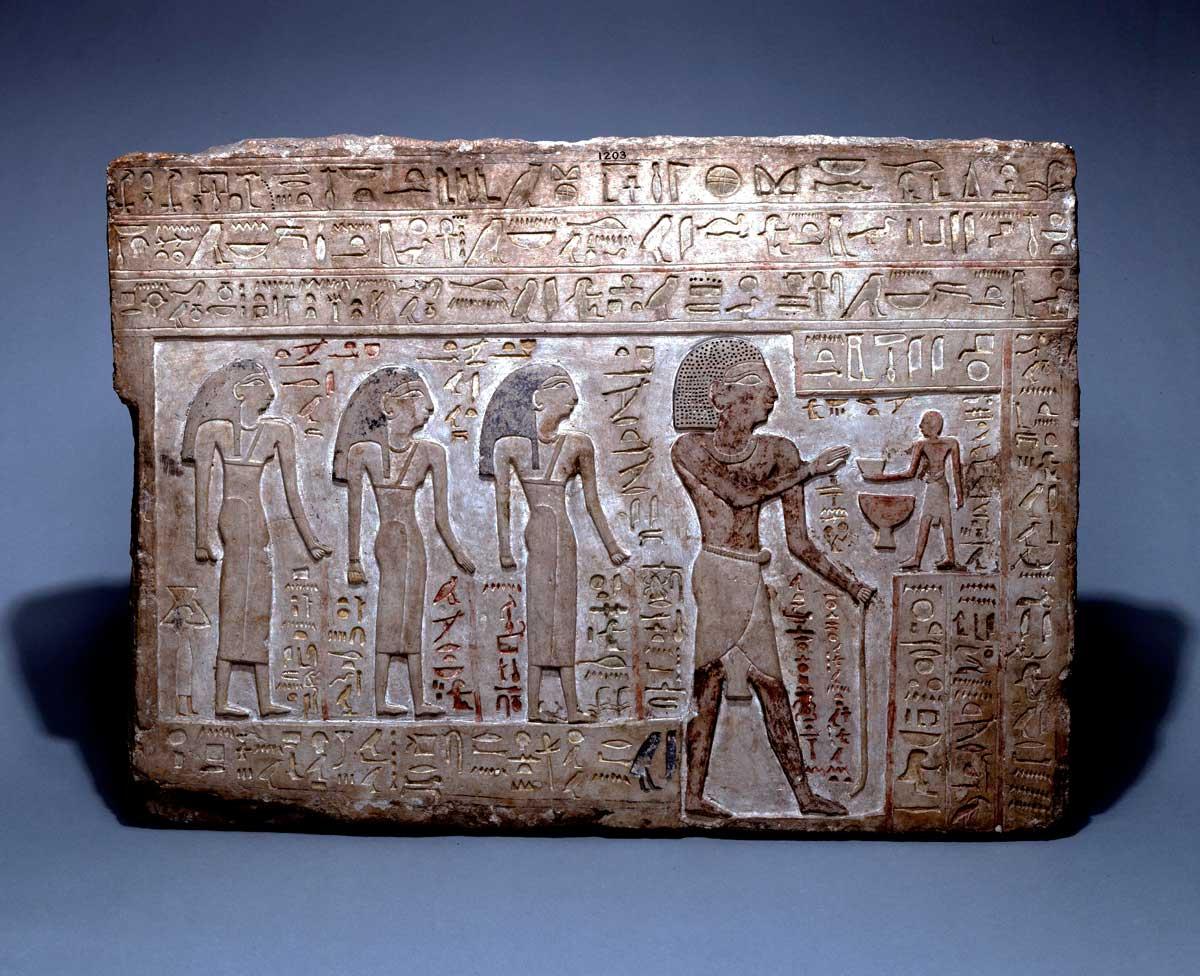
Artists continued to produce statues and funerary objects.
Scribes continued to write.
Religious practices continued.
Agricultural communities continued to depend on the Nile.
Egyptian civilization survived despite political fragmentation.
The Rise of Thebes
During this period, Thebes became increasingly important.
The rulers of Upper Egypt gradually developed stronger political organizations.
At the same time, rulers based around Herakleopolis became powerful in northern Egypt.
Competition between these regional powers eventually led to a struggle for control of the entire country.
Neferkamin ruled before the final reunification.
The Road to the Middle Kingdom
Eventually, the Theban ruler Mentuhotep II defeated his rivals and reunited Egypt.
This marked the beginning of the Middle Kingdom.
Central authority was restored.
Egypt again became a strongly organized state.
Royal building projects expanded.
Trade increased.
Military expeditions were organized.
Literature and art flourished.
The Middle Kingdom represented a major recovery of Egyptian political power.
Neferkamin's Historical Importance
Neferkamin is important because he represents the survival of kingship during a difficult transition.
He demonstrates that the institution of the pharaoh did not disappear when the Old Kingdom ended.
Instead, it continued in a weakened form.
The royal court still used traditional names and religious symbolism.
The pharaoh remained associated with the gods.
This continuity eventually helped the Middle Kingdom rulers restore centralized monarchy.
Why Is Neferkamin Forgotten?
There are several reasons.
His reign was probably very short.
Few monuments were produced.
Later rulers may have destroyed or reused earlier structures.
Many documents from the First Intermediate Period have disappeared.
His name was preserved in royal lists, but there was little additional information to create a historical biography.
As a result, Neferkamin remained almost invisible in later popular histories.
Reconstructing His Story
Modern Egyptologists must be careful when discussing Neferkamin.
The evidence is limited.
Historians distinguish between what is known and what is inferred.
His existence as a king is supported by ancient royal traditions.
His association with the Eighth Dynasty is generally accepted.
But details about his family, personality, political policies, and exact reign remain uncertain.
This is why his story is best understood as part of the larger history of the First Intermediate Period.
A Forgotten Chapter of Egyptian History
The story of Neferkamin reminds us that ancient Egypt was not always politically stable.
The image of Egypt as an unchanging civilization ruled by powerful pharaohs is misleading.
Egypt experienced periods of prosperity, crisis, division, reunification, and transformation.
Neferkamin belonged to one of those transitional moments.
His reign was brief, but it occurred during a major turning point.
Legacy
Neferkamin left no famous pyramid.
He did not conquer foreign empires.
He did not build a massive temple.
He did not become one of Egypt's legendary rulers.
His legacy is much quieter.
His name survived.
That alone is significant.
It allows historians to reconstruct another part of the complicated royal succession after the Old Kingdom.
His story helps demonstrate how Egyptian kingship survived even when the political structure around it was changing.
Conclusion
Neferkamin was one of the mysterious rulers of Egypt's Eighth Dynasty, a little-known pharaoh who lived during the First Intermediate Period.
Almost nothing is known about his personal life.
His parents are unknown.
His family is uncertain.
His political achievements are not recorded in detail.
His burial place has not been securely identified.
His reign was probably short.
Yet his name has survived through the ancient Egyptian royal tradition.
Neferkamin ruled during a time when the centralized political system of the Old Kingdom was weakening.
The long reign of Pepi II had been followed by succession problems.
Provincial governors had gained increasing independence.
Economic resources became more decentralized.
Possible environmental changes may have placed additional pressure on agricultural communities.
Memphis remained an important royal and religious center, but the authority of the central government was no longer what it had been during the age of the great pyramid builders.
Neferkamin's royal name connected him with the god Min and reflected the continuing importance of religion in Egyptian kingship.
Even during political instability, the pharaoh remained responsible in theory for maintaining maat and protecting the divine order.
The First Intermediate Period was not simply a time of collapse.
Egyptian civilization continued.
Religion remained strong.
Agriculture continued along the Nile.
Trade survived.
Local communities developed their own traditions.
Eventually, the political divisions of Egypt were overcome.
The rulers of Thebes became increasingly powerful, and Mentuhotep II eventually reunified the country.
The Middle Kingdom followed, bringing renewed political stability and prosperity.
Neferkamin ruled before that reunification, during the uncertain era between the Old Kingdom and the Middle Kingdom.
His story is therefore one of mystery, political change, and continuity.
Although he left few physical traces, his name survived as part of Egypt's royal history.
Neferkamin may have been a forgotten pharaoh, but his brief place in the royal succession provides another valuable glimpse into the complex transformation of ancient Egypt after the Old Kingdom.