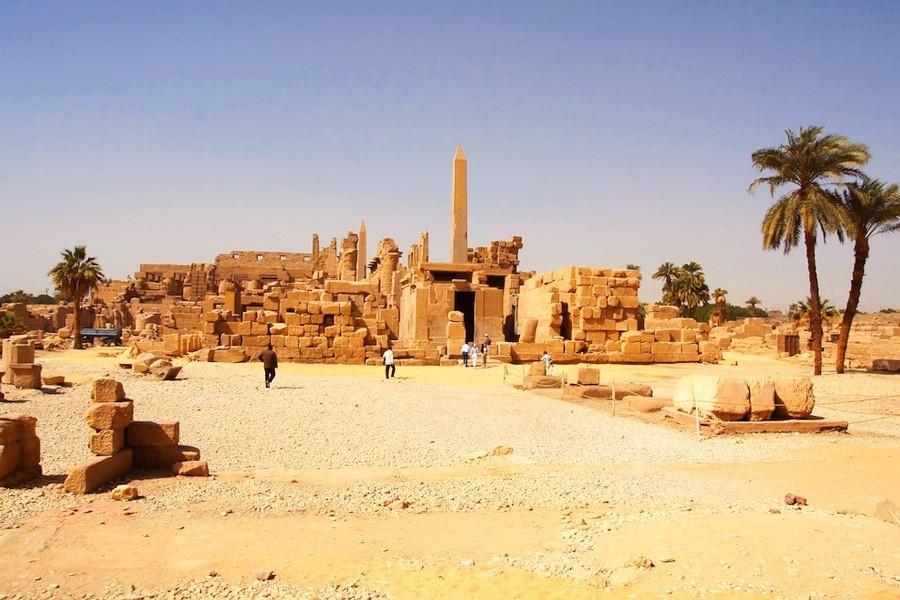
Neferkahor was one of the lesser-known rulers associated with Egypt’s Eighth Dynasty, during the turbulent First Intermediate Period. Unlike the famous pharaohs who left behind enormous pyramids, temples, statues, and detailed inscriptions, Neferkahor is remembered mainly through fragments of the ancient Egyptian royal tradition.
Very little is known about his personal life. His parents, wife, children, military activities, and burial place remain uncertain. His reign was probably short, and the surviving evidence provides only a small window into his time as king.
Despite this mystery, Neferkahor is an important figure for understanding one of the most fascinating transitions in Egyptian history: the transformation from the centralized Old Kingdom into the politically fragmented First Intermediate Period.
Egypt Before Neferkahor
To understand Neferkahor, we first need to look at the Egypt that existed before him.
For centuries, the Egyptian pharaoh had ruled over a highly centralized state.
The king was more than a political leader.
He was also a religious figure who was believed to maintain harmony between the human world and the gods.
Government officials administered agricultural lands, collected resources, organized workers, supervised temples, and managed trade.
The Nile River was the foundation of this system.
Every year, the Nile flooded its banks and deposited fertile soil across the agricultural lands.
The river also provided an efficient transportation system connecting Upper and Lower Egypt.
This centralized state reached its greatest monumental expression during the Old Kingdom.
The Great Pyramids
The Old Kingdom became famous for its pyramids.
During the Fourth Dynasty, Pharaoh Sneferu experimented with several monumental pyramid designs.
His successors Khufu, Khafre, and Menkaure created the famous pyramid complexes at Giza.
The Great Pyramid of Khufu became one of the most extraordinary monuments of the ancient world.
These projects required an enormous centralized administration.
Stone had to be quarried and transported.
Workers needed food and shelter.
Engineers designed the structures.
Administrators organized supplies.
Priests performed rituals.
The pyramids demonstrated the enormous resources controlled by the Egyptian monarchy.
By the time Neferkahor became king, this centralized political system had weakened significantly.
The Sixth Dynasty
The Fifth and Sixth Dynasties continued the Old Kingdom tradition.
However, the balance of political power gradually changed.
Egypt was divided into administrative regions called nomes.
Each region had officials responsible for administration and economic activity.
Over time, many important offices became hereditary.
Provincial families accumulated land and wealth.
Temples also controlled significant agricultural estates.
As these local institutions became stronger, the central government became increasingly dependent on regional elites.
The pharaoh remained the supreme symbolic ruler, but his practical power was slowly declining.
Pepi II and the End of the Old Kingdom
The final great ruler of the Sixth Dynasty was Pepi II, whose throne name was Neferkare.
Ancient Egyptian tradition describes his reign as exceptionally long.
During the later part of his rule, provincial governors became increasingly powerful.
After his death, political instability intensified.
Several kings followed one another rapidly.
The central government struggled to maintain control over the entire country.
Eventually, the Sixth Dynasty ended.
Egypt entered the First Intermediate Period.
Neferkahor belonged to this turbulent chapter of Egyptian history.
The Eighth Dynasty
The Eighth Dynasty was probably based at Memphis.
Its rulers attempted to maintain the traditions of Old Kingdom kingship.
They continued using traditional royal titles.
They maintained ancient religious practices.
They presented themselves as legitimate pharaohs.
However, their actual political authority was probably much weaker than that of the great Old Kingdom kings.
Royal succession became unstable.
Some kings probably ruled only for very short periods.
Neferkahor was one of these little-known rulers.
The Meaning of Neferkahor
The name Neferkahor follows the traditional Egyptian pattern of combining royal language with references to the divine.
Nefer can carry meanings such as beautiful, good, or perfect.
Ka refers to an important spiritual aspect of a person.
Hor refers to Horus, one of the most important gods in ancient Egyptian religion.
Horus was strongly connected with kingship.
The living pharaoh was traditionally associated with Horus, while the deceased king was connected with Osiris.
Therefore, the name Neferkahor reflects the deeply religious nature of Egyptian kingship.
A King With Very Little Evidence
Neferkahor is a difficult ruler for historians to study.
There is no surviving detailed biography.
His parents are unknown.
His wife is unknown.
His children are unknown.
His childhood is unknown.
His political program is unknown.
His military campaigns are unknown.
His burial place has not been securely identified.
Even the exact length of his reign remains uncertain.
The limited evidence is one of the reasons why Neferkahor remains one of Egypt's mysterious pharaohs.
Ancient Egyptian King Lists
The survival of Neferkahor's name is important.
Ancient Egyptian scribes carefully preserved traditions about earlier kings.
The Abydos King List, created during the New Kingdom, contains the names of many earlier rulers.
Another important source is the Turin Royal Canon.
The Turin papyrus originally contained information about kings and their reigns, although large portions are damaged.
These sources allow historians to reconstruct at least part of the complicated succession of rulers during the First Intermediate Period.
A Short Reign
Neferkahor appears to have ruled for a relatively short time.
Short reigns were common among the rulers of the Eighth Dynasty.
Rapid succession made the political situation unstable.
It also made it difficult for kings to complete major construction projects.
A royal pyramid or temple complex required years of work.
The royal government needed enough resources to employ workers, quarry stone, transport materials, and maintain religious ceremonies.
The Eighth Dynasty probably lacked the resources available to the great pyramid builders.
The Weakening of Central Government
The decline of central authority was one of the defining features of the period.
Provincial governors became increasingly powerful.
Local families controlled agricultural estates.
Temples possessed significant economic resources.
Regional elites became less dependent on the royal court.
The pharaoh remained an important religious symbol, but his ability to directly control distant parts of Egypt was increasingly limited.
Provincial Power
During the Old Kingdom, provincial governors primarily served as representatives of the king.
Over generations, many positions became hereditary.
Local rulers accumulated wealth and influence.
Their tombs sometimes became elaborate.
Their inscriptions emphasized their ability to maintain order and provide resources for their communities.
This suggests that political authority was becoming increasingly regional.
Memphis and the Royal Court
Memphis remained an important center of Egyptian government and religion.
It had been closely connected with Egyptian kingship since the earliest dynasties.
The city was also the center of the cult of Ptah.
The continued importance of Memphis helped preserve the traditions of the Old Kingdom.
Neferkahor ruled within this broader Memphite tradition.
The Nile and Everyday Life
Although the royal government was weakening, Egyptian society continued to function.
Farmers cultivated fields along the Nile.
Wheat and barley were among the most important crops.
Craftsmen produced pottery, jewelry, tools, statues, and funerary objects.
Merchants moved goods between different regions.
Priests maintained temples and religious rituals.
Scribes continued recording administrative and religious information.
Political instability did not destroy Egyptian civilization.
Environmental Pressures
Environmental conditions may have contributed to the problems of the First Intermediate Period.
Changes in rainfall patterns could affect the Nile flood.
Lower floods could reduce agricultural production.
Poor harvests could create food shortages and social tensions.
However, climate alone cannot explain the political changes.
The growth of provincial power and the weakening of the central administration were also major factors.
Religion in Neferkahor's Egypt
Religion remained fundamental to Egyptian life.
Ra was worshiped as a major solar deity.
Horus remained closely connected with kingship.
Osiris became increasingly important in funerary religion.
Ptah remained influential at Memphis.
Hathor, Anubis, Min, and many other gods continued to be worshiped.
Even during political fragmentation, Egyptian religious traditions remained strong.
Maat and the Pharaoh
The pharaoh was traditionally responsible for maintaining maat.
Maat represented truth, justice, balance, and cosmic order.
The king's role was to preserve harmony in Egypt.
He was expected to protect the country from chaos.
During a period of political division, this ideal remained extremely important.
Even when the country was fragmented politically, Egyptians continued to imagine Egypt as a unified kingdom under divine kingship.
Funerary Beliefs
Egyptians believed that death was a transition rather than an absolute end.
The deceased required offerings and prayers.
Tombs provided places for funerary rituals.
The royal dead had an especially important role in Egyptian religious tradition.
However, the weakening of the monarchy meant that royal funerary monuments became much smaller than those of the Old Kingdom.
No Famous Monument
No major surviving monument can be confidently attributed to Neferkahor.
This is consistent with the archaeological record of many Eighth Dynasty rulers.
The political situation made large construction projects difficult.
Royal resources were limited.
Rapid changes in kingship also reduced the opportunity to complete ambitious monuments.
Consequently, Neferkahor's physical legacy is extremely difficult to identify.
The First Intermediate Period
The First Intermediate Period was once described as a time when Egyptian civilization collapsed.
Modern understanding is more nuanced.
Political authority became fragmented, but Egyptian culture continued.
Local rulers became stronger.
Religious practices survived.
Art continued to develop.
Craftsmanship remained active.
Writing continued.
Communities adapted to the changing political environment.
The period was therefore not simply an age of destruction.
It was an era of transformation.
Herakleopolis
During the First Intermediate Period, Herakleopolis Magna became an important political center.
Its rulers controlled significant areas of northern and central Egypt.
They continued traditional royal customs.
At the same time, Upper Egypt was becoming increasingly dominated by rulers based at Thebes.
Eventually, these political centers became rivals.
The Rise of Thebes
Thebes gradually increased its power.
Its rulers expanded their control over Upper Egypt.
The city also developed a powerful religious identity.
Eventually, Thebes challenged the northern political authorities.
The conflict continued for generations.
It ultimately resulted in the reunification of Egypt.
Neferkahor ruled before this final reunification.
Mentuhotep II
The reunification of Egypt was eventually achieved by the Theban ruler Mentuhotep II.
He defeated his northern rivals and restored political unity.
The Middle Kingdom began.
Central government became stronger.
The monarchy regained substantial authority.
Royal construction expanded.
Trade and economic activity increased.
Egypt entered another great period of prosperity.
Neferkahor belongs to the generation of rulers who lived before this transformation.
Why Neferkahor Matters
Neferkahor may appear insignificant compared with the famous pharaohs of ancient Egypt.
However, his historical importance lies in what his existence tells us about the continuity of Egyptian kingship.
Even when the central state was weakening, Egyptians continued to recognize the institution of the pharaoh.
Royal names remained connected to the gods.
Traditional titles continued.
Religious beliefs survived.
The idea of maat remained central.
The monarchy did not disappear.
Why Is Neferkahor Forgotten?
There are several reasons.
His reign was probably short.
Few monuments survive.
Records from the First Intermediate Period are incomplete.
Later rulers reused ancient building materials.
Temples and tombs were destroyed or modified.
Documents disappeared over thousands of years.
As a result, only fragments of information about Neferkahor remain.
A Forgotten Pharaoh
Neferkahor did not build a pyramid comparable to Giza.
He did not establish a great empire.
He did not leave behind a famous military victory.
He did not commission a monumental temple that survives today.
But he was still part of the long succession of Egyptian kings.
His name was preserved because ancient Egyptians considered royal history important.
Conclusion
Neferkahor was a little-known ruler associated with Egypt's Eighth Dynasty and the First Intermediate Period.
Almost nothing is known about his personal life.
His parents are unknown.
His wife is unknown.
His children are unknown.
His political achievements are uncertain.
His military activities are not recorded.
His burial place has not been securely identified.
His exact reign length is also uncertain.
Yet his name survived through ancient Egyptian royal traditions.
Neferkahor ruled at a critical moment in Egyptian history.
The centralized government of the Old Kingdom had weakened.
Provincial governors were becoming powerful.
Local families controlled land and resources.
Temples possessed significant estates.
The royal court had fewer resources.
Political authority was becoming increasingly regional.
Environmental pressures may have made these problems more difficult.
But Egypt itself did not disappear.
The Nile continued to support agriculture.
Farmers continued working the land.
Craftsmen continued producing objects.
Priests continued religious ceremonies.
Scribes continued writing.
Temples continued functioning.
Egyptian culture remained remarkably resilient.
The idea of pharaonic kingship also survived.
The king continued to be connected with Horus and the gods.
He remained responsible, at least in theory, for maintaining maat.
The First Intermediate Period was therefore a period of transformation rather than complete destruction.
The political structure of Egypt changed.
Local rulers gained power.
Regional identities became stronger.
But the traditions of Egyptian civilization survived.
Eventually, the rulers of Thebes became powerful enough to reunify Egypt.
Mentuhotep II established the Middle Kingdom.
Centralized government returned.
Egypt once again became a strong and prosperous kingdom.
Neferkahor lived before this recovery.
His reign may have been brief, and his monuments may have disappeared almost completely.
Nevertheless, his name remains an important piece of Egyptian history.
Neferkahor may have been a forgotten pharaoh, but his existence demonstrates the remarkable endurance of Egyptian kingship during one of the country's most politically uncertain periods.
His story reminds us that the history of ancient Egypt is not only the history of famous pyramid builders and powerful conquerors.
It is also the history of lesser-known kings who preserved ancient traditions during difficult times.
Neferkahor represents one of these forgotten rulers.
His reign forms a small link between the declining Old Kingdom, the fragmented First Intermediate Period, and the eventual reunification of Egypt under the Middle Kingdom.
Although his monuments and biography remain largely unknown, his name survived for thousands of years.
That survival gives Neferkahor a small but meaningful place in the extraordinary story of ancient Egypt.