Khafre, also known by his Greek name Chephren, was one of the most famous pharaohs of ancient Egypt's Fourth Dynasty. He ruled during the Old Kingdom, a period often described as the golden age of pyramid construction.
Khafre is best known for building the second-largest pyramid at Giza and for his traditional association with the Great Sphinx of Giza.
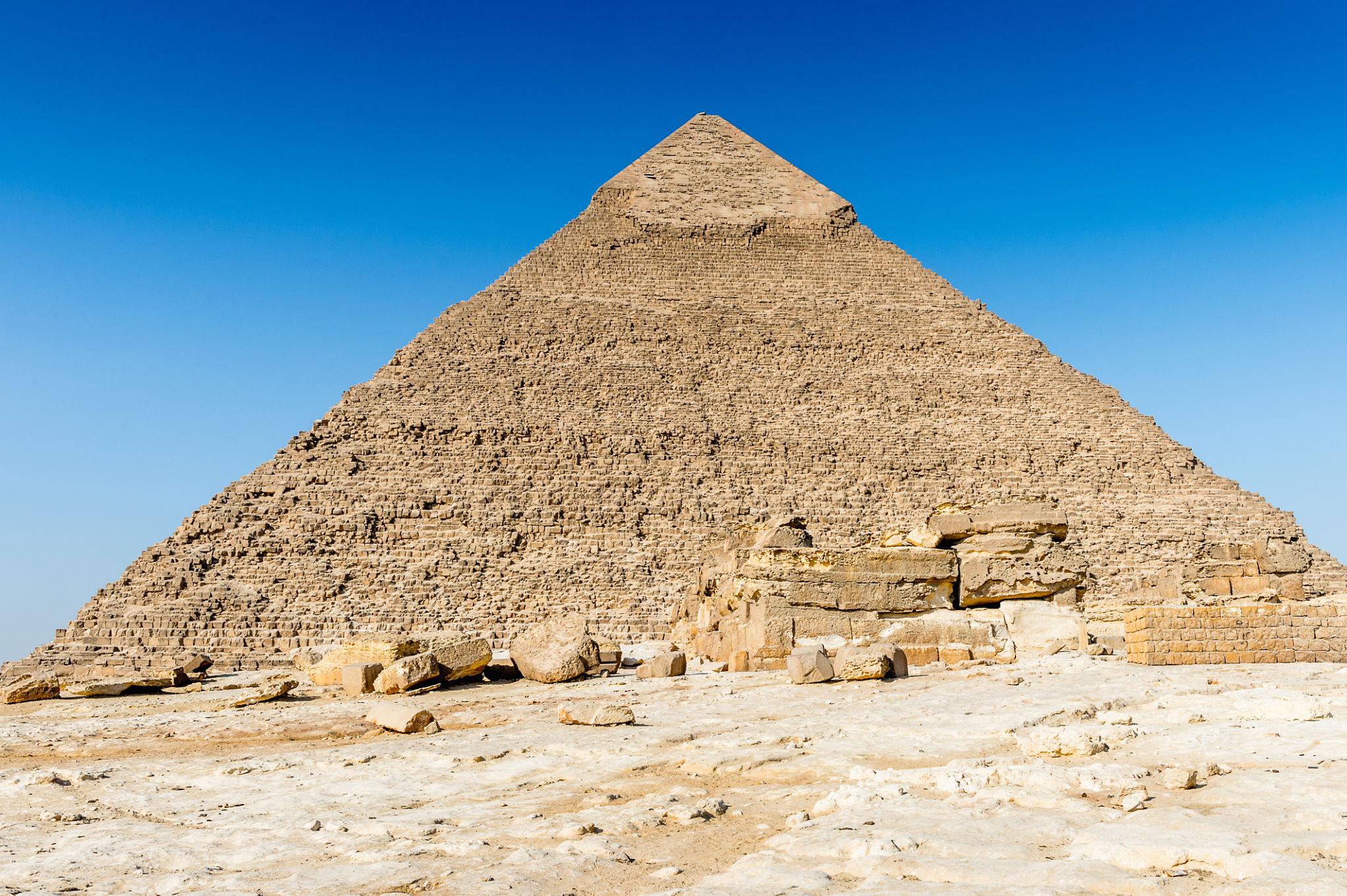
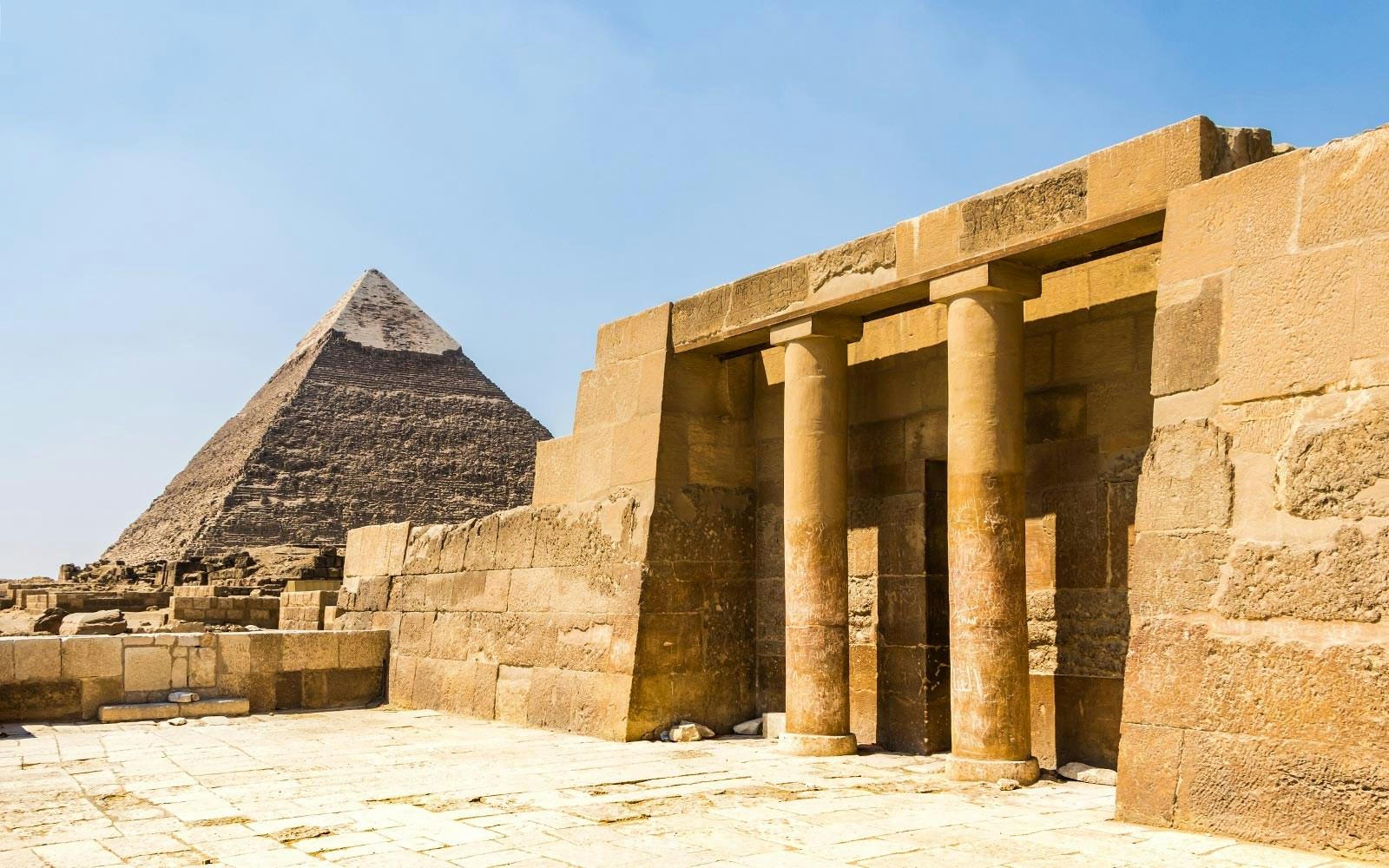
Although his pyramid is smaller than the Great Pyramid of his father, Khufu, it was built on higher ground, making it appear almost as tall as Khufu's monument. A small amount of the original polished limestone casing still survives near its summit, giving visitors an idea of how magnificent the pyramid once looked.
Khafre's reign represents one of the most powerful periods in ancient Egyptian history.
Who Was Khafre?
Khafre was a member of the royal family of the Fourth Dynasty.
He was probably a son of Khufu, the builder of the Great Pyramid of Giza.
The exact details of his mother and the order of succession remain uncertain.
Khafre became king after the reign of Djedefre, although the precise family relationships and political circumstances are still debated.
His Egyptian royal name, Khafre, is generally understood to mean something connected with the divine name Ra, reflecting the growing importance of solar religion during the Fourth Dynasty.
The Greek historian Herodotus later recorded his name as Chephren.
Egypt During the Fourth Dynasty
When Khafre became king, Egypt was already a highly centralized state.
The rulers of the Fourth Dynasty had developed an extraordinary ability to organize labor and resources.
Khufu had built the Great Pyramid.
Djedefre had constructed his pyramid at Abu Rawash.
Khafre continued this tradition with his own monumental complex at Giza.
The construction of these monuments required thousands of workers, engineers, stonecutters, transport specialists, administrators, priests, and craftsmen.
The pyramid was therefore a symbol not only of the king but also of the power of the Egyptian state.
The Pyramid of Khafre
Khafre's pyramid is the second-largest pyramid at Giza.
The pyramid was originally approximately 143.5 meters high.
Today it is slightly shorter because of the loss of some of its upper structure and casing.
However, its position on higher ground makes it appear nearly as tall as the Great Pyramid.
The pyramid was originally covered with smooth white limestone.
Some of this casing still survives at the top.
This is one of the most recognizable features of Khafre's pyramid.
The Original Appearance
When the pyramid was completed, its polished limestone casing would have reflected the intense Egyptian sunlight.
The monument would have appeared smooth, bright, and almost shining.
At the summit, the remaining casing provides modern visitors with a glimpse of the pyramid's original appearance.
The top of the pyramid may also once have had a pyramidion, although no surviving pyramidion from Khafre's pyramid has been securely identified.
Khafre's Pyramid Complex
Khafre's pyramid was part of a much larger funerary complex.
The complex included:
- The main pyramid
- A mortuary temple
- A long causeway
- A valley temple
- Subsidiary structures
- A large sphinx monument nearby
Each part had a religious purpose.
The complex was designed to ensure the king's eternal existence after death.
Priests could perform rituals and offerings on behalf of the deceased ruler.
The Valley Temple of Khafre
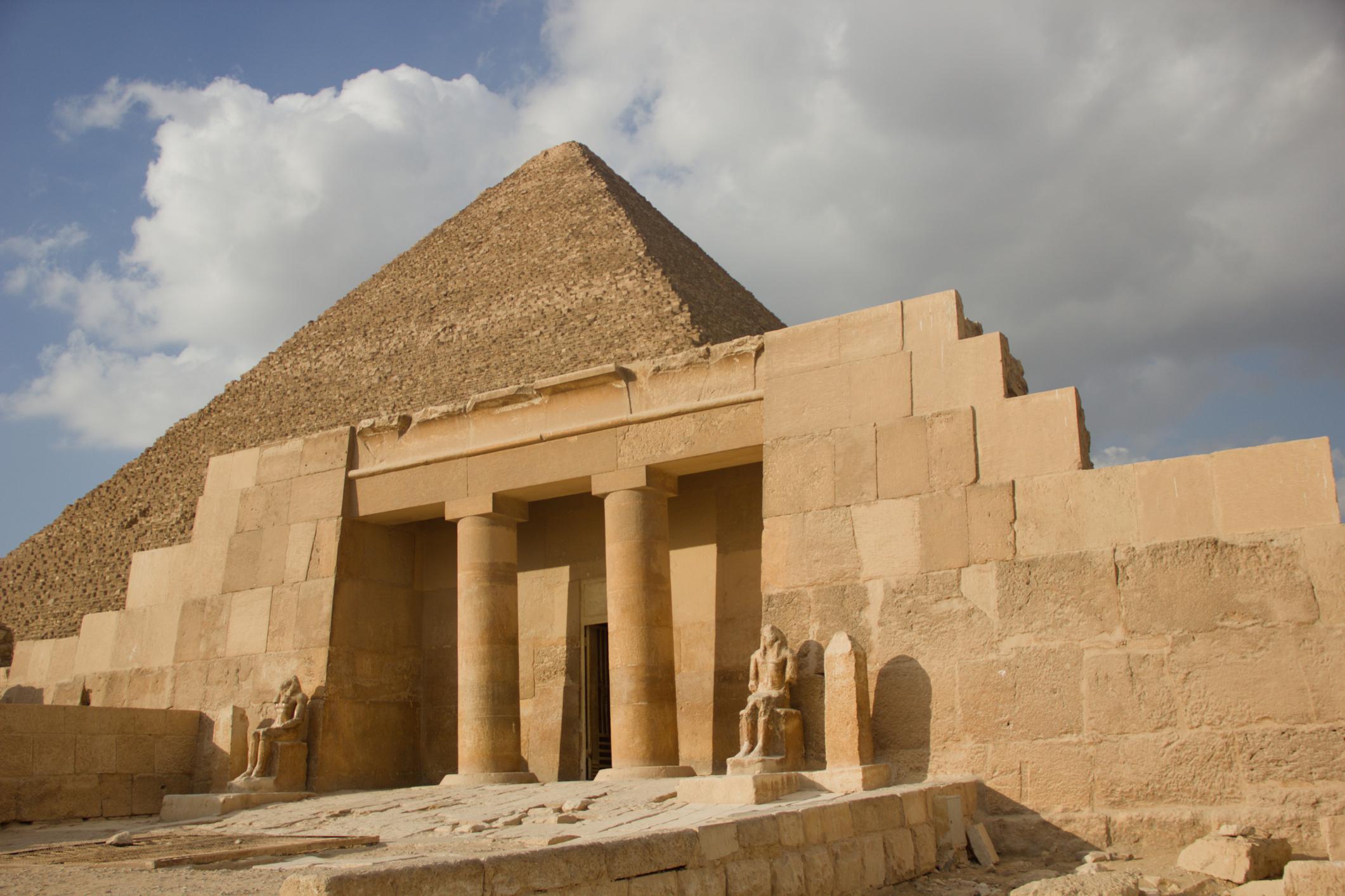
The Valley Temple of Khafre is one of the best-preserved Old Kingdom temples at Giza.
The temple was constructed using enormous blocks of limestone and granite.
Its massive walls demonstrate the engineering capabilities of the Fourth Dynasty.
The interior once contained statues of the king.
Many of these statues were carved from dark stone, creating a powerful visual representation of royal authority.
The Famous Statue of Khafre
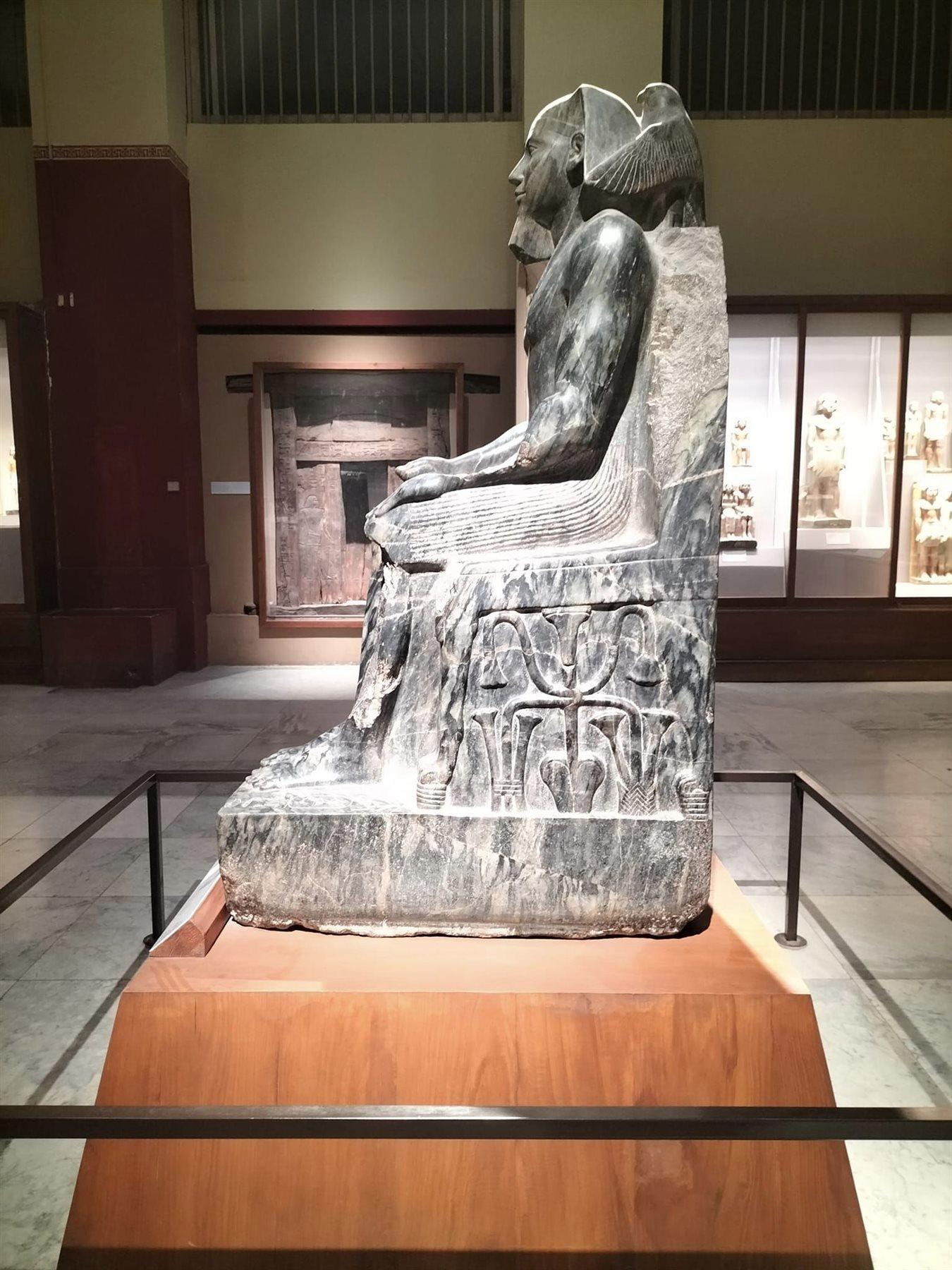
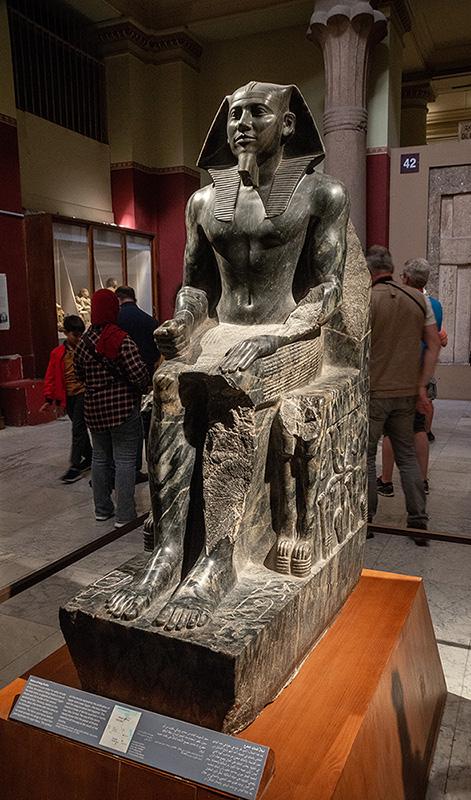
One of the greatest masterpieces of Old Kingdom Egyptian art is the seated statue of Khafre preserved in the Egyptian Museum in Cairo.
The statue is carved from extremely hard diorite.
Khafre sits upright on his throne.
Behind his head is the falcon of Horus, whose wings appear to protect the king.
The composition symbolizes the divine nature of Egyptian kingship.
The statue is not simply a realistic portrait.
It presents Khafre as an eternal and ideal ruler.
His body is youthful and powerful.
His posture is perfectly symmetrical.
This reflects Egyptian artistic principles concerning royal permanence and divine order.
Khafre and Horus
Horus was one of the most important gods of Egyptian kingship.
The pharaoh was associated with Horus during his earthly life.
The falcon behind Khafre's head creates a direct connection between the king and the god.
This symbolism communicates protection, divine authority, and eternal kingship.
The statue demonstrates how Egyptian artists used symbols to communicate ideas rather than simply reproduce physical appearance.
Khafre and the Great Sphinx
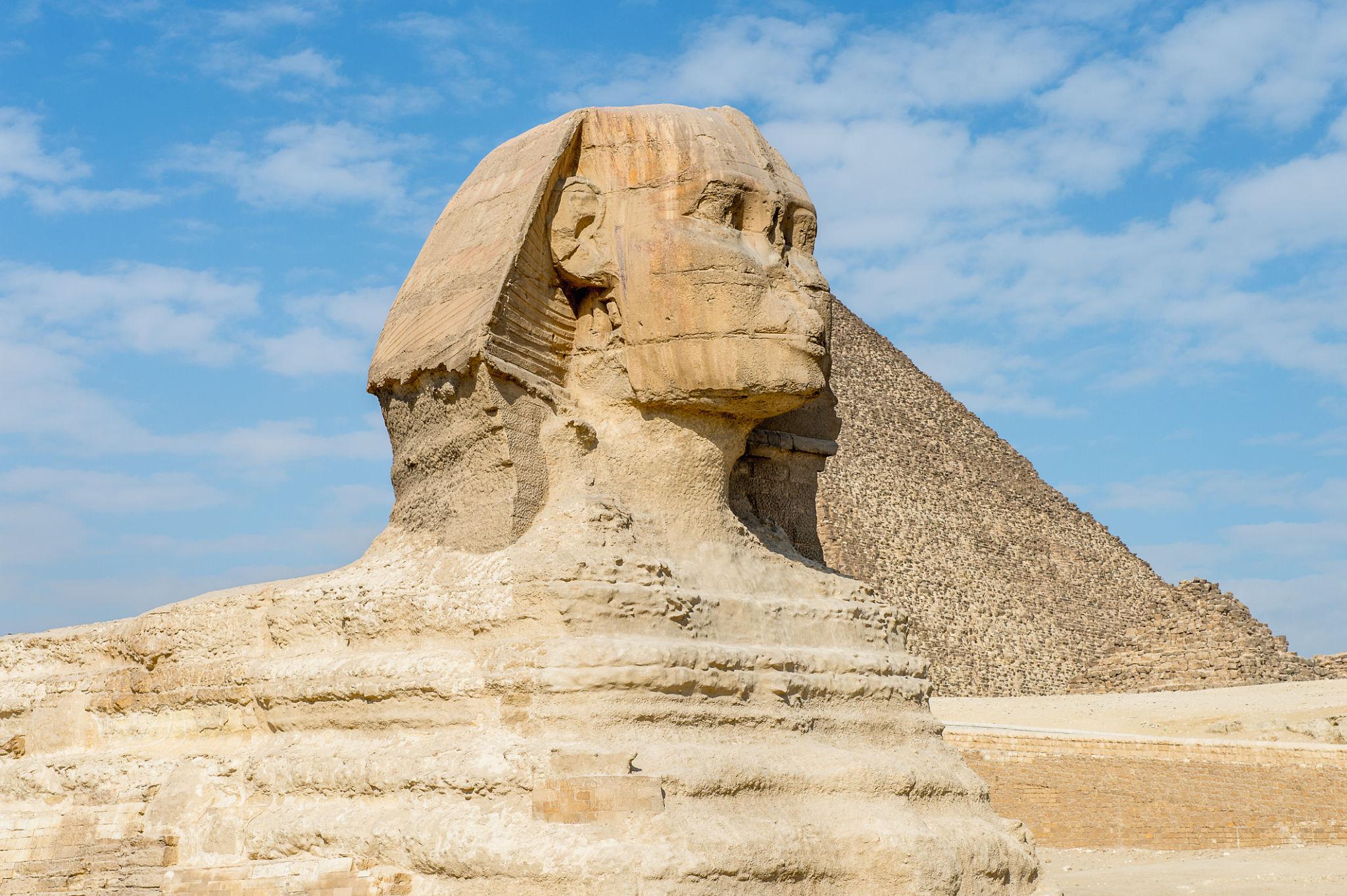
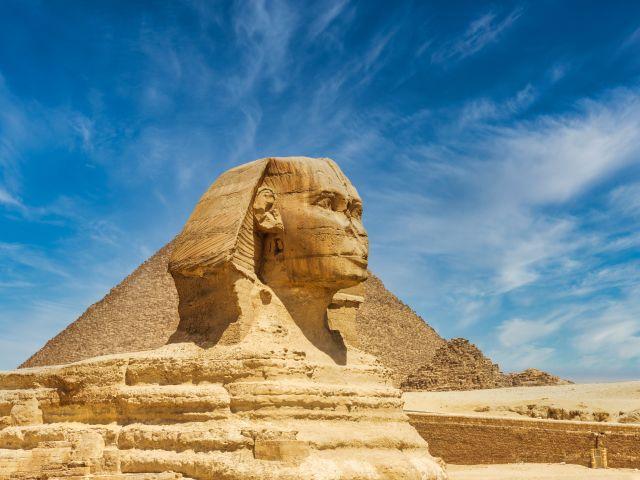
Khafre is traditionally associated with the Great Sphinx of Giza.
The Great Sphinx has the body of a lion and the head of a human king.
It is one of the most famous monuments in the world.
The sphinx symbolizes strength, royal authority, and protection.
Most Egyptologists associate the monument with Khafre's reign, based on archaeological and architectural evidence connecting the Sphinx complex with Khafre's temple complex.
However, some details about its construction and exact purpose remain debated.
The Great Sphinx
The Great Sphinx is approximately 73 meters long and about 20 meters high.
It was carved directly from the limestone bedrock of the Giza Plateau.
The body represents a powerful lion.
The head represents a king wearing the traditional royal headdress.
The monument faces toward the east, where the sun rises.
This orientation had strong religious significance.
The sun was central to Egyptian beliefs about creation, kingship, and eternal life.
The Sphinx and Solar Religion
During the Fourth Dynasty, solar religion was becoming increasingly important.
The king was associated with the sun god Ra.
The Sphinx's eastern orientation may have connected it with the rising sun.
Later Egyptians associated the Sphinx with the solar deity Horemakhet, meaning “Horus in the Horizon.”
This interpretation developed over time.
The famous Dream Stele of Thutmose IV, placed between the Sphinx's paws centuries later, refers to the monument as a divine figure.
The Dream Stele
The Dream Stele was erected by Pharaoh Thutmose IV during the New Kingdom.
According to the inscription, the young prince Thutmose slept near the Sphinx and experienced a divine dream.
The story helped establish the Sphinx as an important sacred monument.
Although the stele was created many centuries after Khafre, it provides evidence of the continuing religious importance of the monument.
Khafre's Government
Khafre ruled a highly organized kingdom.
The Egyptian state controlled agricultural production and collected taxes.
The Nile flood provided fertile farmland.
The agricultural surplus supported the royal court, temples, officials, craftsmen, and workers.
Royal administrators managed estates and storage facilities.
This system allowed Khafre to maintain a large building program.
Construction Workers
The construction of Khafre's pyramid required a massive workforce.
Workers quarried limestone from nearby areas.
Large blocks were transported across the plateau.
Granite used in parts of the complex was brought from southern Egypt.
Workers likely used wooden sledges, ropes, boats, ramps, and other simple technologies.
The success of the project depended on careful organization rather than modern machinery.
The Role of Skilled Craftsmen
Not everyone involved in pyramid construction was a laborer.
Specialized craftsmen included:
- Stonecutters
- Sculptors
- Architects
- Carpenters
- Metalworkers
- Painters
- Priests
- Administrators
- Boat builders
These specialists created the statues, temples, tools, furniture, and ceremonial objects needed for the royal complex.
The high quality of Khafre's surviving sculptures demonstrates the skill of these craftsmen.
Religion and the Afterlife
Ancient Egyptians believed that death was a transition rather than an end.
The king's spirit needed to continue existing in the afterlife.
The pyramid and temple complex provided a place where rituals could support this eternal existence.
Priests performed offerings of food, drink, incense, and other materials.
The king was connected with the gods and the cosmic order known as maat.
Maintaining maat was one of the central responsibilities of the pharaoh.
Khafre and Ra
Khafre's royal ideology was strongly connected with the sun.
The Fourth Dynasty saw the growing importance of Ra in royal theology.
The king was associated with the daily solar cycle.
At sunrise, the sun emerged in the east.
At sunset, it disappeared into the west.
Egyptian religious traditions interpreted this cycle as a journey through the world of the gods.
The dead king was believed to participate in this eternal cycle.
Trade and Natural Resources
Khafre's government depended on Egypt's extensive resource network.
Granite was transported from Aswan.
Limestone came from quarries near the Nile Valley.
Copper and turquoise were obtained from Sinai.
Other resources were brought from Nubia and surrounding regions.
The state organized expeditions and protected important trade routes.
This economic network helped support the royal building program.
Khafre's Family
Khafre belonged to the powerful family of Khufu.
He married members of the royal family and had several children.
His son Menkaure later became pharaoh and built the smallest of the three major pyramids at Giza.
The royal family therefore continued the monumental building tradition.
The three major pyramids at Giza became symbols of the Fourth Dynasty.
Menkaure
Menkaure succeeded Khafre.
His pyramid was smaller than those of Khufu and Khafre.
However, his complex included impressive temples and statues.
Together, the three pyramids formed the most famous royal landscape in ancient Egypt.
Khafre in Ancient Historical Sources
Centuries later, Greek writers described Khafre.
Herodotus called him Chephren and presented him as a harsh ruler.
However, his account was written roughly two thousand years after Khafre's reign.
Modern historians therefore compare literary traditions with archaeological evidence.
The monuments themselves reveal a powerful and highly organized state.
They do not provide enough evidence to support every detail of later stories.
Khafre's Legacy
Khafre's greatest legacy is the Giza pyramid complex.
His pyramid remains one of the most recognizable structures on Earth.
The Great Sphinx has become one of the world's most famous symbols of ancient Egypt.
His diorite statue is considered one of the masterpieces of Egyptian sculpture.
Together, these monuments demonstrate the extraordinary artistic and engineering achievements of the Fourth Dynasty.
Why Khafre Matters
Khafre represents the height of Old Kingdom royal power.
His reign combined:
- Monumental architecture
- Advanced engineering
- Religious symbolism
- Royal sculpture
- Centralized administration
- International resource networks
His pyramid and Sphinx complex show how architecture could be used to express political and religious authority.
The monuments were designed to survive forever.
More than 4,500 years later, they continue to fulfill that purpose.
Conclusion
Khafre, also known as Chephren, was one of the greatest pharaohs of Egypt's Fourth Dynasty.
As a member of the royal family of Khufu, he inherited a powerful kingdom and a long tradition of monumental construction.
His greatest achievement was the construction of the second-largest pyramid at Giza.
Although smaller than Khufu's Great Pyramid, Khafre's pyramid was built on higher ground and still retains some of its original polished limestone casing near the top.
His funerary complex included a magnificent valley temple and a long causeway leading toward the pyramid.
Khafre is also traditionally associated with the Great Sphinx of Giza, one of the most extraordinary monuments of ancient Egypt.
The Sphinx combines the body of a lion with the head of a king, symbolizing royal strength, protection, and divine authority.
Khafre's surviving diorite statue is another masterpiece.
The falcon of Horus behind the king's head represents divine protection and emphasizes the sacred nature of Egyptian kingship.
His reign demonstrates the extraordinary power of the Old Kingdom state.
The construction of his pyramid and temples required advanced engineering, skilled craftsmen, organized labor, extensive resources, and a sophisticated administration.
Khafre's son Menkaure later continued the royal building tradition at Giza.
Together with the monuments of Khufu and Menkaure, Khafre's pyramid created the iconic landscape of the Giza Plateau.
Khafre's legacy remains one of the most powerful symbols of ancient Egypt: a king carved in stone, a pyramid rising toward the heavens, and the Great Sphinx watching over the desert for more than four millennia.