Intef II, whose full royal name was Wahankh Intef II, was one of the most important rulers of Egypt's Eleventh Dynasty. He ruled during the First Intermediate Period, a time when Egypt was divided between competing regional kingdoms. His reign was a major step toward the reunification of Egypt and the beginning of the Middle Kingdom.
Intef II was not simply a local governor who happened to gain power. He presented himself as a legitimate Egyptian king and adopted the traditional royal title King of Upper and Lower Egypt. He strengthened the Theban kingdom, expanded its territory, captured Abydos, fought against the rulers of Herakleopolis, and established a stronger political foundation for his successors.
Although he did not completely reunify Egypt, the achievements of Intef II made the later victory of Mentuhotep II possible. For this reason, he is one of the most important rulers of the early Eleventh Dynasty.
Egypt Before Intef II
Intef II lived during a difficult period in Egyptian history.
The Old Kingdom had already collapsed.
For centuries, Egypt had been governed by powerful centralized kings. Pharaohs such as Khufu, Khafre, and Menkaure controlled enormous resources and organized the construction of massive monuments.
But toward the end of the Old Kingdom, the centralized government gradually weakened.
Provincial governors became more powerful.
Local families accumulated land and wealth.
Temples controlled large estates.
The central government became less capable of controlling distant regions.
After the long reign of Pepi II, political instability became increasingly serious.
Egypt eventually entered the period known as the First Intermediate Period.
Instead of one strong centralized kingdom, Egypt became divided among competing regional rulers.
The Divided Kingdom
By the time Intef II came to power, two major political centers were becoming especially important.
In the north, the rulers of Herakleopolis controlled large parts of Lower and Middle Egypt.
In the south, Thebes had developed into a powerful regional kingdom.
The rulers of these two regions had competing ambitions.
The Herakleopolitan kings wanted to preserve their authority over northern Egypt.
The Theban rulers wanted to expand their influence and eventually restore the unity of Egypt.
Intef II became one of the most important leaders in this southern expansion.
The Rise of the Theban Dynasty
The Theban royal family had already begun to establish itself before Intef II.
Earlier rulers, including Intef I and Mentuhotep I, helped strengthen Theban control over Upper Egypt.
Intef II inherited this developing kingdom and expanded it significantly.
His reign was therefore a continuation of the policies of his predecessors, but on a much larger scale.
He transformed Thebes into an increasingly powerful political and military center.
The Name Wahankh
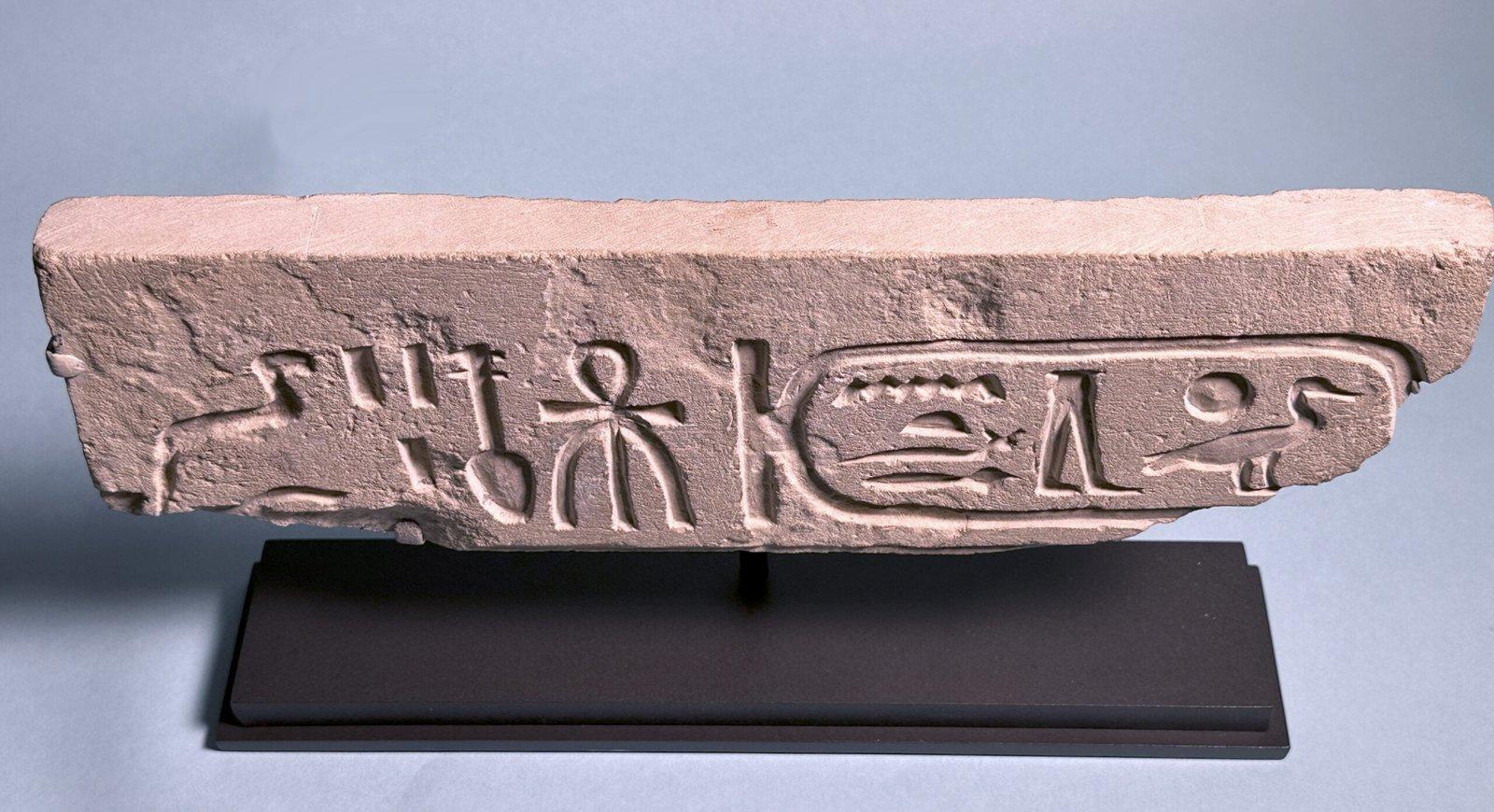
Intef II is often called Wahankh Intef II.
The name Wahankh is generally interpreted as meaning something related to "enduring of life" or "lasting in life."
His Horus name was particularly significant because it reflected the traditional Egyptian concept of kingship.
Intef II wanted to be recognized not merely as a regional ruler but as a legitimate king of Egypt.
This ambition became increasingly clear during his reign.
King of Upper and Lower Egypt
One of Intef II's most important political decisions was his use of the traditional title King of Upper and Lower Egypt.
This title had enormous symbolic importance.
Egypt was politically divided, but Intef II presented himself as the legitimate ruler of the entire country.
He was essentially claiming that the division of Egypt did not change the traditional concept of Egyptian kingship.
The title also demonstrated the growing confidence of the Theban monarchy.
Intef II was no longer simply defending Thebes.
He was claiming a place in the long tradition of Egyptian pharaohs.
The Capture of Abydos
One of Intef II's most important achievements was the capture of Abydos.
Abydos was one of the most sacred places in ancient Egypt.
It had an extremely long history and was closely connected with early Egyptian kingship and the worship of Osiris.
The city was therefore much more than a normal settlement.
Controlling Abydos gave Intef II enormous political and religious prestige.
By taking the city, he strengthened his claim to be a legitimate successor of the ancient Egyptian kings.
Why Abydos Was So Important
Abydos had deep connections with the origins of Egyptian kingship.
Some of the earliest kings of Egypt were associated with the region.
Later, Abydos became one of the most important cult centers of Osiris.
Control of the city therefore gave Intef II both strategic and ideological advantages.
It allowed him to demonstrate that the Theban dynasty was not simply a new regional family.
It was presenting itself as part of the ancient royal tradition of Egypt.
The War With Herakleopolis
After strengthening his position in Upper Egypt and taking Abydos, Intef II continued to compete with the rulers of Herakleopolis.
The conflict was not one single battle.
It was a long political and military struggle.
The two kingdoms competed for territory, resources, and influence.
The Nile Valley became the main arena of this competition.
Intef II's campaigns gradually weakened the position of his northern rivals.
His victories helped expand Theban authority.
The struggle would continue beyond his reign, but the balance of power was beginning to shift toward Thebes.
The Nile and Military Expansion
The Nile was essential to Intef II's success.
The river was the main transportation route through Egypt.
Armies could travel along it.
Supplies could be moved.
Agricultural products could be transported.
Messages could reach distant communities.
Controlling important sections of the Nile therefore provided both economic and military advantages.
Thebes had a strong geographical position in Upper Egypt.
Intef II was able to use this advantage to expand his authority.
The Military King
Intef II's reign was strongly connected with military expansion.
However, he should not be understood simply as a warrior king.
He was also an administrator, religious leader, and political ruler.
His goal was to create a stable kingdom that could challenge the northern rulers.
He strengthened the institutions of the Theban state.
He placed trusted people in important positions.
He maintained close relationships with his family and supporters.
His government relied heavily on personal loyalty and centralized control.
Strong Royal Control
Intef II appears to have understood the dangers of excessive provincial independence.
The Old Kingdom had weakened partly because regional officials had accumulated too much power.
Intef II therefore avoided creating powerful independent nomarchs within his own territory.
Instead, he relied on people personally loyal to the king.
This helped strengthen the authority of the Theban monarchy.
It also allowed the king to maintain greater control over the regions under his rule.
The Importance of Loyalty
Personal loyalty was extremely important in Intef II's government.
The king trusted close members of his family and loyal supporters.
This approach helped prevent the emergence of powerful regional officials who might challenge royal authority.
It was an approach that reflected older traditions of Egyptian kingship.
Intef II was attempting to rebuild a centralized state while Egypt was still politically divided.
Religion and Kingship
Religion remained at the center of Intef II's government.
The ancient Egyptians believed that the pharaoh had a special relationship with the gods.
The king was expected to maintain maat, the divine principle of truth, justice, balance, and order.
Political stability was therefore closely connected with religious legitimacy.
Intef II presented himself as a legitimate king who was restoring order to Egypt.
His military victories could be interpreted as part of this larger mission.
The God Amun
The rise of Thebes also increased the importance of the local god Amun.
Amun would eventually become one of the most powerful gods in Egyptian history.
During the early Eleventh Dynasty, his cult was already important in Thebes.
Intef II is traditionally associated with an early monument dedicated to Amun at the site that later became the great temple complex of Karnak. The exact early development of the Karnak site is debated, but Intef II is widely associated with one of the earliest known royal monuments there.
The Early Karnak Monument
The later Karnak complex became one of the largest religious sites in the ancient world.
But its beginnings were much more modest.
Intef II is associated with an early monument honoring Amun.
This was important because it connected the Theban king with the local divine tradition.
Over many centuries, later pharaohs expanded the site.
The enormous Karnak complex that visitors see today is the result of centuries of construction.
Intef II's contribution represents an early stage in this long history.
Life in Thebes
Thebes was becoming a major political center during Intef II's reign.
The city benefited from its location along the Nile.
Agriculture provided food and resources.
Craftsmen produced pottery, tools, jewelry, textiles, and weapons.
Merchants transported goods along the river.
Priests maintained temples.
Officials organized agricultural production and taxation.
The growth of the royal government created new opportunities for administrators, soldiers, craftsmen, and religious officials.
The Economy of Upper Egypt
Agriculture remained the foundation of the Theban economy.
The Nile provided fertile soil.
Farmers cultivated grain and other crops.
Livestock were also important.
The government needed agricultural production to support its army and administration.
Trade also contributed to the economy.
Thebes' position along the Nile made it easier to move goods between Upper Egypt and other regions.
The People of Intef II's Kingdom
Intef II's kingdom was not only a military state.
It was a functioning society.
Farmers worked the fields.
Fishermen worked the Nile.
Craftsmen produced everyday objects.
Priests performed rituals.
Scribes kept records.
Soldiers protected the kingdom.
Administrators collected resources.
The king's responsibility was to keep this system functioning.
This was part of the traditional Egyptian concept of kingship.
Monuments and Building Projects
Intef II built monuments and supported religious activity.
Although his monuments were modest compared with those of later Middle Kingdom rulers, they were politically significant.
They demonstrated that Thebes had become a genuine royal center.
The king was not simply a local governor.
He was presenting himself as a pharaoh with the authority and responsibilities of traditional Egyptian kingship.
Intef II's Tomb
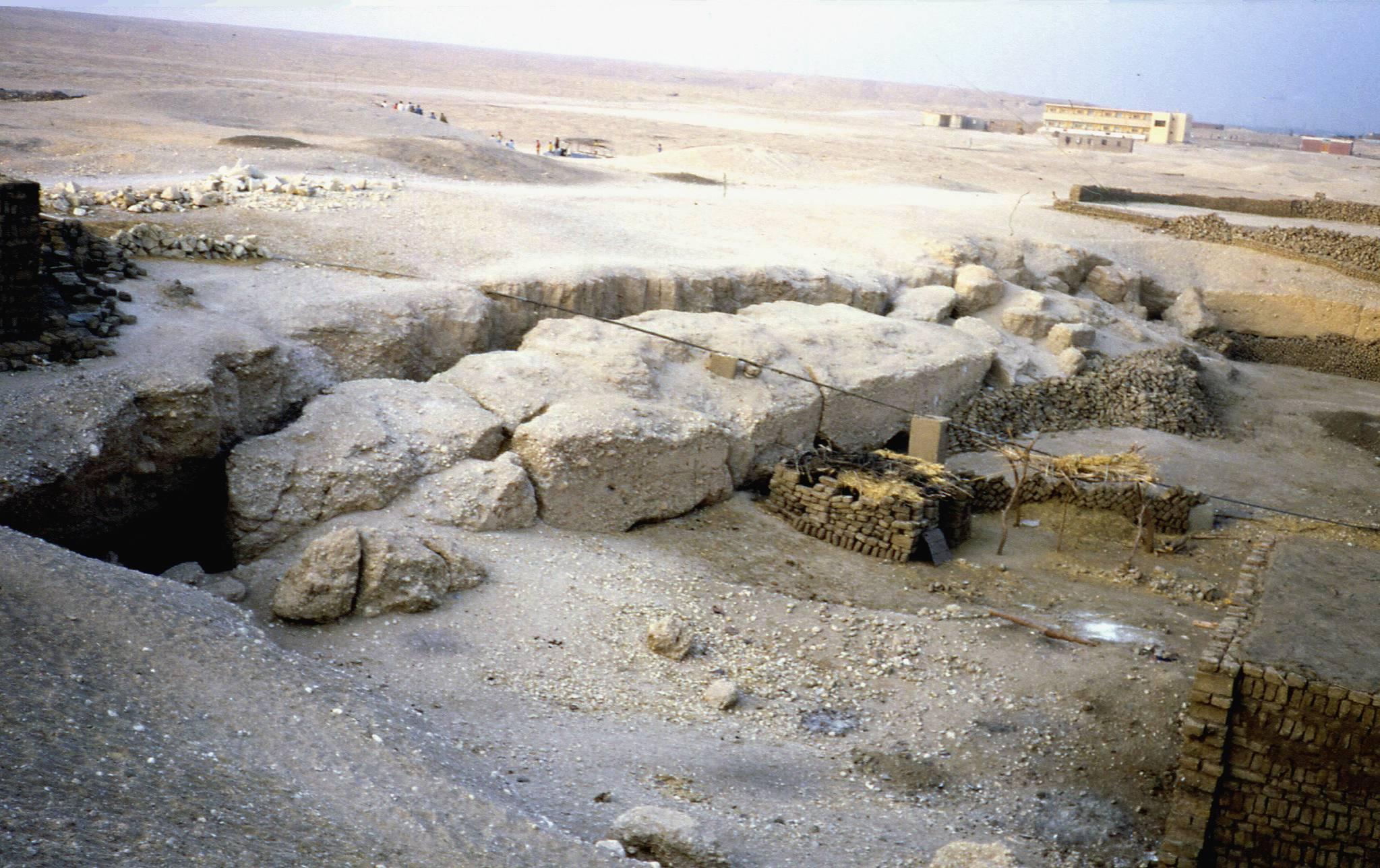
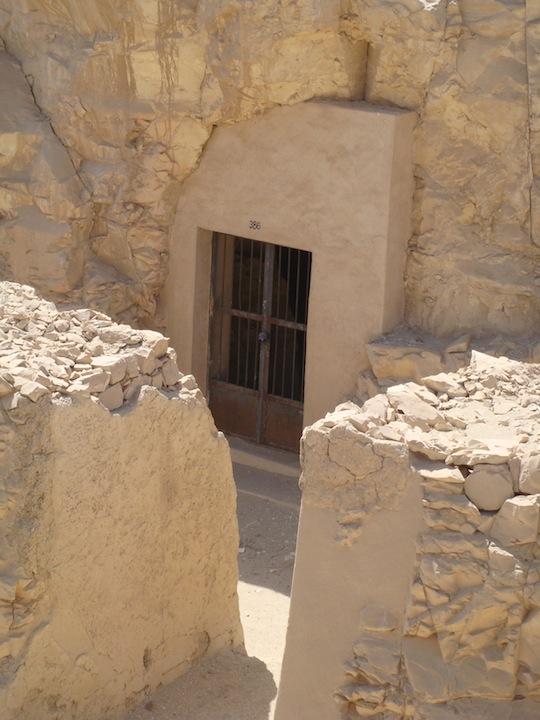
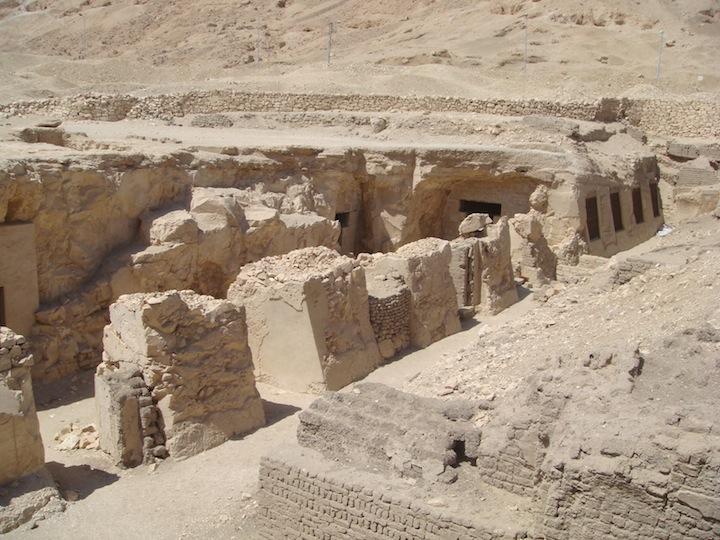
After his death, Intef II was buried at el-Tarif, on the western side of Thebes.
The royal tomb was part of the early Eleventh Dynasty funerary landscape.
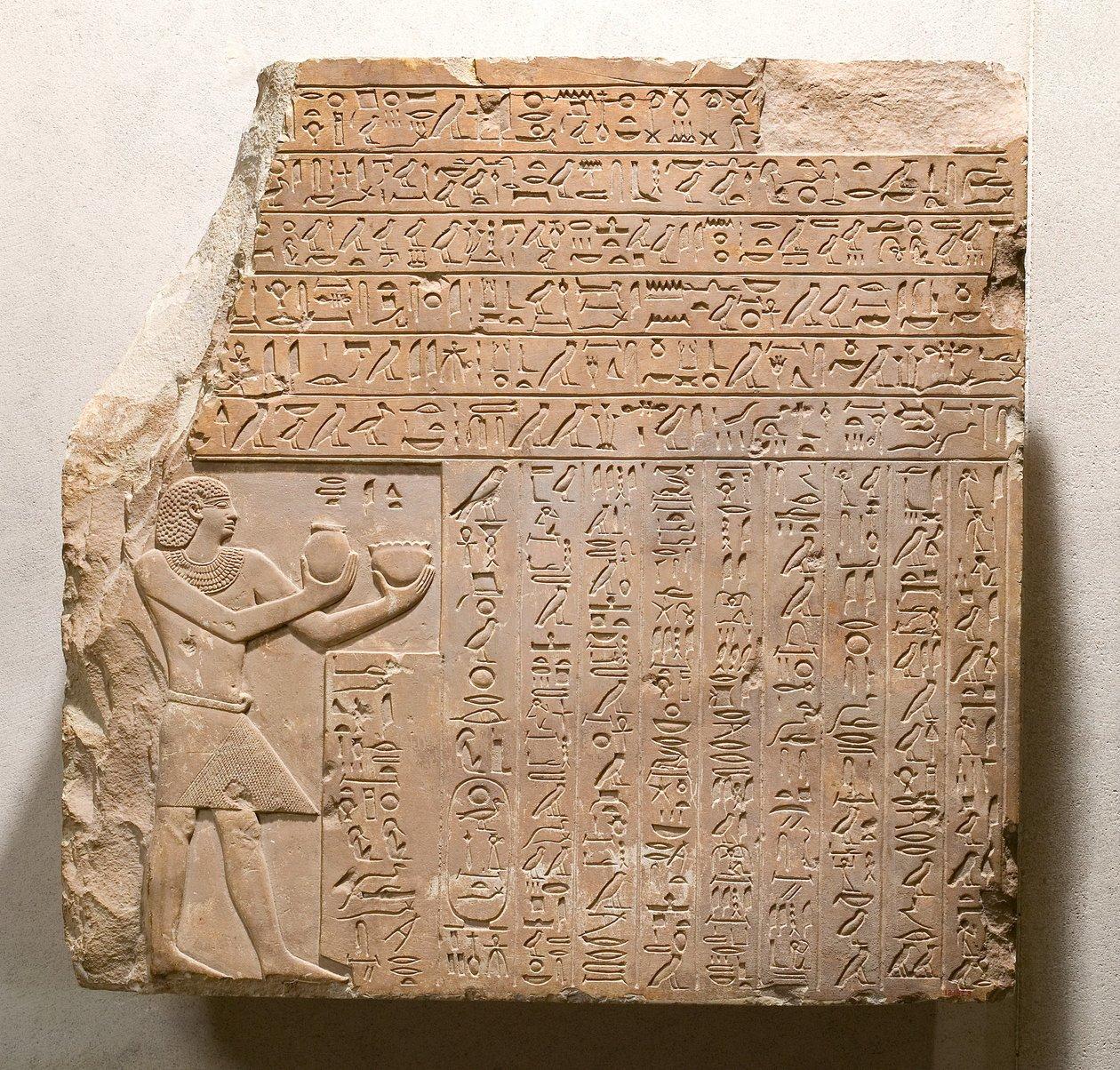
A biographical inscription was placed near the entrance of his tomb.
The monument described his achievements and emphasized the importance of his reign.
The tomb and its inscriptions provide valuable evidence for understanding Intef II's rule.
The Famous Dogs
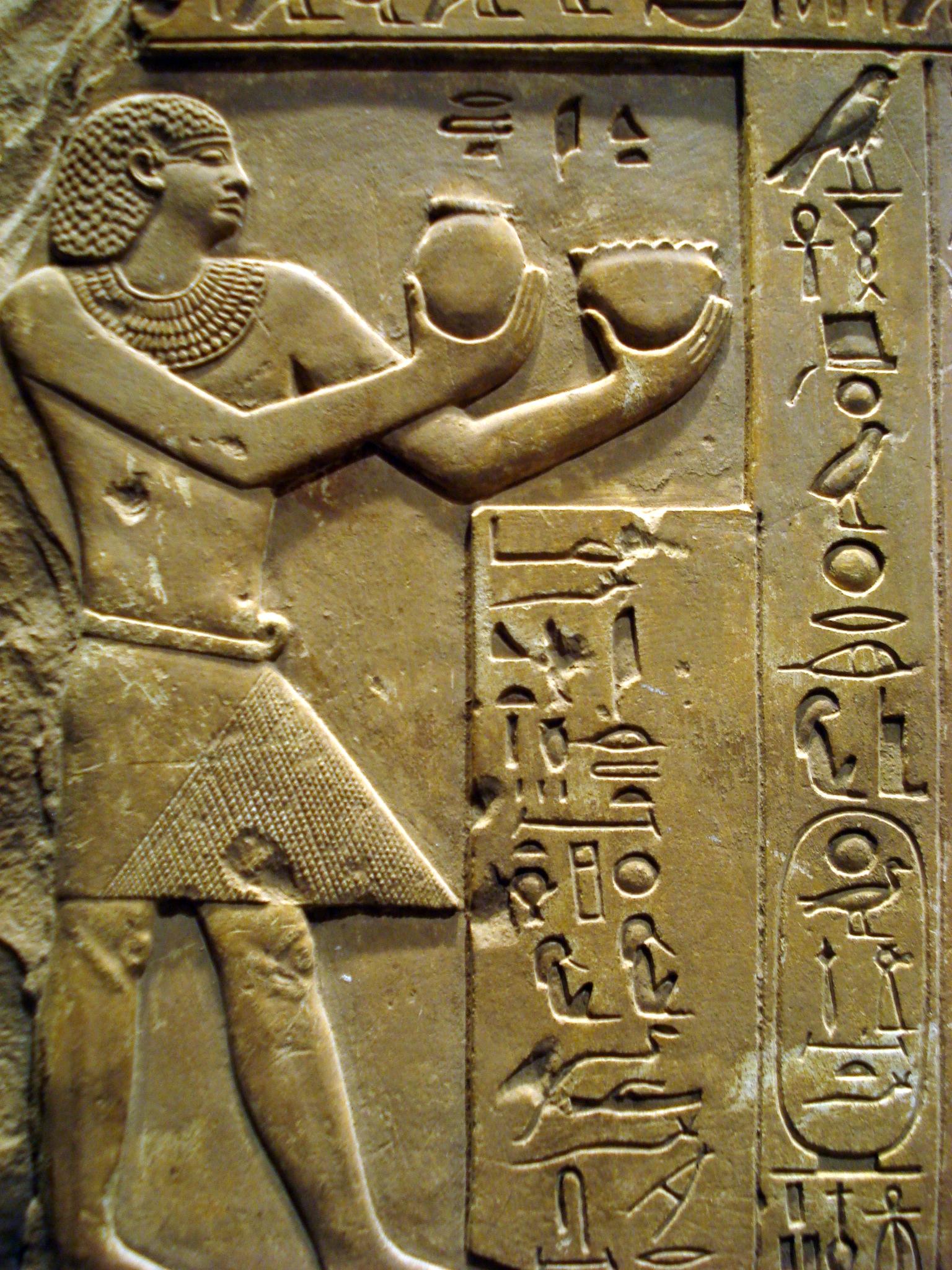
One particularly interesting feature associated with the memorial of Intef II is the depiction of the king accompanied by his favorite dogs.
This detail provides a rare personal glimpse into the ruler.
Ancient Egyptian royal art often emphasized kings as powerful and divine figures.
The presence of the king's dogs creates a more personal image.
It reminds us that behind the royal titles and military campaigns was a human ruler with personal relationships and interests.
Intef II's Government
Intef II appears to have maintained a tightly controlled administration.
He relied heavily on trusted family members and loyal supporters.
This reduced the risk of powerful provincial officials becoming independent.
His approach was particularly important because Egypt had recently experienced political fragmentation.
The Theban king was attempting to rebuild centralized authority.
His government therefore combined traditional royal ideology with practical political control.
The Meaning of Maat
Maat remained an important principle throughout Intef II's reign.
It represented truth, justice, harmony, and cosmic balance.
A successful king was expected to protect maat.
For Intef II, maintaining order was particularly important because Egypt had been divided for generations.
His claim to kingship could therefore be presented as part of the restoration of order.
His military campaigns were not simply territorial conquests.
They were also connected to the traditional Egyptian idea of restoring unity.
Intef II and the Future of Egypt
Intef II did not reunite the entire country.
However, he made major progress toward that goal.
He expanded Theban territory.
He captured Abydos.
He weakened the northern rulers.
He strengthened the Theban administration.
He reinforced the royal tradition.
He supported religious institutions.
He established a stronger foundation for his successors.
These achievements changed the balance of power in Egypt.
Intef III
After Intef II's death, his successor Intef III continued the expansion of Theban authority.
Intef III captured important territories and further weakened the northern rulers.
The Theban kingdom was becoming increasingly powerful.
The process that Intef II had helped accelerate continued under his successor.
Mentuhotep II
The final stage of reunification came under Mentuhotep II.
He inherited a much stronger Theban kingdom.
The northern rulers were weakened.
The Theban army had experience.
The royal administration was stronger.
The ideological claim to legitimate kingship had already been established.
Mentuhotep II eventually defeated Herakleopolis and reunited Egypt.
He became one of the greatest rulers of the Eleventh Dynasty.
The Beginning of the Middle Kingdom
The reunification of Egypt under Mentuhotep II marked the beginning of the Middle Kingdom.
Central authority was restored.
The country became politically unified again.
The economy expanded.
Trade increased.
Military expeditions were launched.
Art and literature flourished.
The royal government began constructing impressive monuments.
The Middle Kingdom became one of the most important periods of Egyptian civilization.
Intef II was one of the rulers who made this transformation possible.
Why Intef II Matters
Intef II is historically important for several reasons.
First, he greatly strengthened the Theban kingdom.
Second, he captured Abydos and strengthened his claim to legitimate Egyptian kingship.
Third, he fought against the Herakleopolitan rulers.
Fourth, he developed a more centralized administration in Thebes.
Fifth, he supported religious institutions.
Sixth, he created the political foundation that allowed later rulers to reunite Egypt.
His reign was therefore a turning point in Egyptian history.
Conclusion
Intef II, or Wahankh Intef II, was one of the most important rulers of Egypt's Eleventh Dynasty.
He ruled during the First Intermediate Period, when Egypt was divided between competing regional powers.
The Old Kingdom had collapsed.
The centralized government had weakened.
Local rulers had become powerful.
Herakleopolis controlled much of northern and central Egypt.
Thebes controlled important parts of Upper Egypt.
Intef II inherited this divided political world.
But he did not accept permanent division.
He presented himself as a legitimate Egyptian king.
He adopted the title King of Upper and Lower Egypt.
This was a powerful statement.
Intef II was claiming that the ancient Egyptian tradition of unified kingship still belonged to him.
One of his most important achievements was the capture of Abydos.
The city was sacred and deeply connected with the earliest traditions of Egyptian kingship.
By controlling Abydos, Intef II strengthened his political and religious legitimacy.
He was demonstrating that the Theban dynasty belonged to the ancient tradition of Egyptian rulers.
After securing Abydos, Intef II continued his struggle against Herakleopolis.
His wars were part of a larger competition for control of the Nile Valley.
The Nile was essential for transportation, agriculture, communication, and trade.
Control of important parts of the river helped strengthen the Theban kingdom.
Intef II also developed a strong system of royal control.
He relied on trusted family members and loyal supporters.
He avoided allowing powerful independent provincial rulers to develop inside his kingdom.
This approach helped strengthen the monarchy.
Religion was equally important.
Intef II supported the traditional gods and maintained the principle of maat.
He is also associated with an early monument to Amun at Karnak, linking the Theban monarchy with the local god whose cult would later become enormously powerful.
His reign was therefore important both politically and religiously.
Intef II's funerary monument at el-Tarif provides additional evidence of his importance.
A biographical inscription recorded his achievements.
The depiction of the king with his favorite dogs provides a rare personal detail and reminds us that this powerful ruler was also an individual with his own relationships and interests.
Intef II died without completely reunifying Egypt.
But he left behind a much stronger Theban kingdom.
His successor Intef III continued the expansion.
Then Mentuhotep II completed the process.
He defeated the northern rulers and reunited Egypt.
The Middle Kingdom began.
The success of Mentuhotep II was therefore not an isolated achievement.
It was the result of generations of Theban political development.
Intef II was one of the most important figures in that process.
He transformed Thebes into a serious rival to the northern kingdoms.
He strengthened the royal administration.
He expanded territory.
He captured Abydos.
He claimed the traditional title of Egyptian kingship.
He fought for control of the Nile Valley.
And he preserved the idea that Egypt could once again become a unified kingdom.
For these reasons, Intef II deserves to be remembered as one of the great architects of Egypt's reunification.
He was not the final king who restored unity.
But he helped create the political, military, religious, and administrative foundation upon which that victory was built.
His story is the story of a divided Egypt slowly moving toward unity.
It is the story of Thebes rising from a regional city to a royal capital.
It is the story of a dynasty rebuilding the power of the pharaoh.
And above all, it is the story of a king who refused to accept that the division of Egypt had to last forever.
Intef II was one of the most important early Theban kings, and his achievements paved the way for Mentuhotep II and the beginning of the Middle Kingdom.