Intef I, also known as Sehertawy Intef, was one of the earliest rulers of Egypt's Eleventh Dynasty and an important figure in the rise of Theban power during the First Intermediate Period. He ruled during a time when Egypt was divided between competing regional kingdoms, and his reign helped establish the political foundations that would eventually lead to the reunification of Egypt.
Intef I was probably a successor or close relative of the early Theban rulers who had begun building an independent kingdom in Upper Egypt. Although very little is known about his personal life, his reign appears to have been important in strengthening Theban authority.
His story is not one of enormous pyramids or vast foreign conquests. Instead, it is a story of political rivalry, military competition, regional power, and the gradual rebuilding of Egyptian unity.
Egypt During Intef I's Time
Intef I lived during the First Intermediate Period, one of the most politically complicated eras in ancient Egyptian history.
The powerful centralized government of the Old Kingdom had collapsed.
For centuries, the pharaoh had controlled Egypt from a strong central administration. Kings such as Khufu, Khafre, and Menkaure had commanded enormous resources and built monumental pyramids.
But during the later Sixth Dynasty, the central government gradually weakened.
Provincial governors became more powerful. Local families controlled land and resources. Temples gained economic influence. After the long reign of Pepi II, political instability increased.
Egypt became divided among several competing regional powers.
This was the world inherited by Intef I.
The Two Political Centers
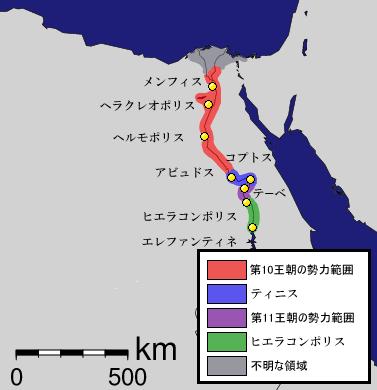
By the time Intef I ruled, two major political centers were especially important.
In northern and central Egypt, Herakleopolis Magna became the base of powerful rulers.
In Upper Egypt, Thebes emerged as the center of a new royal dynasty.
The two regions had different political interests.
The Herakleopolitan rulers wanted to preserve their influence over central and northern Egypt.
The Theban rulers wanted to expand their authority.
The rivalry between them eventually became a struggle for control over Egypt itself.
Intef I was one of the early Theban kings who helped transform this regional competition into a larger political struggle.
The Rise of the Intef Dynasty
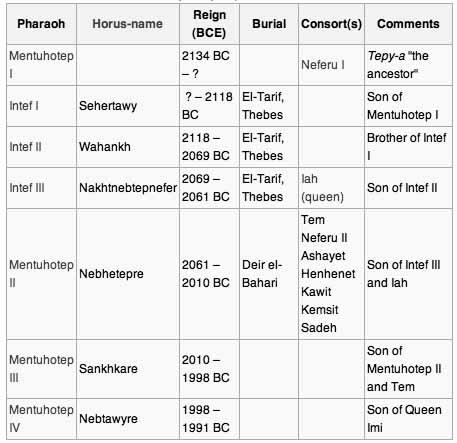
The name Intef became associated with the early rulers of the Eleventh Dynasty.
The Theban royal family gradually strengthened its position in Upper Egypt.
Intef I inherited a regional kingdom rather than the unified Egypt of the Old Kingdom.
His challenge was to defend and expand Theban territory.
The early Theban rulers were therefore very different from the pyramid builders.
They had fewer resources.
They faced rival kingdoms.
They needed military strength.
They also needed to maintain relationships with local governors and communities.
His Royal Name
Intef I is often known by the Horus name Sehertawy, which is commonly translated as something like "He Who Has Pacified the Two Lands" or "He Who Brings the Two Lands to Peace."
This royal name is particularly interesting because it reflects the political situation of the period.
Egypt was divided.
The idea of bringing the Two Lands together was therefore a powerful royal message.
The name may have expressed the king's ambition to restore unity and order.
A King of Upper Egypt
Intef I was primarily a ruler of Upper Egypt.
Thebes was the center of his political power.
His authority probably extended over important areas of southern Egypt.
The exact boundaries of his kingdom are difficult to establish.
However, the growing influence of the Theban rulers suggests that they were gradually expanding their control.
Intef I played a role in this process.
Military Competition
The political environment required military strength.
The Theban rulers competed with neighboring regions.
They also had to protect important agricultural lands and trade routes.
Although detailed records of Intef I's military campaigns are limited, his reign occurred during a period when military conflict between regional powers was becoming increasingly important.
The Theban kingdom needed an organized army to survive.
Intef I helped strengthen the military character of the dynasty.
The Importance of the Nile
The Nile was essential to the political struggle.
It was Egypt's main transportation route.
Armies could travel along it.
Agricultural products could be transported.
Trade goods moved between regions.
The river also connected the different communities of Upper and Lower Egypt.
Control of important stretches of the Nile therefore provided significant political and economic advantages.
Thebes was strategically located along the river, helping its rulers strengthen their position.
Thebes as a Royal Capital
Thebes became increasingly important under the Eleventh Dynasty.
The city was surrounded by fertile agricultural land.
It also had important religious traditions.
The local god Montu was particularly associated with warfare and royal strength.
Another deity, Amun, would become enormously important later in Egyptian history.
During Intef I's period, Thebes was developing into a major political and religious center.
The growth of Thebes was closely connected with the rise of the Eleventh Dynasty.
Religion and Kingship
Religion remained central to Egyptian political life.
The pharaoh was believed to have a special relationship with the gods.
The king was expected to maintain maat, the divine principle of order, justice, and balance.
The political division of Egypt could be interpreted as a disruption of this ideal.
The Theban rulers could therefore present themselves as restorers of order.
Intef I's royal ideology reflected the continuing Egyptian belief that legitimate kingship was connected with maintaining harmony between the gods and the human world.
Montu and the Theban Kings
Montu was particularly important to the early Theban rulers.
He was associated with warfare, courage, and royal power.
The association between the king and Montu was especially appropriate during a period of military competition.
The Theban rulers needed to demonstrate that they were strong enough to defend their kingdom and expand their influence.
Montu provided a powerful religious symbol for this role.
Everyday Life Under Intef I
While royal politics were changing, ordinary Egyptians continued their daily lives.
Farmers cultivated wheat, barley, vegetables, and other crops.
The Nile provided fertile soil.
Fishermen worked along the river.
Craftsmen produced pottery, jewelry, tools, textiles, and weapons.
Merchants transported goods between communities.
Priests performed religious rituals.
Scribes recorded administrative information.
The political division of Egypt did not mean that civilization had disappeared.
Egyptian culture remained strong.
The Economy of Upper Egypt
The Theban economy depended heavily on agriculture.
The fertile lands along the Nile produced crops that supported local communities.
Livestock also played an important role.
The rulers needed agricultural resources to support their armies, officials, and temples.
Trade with other regions provided additional goods.
The Nile made transportation relatively efficient.
Economic strength therefore became an important foundation for Theban political expansion.
The Role of Local Governors
Provincial governors had become increasingly powerful after the decline of the Old Kingdom.
Many local officials controlled their own lands and resources.
The Theban rulers had to cooperate with these local elites.
At the same time, they needed to prevent regional governors from becoming completely independent.
Building a strong centralized administration was therefore an important long-term challenge.
Intef I belonged to the generation of rulers who began rebuilding centralized royal authority in Upper Egypt.
Intef I's Monuments
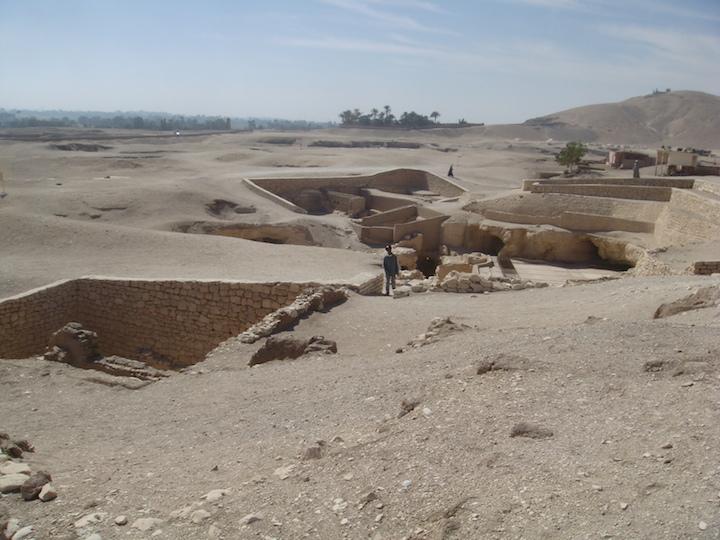
Very little remains of Intef I's original monuments.
His tomb is traditionally associated with the Theban necropolis on the western bank of the Nile.
The early Eleventh Dynasty rulers were not building enormous pyramids like the kings of the Old Kingdom.
Their royal tombs reflected the changing political and economic conditions of the period.
Instead of gigantic pyramid complexes, the Theban kings developed new forms of royal funerary architecture.
These developments eventually influenced Middle Kingdom royal tomb design.
The Royal Tomb at Thebes
Intef I's funerary complex was associated with the western bank of Thebes.
The western desert cliffs provided a natural setting for royal burial.
The Theban rulers would increasingly use this landscape for their tombs.
The development of royal burial sites in western Thebes became one of the defining features of the Eleventh Dynasty.
Later, the area would become one of the most famous archaeological landscapes in Egypt.
The Road Toward Reunification
Intef I was not the king who reunited Egypt.
However, his reign helped prepare the way.
The Theban rulers gradually expanded their political influence.
They strengthened their military forces.
They developed administrative systems.
They gained control over additional territories.
Their rivalry with Herakleopolis became increasingly serious.
The conflict would continue under later rulers.
Intef II
After Intef I, his successor Intef II continued the expansion of Theban power.
Intef II was one of the most important early rulers of the Eleventh Dynasty.
He expanded Theban territory and fought against northern rivals.
His reign strengthened the dynasty considerably.
The achievements of Intef II created the conditions for later Theban victories.
Intef III
Intef III continued the work of his predecessors.
Although much of his reign is also poorly documented, the Theban dynasty continued growing stronger.
The rulers of Upper Egypt gradually developed the political and military strength needed to challenge Herakleopolis.
Eventually, the struggle reached its decisive phase under Mentuhotep II.
Mentuhotep II and the Reunification of Egypt
The greatest achievement of the Eleventh Dynasty came under Mentuhotep II.
He defeated the northern rivals and reunified Egypt.
For the first time in generations, Egypt was once again governed by a strong central monarchy.
The Middle Kingdom began.
Mentuhotep II became one of the most important rulers in Egyptian history.
His success was the result of generations of Theban political development.
Intef I was one of the early kings who helped establish that foundation.
The Beginning of the Middle Kingdom
The reunification of Egypt created a new political era.
The Middle Kingdom became a period of stability and prosperity.
Central government was strengthened.
Agriculture expanded.
Trade increased.
Military campaigns extended Egyptian influence into neighboring regions.
Art and literature flourished.
Royal construction projects expanded.
The Eleventh Dynasty transformed Thebes from a regional power into the center of a unified Egyptian state.
Why Intef I Is Important
Intef I may not be as famous as Mentuhotep II, but his historical role is important.
He ruled during the early stage of the Theban rise.
He helped preserve the independence of the southern kingdom.
He strengthened the royal tradition of the Eleventh Dynasty.
He contributed to the political and military development of Thebes.
His reign formed part of the chain of events that eventually resulted in the reunification of Egypt.
A King Between Two Eras
Intef I stood between two major periods of Egyptian history.
Behind him was the declining Old Kingdom and the political fragmentation of the First Intermediate Period.
Ahead of him was the reunified Middle Kingdom.
He ruled during a time when Egypt was divided, but the idea of a united kingdom had not disappeared.
The Theban rulers gradually transformed that idea into political reality.
The Legacy of Intef I
The greatest legacy of Intef I was the strengthening of the Theban royal dynasty.
He did not build a massive pyramid.
He did not create a large empire.
He did not leave behind extensive written records.
But his dynasty survived.
His successors expanded Theban authority.
Eventually, Egypt was reunited.
The Middle Kingdom began.
This makes Intef I an important link in the long history of Egyptian political development.
Conclusion
Intef I was one of the earliest important rulers of Egypt's Eleventh Dynasty and a key figure in the rise of Theban power during the First Intermediate Period.
He ruled at a time when Egypt was divided among competing regional kingdoms.
The Old Kingdom had already collapsed.
The centralized government that had built the great pyramids had weakened.
Local governors and regional rulers had gained power.
In the north, Herakleopolis became an important political center.
In the south, Thebes was emerging as a powerful kingdom.
Intef I inherited this divided political landscape.
His task was not to rule a unified Egypt but to strengthen the Theban kingdom.
His royal name, Sehertawy, reflected the idea of bringing the Two Lands into peace.
This was an especially meaningful message during a period when Egypt was politically divided.
The Nile played an important role in the struggle.
It provided agricultural resources and connected the different regions of Egypt.
It also allowed armies, officials, and goods to move efficiently.
Thebes benefited from its strategic position along the river.
Religion was another important source of royal legitimacy.
The Theban rulers were strongly connected with Montu, the warrior god associated with courage, warfare, and royal power.
The king was also expected to maintain maat, the principle of truth, justice, balance, and cosmic order.
The reunification of Egypt could therefore be presented as the restoration of both political and divine order.
Intef I's reign was relatively early in this process.
He did not complete the reunification of Egypt.
His successors continued the struggle.
Intef II expanded Theban territory and strengthened the dynasty.
Later, Mentuhotep II achieved the great victory that finally reunited Egypt.
The Middle Kingdom began.
Egypt once again possessed a powerful centralized government.
Trade expanded.
Agriculture became more productive.
Military power increased.
Art, architecture, and literature flourished.
Intef I's historical importance therefore comes from his place within this larger transformation.
He was one of the rulers who helped establish the power of Thebes.
His reign helped preserve the Eleventh Dynasty during a period when Egypt was politically fragmented.
His dynasty survived long enough to reunite the country.
Very little is known about Intef I's personal life.
His exact military achievements remain uncertain.
Only limited monuments survive.
However, historical importance does not always depend on the number of surviving statues or temples.
Sometimes a ruler's importance comes from the political developments that followed.
Intef I was one of those rulers.
He helped create the foundation for a dynasty that would eventually restore Egyptian unity.
His story is therefore a story of transition.
It connects the politically divided world of the First Intermediate Period with the powerful centralized kingdom of the Middle Kingdom.
He represents the gradual rise of Thebes and the return of strong Egyptian kingship.
Intef I was not the pharaoh who reunited Egypt, but he was one of the rulers who helped make that reunification possible.
His legacy survived through the Eleventh Dynasty, the rise of Thebes, and the eventual restoration of Egyptian unity under Mentuhotep II.
For this reason, Intef I deserves an important place in the history of ancient Egypt.