Anedjib, also known as Adjib, was one of the early rulers of ancient Egypt's First Dynasty. He is generally considered the sixth king of the dynasty and ruled during the Early Dynastic Period, around the beginning of the 3rd millennium BCE.
Although Anedjib's reign was probably shorter than that of some of his predecessors, he is an important figure in the history of early Egypt. Archaeological discoveries from his reign provide valuable evidence about the development of Egyptian kingship, royal titles, administration, religion, and burial traditions.
Anedjib is particularly interesting because he introduced or emphasized several royal titles and ceremonial traditions that later became important parts of Egyptian kingship.
Who Was Anedjib?
Anedjib was an early Egyptian pharaoh who ruled after Den.
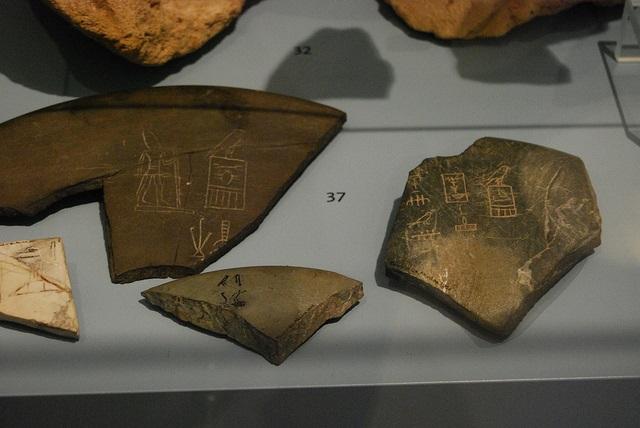
His royal name is preserved in inscriptions and seal impressions dating from the First Dynasty.
The name Anedjib is usually associated with the meaning "Safe and Sound" or a similar concept, although the exact interpretation of the early name remains uncertain.
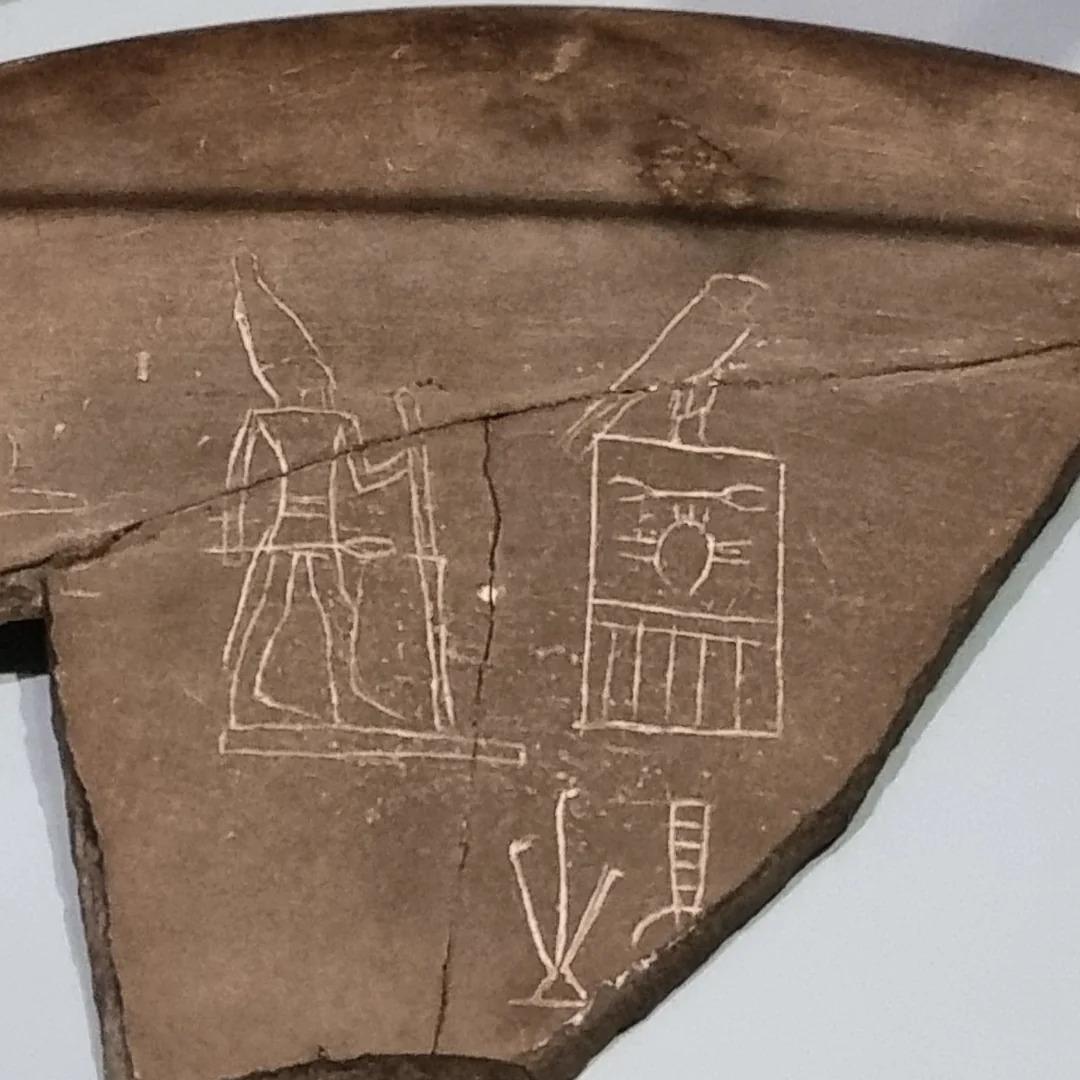
Like other First Dynasty kings, Anedjib used a royal Horus name written inside a serekh.
The serekh was a rectangular representation of the royal palace facade.
Above it was the falcon of Horus, symbolizing the divine authority of the king.
Anedjib and the First Dynasty
The First Dynasty was the beginning of Egypt's long tradition of dynastic kingship.
Earlier rulers had established the unity of Upper and Lower Egypt.
By the time Anedjib became king, the Egyptian state was already becoming increasingly centralized.
The pharaoh controlled agricultural resources, royal estates, religious institutions, trade networks, and government officials.
Anedjib inherited this system.
His reign continued the traditions developed by Narmer, Hor-Aha, Djer, Djet, and Den.
Although fewer records survive from his reign, his inscriptions reveal important developments in royal ideology.
The Royal Titles of Anedjib
One of Anedjib's most important contributions was his use of royal titles.
He is associated with the early use of the title "Two Ladies", or Nebty, which connected the king with two important goddesses.
The two goddesses were Wadjet, the cobra goddess of Lower Egypt, and Nekhbet, the vulture goddess of Upper Egypt.
Together, they symbolized the unity of the two lands.
The title emphasized that the king ruled both Upper and Lower Egypt.
This became one of the five major royal titles used by later Egyptian pharaohs.
Anedjib therefore played an important role in the development of Egyptian royal titulary.
The Sed Festival
Anedjib is also associated with the development of the royal Sed Festival.
The Sed Festival was a major royal ceremony intended to renew the king's strength and legitimacy.
Later Egyptian pharaohs traditionally celebrated the festival after approximately thirty years of reign and then at regular intervals.
The ceremony involved rituals, processions, offerings, and symbolic demonstrations of royal power.
Anedjib's inscriptions mention a festival associated with royal renewal.
However, it is uncertain whether he actually celebrated a traditional thirty-year Sed Festival.
His reign may not have been long enough.
Instead, the reference may represent an early stage in the development of the ceremonial tradition.
Anedjib's Tomb at Abydos
Anedjib was buried at Abydos, in the royal cemetery of Umm el-Qa'ab.
His tomb is smaller than some of the royal tombs belonging to earlier kings.
It consists of a central burial chamber surrounded by smaller chambers.
The construction was relatively simple compared with the enormous monuments of later Egyptian rulers.
However, the tomb remains historically important because it belongs to one of the earliest royal cemeteries in Egypt.
The tomb provides evidence about the development of royal burial traditions during the First Dynasty.
The Royal Cemetery at Umm el-Qa'ab
Umm el-Qa'ab became the burial place of several of Egypt's earliest kings.
The area was located near the ancient sacred center of Abydos.
Centuries later, Abydos became strongly associated with the god Osiris.
The royal cemetery therefore became an important religious landscape.
The early kings buried at Umm el-Qa'ab helped establish Abydos as a sacred location connected with Egyptian kingship and the afterlife.
Anedjib's tomb forms part of this important sequence of royal burials.
Anedjib and the Afterlife
Ancient Egyptians believed that the king continued to exist after death.
The royal tomb was designed to protect the king's body and provide the necessary resources for his eternal existence.
Offerings of food and drink could be provided.
Objects connected with the king's life and authority could also be placed in the burial complex.
The tomb therefore had both practical and religious functions.
Anedjib's burial demonstrates the continuing importance of these traditions.
Over time, Egyptian royal tombs would become increasingly elaborate.
Eventually, pyramids would dominate the royal cemeteries of the Old Kingdom.
Early Egyptian Architecture
Anedjib's tomb reflects the architectural traditions of the First Dynasty.
The Egyptians were still using mud brick extensively.
Stone was increasingly being introduced for important architectural elements.
The early royal tombs at Abydos show a gradual transition toward more sophisticated monumental construction.
The architectural knowledge developed during this period would later support the construction of massive stone monuments.
The Step Pyramid of Djoser, built several generations after Anedjib, represented a major breakthrough.
Later pyramids at Dahshur and Giza demonstrated the extraordinary development of Egyptian engineering.
Anedjib and Egyptian Religion
Religion was central to the authority of the early pharaohs.
The king was believed to be connected with the gods.
Horus was especially important because the living king was associated with the god.
After death, the king became connected with Osiris.
Anedjib's royal titles reflect these religious ideas.
His association with the Two Ladies also connected him with the religious traditions of Upper and Lower Egypt.
The king's responsibility was to maintain maat, the divine order of the universe.
This concept included justice, stability, harmony, and proper religious practice.
The Two Ladies
The Nebty title is particularly important in understanding early Egyptian kingship.
The two goddesses represented the two major regions of Egypt.
Nekhbet, the vulture goddess, was associated with Upper Egypt.
Wadjet, the cobra goddess, was associated with Lower Egypt.
The combination of these two goddesses represented the unity of the country.
By adopting this title, the king presented himself as the legitimate ruler of the entire Egyptian kingdom.
This concept remained central to Egyptian royal ideology for thousands of years.
Anedjib and Writing
The reign of Anedjib belongs to an important period in the development of Egyptian writing.
Hieroglyphic signs were increasingly used for royal names, titles, administrative records, and religious purposes.
Inscriptions were generally short.
Seal impressions and small objects could record the identity of officials, royal estates, products, or ceremonies.
These records were essential to the development of centralized government.
Although Anedjib left fewer surviving inscriptions than Den, the evidence from his reign is still valuable.
Royal Administration
The Egyptian state depended on an organized administrative system.
Officials were responsible for collecting agricultural resources and managing royal estates.
Others supervised religious institutions, workshops, transportation, and trade.
The king was at the top of this hierarchy.
Writing and sealing systems helped officials control the movement of goods.
Anedjib inherited an administration that had already become relatively sophisticated.
His reign shows that the institutions of the First Dynasty continued to function even as royal rulers changed.
Egypt's Economy
Agriculture remained the foundation of Egyptian society.
The Nile flood created fertile land for farming.
Farmers produced grain, vegetables, flax, and other crops.
Part of the agricultural surplus was collected by the central administration.
This allowed the government to support the royal household, temples, officials, and craftsmen.
The development of a centralized economy was one of the major achievements of the early dynasties.
Anedjib's reign took place within this growing economic system.
Trade and Resources
Egypt required resources from outside the Nile Valley.
The deserts and neighboring regions provided valuable minerals, stones, and other materials.
Trade routes connected Egypt with Nubia, Sinai, the Eastern Desert, and the Levant.
Copper and turquoise from Sinai were especially valuable.
Stone from the desert regions was used for tools, vessels, and monuments.
The ability to organize expeditions and trade demonstrates the growing power of the Egyptian government.
Although detailed records from Anedjib's reign are limited, he ruled during this expanding period of economic activity.
Anedjib's Political Position
Anedjib's reign appears to have been relatively short.
Some historical traditions suggest that his rule may have lasted only a few years.
This has led historians to question whether his reign was politically stable.
However, the evidence is insufficient to reconstruct the exact political circumstances.
His royal titles and surviving monuments demonstrate that he continued to present himself as the legitimate ruler of a unified Egypt.
The continuation of royal traditions suggests that the monarchy remained strong.
Anedjib and His Successor
Anedjib was eventually succeeded by Semerkhet, another ruler of the First Dynasty.
The transition between the two kings is an important subject for Egyptologists.
Later historical traditions sometimes portray Anedjib's reign as problematic, but these accounts must be treated cautiously.
Ancient king lists were compiled much later and may reflect traditions that had changed over time.
Archaeological evidence provides a more direct source for understanding Anedjib.
Anedjib's Historical Importance
Anedjib may not have ruled for a long time, but his reign is important because of his role in the development of Egyptian royal ideology.
His use of the Two Ladies title helped establish an important element of royal titulary.
His association with the Sed Festival provides evidence for the development of royal renewal ceremonies.
His tomb contributes to our understanding of First Dynasty burial architecture.
Together, these elements show that Egyptian kingship was becoming increasingly complex.
Anedjib's Legacy
Anedjib's legacy continued through the royal traditions that later pharaohs developed.
The Nebty title became a standard part of Egyptian royal titulary.
The concept of the king as ruler of the Two Lands remained central to Egyptian identity.
The royal renewal ceremonies associated with the Sed Festival became an important part of later kingship.
The religious traditions connected with Horus, Nekhbet, and Wadjet also remained powerful.
Although Anedjib's monuments are modest compared with those of later pharaohs, his reign contributed to the evolution of these traditions.
From Anedjib to the Old Kingdom
The development of Egyptian kingship did not stop with the First Dynasty.
Later rulers continued to expand the political and religious institutions established by the early kings.
The Second Dynasty strengthened the centralized state.
The Third Dynasty introduced monumental stone architecture on a new scale.
Djoser's Step Pyramid at Saqqara became the first great stone pyramid complex.
The Fourth Dynasty then produced the famous pyramids of Giza.
These monuments were the result of centuries of gradual development.
Anedjib belonged to the early stage of this process.
Conclusion
Anedjib, also known as Adjib, was an important ruler of Egypt's First Dynasty.
Although his reign was probably relatively short, he played a role in the continuing development of Egyptian kingship during one of the earliest periods of the pharaonic state.
His use of the Nebty or Two Ladies title was especially significant.
By associating himself with Nekhbet and Wadjet, the king emphasized his authority over both Upper and Lower Egypt.
Anedjib is also connected with the early development of the Sed Festival, a royal ceremony intended to renew the king's power and legitimacy.
His tomb at Abydos provides evidence about the burial traditions of the First Dynasty, while inscriptions and seal impressions reveal the growing importance of writing and administration.
Anedjib ruled thousands of years before the famous pyramids and temples of Egypt.
Yet his reign was part of the foundation upon which those later achievements were built.
The political system, royal titles, religious beliefs, administrative practices, and funerary traditions developed during the First Dynasty would influence Egyptian civilization for thousands of years.
Anedjib may have been a relatively obscure pharaoh, but his reign represents an important chapter in the formation of the Egyptian monarchy and the enduring traditions of the pharaohs.