Amenemhat III was one of the greatest rulers of Egypt's Twelfth Dynasty and one of the most successful pharaohs of the Middle Kingdom. His reign was characterized by economic prosperity, agricultural development, ambitious irrigation projects, extensive mining expeditions, international trade, and some of the most remarkable architectural achievements of the Middle Kingdom.
He inherited a powerful and highly centralized kingdom from his father, Senusret III.
Senusret III had strengthened Egypt's military, secured the southern frontier, and reduced the power of provincial governors.
Amenemhat III inherited this strong political system and used it to focus on economic development.
His reign is particularly associated with the Faiyum, a fertile region west of the Nile Valley.
The Faiyum became one of the most productive agricultural areas in Egypt.
Amenemhat III invested heavily in controlling water, expanding farmland, developing irrigation, and exploiting natural resources.
He also sponsored enormous building projects.
His monuments included pyramids at Dahshur and Hawara, temples, statues, and structures throughout Egypt.
The famous complex at Hawara was later described by ancient Greek writers as the Labyrinth, one of the most extraordinary architectural complexes in the ancient world.
Amenemhat III's reign was therefore a period of prosperity and development.
He was not remembered primarily as a conqueror.
Instead, he became famous as a builder, administrator, economic planner, and ruler who made Egypt exceptionally prosperous.
Egypt Before Amenemhat III
Amenemhat III inherited a kingdom that had been developed over several generations.
His great-grandfather was Amenemhat II.
His grandfather was Senusret II.
His father was Senusret III.
The Twelfth Dynasty had transformed Egypt into a powerful centralized state.
Amenemhat I had restored royal authority.
Senusret I had strengthened Egypt's military and religious institutions.
Amenemhat II had expanded international trade.
Senusret II had developed the Faiyum.
Senusret III had centralized the administration and strengthened the southern frontier.
Amenemhat III inherited all of these achievements.
His challenge was to maintain them.
He succeeded remarkably well.
Becoming Pharaoh
Amenemhat III succeeded his father, Senusret III.
The exact chronology of his reign remains debated, but he ruled for approximately four decades.
His long reign gave him enough time to complete enormous economic and architectural projects.
His government was able to organize large numbers of workers.
It could send expeditions into distant regions.
It could build temples and pyramids.
It could manage irrigation projects.
This level of organization demonstrates the strength of the Middle Kingdom state.
A Peaceful Reign
Unlike his father, Amenemhat III is not primarily remembered for major military campaigns.
His reign appears to have been relatively peaceful.
The military remained strong, especially in Nubia, but the king focused more heavily on internal development.
This was possible because Senusret III had already secured Egypt's borders.
Amenemhat III could therefore concentrate on the economy.
The Faiyum
The Faiyum was at the center of Amenemhat III's policies.
The region was naturally fertile.
It contained a large lake and extensive agricultural land.
The Egyptian government had already begun developing the region under earlier kings.
Amenemhat III expanded these efforts dramatically.
Water Management
The Nile flood was the foundation of Egyptian agriculture.
However, water levels varied from year to year.
Effective water management could increase agricultural production.
Amenemhat III's government worked to regulate water movement into the Faiyum.
Canals and embankments helped control the flow.
The goal was to maximize agricultural land and productivity.
Lake Moeris
The great lake of the Faiyum was later known as Lake Moeris.
Ancient writers described the lake as an enormous reservoir.
The exact scale of Middle Kingdom water management remains a subject of scholarly research.
However, Amenemhat III clearly invested heavily in the region.
His reign became closely associated with the Faiyum's agricultural development.
Agriculture
Agriculture was the foundation of Egypt's economy.
Farmers cultivated wheat and barley.
They grew vegetables, fruits, and flax.
They raised cattle, sheep, goats, and other animals.
The Faiyum's fertile land could produce large quantities of food.
This agricultural surplus supported the population and the government.
Economic Prosperity
Amenemhat III's reign is often associated with economic prosperity.
The government controlled valuable resources.
Agriculture was productive.
Mining continued.
Trade remained active.
The royal treasury could finance large projects.
The temples received resources.
The army remained strong.
Mining Expeditions
Amenemhat III sponsored extensive mining expeditions.
Egypt's deserts contained valuable minerals.
Copper and turquoise were obtained from the Sinai.
Stone came from quarries throughout Egypt.
Gold was obtained from regions associated with Nubia and the Eastern Desert.
The Sinai
The Sinai Peninsula was particularly important for turquoise and copper.
Turquoise was used in jewelry.
Copper was essential for tools and weapons.
Expeditions traveled into difficult desert environments.
The government organized workers, animals, supplies, and military protection.
Wadi Hammamat
The Eastern Desert contained important quarries.
Wadi Hammamat was one of the most famous.
Egyptians extracted valuable stone from the region.
The stone was transported back to the Nile Valley.
Royal inscriptions recorded some of these expeditions.
Gold
Gold was one of the most valuable resources available to Egypt.
It was used for jewelry, statues, religious objects, and royal decoration.
Egypt's access to gold helped make the Middle Kingdom court wealthy.
Amenemhat III continued the economic policies that maintained access to these resources.
Trade
International trade remained important during Amenemhat III's reign.
Egypt exchanged goods with neighboring regions.
The Levant supplied timber and other products.
Nubia supplied gold and African luxury goods.
Red Sea routes provided access to southern regions.
Trade With the Levant
Egypt needed imported timber.
The Nile Valley did not contain enough large forests to supply all of Egypt's requirements.
Wood from the Levant was therefore extremely valuable.
It was used for ships, furniture, doors, coffins, and construction.
Trade With Nubia
Nubia remained strategically important.
Egypt controlled major areas of the region.
The southern frontier was protected by fortresses.
Nubian trade provided gold, ivory, ebony, animal skins, and other products.
The Red Sea
The Red Sea connected Egypt with distant trading regions.
Egyptian expeditions traveled through the Eastern Desert.
They reached Red Sea ports.
From there, goods could travel toward Arabia and the Horn of Africa.
Incense was particularly valuable.
The Land of Punt
Egyptian interest in Punt continued during the Middle Kingdom.
Punt was famous for incense, aromatic products, exotic animals, and luxury goods.
The exact location of Punt remains debated.
It was probably somewhere near the southern Red Sea region.
Architecture
Amenemhat III was one of the greatest builders of the Middle Kingdom.
His monuments appeared throughout Egypt.
He constructed pyramids.
He built temples.
He commissioned statues.
He restored older religious sites.
His building program demonstrated the resources available to the Egyptian state.
The Pyramid at Dahshur
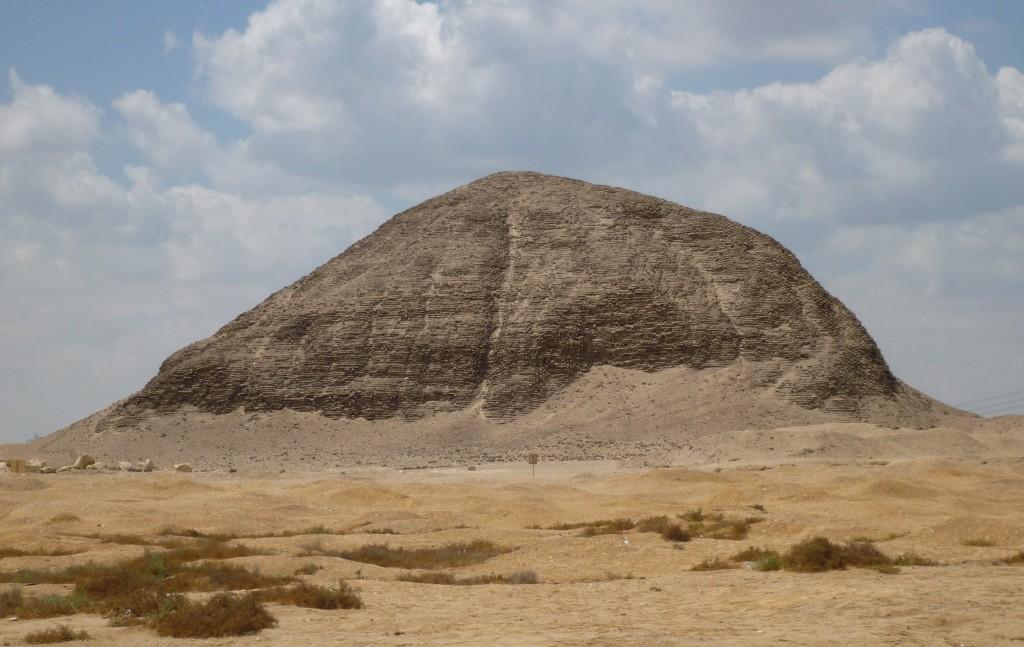
Amenemhat III initially built a pyramid at Dahshur.
It is often called the Black Pyramid because of the dark appearance of its mudbrick core.
The pyramid was constructed during the earlier part of his reign.
The Black Pyramid
The Black Pyramid was built mainly with mudbrick and stone.
Its construction followed Middle Kingdom architectural traditions.
The pyramid was originally covered with limestone.
Over time, the structure deteriorated.
The remains today provide important information about Middle Kingdom pyramid construction.
Problems With the Dahshur Pyramid
The Dahshur pyramid may have suffered from structural problems.
Its location and construction methods created challenges.
Eventually, Amenemhat III constructed another major pyramid complex at Hawara.
The Pyramid at Hawara
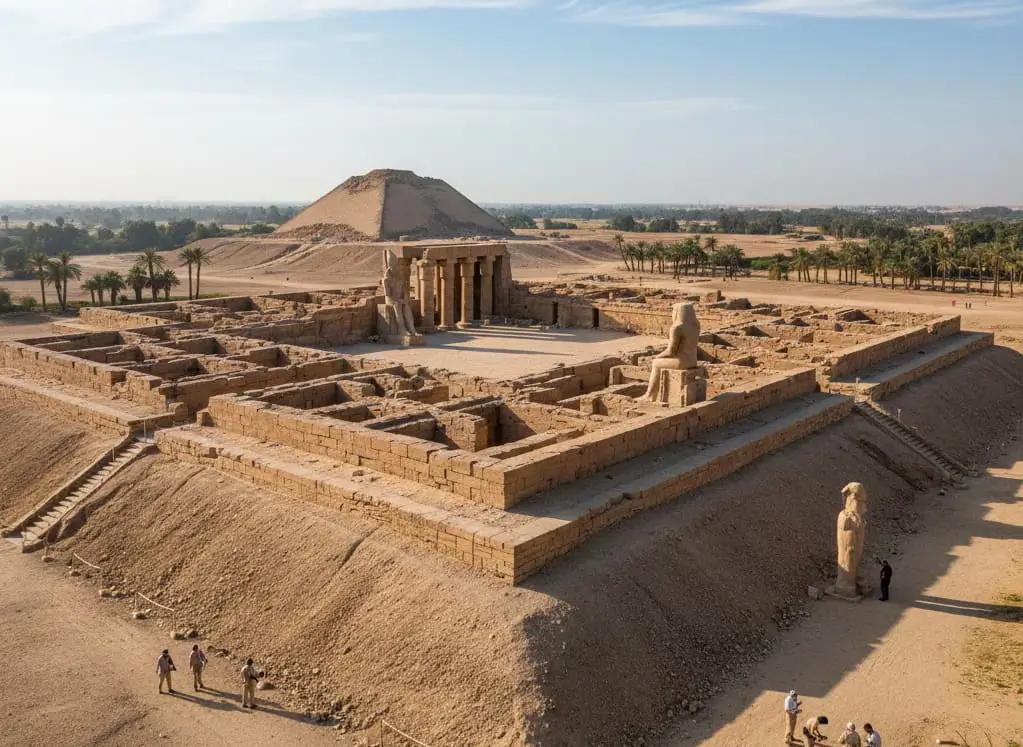
Amenemhat III built another pyramid at Hawara, in the Faiyum region.
This became one of his most famous monuments.
The pyramid itself was built largely from mudbrick with limestone casing.
The complex surrounding it was extraordinary.
The Hawara Complex
The funerary complex included temples, courtyards, corridors, chambers, and monumental structures.
Ancient Greek writers were amazed by its complexity.
The enormous building was later associated with the famous Labyrinth.
The Labyrinth
The ancient Greek historian Herodotus described the complex at Hawara as even more impressive than some of Egypt's greatest monuments.
He called it a labyrinth because of its enormous number of rooms and complicated layout.
Although much of the structure has disappeared, its reputation survived for thousands of years.
Why the Labyrinth Was Important
The complex was not simply a maze.
It was a large religious and funerary complex.
It contained spaces connected with the king's mortuary cult.
The architecture demonstrated the wealth and organizational ability of Amenemhat III's government.
The Pyramid Temple
The temple associated with the pyramid was essential to the royal cult.
Priests performed rituals.
Offerings were made.
The deceased king was honored.
The complex helped ensure the king's eternal existence.
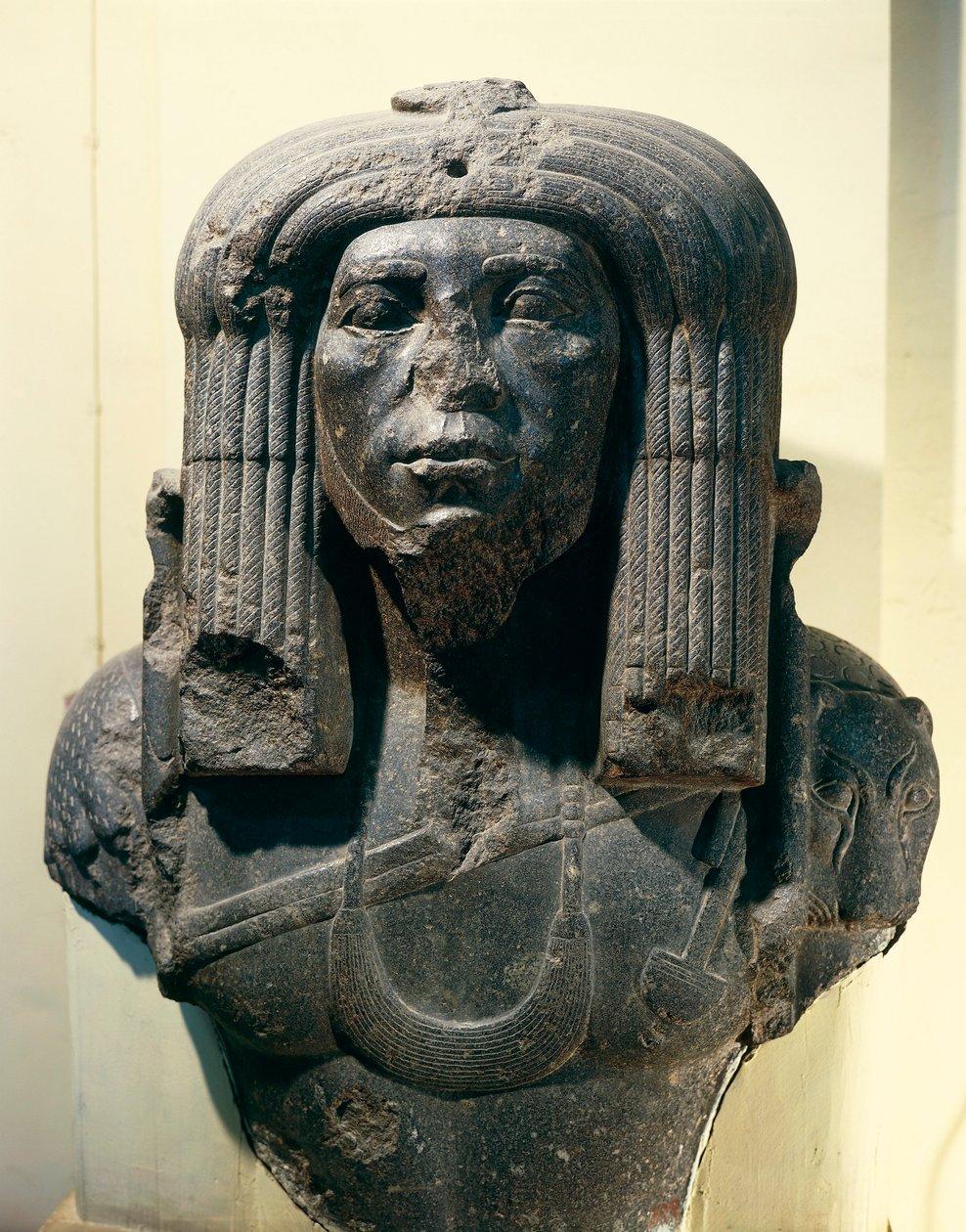
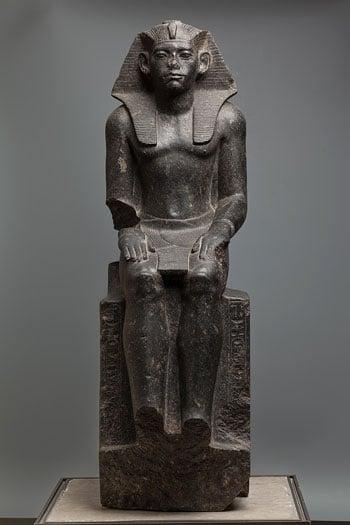
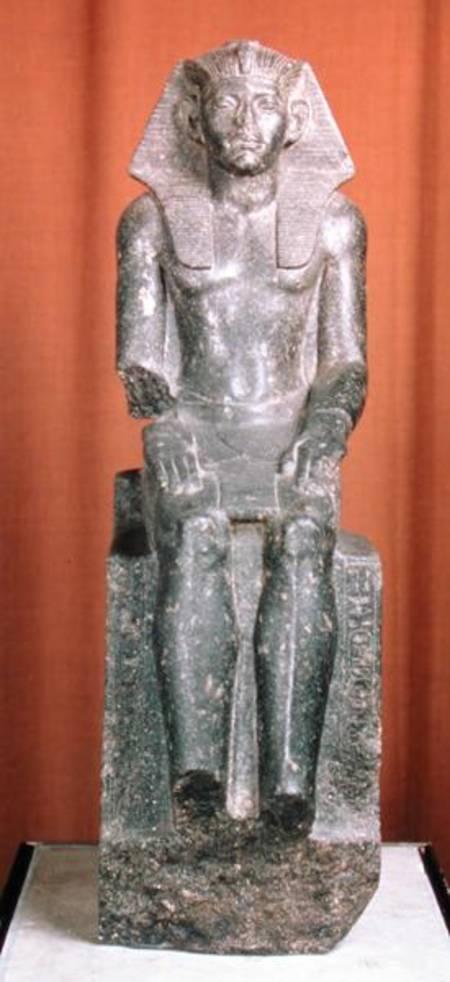
Statues of Amenemhat III
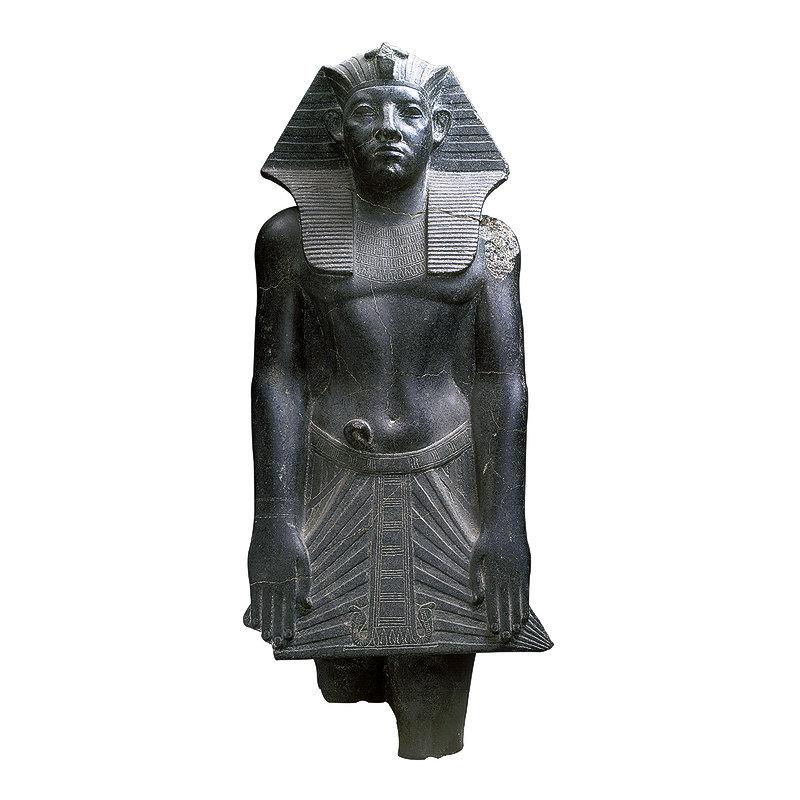
Amenemhat III is represented by several remarkable statues.
His royal portraits continue the artistic traditions of Senusret III.
Some show a mature, serious face.
Others present him in more traditional idealized forms.
Royal Portraiture
Middle Kingdom royal art often emphasized the responsibilities of kingship.
Amenemhat III's portraits sometimes appear serious and powerful.
His face communicates experience and authority.
This artistic tradition was especially strong during the Twelfth Dynasty.
The King and the Gods
Amenemhat III was expected to maintain the relationship between Egypt and the gods.
He built temples.
He restored sanctuaries.
He made offerings.
He supported priests.
Religion was an essential part of government.
Sobek and the Faiyum
The god Sobek was especially important in the Faiyum.
Sobek was represented as a crocodile or a man with a crocodile head.
He was associated with water, fertility, strength, and the Nile.
The development of the Faiyum therefore had an important religious dimension.
Osiris
Osiris was another major deity.
He represented death, resurrection, and eternal life.
Amenemhat III's funerary monuments were connected with the religious traditions surrounding Osiris.
Amun
Amun remained an important deity at Thebes.
The temples of Amun continued to receive royal support.
The god would become even more powerful in later Egyptian history.
Religious Development
The Middle Kingdom saw an increasing emphasis on personal religion.
People sought protection from the gods.
Amulets became common.
Private religious practices expanded.
The royal government continued to support the major temples.
Administration
Amenemhat III inherited the centralized government created by Senusret III.
The provincial governors no longer possessed the same political independence they had enjoyed centuries earlier.
Royal officials administered the country.
The treasury controlled resources.
Scribes maintained records.
The Bureaucracy
The Egyptian bureaucracy was extremely important.
Officials managed agriculture.
They organized workers.
They collected taxes.
They supervised mining expeditions.
They controlled temple resources.
The success of Amenemhat III's projects depended on this bureaucracy.
Scribes
Scribes recorded everything from agricultural production to legal agreements.
They calculated quantities.
They wrote letters.
They maintained administrative documents.
The ability to read and write was therefore extremely valuable.
Engineering
Amenemhat III's reign demonstrates the high level of Egyptian engineering.
Water management required planning.
Pyramid construction required architectural knowledge.
Mining expeditions required logistical organization.
Temple construction required skilled craftsmen.
The government coordinated all of these activities.
The Faiyum Settlements
The development of the Faiyum encouraged settlement.
Farmers moved into productive areas.
Workers and administrators established communities.
The region became increasingly integrated into the Egyptian economy.
Kahun and Lahun
The settlement established near Senusret II's pyramid at Lahun continued to provide evidence about Middle Kingdom society.
Documents from the region reveal details about work, medicine, mathematics, property, and family life.
Amenemhat III benefited from the administrative infrastructure developed by his predecessors.
Daily Life
Most Egyptians continued to live as farmers, craftsmen, fishermen, and laborers.
Their lives were strongly connected with the Nile.
Agriculture determined the rhythm of the year.
Flooding, planting, harvesting, and taxation shaped everyday life.
Food
Bread and beer were dietary staples.
Fish were abundant.
Vegetables included onions, garlic, lettuce, and legumes.
Dates and other fruits were also available.
Wealthier Egyptians could afford more meat.
Clothing
Linen was the main textile.
Farmers wore simple garments.
Elite Egyptians could wear finely woven linen.
Jewelry was an important symbol of wealth.
Women
Women in Middle Kingdom Egypt could own property.
They could inherit possessions.
They could participate in legal agreements.
Some women managed households and property.
The legal documents from the Middle Kingdom provide evidence of their rights.
The Army
Amenemhat III inherited a powerful military from Senusret III.
Egypt maintained control over Nubia.
Fortresses protected the southern frontier.
The army also protected mining expeditions.
Because the borders were relatively secure, Amenemhat III could focus on economic development.
Nubia
Nubia remained an important part of Egypt's economic system.
Gold was essential.
The fortresses built under earlier rulers continued to function.
Egyptian officials controlled trade and resources.
The Eastern Frontier
Egypt also needed to monitor the eastern Delta and Sinai.
Trade routes connected Egypt with the Levant.
Military forces protected strategic locations.
International Relations
Amenemhat III ruled during a period of international exchange.
Egypt maintained connections with the Levant.
Foreign luxury products entered Egypt.
Egyptian goods traveled abroad.
The Middle Kingdom was part of a larger network connecting North Africa, the Mediterranean, and western Asia.
Foreign Luxury Goods
Objects from outside Egypt have been found in Middle Kingdom contexts.
These discoveries demonstrate the extent of international trade.
Egyptian elites had access to foreign materials and artistic influences.
Economic Administration
The state collected agricultural taxes.
It controlled valuable resources.
It organized labor.
It supervised trade.
This system generated wealth.
The wealth supported the king's massive building program.
Amenemhat III and Prosperity
Amenemhat III's reign is often remembered as a prosperous period.
The agricultural economy was strong.
The borders were relatively secure.
Trade continued.
Mining activities increased.
The royal government had resources for construction.
Building Throughout Egypt
Amenemhat III did not limit his building program to the Faiyum.
He sponsored projects in Upper and Lower Egypt.
Temples were restored.
Statues were erected.
Religious monuments were expanded.
His name appeared on monuments across the country.
The Temple of Medinet Madi
Amenemhat III was associated with temple construction at Medinet Madi in the Faiyum.
The temple was dedicated to fertility-related deities and demonstrates the importance of religion in the region.
The Faiyum as a Royal Project
Amenemhat III's connection with the Faiyum was so strong that later Egyptians remembered him as one of the region's great benefactors.
His irrigation and agricultural policies helped make the Faiyum one of Egypt's most productive areas.
The King's Relationship With the Nile
The Nile was central to Egyptian civilization.
Amenemhat III's policies focused on controlling and benefiting from its waters.
The king could present himself as the provider of prosperity.
Good harvests demonstrated divine favor and successful kingship.
The Concept of Maat
Maat represented order, justice, balance, and harmony.
A successful king was expected to maintain maat.
Agricultural prosperity, secure borders, functioning temples, and political stability were all expressions of maat.
Amenemhat III's reign appeared to embody these ideals.
A King of Engineering
Amenemhat III's achievements demonstrate that Egyptian kingship was not limited to warfare.
He invested in infrastructure.
He improved water management.
He expanded agriculture.
He organized mining.
He built enormous monuments.
His reign was an example of practical statecraft.
His Relationship With His Father
Amenemhat III inherited the military legacy of Senusret III.
His father had secured the southern frontier.
Amenemhat III could therefore concentrate on economic and agricultural development.
The two reigns complemented one another.
Senusret III strengthened Egypt's security.
Amenemhat III strengthened its prosperity.
The End of His Reign
Amenemhat III ruled for approximately four decades.
He eventually died after a long and successful reign.
He was succeeded by Amenemhat IV.
His death marked the beginning of the later phase of the Twelfth Dynasty.
Amenemhat IV
Amenemhat IV continued many of his predecessor's policies.
His reign was considerably shorter.
He maintained the religious and economic traditions of the dynasty.
The End of the Twelfth Dynasty
After Amenemhat IV came Neferusobek, also known as Sobekneferu.
She became the final ruler of the Twelfth Dynasty.
Her reign marked the end of one of the greatest dynasties of the Middle Kingdom.
Amenemhat III's Legacy
Amenemhat III left a remarkable legacy.
He developed the Faiyum.
He strengthened agriculture.
He sponsored mining.
He expanded trade.
He built pyramids.
He constructed temples.
He commissioned remarkable statues.
He maintained a powerful centralized government.
His reign represented the economic height of the Twelfth Dynasty.
Conclusion
Amenemhat III was one of the greatest economic and architectural rulers of ancient Egypt.
He inherited a strong kingdom from his father, Senusret III.
His father had created a centralized political system and secured Egypt's borders.
Amenemhat III used that stability to focus on prosperity.
His greatest achievement was the development of the Faiyum.
The region contained enormous agricultural potential.
Through irrigation, water management, canals, and organized settlement, the Egyptian government increased agricultural production.
The Faiyum became one of the richest agricultural areas of Egypt.
This prosperity supported the entire kingdom.
Amenemhat III also sponsored extensive mining expeditions.
The Sinai provided turquoise and copper.
The Eastern Desert provided stone and minerals.
Gold came from Nubia and surrounding regions.
These resources were essential for Egyptian construction, craftsmanship, military equipment, and royal luxury.
International trade also flourished.
Egypt exchanged goods with Nubia, the Levant, and Red Sea regions.
Foreign timber was particularly valuable.
Incense and other luxury products entered Egypt through southern trade networks.
The wealth created by these activities allowed Amenemhat III to undertake an extraordinary building program.
His pyramid at Dahshur, known as the Black Pyramid, was one of his earliest major monuments.
Later, he built another pyramid complex at Hawara.
The Hawara complex became famous in antiquity as the Labyrinth.
Ancient Greek travelers were amazed by its enormous size and complexity.
Although much of it has disappeared, its reputation remains one of the most fascinating examples of Egypt's monumental architecture.
Amenemhat III's statues are equally important.
Some portray him with a serious and mature expression.
These portraits continued the artistic traditions of Senusret III.
The king's face communicates authority, experience, and responsibility.
This was a different style from the eternally youthful images of many Old Kingdom pharaohs.
Religion remained central throughout his reign.
Amenemhat III supported the gods.
He built temples.
He maintained royal funerary traditions.
He was especially connected with Sobek in the Faiyum and with the broader cult of Osiris.
The development of the Faiyum therefore had both economic and religious significance.
Amenemhat III's success was made possible by the centralized government inherited from his father.
Officials supervised agriculture.
Scribes maintained records.
Workers were organized.
Mining expeditions were supplied.
Taxes were collected.
Temples received resources.
The royal government controlled the entire system.
His reign demonstrates how sophisticated Middle Kingdom administration had become.
He did not need to spend his reign fighting major civil wars.
Egypt's borders were relatively secure.
Instead, he could devote his energy to making the kingdom richer and more productive.
This is why Amenemhat III is remembered as one of the great economic rulers of ancient Egypt.
His achievements were not limited to monuments.
He transformed landscapes.
He improved agricultural productivity.
He expanded the economic base of the state.
He encouraged settlement.
He strengthened trade.
He exploited natural resources.
And he left behind monuments that demonstrated the wealth generated by these policies.
When Amenemhat III died, Egypt was still one of the most powerful states in the ancient Near East.
His successor, Amenemhat IV, inherited a stable kingdom.
The Twelfth Dynasty would soon come to an end, but the achievements of Amenemhat III continued to influence Egyptian civilization.
The Faiyum remained an important agricultural center.
His monuments remained symbols of royal power.
His statues continued to represent one of the most sophisticated periods of Egyptian art.
His name survived through inscriptions and archaeological discoveries.
Amenemhat III was the Pharaoh who turned stability into prosperity. Through irrigation, agriculture, mining, trade, engineering, religion, and monumental architecture, he helped make the Twelfth Dynasty one of the greatest periods in the history of ancient Egypt.