Pepi I, also known as Pepi Meryre, was one of the most important pharaohs of Egypt’s Sixth Dynasty and one of the great rulers of the Old Kingdom. He came to the throne after the mysterious and short reign of Userkare, following the death of his father, King Teti.
Pepi I ruled Egypt for many years and oversaw a period of military activity, trade, construction, and religious development. His reign provides important evidence about the strength of the Egyptian state during the later Old Kingdom, while also revealing the growing influence of powerful officials and provincial governors.
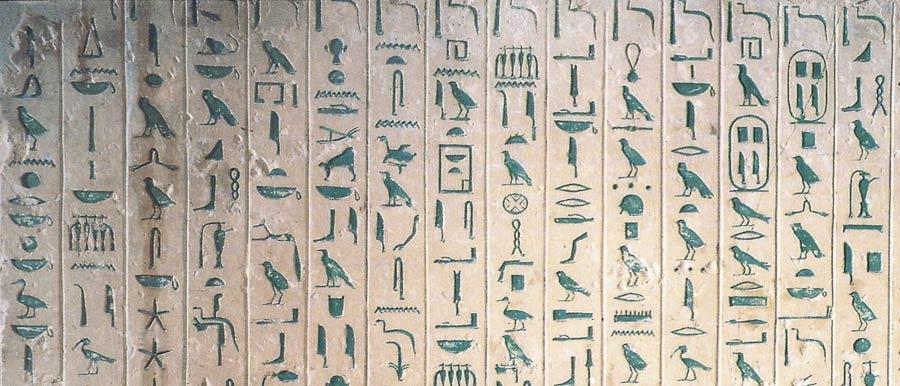
His pyramid at Saqqara, known as "Pepi's beauty is enduring," contained important Pyramid Texts that helped protect the king in the afterlife. Pepi I also left behind statues, inscriptions, temples, and evidence of expeditions to distant regions.
His story is particularly interesting because his reign was not completely peaceful. Ancient inscriptions reveal military campaigns, political challenges, and even an alleged conspiracy involving members of the royal household.
Pepi I's long reign made him one of the central figures of Egypt's Sixth Dynasty and helped shape the final centuries of the Old Kingdom.
Pepi I's Early Life
Pepi I was born into the royal family of the Sixth Dynasty.
His father was King Teti, the founder of the dynasty, and his mother was Queen Iput, who was probably connected to the royal family of the previous Fifth Dynasty.
This gave Pepi I an important royal background.
Iput's connection to King Unas, the last ruler of the Fifth Dynasty, helped connect the new Sixth Dynasty with the earlier royal house.
Pepi therefore grew up surrounded by the traditions of Egyptian kingship.
From an early age, he would have been educated in royal religion, administration, military affairs, and the responsibilities of ruling Egypt.
Pepi I Becomes Pharaoh
After the death of Teti, Egypt experienced a short and mysterious period associated with Userkare.
Userkare's exact relationship with Teti remains uncertain.
Eventually, Pepi I became king.
His accession restored the royal line of Teti and Iput.
Pepi took the throne under the royal name Meryre, meaning approximately "Beloved of Ra."
His name reflected the continuing importance of the sun god in Egyptian royal ideology.
Pepi I would eventually become one of the longest-reigning rulers of the Sixth Dynasty.
The Length of Pepi I's Reign
The exact length of Pepi I's reign remains debated.
Ancient records suggest that he ruled for several decades.
Some interpretations of the historical evidence have proposed a reign of more than forty years, while other calculations differ.
Whatever the exact number, Pepi I clearly ruled for a long period.
His long reign allowed him to build monuments, conduct military campaigns, organize expeditions, and establish a powerful royal administration.
Pepi I's Royal Family
Pepi I had several wives and children.
His royal family became increasingly important in Egyptian politics.
One of his most famous queens was Ankhesenpepi I, also known as Ankhnesmerire I.
Another was Ankhesenpepi II, who became an especially influential royal woman.
Pepi I's relationship with these queens helped shape the succession of the later Sixth Dynasty.
His son Merenre Nemtyemsaf I succeeded him, followed later by Pepi II, who became famous for his extraordinarily long reign.
Queen Ankhesenpepi I
Ankhesenpepi I was an important queen during Pepi I's reign.
She was the daughter of a powerful provincial family.
Her marriage to Pepi I demonstrates the increasing importance of relationships between the royal family and provincial elites.
Her family connections may have helped strengthen political alliances between the central government and influential regions.
Queen Ankhesenpepi II
Ankhesenpepi II was another important wife of Pepi I.
She later became the mother of Pepi II.
Her importance continued after Pepi I's death, particularly during the early years of Pepi II's reign.
She was buried in a monument at Saqqara, where archaeological discoveries have revealed valuable evidence about royal women of the Sixth Dynasty.
Pepi I's Pyramid at Saqqara
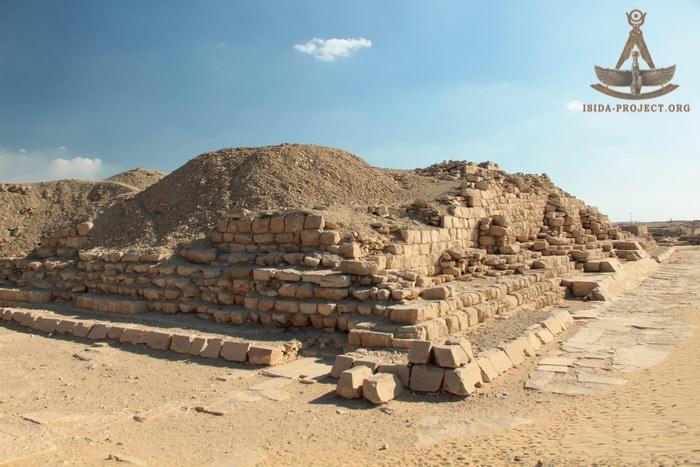
Pepi I built his pyramid at Saqqara, near the pyramids of earlier rulers.
The ancient name of the pyramid was approximately "Pepi's beauty is enduring."
The pyramid was part of a large funerary complex containing temples, ritual spaces, and a causeway.
Like other royal pyramids of the period, its purpose was not simply to serve as a tomb.
It was a sacred center designed to support the king's eternal existence.
The Pyramid Texts of Pepi I
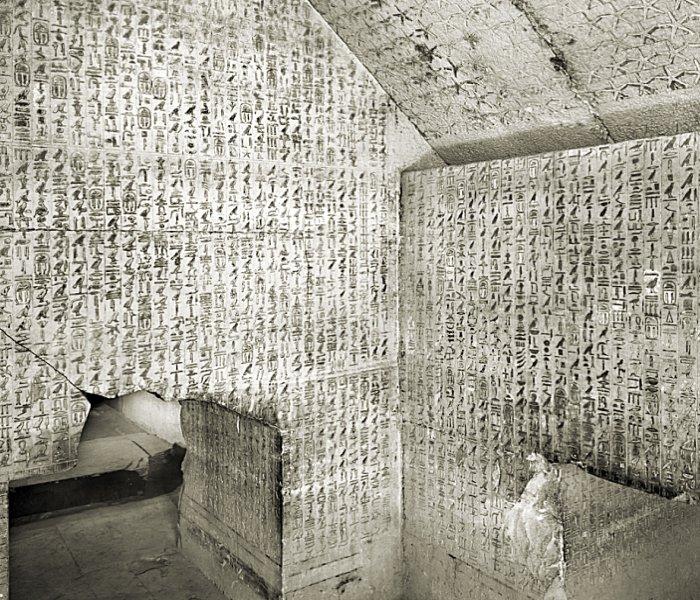
The interior of Pepi I's pyramid contains extensive Pyramid Texts.
These religious inscriptions include spells, prayers, hymns, and magical formulas.
They were designed to protect the deceased king and guide him through the afterlife.
The texts describe the king's relationship with gods such as Ra, Osiris, Horus, Anubis, and other divine beings.
The Pyramid Texts of Pepi I are among the most important surviving religious documents from ancient Egypt.
Pepi I and the Afterlife
Ancient Egyptians believed that death was a transformation.
The king was expected to continue existing after physical death.
He needed to overcome supernatural dangers and join the gods.
The Pyramid Texts provided religious instructions and magical protection.
Pepi I was expected to become an eternal divine ruler.
He could join the solar journey of Ra while also becoming associated with Osiris.
This combination of religious traditions became increasingly important during the Old Kingdom.
Pepi I and Osiris
Osiris was one of the most important gods of the Egyptian afterlife.
According to Egyptian mythology, Osiris was killed by his brother Seth and restored through the efforts of Isis.
The story represented death, resurrection, and renewal.
The deceased pharaoh was identified with Osiris.
Pepi I's Pyramid Texts reflect this tradition.
His burial was therefore part of a larger religious process designed to transform the dead king into an eternal divine being.
Pepi I and Ra
Ra remained central to Egyptian royal ideology.
The sun god represented light, life, order, and renewal.
Every morning, the rising sun symbolized rebirth.
Every night, the sun traveled through the underworld before rising again.
The pharaoh could participate in this eternal cycle.
Pepi's royal name, Meryre, directly emphasized his relationship with Ra.
Pepi I's Government
Pepi I inherited a highly developed administrative system.
Egypt was governed through a network of officials, scribes, priests, administrators, and provincial governors.
The central government collected taxes and agricultural products.
Officials managed royal estates and organized construction projects.
The king relied heavily on senior officials to administer the kingdom.
Some of these officials became extremely powerful.
Powerful Officials
The Sixth Dynasty is famous for the rise of influential officials.
Officials could receive large estates and prestigious titles.
They sometimes built enormous decorated tombs.
Their autobiographical inscriptions describe their careers and their loyalty to the king.
These monuments provide important information about Egyptian administration.
They also reveal the increasing importance of provincial elites.
Weni the Elder
One of the most famous officials during Pepi I's reign was Weni, also known as Weni the Elder.
He served several kings and became a highly respected administrator and military commander.
His autobiographical inscription is one of the most valuable historical documents from the Old Kingdom.
Weni describes his service to the king and his involvement in military campaigns.
His career demonstrates the importance of experienced officials in maintaining the Egyptian state.
Pepi I's Military Campaigns
Pepi I's reign included military campaigns outside Egypt.
Egyptian forces traveled into regions such as the Levant and Nubia.
These campaigns were designed to protect trade routes, secure resources, and maintain Egyptian influence.
The military activity described by Weni suggests that the Egyptian government could organize large forces.
These campaigns also demonstrate that Egypt remained an active regional power.
Campaigns Against the Levant
Weni describes military operations against groups in the eastern Mediterranean region.
Egyptian forces traveled through the Sinai and toward the Levant.
The campaigns involved soldiers, commanders, ships, and logistical support.
Their objectives probably included protecting Egypt's northeastern frontier and securing trade routes.
These operations provide valuable evidence of Egyptian military organization during the Sixth Dynasty.
Campaigns in Nubia
Nubia was another important region for Egypt.
It provided gold, valuable stones, animal products, and access to territories farther south.
Egyptian expeditions traveled through the region to obtain resources and maintain political influence.
Pepi I's government continued the long Egyptian tradition of organizing expeditions into Nubia.
Trade Under Pepi I
Trade remained important during Pepi I's reign.
Egypt maintained connections with Nubia, the Levant, Sinai, and other regions.
Luxury products and raw materials entered the country.
These included precious stones, metals, incense, exotic animals, and other valuable goods.
The royal court and temples depended on these resources.
Expeditions to the Eastern Desert
Egyptian officials also organized expeditions into the Eastern Desert.
The region contained valuable stone and minerals.
Egyptian quarrying teams needed workers, transportation, food, water, and military protection.
These expeditions demonstrate the organizational abilities of the Egyptian government.
Pepi I and Mining
Mining was an important part of the Egyptian economy.
Sinai was especially valuable for turquoise and copper.
The Eastern Desert provided stone and other minerals.
Gold came from regions farther south.
These resources were used to create jewelry, statues, tools, weapons, temples, and religious objects.
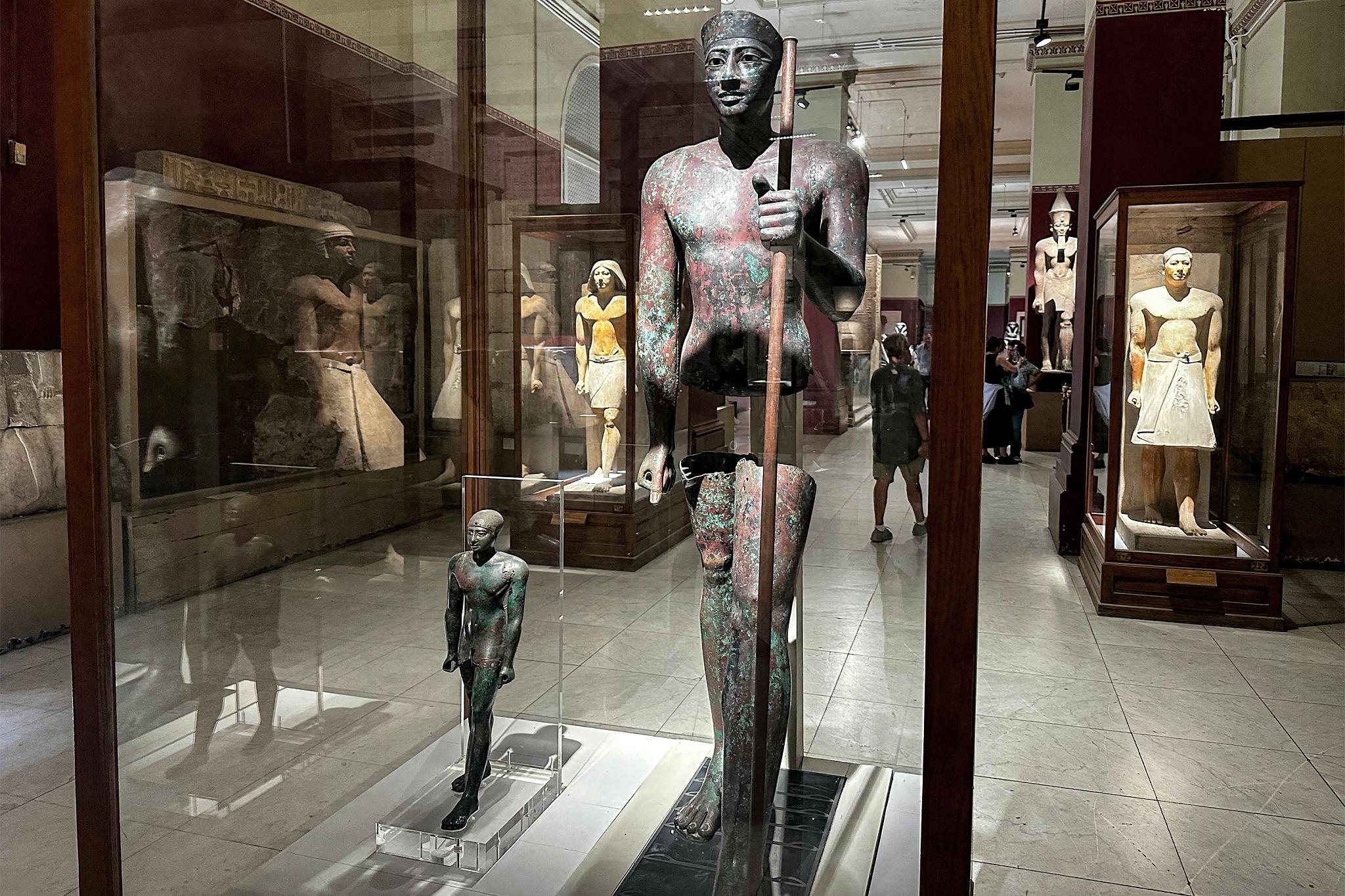
Copper Statue of Pepi I
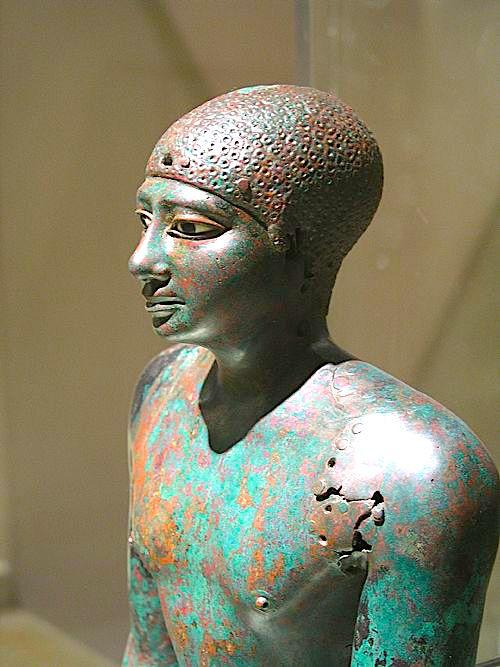
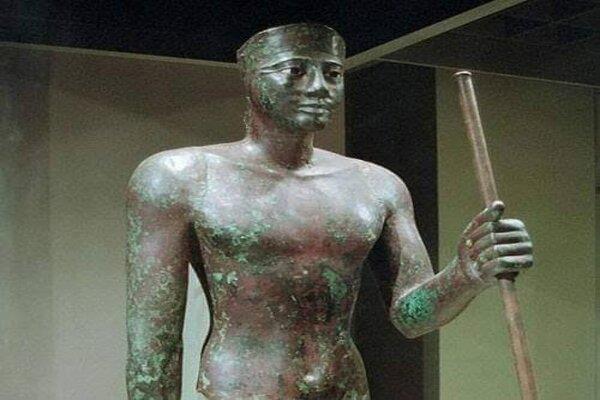
One of the most interesting surviving objects connected with Pepi I is a famous copper statue representing the king.
The statue is associated with Pepi I and his son Merenre.
It demonstrates the remarkable technical abilities of Egyptian metalworkers.
The use of copper for monumental sculpture was unusual and technically challenging.
The statue is an important example of Old Kingdom craftsmanship.
Pepi I and Egyptian Art
The art of Pepi I's reign continued the highly developed traditions of the Old Kingdom.
Royal statues represented the king as powerful and youthful.
Reliefs showed religious rituals, agricultural activities, hunting, fishing, animals, boats, and crafts.
Private tombs became especially important sources of artistic information.
The art of this period combines idealized royal imagery with detailed scenes of everyday life.
The Economy of Egypt
Egypt's economy depended heavily on agriculture.
The Nile flood created fertile farmland.
Farmers cultivated wheat, barley, vegetables, flax, and fruit.
The state collected part of the agricultural production through taxation.
These resources supported the royal palace, temples, officials, soldiers, craftsmen, and workers.
The success of the government depended on the successful management of agricultural resources.
Everyday Life Under Pepi I
Most Egyptians lived in villages near the Nile.
Farmers worked the fields and raised animals.
Fishermen depended on the river and its surrounding wetlands.
Craftsmen produced pottery, furniture, tools, jewelry, and textiles.
Scribes worked in government offices and temples.
Merchants transported products by boat along the Nile and through desert routes.
Although the pharaoh lived in a world of temples and palaces, his government depended on the daily work of ordinary Egyptians.
The Royal Conspiracy
One of the most intriguing episodes of Pepi I's reign concerns an alleged conspiracy within the royal household.
According to later evidence, Pepi I faced a plot involving a member of his harem.
The story has been connected with the autobiography of the official Weni.
Weni describes an investigation into a serious case involving the royal household.
The details are incomplete, and historians continue to debate exactly what happened.
Nevertheless, the episode suggests that Pepi I's reign was not free from internal political tensions.
The Role of Weni in the Investigation
Weni was trusted by Pepi I and was given important responsibilities.
His inscription indicates that he was involved in legal proceedings connected with the royal household.
This demonstrates the authority that high-ranking officials could exercise.
It also reveals that the Egyptian state had sophisticated legal and administrative procedures.
The investigation appears to have been treated as a serious matter involving the security of the king.
Pepi I and Merenre
Pepi I was succeeded by his son Merenre Nemtyemsaf I.
Merenre continued many of his father's policies.
He maintained relations with Nubia and conducted expeditions.
His reign was much shorter than Pepi I's, but he continued the Sixth Dynasty tradition of strong royal government.
Pepi II
After Merenre's death, Pepi II eventually became king.
Pepi II was traditionally believed to have ruled for an extraordinarily long period.
Although the exact length of his reign remains debated, he was certainly one of the longest-reigning pharaohs in Egyptian history.
His accession continued the royal line established by Pepi I.
Pepi I's Legacy
Pepi I left a major legacy.
He strengthened the Sixth Dynasty.
He maintained Egypt's military and economic connections with neighboring regions.
He sponsored construction and religious activities.
His pyramid preserved an important collection of Pyramid Texts.
His officials left valuable autobiographical inscriptions.
His reign also established the royal family that would continue through Merenre and Pepi II.
The Importance of Pepi I's Reign
Pepi I's reign is important because it represents both the strength and the changing nature of the Old Kingdom.
Egypt was still capable of organizing large military expeditions and major construction projects.
The royal government remained powerful.
At the same time, provincial officials were gaining influence.
This gradual decentralization would become increasingly important in the later Sixth Dynasty.
Pepi I and the End of the Old Kingdom
Pepi I lived during a period when Egypt was still prosperous and powerful.
However, the foundations of the Old Kingdom were gradually changing.
Provincial elites became stronger.
Local administrations became more independent.
The central government eventually faced economic and political difficulties.
These developments contributed to the transformation of Egyptian society at the end of the Old Kingdom.
Pepi I himself was not responsible for the later collapse.
His reign actually demonstrates that the Egyptian state remained highly organized and powerful for much of the Sixth Dynasty.
Conclusion
Pepi I was one of the greatest rulers of Egypt's Sixth Dynasty and one of the most important pharaohs of the later Old Kingdom.
As the son of Teti and Queen Iput, he inherited a powerful royal tradition and eventually restored the direct line of Teti after the mysterious reign of Userkare.
His long reign allowed Egypt to maintain an extensive administration, organize military campaigns, conduct expeditions to Nubia and the Eastern Desert, and maintain important trade networks.
His officials, especially Weni the Elder, left detailed records that provide historians with valuable information about Egyptian military campaigns, administration, and royal authority.
Pepi I's pyramid at Saqqara was decorated with extensive Pyramid Texts, revealing the religious beliefs surrounding the king's death and journey into the afterlife.
His relationship with Ra and Osiris reflected the central religious ideas of Egyptian kingship, resurrection, and eternal life.
His reign also witnessed important developments within the royal family. Queens such as Ankhesenpepi I and Ankhesenpepi II became influential figures, while his son Merenre and later his grandson Pepi II continued the royal line.
The story of Pepi I also contains mystery and political drama, particularly the alleged conspiracy within the royal household that required an official investigation.
Despite these challenges, Pepi I maintained the strength of the Egyptian state for many years.
Today, Pepi I is remembered as a powerful Old Kingdom pharaoh whose military campaigns, royal family, pyramid, religious texts, and remarkable officials provide an important window into one of the most fascinating periods of ancient Egyptian civilization.