Userkaf was the founder of Egypt's Fifth Dynasty and one of the most important kings of the early Old Kingdom. He ruled Egypt during a period of major religious and architectural change, when the worship of the sun god Ra became increasingly important in royal ideology.
Although Userkaf did not build a monument as enormous as the Great Pyramid of Khufu, his reign introduced a new architectural tradition. He constructed a pyramid complex at Saqqara and, more importantly, established one of the earliest known sun temples at Abu Gorab, near modern Abu Sir.
His reign marked the transition from the powerful pyramid-building traditions of the Fourth Dynasty to the distinctive religious culture of the Fifth Dynasty.
Who Was Userkaf?
Userkaf was the first king of the Fifth Dynasty.
His name is commonly translated as something like “His Ka Is Strong” or “His Soul Is Powerful.”
He ruled Egypt during the Old Kingdom, probably in the early part of the 25th century BCE.
The exact dates of his reign remain uncertain, as ancient chronological records are incomplete. He is generally believed to have ruled for several years, although ancient sources and modern reconstructions differ about the precise length.
Userkaf's family background is also debated.
Later traditions connect the early Fifth Dynasty with priests of the sun god Ra, and some later stories describe the origins of the dynasty through a royal birth connected with the god. However, these stories were written much later and cannot be treated as straightforward historical records.
The End of the Fourth Dynasty
Userkaf came to power after the end of the Fourth Dynasty, the dynasty that produced some of Egypt's most famous monuments.
The Fourth Dynasty included:
- Sneferu
- Khufu
- Djedefre
- Khafre
- Menkaure
- Shepseskaf
The pyramids of Giza had already transformed the Egyptian landscape.
However, by the end of the Fourth Dynasty, royal funerary architecture was changing.
Shepseskaf, the last clearly established king of the Fourth Dynasty, abandoned the traditional pyramid form and built the enormous Mastabat Fara'un at Saqqara.
Userkaf continued this movement toward a new style of royal architecture.
The Beginning of the Fifth Dynasty
The Fifth Dynasty represented a significant change in Egyptian royal ideology.
The pharaoh remained the central political and religious figure, but the relationship between kingship and the sun god Ra became especially prominent.
This can be seen in royal names, temples, and monuments.
Several Fifth Dynasty kings built sun temples, structures dedicated to the worship of Ra.
Userkaf is traditionally regarded as the first ruler to establish this important architectural tradition.
Userkaf's Pyramid at Saqqara
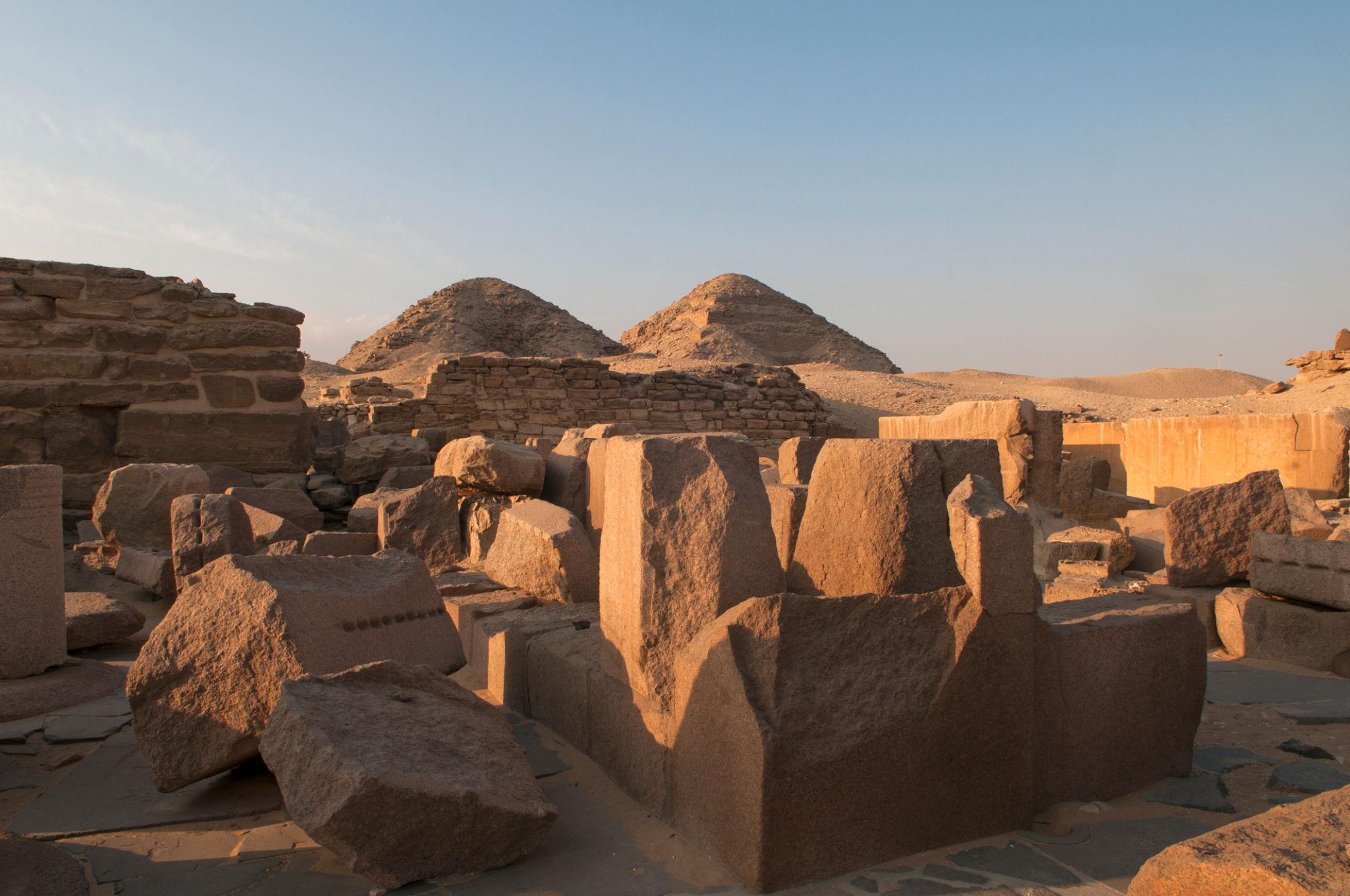
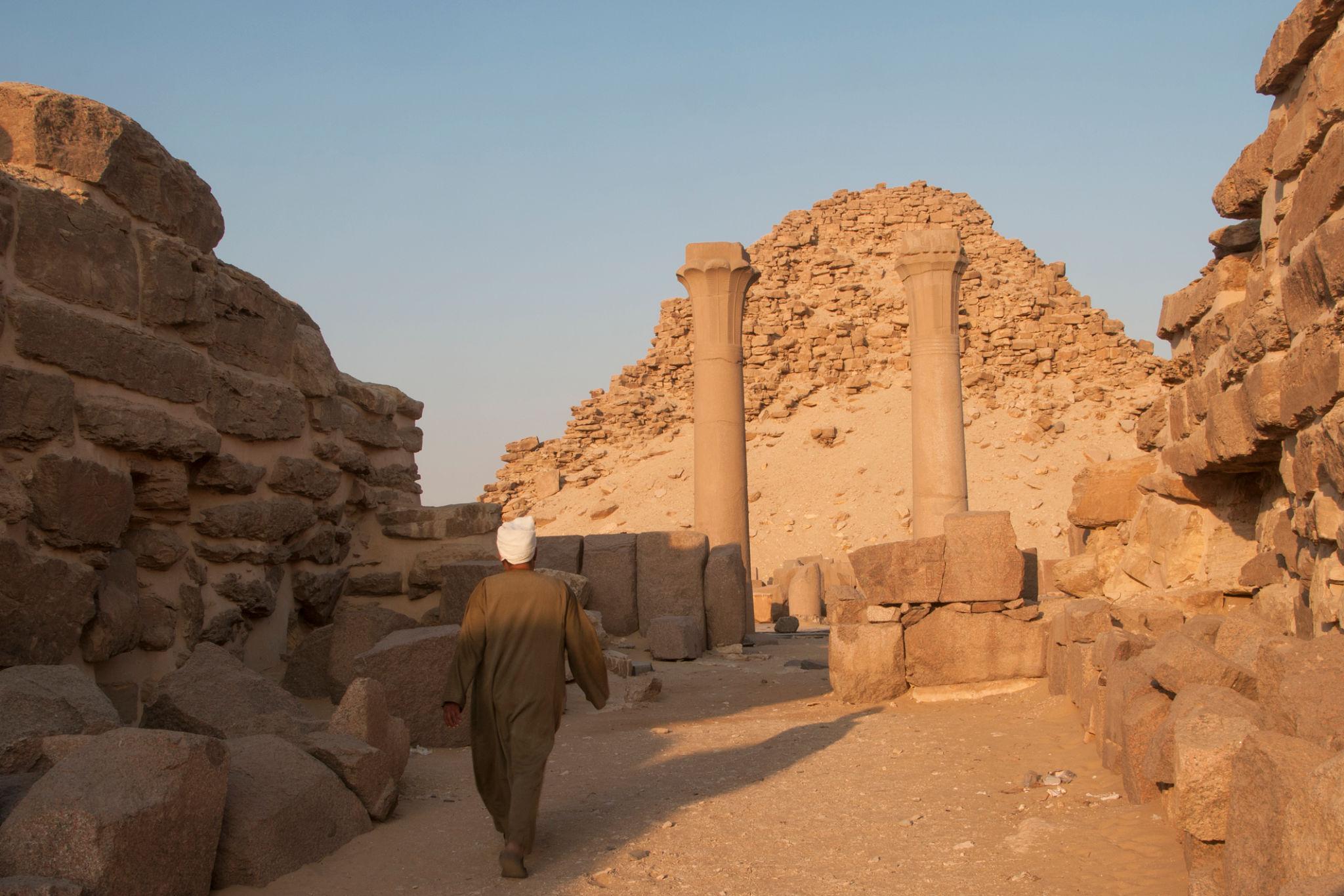
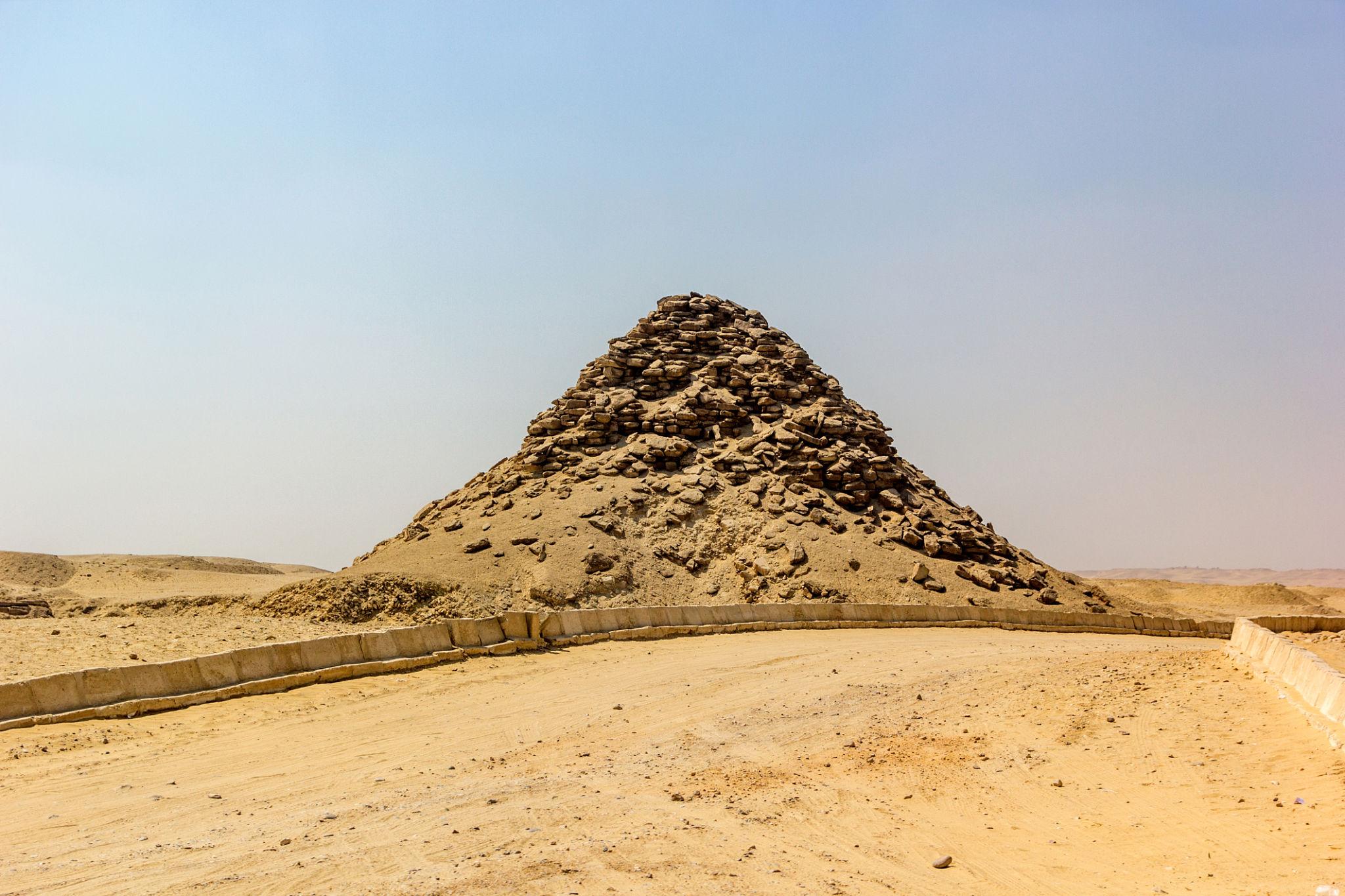
Userkaf built his pyramid complex at Saqqara, close to the Step Pyramid of Djoser.
His pyramid was much smaller than the Great Pyramid of Khufu.
It originally stood approximately 49 meters high.
Over thousands of years, the monument suffered heavy damage.
Much of the outer casing disappeared, and the pyramid eventually became a relatively low mound of rubble and stone.
Nevertheless, the complex remains extremely important archaeologically.
Why Did Userkaf Build at Saqqara?
Saqqara had already been an important royal cemetery for centuries.
The Step Pyramid of Djoser, constructed during the Third Dynasty, dominated the area.
By choosing Saqqara, Userkaf connected his reign with the ancient royal traditions of Memphis.
The location also placed his monument near the center of Egypt's political and religious world.
Userkaf's pyramid complex was therefore not simply a tomb.
It was a statement of continuity with earlier royal traditions.
Userkaf's Pyramid Complex
The pyramid complex included several important elements:
- The main pyramid
- A mortuary temple
- A causeway
- A valley or entrance area
- Courtyards
- Ritual spaces
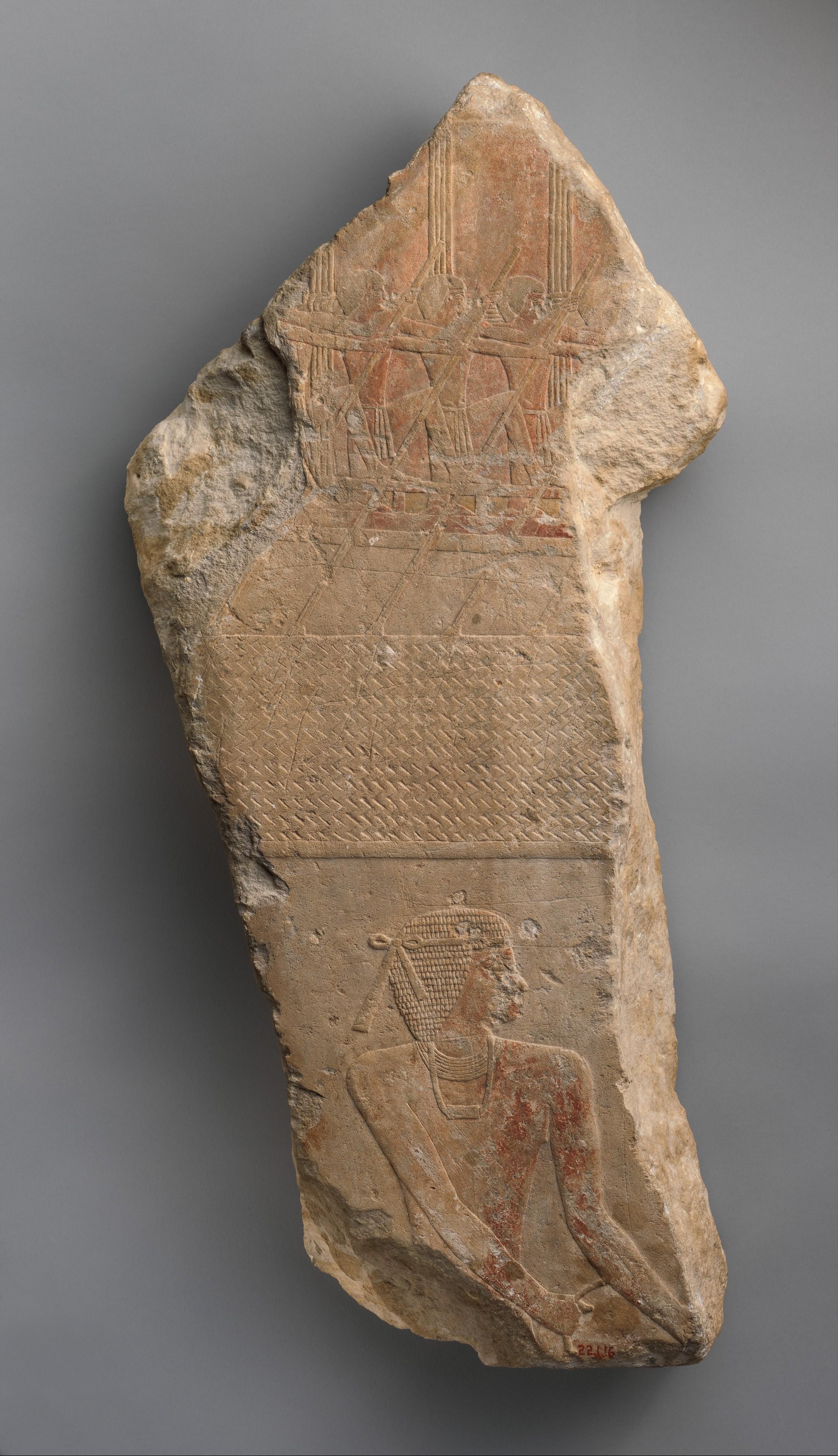
The mortuary temple was decorated with reliefs.
Fragments discovered by archaeologists depict scenes involving nature, offerings, royal ceremonies, and agricultural life.
These reliefs provide valuable information about Fifth Dynasty artistic traditions.
The Mortuary Temple
Userkaf's mortuary temple was designed to support his eternal existence.
Priests would perform offerings and rituals for the deceased king.
The temple contained areas for religious ceremonies and offerings.
The decoration included scenes of abundance and nature.
Such scenes were not merely artistic decoration.
They represented the prosperity of Egypt and the resources necessary to sustain the king in the afterlife.
The Sun Temple of Userkaf
One of Userkaf's most important achievements was his association with a sun temple.
The site of Abu Gorab, near Abusir, became an important center for solar worship during the Fifth Dynasty.
Userkaf is generally considered to have established one of the earliest sun temples there.
The temple was dedicated to the worship of Ra.
Its design was very different from a traditional pyramid complex.
Instead of focusing primarily on a royal burial, the sun temple emphasized the worship of the solar deity.
The Solar Cult
Ra was one of the most important gods in ancient Egypt.
He was associated with the sun, creation, kingship, and cosmic order.
The sun's daily journey across the sky was seen as a powerful symbol of renewal.
Every morning, the sun rose in the east.
Every evening, it disappeared in the west.
The cycle represented death and rebirth.
For the Egyptian king, this solar symbolism was closely connected with eternal life.
The Obelisk and Benben Stone
Sun temples of the Fifth Dynasty included a distinctive architectural feature: a massive obelisk-like structure standing on a large base.
At the top was a sacred stone associated with the benben, an ancient symbol connected with creation and the first mound of earth.
The exact appearance of Userkaf's original sun temple is difficult to reconstruct because the monument was heavily damaged.
Later sun temples provide better evidence of the architectural form.
Userkaf and Ra
Userkaf's reign strengthened the relationship between Egyptian kingship and the cult of Ra.
This connection continued under later Fifth Dynasty rulers.
Kings such as Sahure, Neferirkare, and Nyuserre also built monuments associated with solar worship.
The sun temple became an important part of royal religious architecture.
The Abusir Necropolis
The Fifth Dynasty royal cemetery eventually became strongly associated with Abusir.
Userkaf's monument at Saqqara came before the major concentration of Fifth Dynasty pyramids at Abusir.
Later kings constructed their pyramids there.
This created an important royal landscape dedicated to both kingship and solar religion.
Userkaf's Government
Userkaf inherited a highly developed Egyptian administrative system.
The country was divided into administrative districts known as nomes.
Officials managed agriculture, taxation, storage, transportation, and labor.
The Nile River connected Upper and Lower Egypt.
Grain from agricultural estates supported royal institutions.
The government also controlled important quarries and trade routes.
This administrative system allowed Userkaf to maintain royal building projects.
Agriculture and the Nile
The Nile was the foundation of Egyptian civilization.
Its annual flood deposited fertile soil along the valley.
Farmers cultivated wheat, barley, vegetables, fruit, and other crops.
The agricultural surplus supported the population, temples, officials, and craftsmen.
The Nile was also Egypt's main transportation route.
Heavy stone could be moved by boat from distant quarries.
This made large construction projects possible.
Trade and Resources
Userkaf's Egypt depended on resources from across the region.
Stone was obtained from quarries throughout the Nile Valley.
Granite could be transported from the Aswan region.
Copper and turquoise were available from Sinai.
Nubia was an important source of resources and trade.
The Egyptian state organized expeditions to distant regions.
These activities helped maintain the wealth of the royal institutions.
Userkaf's Artistic Legacy
Userkaf's reign produced important examples of Old Kingdom sculpture.
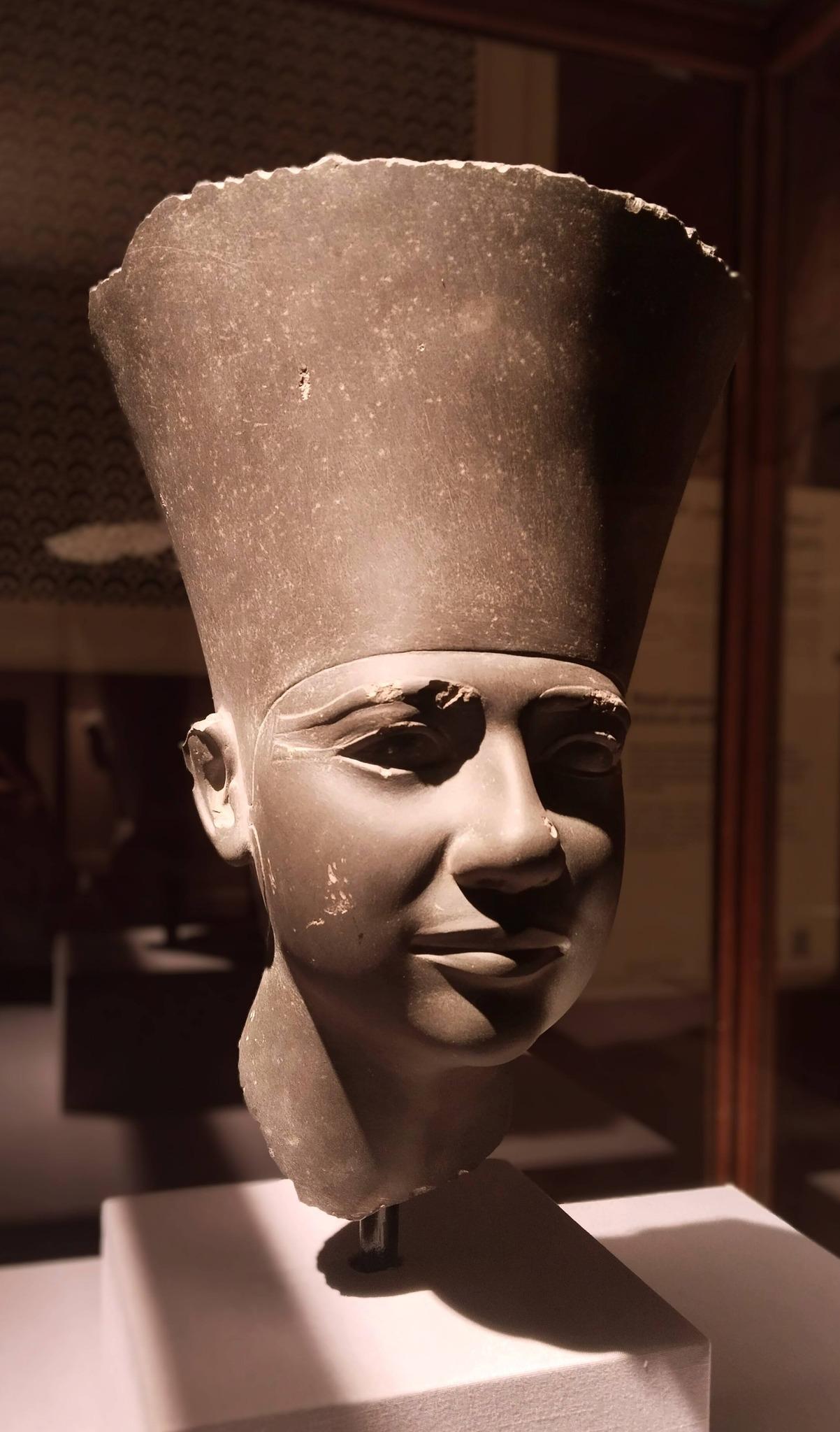
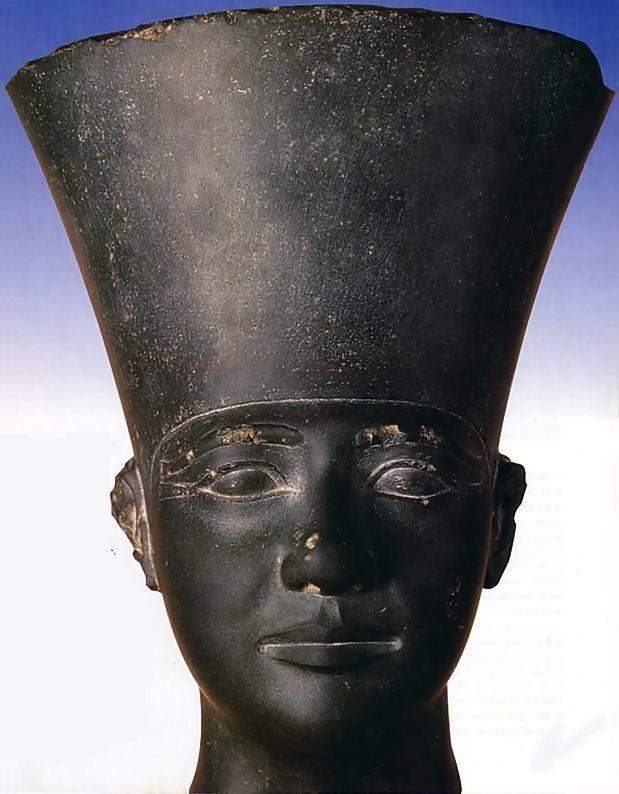
One famous sculpture associated with Userkaf is a large granite head of the king.
The sculpture presents Userkaf wearing royal headgear.
His facial features are idealized but more expressive than some earlier Old Kingdom royal sculptures.
The piece demonstrates the high level of craftsmanship achieved during the Fifth Dynasty.
Royal Sculpture
Egyptian royal statues were created for religious purposes.
They were not simply portraits.
The statue could serve as a permanent physical presence for the king.
It could receive offerings and participate symbolically in rituals.
The king was usually presented as youthful, strong, and composed.
This idealized style communicated permanence and divine authority.
Userkaf's Religious Importance
Userkaf's greatest historical importance may lie in religion rather than architecture.
His reign helped establish the solar cult as a central element of Fifth Dynasty royal ideology.
The sun god Ra became increasingly connected with the royal family.
Later Fifth Dynasty kings adopted names that incorporated solar associations.
This development influenced Egyptian religion for centuries.
The Papyrus Westcar Tradition
A famous literary story known as the Westcar Papyrus contains a tale about the origins of the Fifth Dynasty.
According to the story, a woman named Rededjet gives birth to three sons who are destined to become kings.
The children are connected with the god Ra.
The story eventually explains the divine origins of the Fifth Dynasty.
However, the papyrus was written much later than Userkaf's reign.
Therefore, it should be treated as literature and religious tradition rather than direct historical evidence.
Was Userkaf a Priest's Son?
Later traditions have sometimes been interpreted as suggesting that the Fifth Dynasty originated from a family connected with priests of Ra.
However, the historical evidence does not prove that Userkaf was literally the son of a priest.
The origins of the Fifth Dynasty remain debated.
Userkaf may have been related to the previous royal family through marriage or other family connections.
The exact succession remains uncertain.
Userkaf's Family
The identity of Userkaf's wife is not completely certain.
Some scholars associate him with Khentkaus I, a powerful royal woman who lived during the transition between the Fourth and Fifth Dynasties.
However, the exact nature of their relationship remains debated.
Khentkaus I is an important figure because of her unusual royal status and monumental tomb at Giza.
Khentkaus I
Khentkaus I's monument has features that have led scholars to debate her exact status.
She may have been the mother of a king, a queen, or even played a more direct political role.
Her life demonstrates the complexity of royal succession during the transition between the Fourth and Fifth Dynasties.
Userkaf's Successor
Userkaf was succeeded by Sahure, one of the best-known kings of the early Fifth Dynasty.
Sahure built his pyramid at Abusir.
During Sahure's reign, the Fifth Dynasty's architectural and religious traditions became even more developed.
The royal pyramid complex became closely connected with solar symbolism.
The Fifth Dynasty Under Sahure
Sahure's reign is famous for international expeditions and beautifully decorated temples.
Reliefs from his complex depict ships, foreign lands, animals, plants, and religious ceremonies.
These monuments show that the Fifth Dynasty continued the strong administrative and economic traditions of the Old Kingdom.
Userkaf had established the dynasty, while his successors expanded its cultural legacy.
Userkaf's Reign and Historical Change
The reign of Userkaf represents an important transformation.
The enormous pyramids of the Fourth Dynasty were no longer the central expression of royal power.
Instead, kings increasingly emphasized:
- Solar worship
- Mortuary temples
- Sun temples
- Elaborate relief decoration
- Smaller pyramids
- Religious institutions
This did not mean that pyramids became unimportant.
Rather, their role was changing.
The Meaning of the Sun Temple
The sun temple represented a different approach to royal religion.
The pyramid was primarily associated with the king's eternal existence.
The sun temple emphasized the worship of the solar deity.
The two traditions were closely connected.
The dead king could participate in the eternal solar cycle.
The sun's daily rebirth became a powerful metaphor for the king's resurrection.
Userkaf and Maat
Like earlier pharaohs, Userkaf was responsible for maintaining maat.
Maat represented truth, justice, balance, and cosmic order.
The pharaoh's role was to prevent chaos and preserve harmony.
Religious rituals, temple offerings, royal decisions, and military activities were all connected with this responsibility.
Userkaf's Legacy
Userkaf's reign was relatively short, but its historical impact was considerable.
He founded a dynasty that ruled Egypt for several generations.
The Fifth Dynasty became famous for its connection with the cult of Ra.
Its kings built pyramids at Abusir and established some of the most beautifully decorated temples of the Old Kingdom.
Userkaf's sun temple helped establish this tradition.
Why Userkaf Matters
Userkaf matters because he stands at the beginning of a new chapter in ancient Egyptian history.
He inherited the achievements of the Fourth Dynasty but introduced a different royal vision.
His pyramid at Saqqara connected him with earlier royal traditions.
His sun temple connected him with the growing power of Ra.
His reign therefore represents both continuity and change.
Conclusion
Userkaf was the founder of Egypt's Fifth Dynasty and one of the most important kings of the early Old Kingdom.
He ruled during a period of transition after the great pyramid builders of the Fourth Dynasty.
Rather than attempting to construct another enormous monument like the Great Pyramid of Khufu, Userkaf built a smaller pyramid complex at Saqqara and established an important new tradition of solar worship.
His association with a sun temple at Abu Gorab is particularly significant.
The temple was dedicated to the sun god Ra, whose importance in royal ideology grew dramatically during the Fifth Dynasty.
Userkaf's reign also produced important works of royal sculpture and funerary art.
His monuments demonstrate the continued strength of the Egyptian state, while his religious architecture reveals changing ideas about kingship and the afterlife.
He was succeeded by Sahure, whose reign continued and expanded the traditions Userkaf helped establish.
Although Userkaf's own pyramid is now badly ruined, his historical importance remains clear.
He was the king who helped transform the royal landscape of ancient Egypt—from the age of the gigantic pyramids of Giza to the solar temples and richly decorated monuments of the Fifth Dynasty.