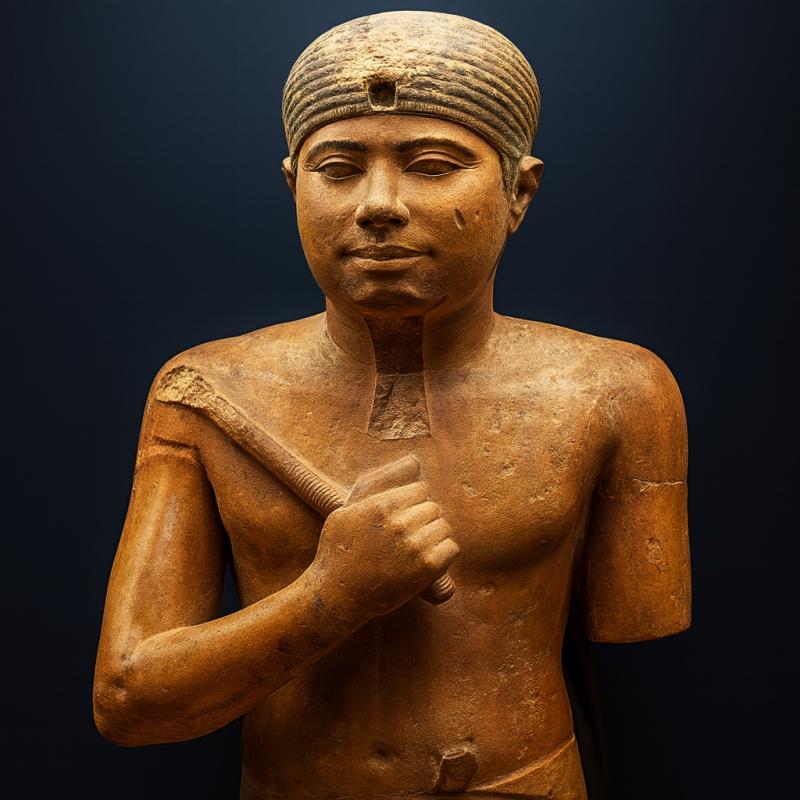
Neferirkare Kakai was one of the most important rulers of Egypt's Fifth Dynasty. He succeeded Sahure and ruled during a period when the Egyptian Old Kingdom was experiencing important developments in royal religion, architecture, administration, and art.
Neferirkare is especially important because his reign is connected with the famous Abusir Papyri, one of the most valuable collections of administrative documents from the Old Kingdom. These records provide rare information about the daily organization of royal funerary temples, priests, offerings, workers, and the Egyptian state.
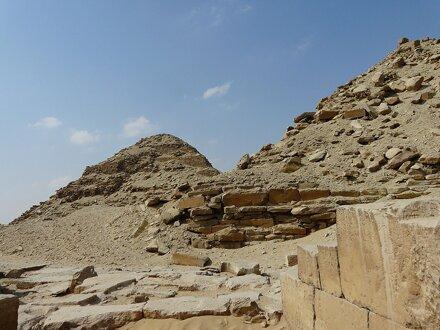
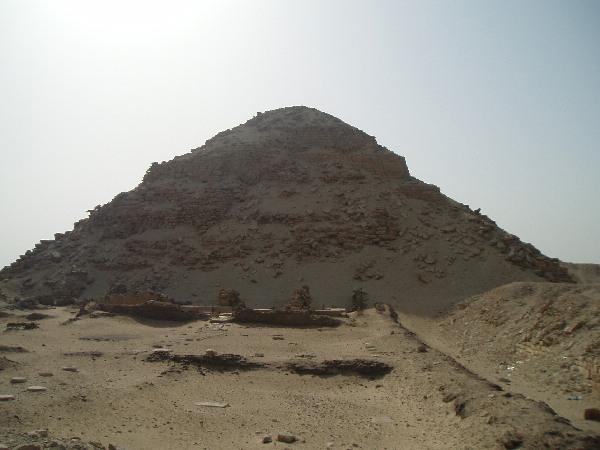
His pyramid at Abusir was originally one of the largest monuments of the Fifth Dynasty. Although it is now heavily damaged, its remains continue to provide important evidence about the development of pyramid construction and solar religion.
Who Was Neferirkare Kakai?
Neferirkare Kakai was the third ruler of the Fifth Dynasty.
His name, Neferirkare, can be understood as something like “Beautiful Is the Soul of Ra” or “The Ka of Ra Is Beautiful.”
The name clearly reflects the strong solar ideology of the Fifth Dynasty.
The second part of his name, Kakai, was his personal or birth name.
Like other Egyptian kings, Neferirkare had several royal names and titles.
His reign probably occurred during the early part of the 25th century BCE, although the exact dates remain uncertain.
Neferirkare's Family
Neferirkare appears to have been closely connected to the royal family of the early Fifth Dynasty.
Some ancient traditions and modern interpretations suggest that he was a son of Sahure, although the exact family relationships remain debated.
Neferirkare married Khentkaus II, an important royal woman whose tomb and pyramid complex were located at Abusir.
They had at least two sons who later became important rulers:
- Neferefre
- Nyuserre Ini
This made Neferirkare's family one of the most important royal families of the Fifth Dynasty.
The Fifth Dynasty
Neferirkare inherited a kingdom with a long tradition of centralized government.
The Fourth Dynasty had created the enormous pyramids of Giza.
The Fifth Dynasty continued pyramid construction but increasingly emphasized solar temples, mortuary temples, and religious institutions.
The worship of Ra, the sun god, became an especially important part of royal ideology.
Neferirkare's name itself demonstrates this connection.
The Pyramid of Neferirkare
Neferirkare built his pyramid at Abusir, where Sahure had already established an important royal cemetery.
The pyramid was originally planned as a step pyramid and was later transformed into a true pyramid.
This unusual construction history provides important evidence about Fifth Dynasty pyramid building.
The monument was originally approximately 70 meters high, making it one of the largest pyramids of the Fifth Dynasty.
Today, much of the outer structure has disappeared.
However, the central core remains an important archaeological landmark.
From Step Pyramid to True Pyramid
Neferirkare's pyramid appears to have been constructed in stages.
The first stage may have involved a stepped structure.
Later builders converted it into a true pyramid.
This change may reflect modifications made during the king's reign.
It may also indicate that the original design was altered as the project developed.
The monument therefore provides valuable evidence about how Egyptian architects adapted royal building projects.
The Mortuary Temple
Neferirkare's pyramid complex included a large mortuary temple.
The temple was intended to support the king's eternal cult.
Priests performed rituals and offerings.
The temple included courtyards, offering rooms, storage areas, and ceremonial spaces.
Much of the complex was later damaged or never completely finished.
However, archaeological excavations have recovered important architectural remains.
The Abusir Papyri
One of the greatest historical discoveries associated with Neferirkare's complex is the collection known as the Abusir Papyri.
These papyri contain administrative records concerning the operation of the royal funerary temple.
They include information about:
- Priests
- Daily rituals
- Offerings
- Temple workers
- Equipment
- Supplies
- Schedules
- Administrative duties
They are among the most important written sources for understanding the organization of Old Kingdom religious institutions.
Why the Abusir Papyri Are Important
Most surviving evidence from the Old Kingdom consists of monuments, tombs, statues, and inscriptions.
Administrative documents are much rarer.
The Abusir Papyri provide a glimpse into the practical side of Egyptian government.
They show that temples were not simply places of worship.
They were large economic institutions.
They required workers, supplies, records, storage facilities, and administrators.
Temple Administration
The papyri demonstrate that priests followed organized schedules.
Different groups of priests served during specific periods.
Offerings had to be prepared and delivered.
Religious ceremonies followed established routines.
Equipment and supplies were carefully recorded.
This shows the sophisticated administrative structure of Old Kingdom Egypt.
Food Offerings
The royal funerary cult required a continuous supply of food.
Offerings could include:
- Bread
- Beer
- Meat
- Vegetables
- Fruit
- Poultry
- Wine
- Incense
These goods came from agricultural estates and other sources.
Temple officials recorded the quantities and distribution of offerings.
The system ensured that the king's cult could continue after his death.
The Role of Priests
Priests were responsible for performing religious rituals.
They purified sacred spaces.
They prepared offerings.
They recited prayers.
They maintained statues.
They participated in ceremonies connected with the king and the gods.
The Abusir Papyri show that priestly service was highly organized.
Neferirkare and Solar Religion
Neferirkare's royal name strongly connects him with Ra.
Ra was the sun god and one of the most important deities in ancient Egypt.
The Fifth Dynasty saw the expansion of solar religious traditions.
Royal monuments incorporated solar symbolism.
The king was associated with the sun's eternal cycle.
The daily movement of the sun across the sky symbolized death, renewal, and resurrection.
The Sun Temple Tradition
Earlier Fifth Dynasty kings such as Userkaf and later rulers constructed sun temples.
These monuments emphasized the worship of Ra.
Neferirkare's own pyramid complex was closely connected with this religious tradition, even though a securely identified sun temple built by him has not survived in the same way as some later examples.
His reign continued the strong solar ideology of the dynasty.
Neferirkare's Artistic Legacy
The Fifth Dynasty was famous for elegant relief sculpture.
Royal art presented the king as youthful, powerful, and calm.
The figures followed established Egyptian artistic conventions.
Artists carefully carved human figures, animals, plants, and hieroglyphic inscriptions.
The result was an artistic style that combined idealized royal imagery with detailed representations of nature.
The King and Maat
Neferirkare, like every Egyptian pharaoh, was responsible for maintaining maat.
Maat represented truth, justice, balance, and cosmic order.
The king was believed to preserve harmony between humans and the gods.
Foreign enemies were often represented as forces of chaos.
The king's role was to defeat chaos and protect Egypt.
This ideology appears throughout Egyptian royal art.
Neferirkare's Government
The Egyptian state was highly organized.
Officials supervised agriculture.
Administrators collected taxes.
Royal estates produced food.
Workers maintained temples and monuments.
The government controlled quarries and transportation networks.
The Nile served as Egypt's primary transportation system.
This administrative structure allowed Neferirkare to maintain large construction and religious projects.
The Egyptian Economy
Agriculture remained the foundation of the economy.
The Nile flood provided fertile soil.
Farmers grew grain and other crops.
Livestock provided meat, milk, leather, and other products.
The state collected part of the agricultural surplus.
Some resources were distributed to temples and royal institutions.
The Abusir documents provide evidence of this complex economic organization.
Trade and Foreign Expeditions
Egypt maintained contact with surrounding regions during the Fifth Dynasty.
Trade routes connected Egypt with the Levant and Nubia.
Egyptian expeditions sought valuable materials.
These included:
- Timber
- Copper
- Turquoise
- Gold
- Aromatic products
- Stone
- Luxury goods
Such resources supported the royal economy and religious institutions.
Neferirkare's Family: Khentkaus II
One of the most important people associated with Neferirkare was Khentkaus II.
She was an important queen of the Fifth Dynasty.
Her pyramid complex was built at Abusir.
Her monuments provide valuable information about royal women and succession during the period.
Khentkaus II appears to have played an important role in the royal family.
Neferefre
Neferirkare's son Neferefre later became king.
His reign was probably very short.
He began constructing a pyramid at Abusir, but the monument was never completed.
The incomplete pyramid provides valuable evidence about Egyptian construction techniques.
Nyuserre Ini
Another son, Nyuserre Ini, eventually became one of the longest-reigning kings of the Fifth Dynasty.
He completed several unfinished royal projects.
Nyuserre also constructed his own pyramid and a famous sun temple at Abusir.
His reign helped preserve and expand the traditions established by Userkaf, Sahure, and Neferirkare.
The Abusir Royal Cemetery
Under Neferirkare and his successors, Abusir became one of the most important royal cemeteries in Egypt.
The site contained pyramids and temples belonging to several Fifth Dynasty rulers.
It also contained the tombs of important officials.
The cemetery provides an extraordinary record of Old Kingdom royal and administrative culture.
Tombs of Officials
High-ranking officials were buried near royal monuments.
Their tombs contain inscriptions describing their careers.
Some officials served as administrators, priests, architects, military leaders, or royal advisors.
These inscriptions provide information about the structure of the Egyptian government.
They also show that elite officials could hold several important titles at the same time.
The Growth of Temple Institutions
The Fifth Dynasty saw the increasing importance of royal temples.
These institutions controlled agricultural estates.
They employed priests and workers.
They maintained livestock.
They stored grain.
They distributed food and other resources.
This growth had long-term consequences for Egyptian society.
Religious institutions became increasingly important economic centers.
Neferirkare's Reign and the Old Kingdom
Neferirkare ruled during a period when the Old Kingdom was still powerful.
The state remained capable of organizing major construction projects.
The royal administration functioned effectively.
Egypt maintained international contacts.
Art and religious architecture continued to develop.
The surviving evidence does not suggest that Egypt was experiencing a major crisis during his reign.
The Importance of the Written Records
The Abusir Papyri make Neferirkare especially valuable to historians.
For many ancient Egyptian kings, we know mainly their monuments.
For Neferirkare, written administrative records provide a rare look at everyday institutional life.
They tell us about people who worked in the temple.
They show how offerings were organized.
They reveal schedules and responsibilities.
They demonstrate how carefully the royal cult was managed.
Neferirkare's Legacy
Neferirkare's pyramid may not be as famous as the Great Pyramid of Khufu, but his historical importance is enormous.
His reign preserved the Fifth Dynasty's solar traditions.
His pyramid complex contributed to the development of Abusir as a royal cemetery.
His mortuary institution produced administrative records that survived for thousands of years.
These documents are among the most valuable sources for the study of Old Kingdom Egypt.
Why Neferirkare Matters
Neferirkare matters because he allows us to see ancient Egypt from two perspectives.
His pyramid and temples reveal the world of royal religion and architecture.
The Abusir Papyri reveal the practical world of administrators, priests, workers, food supplies, and daily schedules.
Together, these sources create a much more complete picture of Old Kingdom civilization.
Conclusion
Neferirkare Kakai was one of the most important rulers of Egypt's Fifth Dynasty.
As the successor of Sahure, he continued the dynasty's strong connection with the sun god Ra and helped establish Abusir as one of Egypt's most important royal cemeteries.
His pyramid was originally a magnificent monument and was probably among the largest pyramids of the Fifth Dynasty.
Although much of it has been destroyed, the surviving remains continue to provide important archaeological evidence.
The greatest legacy of Neferirkare, however, may be the Abusir Papyri.
These administrative documents reveal the complex organization of his funerary temple.
They describe priests, offerings, workers, supplies, schedules, and temple administration.
They demonstrate that Egyptian temples were not only religious centers but also major economic institutions.
Neferirkare was also part of an important royal family.
His wife Khentkaus II was a prominent royal woman, while his sons Neferefre and Nyuserre Ini later played major roles in the Fifth Dynasty.
Through his family, monuments, and administrative records, Neferirkare left a lasting mark on Egyptian history.
His pyramid represents the grandeur of Old Kingdom kingship, while the Abusir Papyri reveal the human organization behind that grandeur—making Neferirkare Kakai one of the most valuable rulers for understanding how ancient Egyptian civilization actually worked.