Neferefre, also known as Raneferef, was a pharaoh of Egypt’s Fifth Dynasty during the Old Kingdom. Although his reign was extremely short, Neferefre remains an important historical figure because of the archaeological discoveries made at his unfinished pyramid complex at Abusir.
He ruled more than 4,400 years ago, during a period when Egypt was a powerful centralized kingdom. The Fifth Dynasty was famous for its enormous pyramids, sophisticated administration, and strong devotion to the sun god Ra.
Neferefre’s reign may have lasted only a few years, and he appears to have died before his pyramid and mortuary temple were completed. Nevertheless, archaeologists discovered valuable statues, papyri, inscriptions, and architectural remains at his complex, allowing historians to reconstruct important aspects of his reign.
Neferefre’s Early Life
Very little is known about Neferefre’s childhood.
He was born into the royal family during Egypt’s Fifth Dynasty, probably during the reign of his father, Neferirkare Kakai.
His mother is generally identified as Khentkaus II, an important royal woman who played a significant role in the royal family.
Neferefre was therefore a member of one of the most powerful royal families of the Old Kingdom.
His brother Nyuserre Ini later became one of the most successful kings of the Fifth Dynasty.
Neferefre’s Father: Neferirkare Kakai
Neferefre’s father, Neferirkare Kakai, was an important Fifth Dynasty ruler.
Neferirkare constructed a large pyramid complex at Abusir and maintained the traditional relationship between Egyptian kingship and the sun god Ra.
His reign was associated with major administrative and religious developments.
When Neferirkare died, Neferefre succeeded him.
Neferefre Becomes Pharaoh
Neferefre became king at a relatively young age.
His royal names emphasized his relationship with the gods and the divine nature of Egyptian kingship.
Neferefre inherited a powerful kingdom, but he had very little time to rule.
Archaeological evidence suggests that his reign lasted only a few years, possibly less than three.
Because of his early death, many of his planned monuments remained unfinished.
A Short Reign
The most important feature of Neferefre’s reign was its brevity.
Unlike kings such as Sahure and Nyuserre, Neferefre did not have enough time to complete a large pyramid complex.
His unfinished monuments provide archaeologists with a rare opportunity to see how Egyptian royal construction actually worked.
Instead of seeing only completed pyramids and temples, researchers can study unfinished foundations, construction methods, abandoned blocks, and temporary structures.
Neferefre’s Pyramid at Abusir
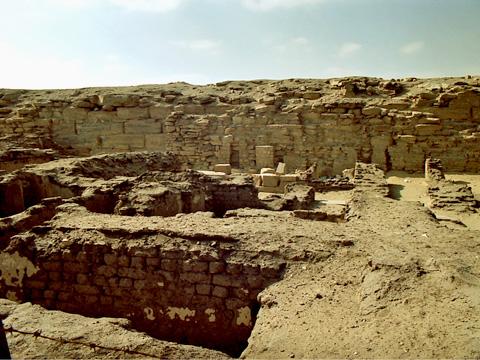
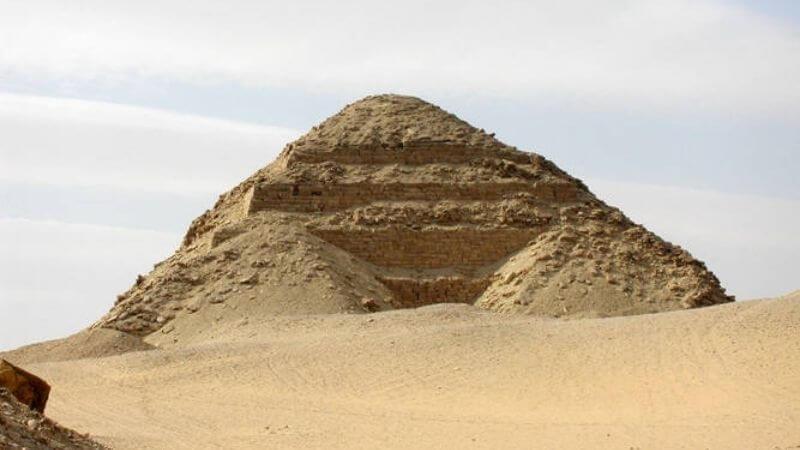
Neferefre began constructing his pyramid at Abusir, near the pyramids of his father Neferirkare and other Fifth Dynasty rulers.
The pyramid was never completed.
Instead of rising into a traditional pyramid shape, the monument remained at a relatively low stage of construction.
After Neferefre’s death, his successors adapted the unfinished structure for his funerary cult.
This unusual construction history makes the site one of the most important archaeological monuments of the Fifth Dynasty.
Why Was Neferefre’s Pyramid Unfinished?
The most likely explanation is that Neferefre died unexpectedly.
Building a pyramid required enormous amounts of time, labor, stone, food, transportation, and administration.
A king who died after only a few years could not realistically complete such a monument.
After his death, his successors had to decide how to finish the complex.
Rather than abandoning Neferefre’s burial completely, they transformed parts of the unfinished pyramid into a more practical funerary monument.
Neferefre’s Mortuary Temple
Although his pyramid remained unfinished, Neferefre’s mortuary complex became an important religious center.
Archaeologists discovered many remains from the temple, including stone foundations, pillars, statues, offering areas, storage rooms, religious inscriptions, and papyrus documents.
The temple continued to function after Neferefre’s death.
Priests performed rituals and presented offerings to maintain the king’s cult.
The Abusir Papyri
One of the greatest archaeological treasures associated with Neferefre’s family is the collection of Abusir Papyri.
These papyri contain administrative records connected with the royal temples.
They describe offerings, priests, temple workers, equipment, and daily administrative activities.
Although not all of the papyri belong directly to Neferefre’s reign, they provide valuable information about the organization of Fifth Dynasty royal institutions.
They show that Egyptian temples were not simply religious buildings.
They were also major economic and administrative centers.
Neferefre and the Sun God Ra
The Fifth Dynasty was strongly associated with the worship of Ra.
Neferefre continued this tradition.
The sun god represented creation, life, kingship, and renewal.
Egyptian kings were believed to have a special relationship with Ra.
The pharaoh was not simply a political leader.
He was a divine ruler responsible for maintaining order between the human world and the gods.
Neferefre’s Solar Religion
There is no clearly identified large solar temple belonging specifically to Neferefre.
His short reign probably prevented him from completing major religious construction projects.
Nevertheless, the religious organization of his mortuary complex shows that solar traditions remained important.
The king’s eternal existence was connected with the daily journey of the sun.
Neferefre and Osiris
The worship of Osiris was also becoming increasingly important during this period.
Osiris was the god of death, resurrection, and the afterlife.
Ancient Egyptians believed that the deceased king could become associated with Osiris after death.
The king’s funerary rituals were therefore designed to guarantee eternal life.
Neferefre’s mortuary temple served this purpose.
Priests continued to perform offerings and ceremonies in his name after his death.
Neferefre’s Statues
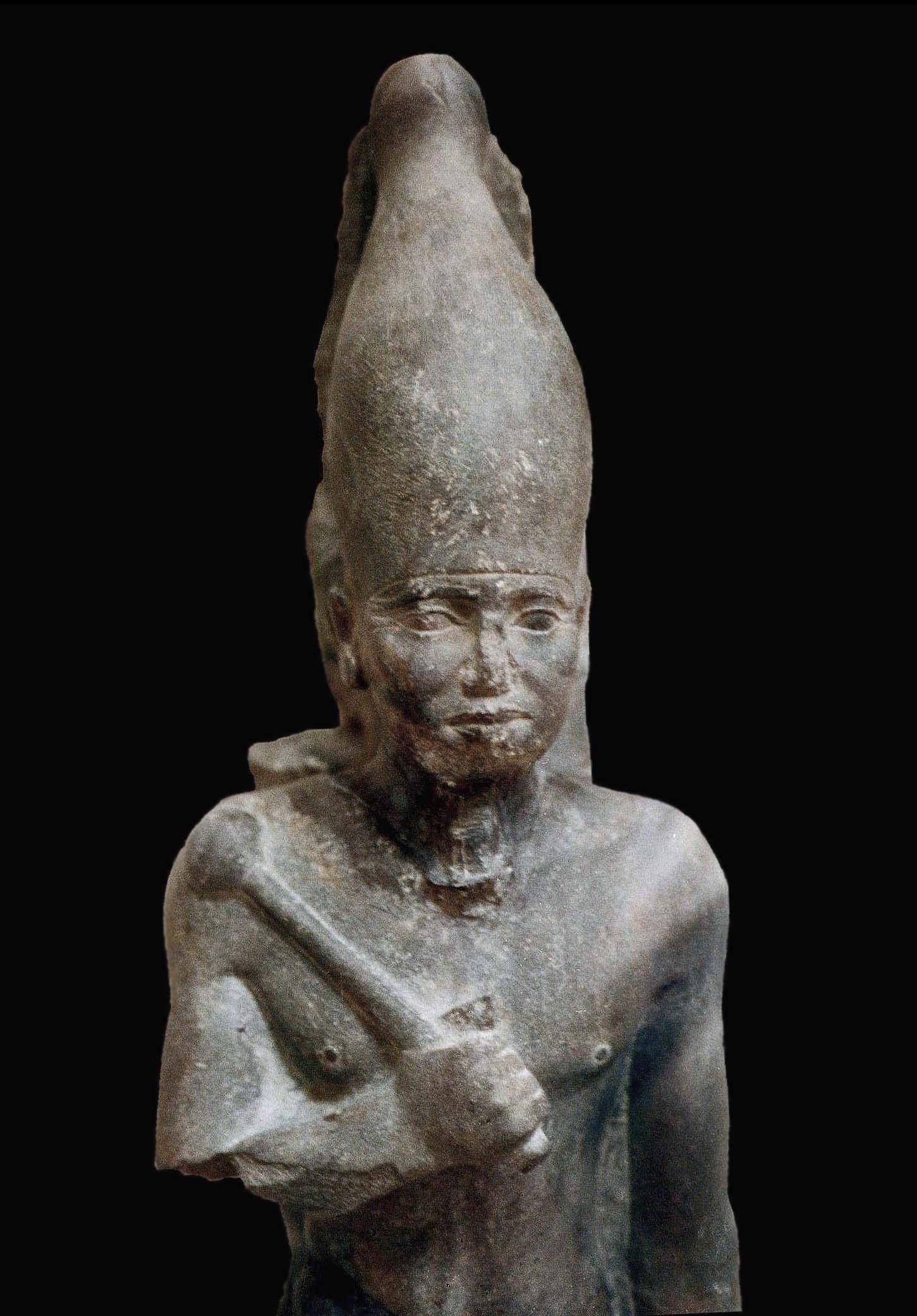
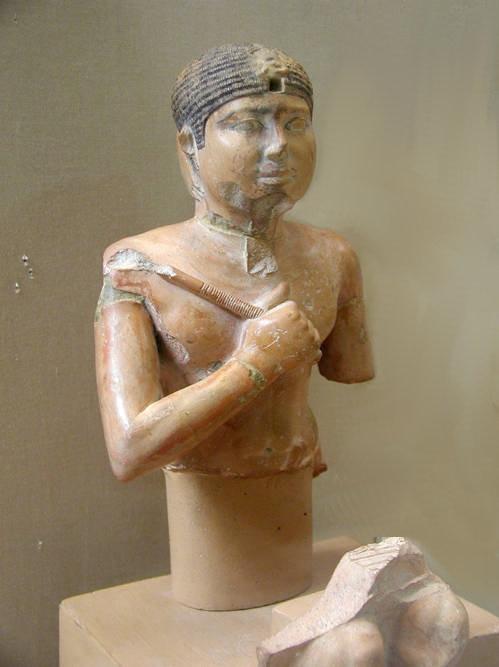
One of the most remarkable discoveries from Neferefre’s complex was a group of statues.
These statues provide important evidence about Egyptian royal art.
They depict the king in traditional royal forms and demonstrate the skill of Fifth Dynasty sculptors.
Some fragments were found within the temple complex.
The statues also help historians confirm Neferefre’s identity and royal status.
Neferefre’s Royal Appearance
Egyptian royal art was designed to communicate more than physical appearance.
The king was shown as young, strong, calm, powerful, and divine.
This artistic style emphasized the eternal nature of kingship.
Even when a king died, his statue could continue to represent his presence in the world.
Neferefre’s Family
Neferefre belonged to a powerful royal family.
His father was Neferirkare Kakai.
His mother was Khentkaus II.
His brother Nyuserre Ini eventually became king.
Neferefre was also associated with a queen named Khentkaus III, whose tomb was discovered at Abusir and provides important evidence about the royal family.
The discovery of Khentkaus III’s tomb helped archaeologists understand the complicated royal relationships of the Fifth Dynasty.
Nyuserre Ini: Neferefre’s Brother
After Neferefre’s death, his brother Nyuserre Ini eventually became king.
Nyuserre ruled for a much longer period.
He completed several projects that had been started by earlier kings.
He also expanded his own pyramid complex and religious monuments.
Nyuserre’s long reign helped stabilize the royal family after the short reigns of Neferefre and Shepseskare.
The Mystery of Shepseskare
Neferefre’s reign is closely connected with the mysterious king Shepseskare.
Historians continue to debate the exact order of succession between Neferirkare, Shepseskare, Neferefre, and Nyuserre.
Shepseskare also appears to have ruled for only a short time.
The evidence from Abusir has helped Egyptologists reconstruct this complicated period of royal history.
Administration During Neferefre’s Reign
Neferefre inherited a highly organized state.
The Egyptian government relied on officials such as viziers, scribes, priests, estate administrators, military officials, and regional governors.
They managed taxation, agriculture, construction, temples, and trade.
The king depended on this bureaucracy to maintain control over Egypt.
Agriculture and the Nile
Like every Egyptian king, Neferefre depended on the Nile.
The annual flood provided fertile soil for farming.
Egyptian farmers cultivated wheat, barley, flax, vegetables, and fruit.
Agricultural production supported the entire kingdom.
The government collected taxes from farms and redistributed resources to temples, royal estates, workers, and officials.
Trade and Natural Resources
Egypt during the Fifth Dynasty maintained long-distance trade and expedition networks.
Egyptians traveled to regions such as Nubia, Sinai, and the Eastern Desert.
They sought valuable resources including gold, copper, turquoise, stone, timber, and incense.
These materials were important for construction, religious ceremonies, tools, jewelry, and royal monuments.
Neferefre and Nubia
Nubia was an important region south of Egypt.
It provided valuable resources, particularly gold.
Nubia also controlled routes leading deeper into Africa.
Egyptian rulers therefore maintained political and economic interests in the region.
Although there are few records of military campaigns directly attributed to Neferefre, his administration inherited the broader Egyptian system of expeditions toward Nubia.
Daily Life in Neferefre’s Egypt
Most Egyptians lived very different lives from the royal family.
Farmers worked along the Nile.
Fishermen traveled on small boats.
Craftsmen produced pottery, tools, furniture, jewelry, and statues.
Scribes recorded economic transactions.
Priests served in temples.
Workers were employed on royal and religious construction projects.
The Nile connected these communities and provided the foundation of Egyptian civilization.
Egyptian Religion
Religion influenced nearly every aspect of life.
Egyptians worshipped many gods, including Ra, Osiris, Isis, Horus, Anubis, Ptah, and Hathor.
The pharaoh was believed to have a unique role in maintaining harmony between humans and the gods.
Temples provided places where priests could perform rituals and offerings.
Neferefre’s mortuary temple was part of this religious system.
Maat and the Pharaoh
Neferefre was expected to maintain maat.
Maat represented order, justice, truth, and harmony.
The opposite of maat was chaos.
The pharaoh’s role was to protect Egypt from chaos and preserve the natural and divine order.
This responsibility was one of the foundations of Egyptian kingship.
Neferefre’s Death
Neferefre appears to have died unexpectedly and at a relatively young age.
The exact cause of his death is unknown.
His unfinished pyramid strongly suggests that he did not live long enough to complete his planned monument.
His death created a succession problem for the royal family.
Eventually, his brother Nyuserre became king and continued the Fifth Dynasty.
Neferefre’s Burial
Although his pyramid was unfinished, Neferefre was apparently buried at Abusir.
His mortuary complex was adapted to serve his funerary cult.
Priests continued to make offerings and perform rituals for him.
The discovery of statues, inscriptions, and administrative documents demonstrates that his cult remained active after his death.
The Importance of Neferefre’s Complex
Neferefre’s unfinished complex is extremely valuable to archaeologists.
A completed monument hides much of the construction process.
At Neferefre’s site, however, archaeologists can see how the Egyptians changed their plans after the king died.
The site therefore provides information about pyramid construction, temple architecture, royal funerary rituals, administrative organization, Egyptian sculpture, and religious practices.
Neferefre’s Historical Legacy
Neferefre’s reign was short, but his archaeological legacy is surprisingly rich.
His unfinished pyramid and mortuary temple preserve valuable information about the Fifth Dynasty.
His statues reveal the quality of royal sculpture.
The Abusir papyri provide insight into temple administration and daily religious activities.
His family connections help historians understand the succession of the Fifth Dynasty.
Why Neferefre Is Important
Neferefre is important because he provides historians with a unique view of a short-lived royal reign.
His unfinished monuments reveal the realities of ancient Egyptian construction.
His family history helps explain the succession between several Fifth Dynasty rulers.
His temple remains demonstrate how the royal funerary cult continued even after an unfinished pyramid.
His story also shows that a king did not need to rule for decades to leave an important archaeological legacy.
Conclusion
Neferefre was a short-reigning pharaoh of Egypt’s Fifth Dynasty whose unfinished monuments became some of the most valuable archaeological discoveries at Abusir.
The son of Neferirkare Kakai and Queen Khentkaus II, Neferefre inherited the throne during a period of great prosperity and religious development.
His reign was probably very short, and he appears to have died before completing his pyramid.
After his death, his unfinished pyramid was transformed into a funerary complex that continued to serve his royal cult.
The discoveries at his complex include statues, architectural remains, inscriptions, and administrative documents that provide valuable information about ancient Egyptian religion, government, art, and daily life.
His brother Nyuserre Ini later became king and ruled for a much longer period, helping stabilize the Fifth Dynasty.
Today, Neferefre remains an important figure in Egyptian history because his unfinished monuments allow modern researchers to see a side of pyramid construction and royal administration that is rarely preserved.
Although Neferefre ruled Egypt for only a short time, the remains of his pyramid complex at Abusir continue to tell the story of a young king, a powerful royal family, and one of the most fascinating periods of the ancient Egyptian Old Kingdom.