Merenhor was one of the little-known rulers of ancient Egypt who is generally associated with the Eighth Dynasty and the early First Intermediate Period. He belonged to a confusing and poorly documented chapter of Egyptian history, when the centralized government of the Old Kingdom had weakened and Egypt was experiencing major political changes.
Unlike the great pharaohs such as Khufu, Khafre, Menkaure, or Pepi II, Merenhor left almost no monumental legacy. His reign appears to have been extremely short, and historians have very little information about his personal life, family, political achievements, or burial.
Nevertheless, Merenhor is important because his name provides another piece of evidence for reconstructing the difficult succession of rulers who governed Egypt after the end of the Sixth Dynasty.
Egypt at the End of the Old Kingdom
For centuries, ancient Egypt was ruled by a powerful centralized monarchy.
The pharaoh was the supreme political and religious authority.
Royal officials administered agricultural estates, collected resources, organized workers, and supervised temples.
This centralized system allowed kings to construct enormous monuments.
The pyramids of Saqqara, Dahshur, and Giza are evidence of the strength of the Old Kingdom state.
However, the system gradually began to change.
The Reign of Pepi II
The Sixth Dynasty reached its final period under Pepi II, whose throne name was Neferkare.
Ancient sources traditionally describe Pepi II as one of the longest-reigning rulers in Egyptian history.
During his long reign, provincial officials became increasingly powerful.
Local families accumulated land and wealth.
Government positions became increasingly hereditary.
The central administration continued to function, but its authority was gradually being challenged by regional elites.
When Pepi II eventually died, Egypt entered a period of political uncertainty.
The End of the Sixth Dynasty
The succession after Pepi II is difficult to reconstruct.
Several kings appear to have ruled for short periods.
Some names are preserved only in later king lists.
Others are known from fragments of inscriptions or damaged papyri.
Eventually, the Sixth Dynasty ended.
The Old Kingdom's centralized political system began to break apart.
Egypt entered the period historians call the First Intermediate Period.
Merenhor was one of the rulers associated with this complicated era.
The Eighth Dynasty
The Eighth Dynasty is one of the most mysterious dynasties in Egyptian history.
The kings of this dynasty are believed to have ruled mainly from Memphis.
Their authority was probably much weaker than that of the great kings of the Old Kingdom.
Many rulers appear to have had extremely short reigns.
The dynasty may have represented an attempt by the Memphite royal court to preserve the old traditions of centralized kingship.
Merenhor was one of these little-known rulers.
The Name Merenhor
The name Merenhor is generally understood as meaning something like "Beloved of Horus."
Horus was one of the most important gods in ancient Egyptian religion.
The pharaoh was traditionally associated with Horus during his lifetime.
The king was seen as the earthly manifestation of the god's royal power.
A royal name connected with Horus therefore carried an important message about legitimacy.
It suggested that the ruler was favored by the divine protector of kingship.
A Very Short Reign
Merenhor appears to have ruled for only a very short period.
The exact length of his reign is uncertain.
The Eighth Dynasty contained several rulers who may have ruled for only months or a few years.
This political instability made it difficult for any single king to establish long-term authority.
A short reign also made major construction projects nearly impossible.
The Lack of Monuments
No major pyramid or temple can be securely attributed to Merenhor.
This is not unusual for an Eighth Dynasty ruler.
The construction of a royal pyramid required enormous resources.
Stone had to be quarried and transported.
Workers had to be fed and housed.
Architects, priests, craftsmen, and administrators had to organize the project.
A ruler who remained on the throne for only a short period probably did not have enough time to establish a monumental funerary complex.
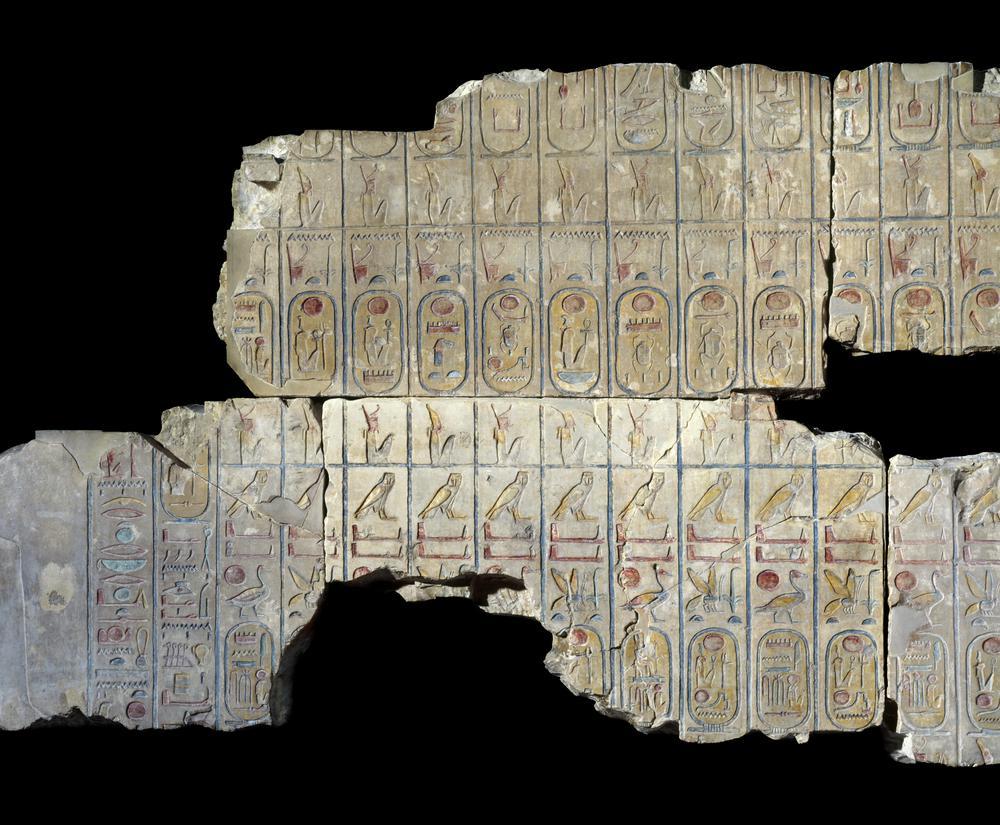
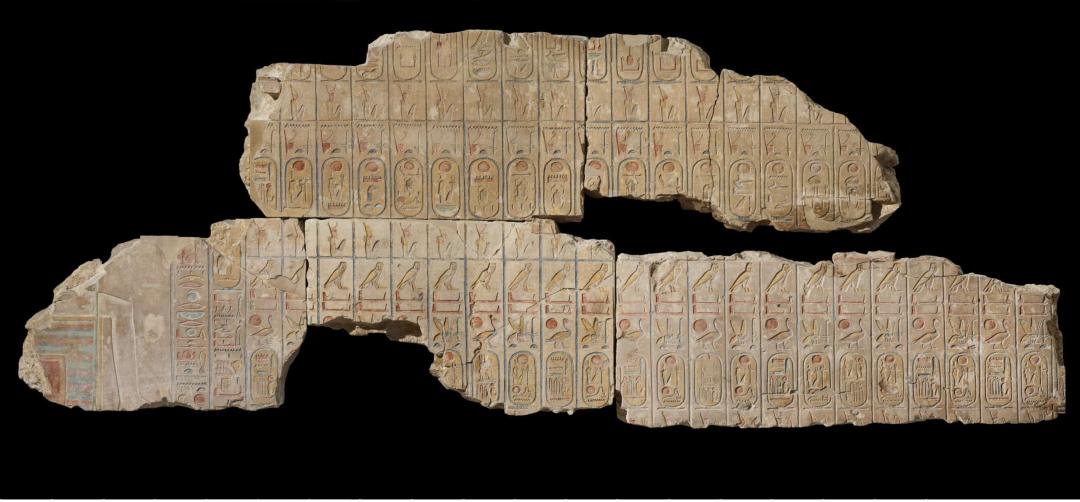
The Abydos King List
One of the most important sources for the succession of Egypt's Eighth Dynasty is the Abydos King List.
The list was created during the New Kingdom, centuries after Merenhor's lifetime.
It preserves the names of numerous Egyptian kings.
The inclusion of Merenhor demonstrates that later Egyptian scribes remembered him as part of the royal tradition.
However, the list does not provide a detailed description of his reign.
The Turin Royal Canon
Another major source is the Turin Royal Canon.
This ancient papyrus contains a list of Egyptian kings and, in many cases, the duration of their reigns.
Unfortunately, the papyrus is damaged.
Many sections concerning the First Intermediate Period are incomplete.
Because of this, the exact chronology of Merenhor remains uncertain.
Reconstructing a Lost Reign
Historians studying Merenhor must work with extremely limited evidence.
They compare king lists.
They examine inscriptions.
They study archaeological layers.
They analyze royal names and titles.
They compare Egyptian chronology with evidence from other rulers.
This process allows historians to reconstruct the broad outline of his historical position even though his personal story has disappeared.
Memphis and the Royal Court
Merenhor's connection with the Eighth Dynasty suggests that he was probably associated with the Memphite royal court.
Memphis had been a major center of Egyptian government for centuries.
It was located strategically near the beginning of the Nile Delta.
The city was also the center of the cult of Ptah, an important creator god.
The Memphite tradition remained powerful even during periods of political fragmentation.
The Weakening of Memphis
Although Memphis remained important, its political authority was increasingly challenged.
Regional centers became stronger.
Local governors controlled their own resources.
Upper Egyptian rulers gained influence.
The central government could no longer exercise the same level of control over every part of the country.
This was one of the defining characteristics of the First Intermediate Period.
The Rise of Provincial Governors
Provincial governors had originally served as representatives of the pharaoh.
They administered local districts called nomes.
Over generations, these officials accumulated land, wealth, and political influence.
Some positions became hereditary.
Their tombs became increasingly impressive.
Their inscriptions often described their personal achievements.
This was a major change from the earlier Old Kingdom system.
Local Power and the Pharaoh
The growth of local power did not necessarily mean that every governor rejected the pharaoh.
Many local rulers continued to recognize the king.
However, they were increasingly independent in practical matters.
They could control food supplies, agricultural land, workers, and military resources.
This made it difficult for a short-reigning king like Merenhor to impose centralized policies across Egypt.
Agriculture and the Nile
Egyptian society depended on the Nile.
The annual flood provided water and fertile soil.
Agricultural production supported the population and the state.
Crops such as wheat and barley were particularly important.
When the Nile flood was inadequate, agricultural production could suffer.
Economic difficulties could then spread throughout the country.
Environmental Pressures
Some historians believe that environmental changes may have contributed to the crisis at the end of the Old Kingdom.
Changes in rainfall in northeastern Africa could influence the Nile flood.
Periods of drought could place pressure on agricultural communities.
However, environmental conditions were probably not the only cause.
The political structure had already been changing for generations.
Economic Decentralization
As provincial governors became more powerful, economic resources became increasingly decentralized.
Local elites could control agricultural estates.
Temples also possessed significant amounts of land.
The central government therefore had less direct control over the resources needed for large royal projects.
This helps explain why monumental architecture declined during the First Intermediate Period.
Religion During Merenhor's Time
Despite political changes, religion remained central to Egyptian society.
People continued to worship the traditional gods.
Horus remained a symbol of kingship.
Osiris became increasingly important as a god of the afterlife.
Ra remained central to solar religion.
Ptah continued to be worshiped at Memphis.
The religious traditions of the Old Kingdom did not disappear.
The Pharaoh and Maat
The pharaoh was traditionally responsible for maintaining maat.
Maat represented truth, justice, balance, and cosmic harmony.
The king's duty was to preserve order and prevent chaos.
During a period of political fragmentation, this concept became especially important.
The ideal of restoring unity and order would later become a major theme of the Middle Kingdom.
Funerary Beliefs
Ancient Egyptians believed that death was a transition to another form of existence.
The deceased needed food, offerings, prayers, and magical protection.
Kings were expected to join the gods after death.
Earlier pharaohs built enormous pyramids to support this transformation.
By Merenhor's period, however, royal funerary monuments were generally much less impressive.
The Disappearance of His Burial
The burial place of Merenhor is unknown.
No pyramid or royal tomb can confidently be identified as his.
His burial may have been modest compared with those of earlier pharaohs.
It may also have been destroyed or hidden beneath later construction.
Thousands of years of rebuilding and reuse have erased many traces of Egypt's lesser-known rulers.
The First Intermediate Period
Merenhor's reign belongs to a period of political fragmentation.
However, the First Intermediate Period should not be viewed simply as a time of collapse.
Egyptian culture continued to develop.
Local rulers produced new artistic styles.
Religious beliefs continued to evolve.
Literature and administrative traditions survived.
Communities continued to function along the Nile.
Regional Centers
Several regional centers became important during this period.
In Upper Egypt, local rulers established powerful administrations.
In Lower Egypt, Memphis and other northern centers remained influential.
Eventually, two major political traditions emerged.
The rulers of Herakleopolis became powerful in northern Egypt.
The rulers of Thebes became dominant in Upper Egypt.
The Road to Reunification
The political division of Egypt eventually produced conflict between regional powers.
The struggle lasted for generations.
Eventually, the Theban ruler Mentuhotep II succeeded in reunifying Egypt.
This marked the beginning of the Middle Kingdom.
The reunification restored a strong centralized monarchy.
The kings of the Middle Kingdom would once again undertake major building projects and organize large administrative systems.
Merenhor's Place in This Transformation
Merenhor ruled before Egypt was reunited.
His reign therefore belongs to the early stages of the political fragmentation that followed the Old Kingdom.
He was part of a royal tradition that continued to claim authority even when the practical power of the monarchy was declining.
His existence shows that the institution of kingship survived the collapse of the Old Kingdom's centralized system.
A Forgotten Pharaoh
Merenhor is almost completely unknown to the general public.
Visitors to Egypt usually hear about Khufu, Hatshepsut, Tutankhamun, or Ramses II.
Merenhor has no comparable monument.
But his obscurity is valuable to historians.
It reminds us that ancient Egypt was not governed only by famous rulers.
Hundreds of kings, officials, priests, soldiers, craftsmen, and farmers contributed to Egyptian civilization.
Why His Name Survived
The survival of Merenhor's name is significant.
Egyptian scribes carefully preserved royal traditions.
Even short-reigning kings could remain part of the historical memory.
The royal lists created centuries later demonstrate the importance of preserving the succession of kings.
Without these lists, many rulers of the First Intermediate Period would have completely disappeared from history.
The Challenge of Ancient Egyptian History
Merenhor illustrates the difficulties historians face when studying ancient Egypt.
Archaeological evidence is uneven.
Monuments can disappear.
Inscriptions can be damaged.
Names can be transmitted differently between documents.
Some rulers may have been omitted from later traditions.
Others may have ruled simultaneously in different parts of the country.
Therefore, the history of Merenhor must be reconstructed carefully.
The Importance of Small Evidence
A single royal name can be extremely valuable.
It can establish that a ruler existed.
It can help identify the sequence of kings.
It can provide information about royal ideology.
It can help connect different historical sources.
For a king like Merenhor, these small pieces of evidence are the foundation of his entire historical story.
The Legacy of Merenhor
Merenhor's legacy is not based on architecture.
It is based on his place in the transition between two great eras.
The Old Kingdom had created one of the most centralized political systems in the ancient world.
The First Intermediate Period transformed that system.
The Middle Kingdom would later rebuild it.
Merenhor belongs to the uncertain middle stage of this process.
A King Between Stability and Fragmentation
Merenhor can be viewed as a ruler standing between two political worlds.
The traditions of the Old Kingdom remained alive.
The pharaoh still carried divine authority.
Royal names still invoked the gods.
But the practical power of the king was increasingly limited.
Regional rulers were becoming more important.
This tension defined much of the First Intermediate Period.
Conclusion
Merenhor was a mysterious ruler associated with Egypt's Eighth Dynasty and the early First Intermediate Period.
His reign was probably extremely short, and almost no information about his personal life survives.
There is no securely identified pyramid, temple, or major military monument connected with him.
His name survives primarily through the ancient Egyptian royal tradition.
Despite this lack of evidence, Merenhor is historically important.
He ruled during a time when the centralized government of the Old Kingdom was weakening.
The long reign of Pepi II had been followed by political uncertainty.
Provincial governors had become increasingly powerful.
Local families controlled larger amounts of land and wealth.
Economic resources became more decentralized.
Possible environmental pressures may also have affected agriculture and the Nile flood.
All these developments contributed to the transformation of Egyptian political life.
Merenhor continued the ancient tradition of Egyptian kingship.
His name, associated with Horus, reflected the religious ideology of the pharaoh.
The king was still expected to maintain maat, protect the kingdom, and preserve the relationship between Egypt and the gods.
But his ability to exercise direct authority was probably much more limited than that of earlier kings.
The First Intermediate Period that followed the Old Kingdom was not simply an age of destruction.
Egyptian civilization survived.
Religion continued.
Agriculture continued.
Trade continued.
Local governments developed.
Eventually, the political divisions were overcome by the rulers of Upper Egypt.
Mentuhotep II reunited the country and established the foundations of the Middle Kingdom.
Merenhor ruled long before that reunification, during the uncertain period when Egypt's future was still being determined.
His story is therefore a story of mystery, political change, and the survival of royal tradition.
Although he left behind few physical traces, his name remains an important piece of evidence for understanding one of the most complicated transitions in ancient Egyptian history.
Merenhor may have been a forgotten pharaoh, but his brief appearance in the historical record helps illuminate the final transformation of the Old Kingdom and the beginning of a new era in ancient Egypt.