Khasekhemwy was one of the most important rulers of Egypt's Second Dynasty and the final king of that dynasty. He ruled during the Early Dynastic Period, a crucial stage in the formation of the Egyptian state.
Khasekhemwy is especially famous because his reign appears to have brought stability after a complicated period of political and religious change. His royal name is also remarkable because he used symbols associated with both Horus and Seth, two of the most important gods in ancient Egyptian religion.
His reign helped prepare Egypt for the beginning of the Third Dynasty, when rulers such as Djoser would transform Egyptian architecture and build the first great stone monuments.
Although Khasekhemwy lived more than 4,500 years ago, archaeological discoveries connected with him provide valuable information about early Egyptian government, religion, warfare, architecture, and royal power.
Who Was Khasekhemwy?
Khasekhemwy was the final ruler of Egypt's Second Dynasty.
His name is commonly translated as “The Two Powers Have Appeared” or “The Two Powers Have Arisen.”
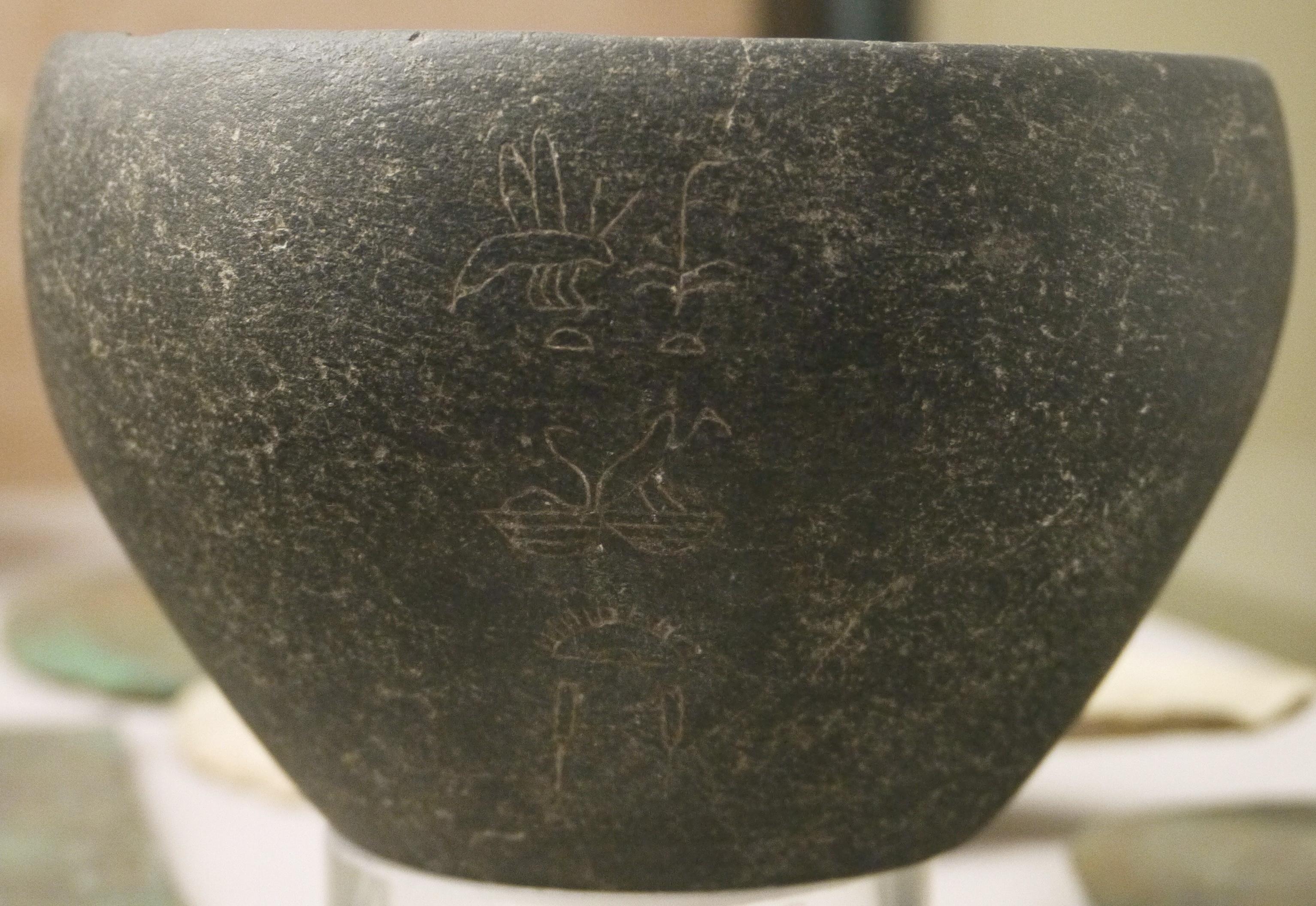
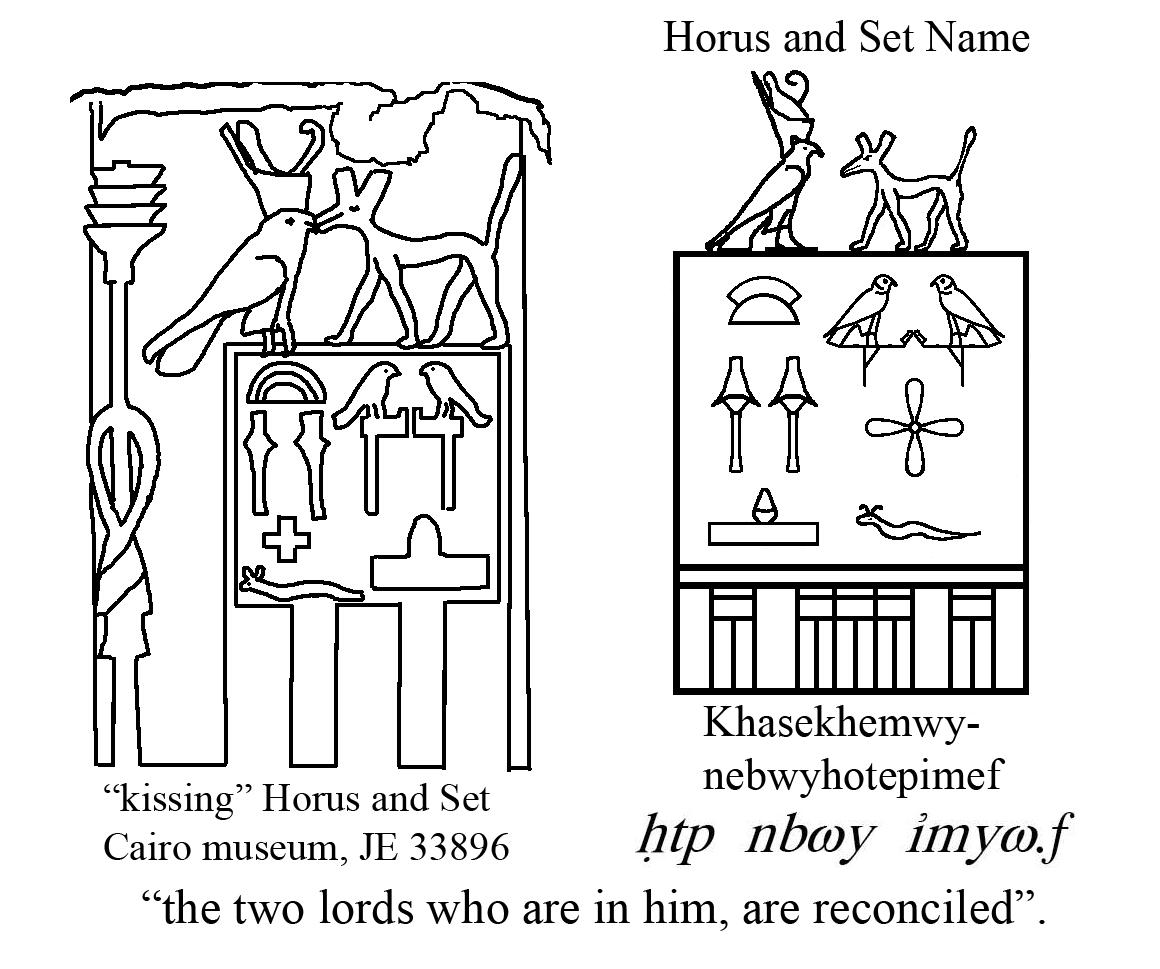
The meaning of his name is particularly interesting because the king's royal identity appears to have been connected with both Horus and Seth.
Earlier in his reign, he may have used the name Khasekhem, meaning something like “The Power Has Appeared.”
Later, he became known as Khasekhemwy.
The addition of -wy, meaning “the two,” is often interpreted as an important reference to two divine powers.
This may have represented a political or religious reconciliation.
However, the exact meaning of the name remains debated.
Egypt Before Khasekhemwy
The Second Dynasty was a complicated period in Egyptian history.
It began with Hotepsekhemwy, followed by Raneb and Nynetjer.
After Nynetjer, several rulers appear in archaeological evidence and later historical traditions.
These include Weneg, Sened, Peribsen, and Sekhemib.
The exact order of these rulers is still debated.
Some evidence suggests that Egypt may have experienced political difficulties during the later part of the dynasty.
The famous change in royal symbolism under Peribsen, who used Seth instead of Horus, has led historians to investigate possible political or religious tensions.
By the time Khasekhemwy came to power, Egypt may have needed stronger central authority.
The Meaning of Khasekhemwy's Name
Khasekhemwy's name is one of the most interesting clues about his reign.
The phrase is often understood as referring to two divine powers.
His royal symbolism included both Horus and Seth at different stages of his reign.
This has traditionally been interpreted as a symbol of reconciliation between the traditions of Horus and Seth.
If the Second Dynasty had experienced political or religious tensions, Khasekhemwy may have presented himself as the ruler capable of restoring unity.
However, there is no definitive evidence proving that his reign followed a literal civil war between two religious factions.
The symbolism may have had a broader religious meaning.
Khasekhemwy and Horus
Horus was one of the most important gods associated with Egyptian kingship.
The king was traditionally identified with Horus during his earthly life.
The falcon of Horus appeared above the royal serekh of many early Egyptian rulers.
This tradition continued throughout pharaonic history.
Khasekhemwy's association with Horus therefore connected him with the traditional concept of divine kingship.
But his relationship with Seth made his royal identity unusual.
Khasekhemwy and Seth
Seth was a powerful and complicated deity.
He was associated with the desert, storms, violence, and dangerous forces.
However, Seth was not simply an evil god.
In some Egyptian traditions, he protected the sun god Ra from his enemies.
He could therefore represent strength, power, and protection.
Khasekhemwy's use of Seth alongside Horus may have represented the king's ability to unite different divine forces.
It may also have reflected the changing religious traditions of the Second Dynasty.
Khasekhemwy and the Unification of Egypt
One of the most important achievements attributed to Khasekhemwy is the restoration of political unity.
An inscription associated with his reign refers to conflict in Lower Egypt.
The king claimed victory over enemies and recorded a large number of defeated people.
The exact nature of this conflict remains uncertain.
However, the evidence suggests that Khasekhemwy was concerned with strengthening royal authority.
His reign appears to have established greater stability after the uncertain decades of the late Second Dynasty.
Evidence of Warfare
Khasekhemwy is one of the earliest Egyptian rulers for whom there is relatively strong evidence of military activity.
Objects associated with his reign mention victories over enemies.
Some inscriptions refer to large numbers of defeated opponents.
These records may indicate that the king fought to restore central authority.
However, numbers recorded in royal inscriptions may have had symbolic or ideological purposes and should not always be interpreted as exact modern statistics.
What is clear is that warfare played an important role in Khasekhemwy's royal image.
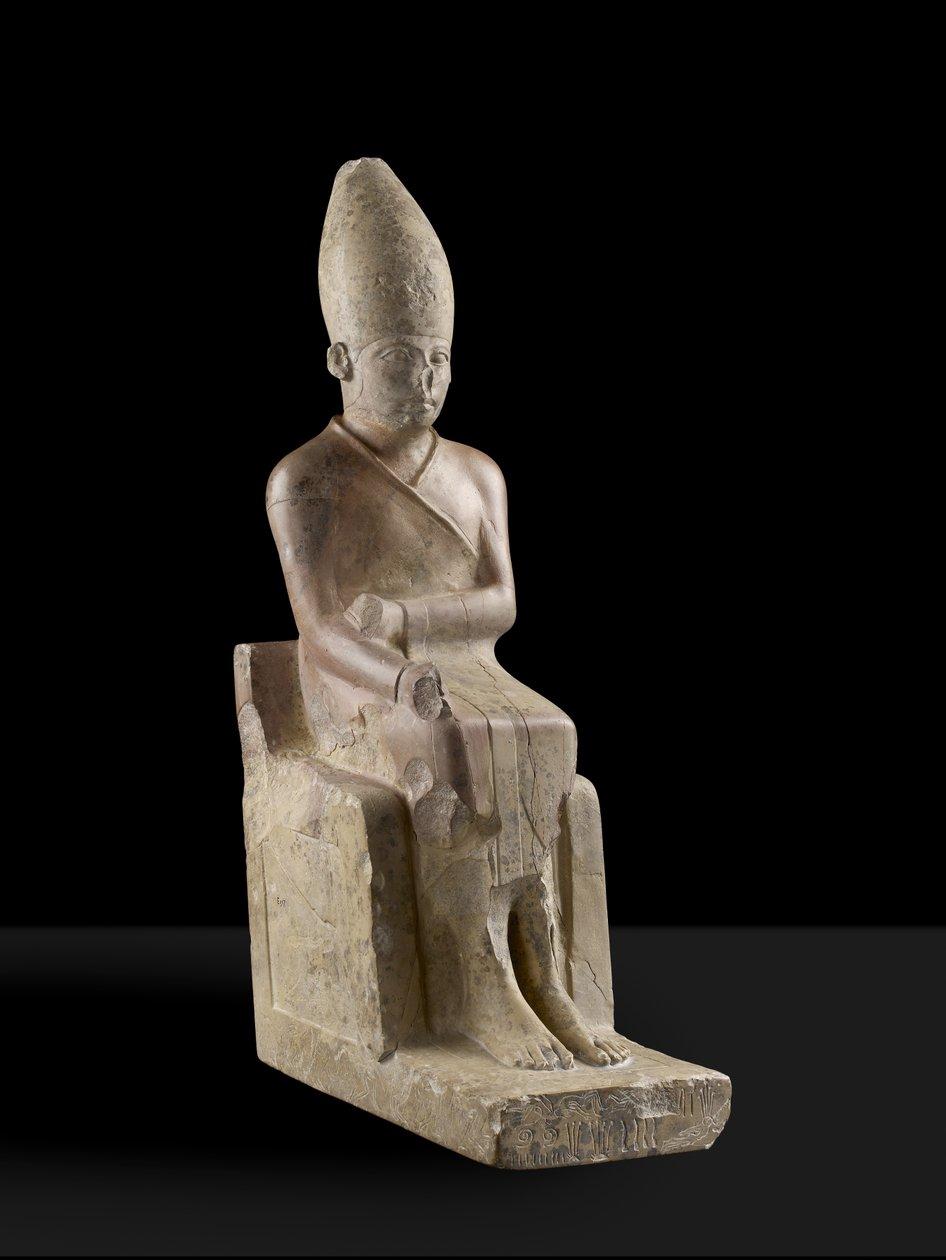
Khasekhemwy's Statue
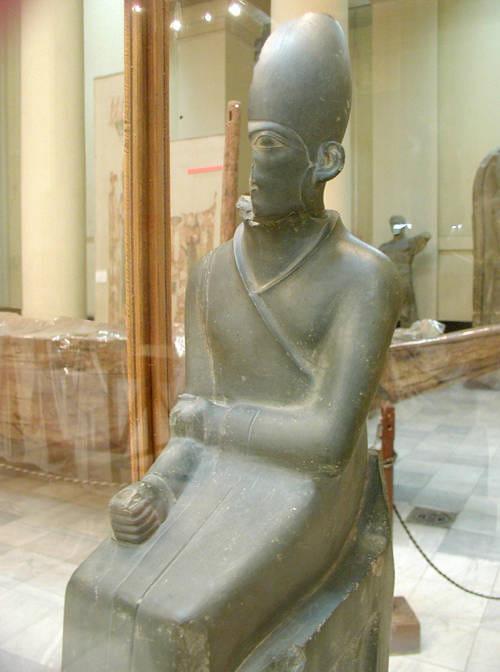
One of the most famous objects associated with Khasekhemwy is a seated stone statue of the king.
The statue is an important example of early Egyptian royal sculpture.
The king is shown seated in a traditional royal pose.
His body and posture communicate stability and authority.
The statue also contains inscriptions that identify the ruler.
Early Egyptian royal statues were not simply portraits.
They had religious purposes.
The image of the king could serve as a permanent representation of his presence.
It could participate symbolically in rituals and offerings.
Khasekhemwy at Abydos
Khasekhemwy was buried at Abydos, one of the most important sacred sites in early Egyptian history.
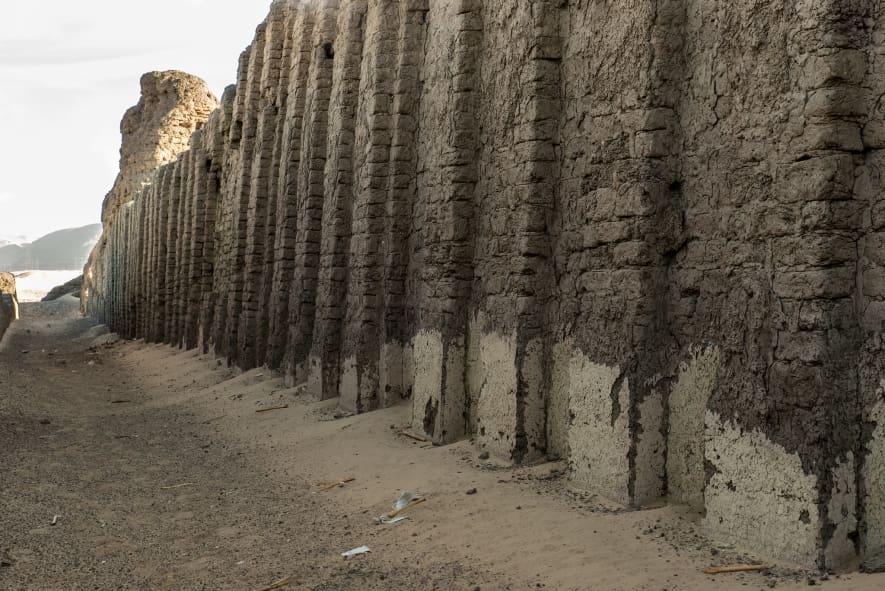
His royal burial complex is associated with the enormous structure known as Shunet el-Zebib.
Shunet el-Zebib is a massive mudbrick enclosure.
It is one of the earliest large monumental structures in Egypt.
The enclosure had thick walls and a complex architectural design.
It was part of the development of royal funerary architecture that would eventually lead to the monumental pyramid complexes of the Old Kingdom.
Shunet el-Zebib
The structure known as Shunet el-Zebib is especially important because of its enormous size.
Its walls were built from mudbrick and included recessed decorative features.
The building probably had ceremonial and funerary functions.
Its design influenced later Egyptian architectural traditions.
The funerary complexes of later kings would become increasingly elaborate.
Khasekhemwy's complex represents an important step in that development.
Khasekhemwy's Tomb
Khasekhemwy's tomb is located at Umm el-Qa'ab, the ancient royal cemetery near Abydos.
The tomb consists of a large underground complex.
The burial complex demonstrates the increasing scale and sophistication of royal funerary architecture.
The tomb contained numerous chambers and storage areas.
These spaces were designed to support the king's burial and afterlife.
Although the tomb was robbed and damaged over the centuries, archaeological evidence has provided important information about early Egyptian royal burial customs.
The Royal Afterlife
Ancient Egyptians believed that the king continued to exist after death.
The deceased ruler required food, offerings, rituals, and protection.
The royal burial complex therefore had religious importance.
The king's body was protected inside the tomb.
Offerings were provided to support his eternal existence.
The funerary enclosure created a ceremonial space where rituals could be performed.
These traditions would eventually become the foundation of the enormous pyramid complexes of the Old Kingdom.
Khasekhemwy's Architecture
Khasekhemwy's reign was important in the development of Egyptian architecture.
Large-scale mudbrick construction required organized labor.
Workers had to manufacture bricks, transport materials, build walls, and maintain supplies.
Administrators had to coordinate the project.
The existence of Shunet el-Zebib demonstrates that the Egyptian state was already capable of organizing enormous construction projects.
This administrative ability would later allow kings to build the pyramids.
The Egyptian Economy
The Egyptian economy was based primarily on agriculture.
The annual Nile flood created fertile soil.
Farmers cultivated wheat, barley, flax, and vegetables.
The government collected agricultural products and redistributed them.
Royal estates supplied food and materials to the palace and religious institutions.
The central government also controlled workshops and trade.
This economic system allowed Khasekhemwy to support soldiers, officials, craftsmen, priests, and construction workers.
Trade During Khasekhemwy's Reign
Egypt continued to obtain resources from neighboring regions.
The Sinai Peninsula provided copper and turquoise.
The Eastern Desert supplied stone and minerals.
Nubia was important for trade and access to southern resources.
Egypt also maintained connections with the eastern Mediterranean.
The ability to organize expeditions demonstrated the strength of the central government.
Trade was especially important for obtaining materials needed for tools, weapons, jewelry, and religious objects.
Khasekhemwy and Egyptian Religion
Religion remained at the center of royal authority.
The pharaoh was expected to maintain maat, the divine order of the universe.
The king performed or sponsored religious rituals.
He supported temples and priests.
He was also responsible for protecting Egypt from chaos.
Khasekhemwy's association with both Horus and Seth may have expressed his role as a ruler capable of controlling opposing forces.
The symbolism would have been particularly powerful during a period of political uncertainty.
The Development of Royal Titles
Khasekhemwy also represents an important stage in the development of Egyptian royal titulary.
Later Egyptian kings would use several formal names, including the Horus name, Nebty name, Golden Horus name, and other titles.
During the Early Dynastic Period, these traditions were still developing.
Khasekhemwy's unusual royal names provide evidence of this evolution.
His combination of divine symbols demonstrates how royal ideology was becoming increasingly sophisticated.
Khasekhemwy and the Third Dynasty
Khasekhemwy was the last king of the Second Dynasty.
After his death, Egypt entered the Third Dynasty.
This transition was one of the most important moments in Egyptian history.
The Third Dynasty produced Djoser, whose Step Pyramid at Saqqara transformed Egyptian architecture.
Djoser's reign is often considered the beginning of the Old Kingdom.
The monumental achievements of the Third Dynasty depended on institutions that had developed during earlier centuries.
Khasekhemwy played an important role in this transition.
The Rise of Djoser
Djoser's Step Pyramid was designed by the famous official and architect Imhotep.
The monument developed from earlier royal tomb traditions.
Instead of constructing a simple mastaba, the builders created a series of stone levels rising toward the sky.
The result was the first great pyramid monument in Egypt.
Khasekhemwy's large mudbrick funerary enclosure at Abydos represents an earlier stage in the development of monumental royal architecture.
Both demonstrate the increasing power of the Egyptian state.
Khasekhemwy's Historical Legacy
Khasekhemwy's legacy is much stronger than that of many rulers of the Second Dynasty.
Several important monuments and artifacts survive from his reign.
His statues demonstrate the development of royal sculpture.
His inscriptions provide evidence of military activity.
His tomb and funerary enclosure reveal the development of royal burial architecture.
His use of both Horus and Seth provides evidence of complex religious ideology.
Most importantly, his reign appears to have strengthened Egyptian political unity.
Why Khasekhemwy Matters
Khasekhemwy matters because he stands at the transition between two major periods of Egyptian history.
He was the final ruler of the Second Dynasty.
After him came the Third Dynasty and the beginning of Egypt's great age of monumental stone architecture.
His reign shows that the Egyptian state had already developed strong administrative, economic, religious, and military institutions.
Without these foundations, the later pyramids and temples would have been impossible.
Khasekhemwy therefore belongs among the important early architects of pharaonic civilization.
Conclusion
Khasekhemwy was the final king of Egypt's Second Dynasty and one of the most significant rulers of the Early Dynastic Period.
His reign appears to have followed a complicated period of political and religious change.
His most famous feature is his unusual association with both Horus and Seth, which may have symbolized the restoration of unity and the combination of powerful divine forces.
He also appears to have conducted military campaigns, strengthened royal authority, and supported major construction projects.
His funerary monument at Abydos, especially the massive mudbrick enclosure known as Shunet el-Zebib, is one of the most important surviving monuments from the Early Dynastic Period.
His royal tomb at Umm el-Qa'ab and surviving statues and inscriptions provide valuable evidence about Egyptian kingship, religion, warfare, administration, and architecture.
After Khasekhemwy's death, Egypt entered the Third Dynasty.
The reign of Djoser and the construction of the Step Pyramid would soon transform Egyptian architecture forever.
Khasekhemwy therefore stands at a critical turning point in Egyptian history.
He belonged to an ancient world still developing its political and religious identity, yet his reign helped establish the stability and centralized authority that allowed Egypt to enter the age of pyramids.
From the mysterious conflicts of the Second Dynasty to the monumental achievements of the Old Kingdom, Khasekhemwy's reign represents the bridge between Egypt's earliest kings and the great pharaonic civilization that followed.