Pharaoh Khaba was one of the most mysterious rulers of ancient Egypt. He lived during the 3rd Dynasty of the Old Kingdom, a period when Egypt was undergoing major changes in architecture, religion, government, and royal power.
Khaba is best known for the unfinished monument called the Layer Pyramid at Zawyet el-Aryan, located between Giza and Saqqara. Although the pyramid was never completed, it provides valuable evidence about the development of Egyptian pyramid architecture and the ambitious building projects of Egypt's early kings.
Compared with famous rulers such as Djoser, Khufu, Hatshepsut, or Ramesses II, very little is known about Khaba. His exact dates of reign, family background, and many details of his political career remain uncertain. Much of his story must therefore be reconstructed from archaeological evidence.
Despite this mystery, Khaba remains an important figure in the history of ancient Egypt.
Who Was Khaba?
Khaba was a king of the 3rd Dynasty, generally placed toward the later part of the dynasty. His exact position in the royal succession is still debated by Egyptologists.
His name, Khaba, is generally interpreted as referring to the appearance or manifestation of the royal soul, although translations of ancient Egyptian names can vary.
Unlike later pharaohs, Khaba left very few inscriptions describing his reign. His name has been found mainly on stone vessels and archaeological objects.
These objects are important because they confirm that Khaba was a historical king and help place him within Egypt's early Old Kingdom.
The lack of written evidence has created many unanswered questions.
Historians do not know exactly how long Khaba ruled. Some estimates suggest that his reign was relatively short, while other interpretations allow for a somewhat longer period.
His relationship with the rulers before and after him is also uncertain.
Nevertheless, his architectural project provides one of the strongest clues about his reign.
Egypt During the 3rd Dynasty
Khaba lived during one of the most important periods in ancient Egyptian history.
The 3rd Dynasty marked the beginning of a new era of monumental stone architecture.
Before this period, Egyptian kings were generally buried in rectangular tombs called mastabas.
During the reign of Djoser, Egyptian architects transformed this tradition.
Djoser's famous Step Pyramid at Saqqara became the first large-scale pyramid in Egypt and demonstrated that stone could be used to create enormous royal monuments.
The achievement represented a major development in Egyptian engineering.
After Djoser, Pharaoh Sekhemkhet began another stepped pyramid at Saqqara.
Khaba appears to have continued this period of experimentation.
His own pyramid was built using a different architectural technique, showing that Egyptian builders were still searching for the most effective way to construct monumental pyramids.
The Layer Pyramid of Khaba
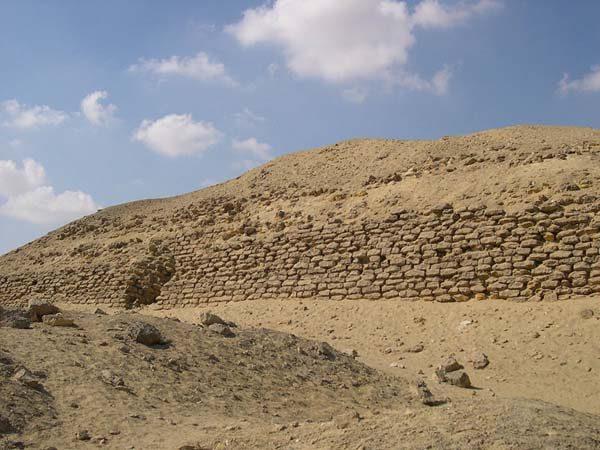
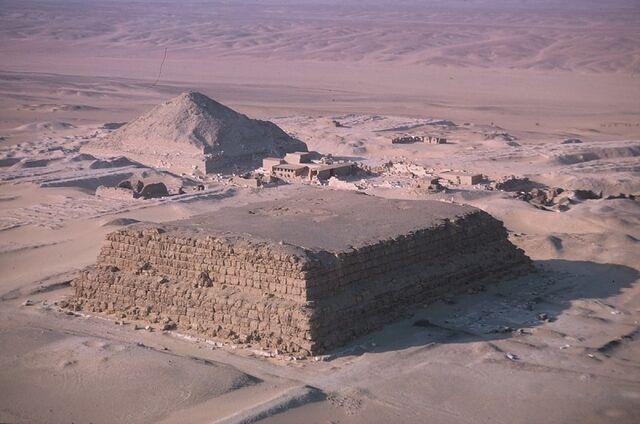
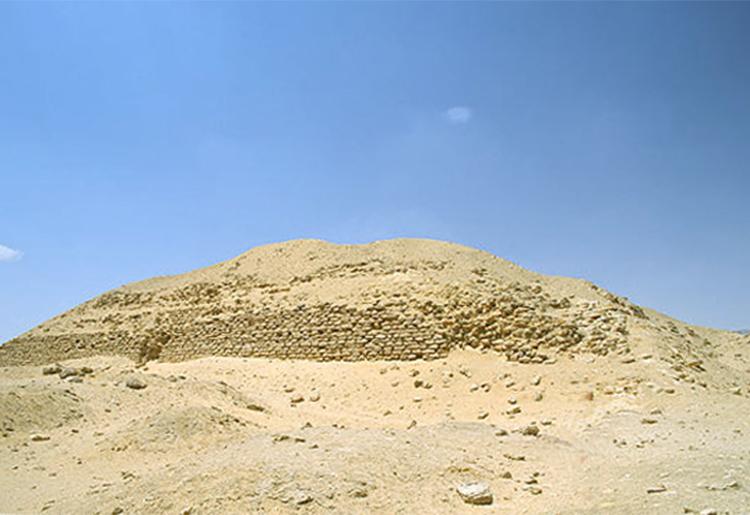
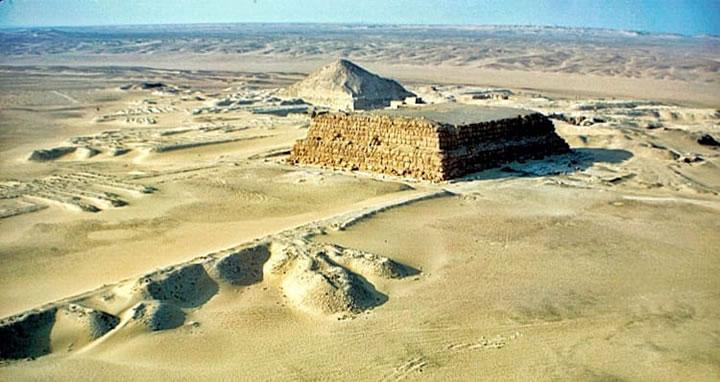
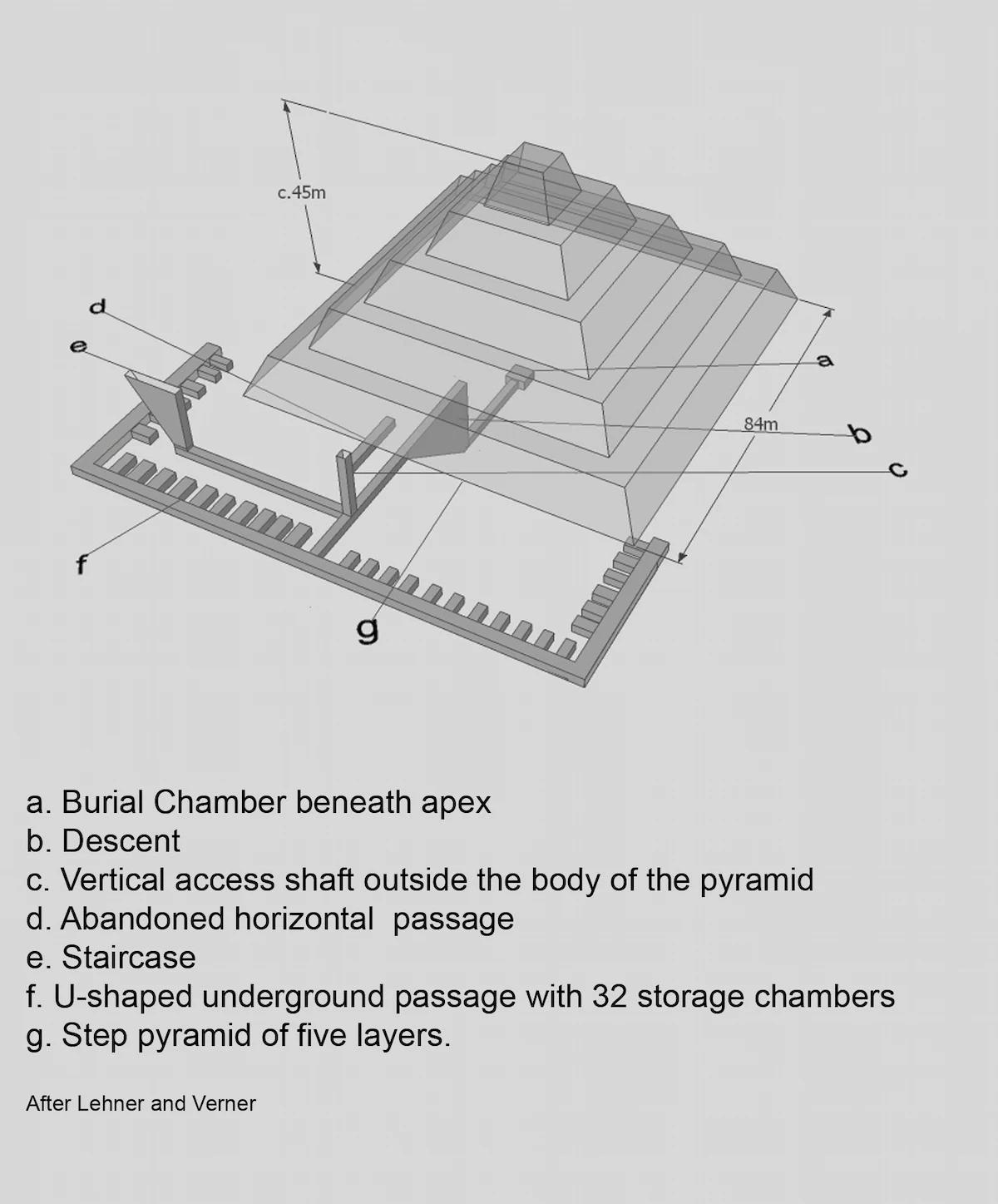
Khaba's most important monument is the Layer Pyramid at Zawyet el-Aryan.
The pyramid receives its modern name from its unusual construction.
Instead of using the smooth outer surfaces seen on later pyramids, the monument appears to have been built from layers of stone arranged in a distinctive manner.
The structure was never completed.
Only part of the original monument survives today, making it difficult to determine exactly how high it was intended to become.
Some Egyptologists believe it was planned as a stepped pyramid similar to Djoser's monument.
Others have emphasized its unusual construction technique and its importance as an experiment in pyramid design.
Whatever its intended final appearance, the Layer Pyramid represents an important stage in the development of Egyptian royal architecture.
Why Was the Pyramid Unfinished?
One of the greatest mysteries surrounding Khaba is why his pyramid was abandoned.
The most common explanation is that Khaba's reign was too short to allow the monument to be completed.
Building a royal pyramid was an enormous undertaking.
Stone had to be quarried, shaped, transported, and carefully positioned.
Workers needed food, tools, housing, and organization.
Engineers and architects had to design both the pyramid and its underground burial chambers.
A large royal complex could require many years or even decades of work.
If Khaba died early, construction may have stopped before the pyramid reached its planned size.
Another possibility is that political or administrative changes affected the project.
Ancient Egypt's monumental construction depended heavily on the strength and stability of the royal government.
A change in succession could therefore lead to the abandonment of an unfinished monument.
Unfortunately, no surviving text provides a definite explanation.
The Underground Chambers
Beneath the Layer Pyramid lies an underground complex containing passages and chambers.
These structures were connected with the king's intended burial.
The burial chamber was designed to protect the pharaoh's body and support his journey into the afterlife.
The underground architecture demonstrates the technical abilities of Egyptian builders during the 3rd Dynasty.
Although the pyramid itself was unfinished, its underground sections show that the architects were already capable of creating complex subterranean structures.
The design also reflects the religious importance of royal burial.
Ancient Egyptians believed that the pharaoh continued to exist after death.
The tomb was therefore an essential part of the king's eternal existence.
The Missing Burial
One of the most important mysteries is whether Khaba was ever buried inside the pyramid.
No confirmed royal mummy has been discovered there.
This has led to several theories.
Khaba may have died before construction was complete, meaning that his burial took place somewhere else.
The pyramid may have been abandoned before it was ready for its religious purpose.
The burial could also have been disturbed in antiquity.
Ancient royal tombs were attractive targets for looters because they often contained valuable objects.
After thousands of years, it is extremely difficult to determine exactly what happened.
The absence of a confirmed burial means that Khaba's final resting place remains unknown.
Khaba and Ancient Egyptian Religion
Religion was at the heart of Egyptian royal life.
The pharaoh was considered a divine ruler and was responsible for maintaining maat, the cosmic order that kept the universe in balance.
After death, the king was expected to continue his existence in the divine realm.
Pyramids were therefore more than enormous tombs.
They were religious monuments designed to support the king's transition into the afterlife.
The pyramid's upward form may have represented the king's ascent toward the heavens and his connection with the gods.
The surrounding funerary complex would have provided spaces for rituals, offerings, and the continued worship of the deceased king.
Although Khaba's monument was never completed, its design reflects the same religious ideas that shaped the other royal pyramids of the Old Kingdom.
Khaba and Djoser
Khaba's monument must be understood as part of the architectural tradition established by Djoser.
Djoser's Step Pyramid was a revolutionary achievement.
It transformed the traditional mastaba into a monumental stepped structure and established a new model for royal funerary architecture.
Khaba lived only a few generations later, during a period when Egyptian architects were still experimenting with this new concept.
The similarities between Djoser's monument and Khaba's pyramid demonstrate the continuation of the stepped-pyramid tradition.
At the same time, the differences in construction show that architects were testing alternative techniques.
This experimentation was essential for the later development of the smooth-sided pyramid.
The Road Toward the Pyramids of Giza
The pyramids of Giza did not appear suddenly.
They were the result of generations of architectural experimentation.
Djoser's Step Pyramid represented the first major breakthrough.
Sekhemkhet continued the stepped-pyramid tradition.
Khaba experimented with the Layer Pyramid.
Later rulers developed new approaches.
The most important of these rulers was Sneferu, who built several pyramids at Dahshur, including the Bent Pyramid and the Red Pyramid.
The Red Pyramid is generally regarded as one of the earliest successful examples of a true smooth-sided pyramid.
The architectural knowledge gained during these experiments eventually contributed to the construction of the Great Pyramid of Khufu at Giza.
Khaba's unfinished monument therefore represents one of the early stages in a long architectural evolution.
The Archaeological Importance of Zawyet el-Aryan
The location of Khaba's pyramid is significant.
Zawyet el-Aryan lies between Giza and Saqqara, within the broader landscape of ancient Egyptian royal cemeteries near Memphis.
The region contains some of Egypt's most important archaeological sites.
Giza became famous for the pyramids of Khufu, Khafre, and Menkaure.
Saqqara contains the Step Pyramid of Djoser and numerous other royal monuments.
Dahshur contains the pyramids of Sneferu and other Middle Kingdom rulers.
Zawyet el-Aryan adds another important chapter to this landscape.
Although it is less famous than Giza or Saqqara, its Layer Pyramid provides valuable information about the early development of Egyptian pyramid construction.
The Discovery and Study of Khaba's Monument
For thousands of years, much of Khaba's pyramid remained buried and damaged by the passage of time.
Modern archaeological investigations eventually revealed the importance of the site.
Researchers studied the surviving stonework, underground chambers, and surrounding landscape.
The unfinished state of the monument made it especially useful for understanding ancient construction methods.
Archaeologists could examine the structure as an incomplete project rather than simply studying the finished remains of a later pyramid.
This allowed researchers to better understand how early Egyptian builders planned and constructed large stone monuments.
Khaba's Historical Importance
Khaba may have left behind few written records, but his monument provides important evidence about the development of the Egyptian state.
A project as ambitious as a pyramid required enormous resources.
Stone had to be extracted from quarries and transported to the construction site.
Workers had to be organized and supplied with food and equipment.
Architects, engineers, craftsmen, administrators, and religious officials all had important roles.
The Layer Pyramid therefore demonstrates that Egypt already possessed a sophisticated centralized administration during the 3rd Dynasty.
It also shows the enormous importance of the pharaoh and royal religion.
The Mystery of Khaba
Perhaps the most fascinating part of Khaba's story is the amount of information that has been lost.
We do not know exactly how long he ruled.
We do not know exactly where he was buried.
We know little about his family.
There are no detailed records of military campaigns or major political achievements.
His pyramid was never completed.
Yet these unanswered questions make Khaba one of the most intriguing kings of early Egypt.
His story must be reconstructed from archaeological fragments rather than a continuous historical record.
A royal name carved on a vessel, an unfinished pyramid, underground chambers, and architectural remains are the pieces from which historians attempt to rebuild his story.
Khaba's Legacy
Khaba's legacy is primarily architectural.
His Layer Pyramid represents an important stage in the evolution of Egyptian pyramids.
It demonstrates that the architects of the 3rd Dynasty were experimenting with different construction techniques as they searched for better ways to build monumental royal tombs.
Although the pyramid remained unfinished, it contributed to the broader tradition that eventually produced the pyramids of Dahshur and Giza.
Khaba's monument also reminds us that ancient Egyptian civilization was not built through the achievements of a few famous kings alone.
Many lesser-known rulers contributed to the development of architecture, administration, religion, and engineering.
Khaba was one of those rulers.
His monument may not be as impressive today as the Great Pyramid, but it represents an important step in the process that made the Great Pyramid possible.
Conclusion
Khaba was a mysterious pharaoh of Egypt's 3rd Dynasty whose reign belongs to one of the most important periods in ancient Egyptian history.
His name is closely associated with the Layer Pyramid at Zawyet el-Aryan, an unfinished royal monument that provides valuable evidence about early pyramid construction.
Although historians know little about Khaba's personal life or political achievements, his monument tells us much about the world in which he lived.
It reveals the ambition of Egypt's early kings, the technical abilities of its architects, and the importance of religion and royal burial.
The unfinished pyramid also demonstrates that the development of Egyptian architecture was a gradual process.
Djoser introduced the monumental Step Pyramid.
Sekhemkhet continued the tradition.
Khaba experimented with another form.
Sneferu later developed the true smooth-sided pyramid.
Finally, the great pyramids of Giza demonstrated the extraordinary achievements of Old Kingdom Egypt.
Khaba therefore deserves a place in the story of ancient Egypt, even though his reign remains surrounded by mystery.
His unfinished pyramid is a reminder that history is not only preserved in magnificent monuments. Sometimes, an unfinished structure can reveal just as much about a civilization as a completed masterpiece.
More than 4,500 years after Khaba's reign, the remains of his pyramid at Zawyet el-Aryan continue to preserve the memory of a mysterious king and an important chapter in the evolution of Egyptian architecture.
Khaba may have left behind an unfinished pyramid, but he also left behind a lasting piece of the story that eventually created the pyramids of ancient Egypt.