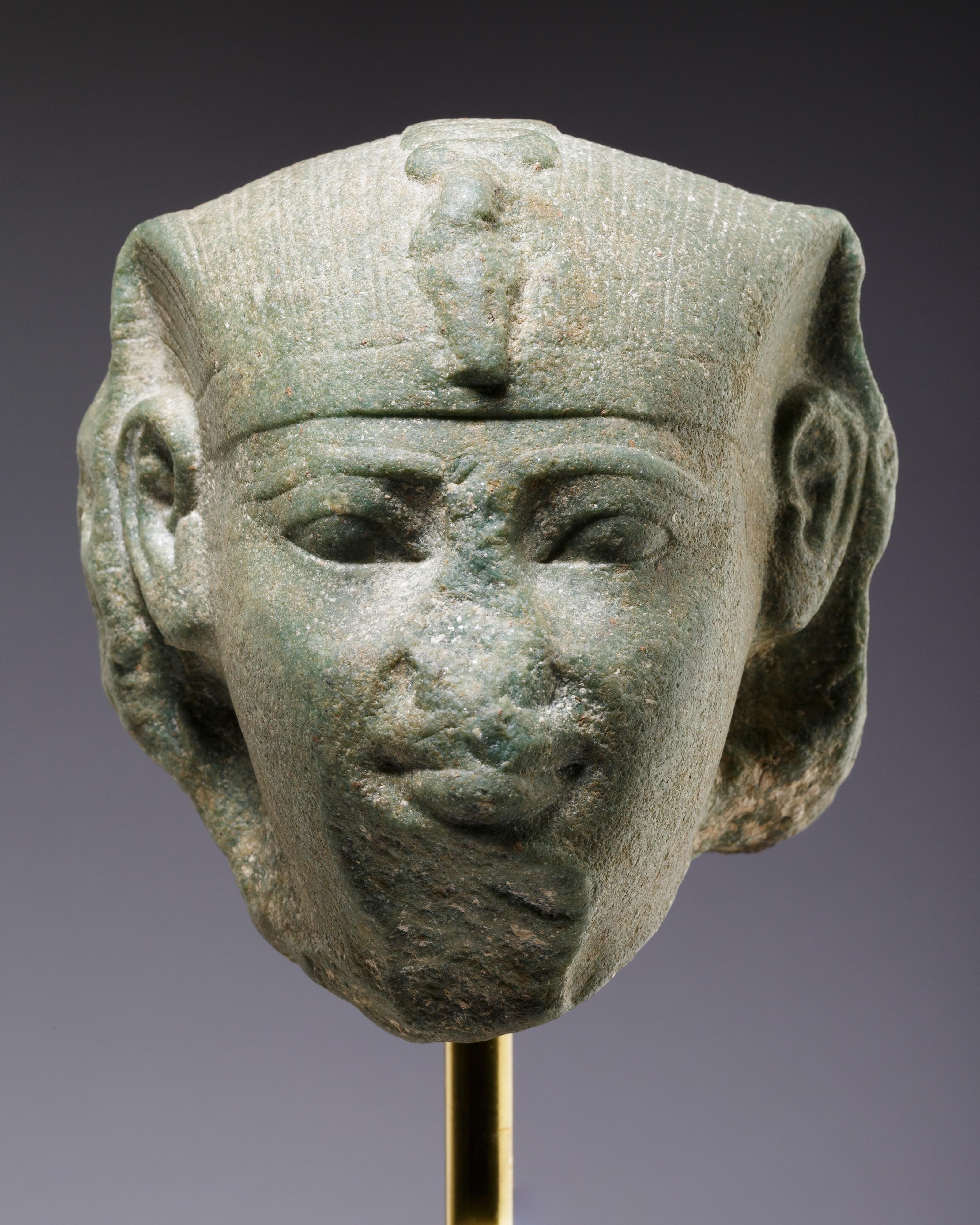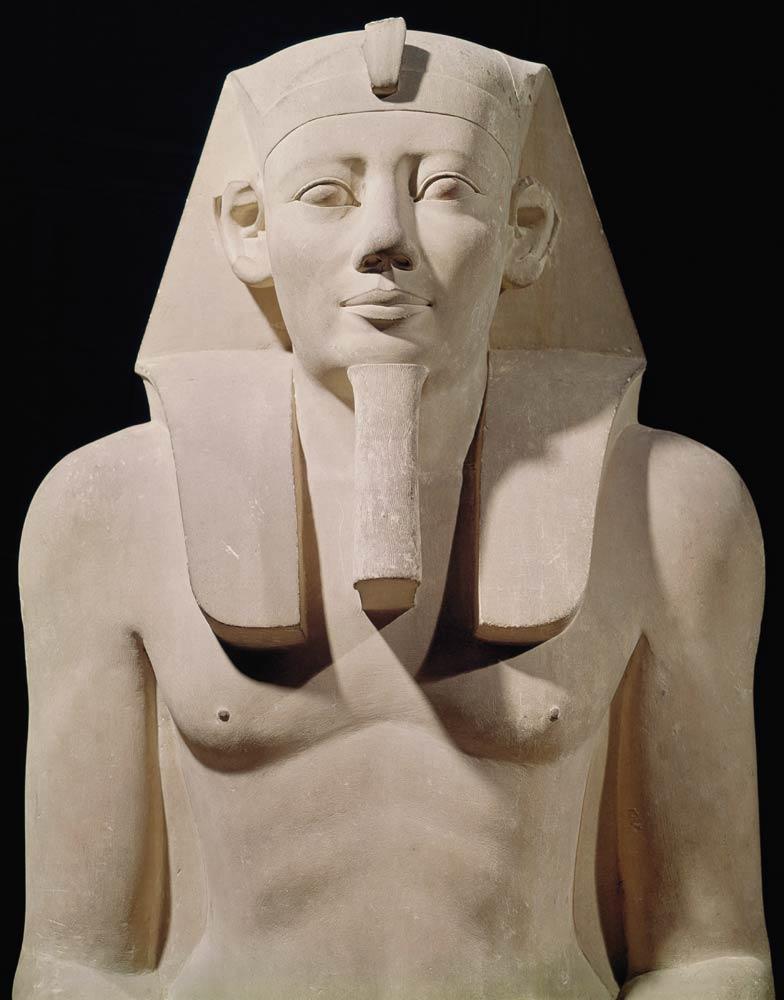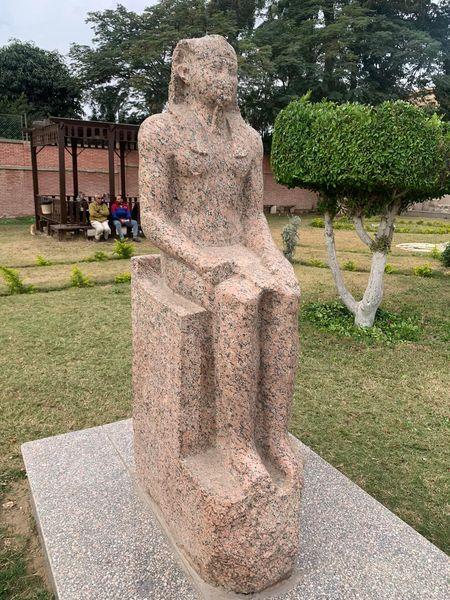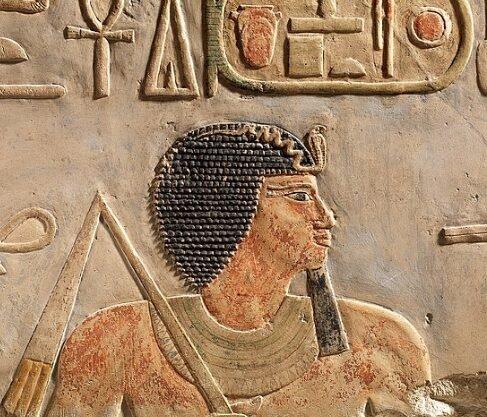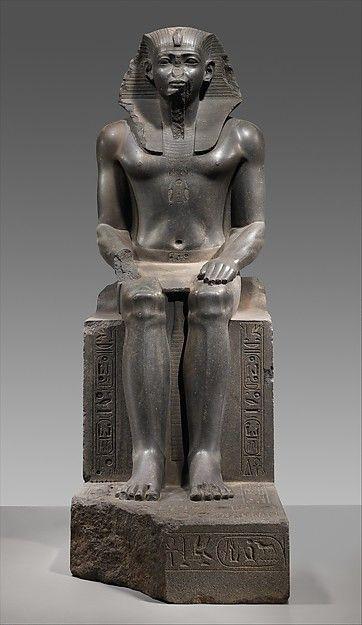
Amenemhat I was one of the most important pharaohs of ancient Egypt and the founder of the Twelfth Dynasty, one of the most successful royal dynasties of the Middle Kingdom. He came to power after the short reign of Mentuhotep IV and transformed Egypt's political system, strengthened royal authority, reorganized the administration, and established a new royal center in northern Egypt.
His reign marked the beginning of a new chapter in Egyptian history.
Amenemhat I inherited a country that had been reunited only a few generations earlier. His predecessor, Mentuhotep II, had ended the First Intermediate Period by defeating the rival rulers of northern Egypt and restoring national unity. Mentuhotep III and Mentuhotep IV continued to strengthen the kingdom through trade, quarrying, and desert expeditions.
Amenemhat I built upon these achievements and created a more centralized and powerful state.
He is remembered not only as a successful king but also as a ruler who understood the importance of political stability. He moved the royal residence away from the traditional Theban center and established a new capital in the region of Itjtawy, near the entrance to the Faiyum.
His reign also introduced an important political innovation: the practice of co-regency, in which he eventually shared the throne with his son, Senusret I. This helped ensure a smooth succession and became an important feature of Twelfth Dynasty government.
Amenemhat I's story is one of political transformation, military strength, economic development, architectural ambition, and royal survival.
Egypt Before Amenemhat I
Before Amenemhat I came to power, Egypt had experienced centuries of political change.
The Old Kingdom had collapsed.
The First Intermediate Period had divided the country.
Thebes eventually emerged as a powerful center in Upper Egypt.
The rulers of the Eleventh Dynasty fought for generations to defeat their northern rivals.
Mentuhotep II finally reunited Egypt.
This created the Middle Kingdom.
But reunification did not eliminate every political problem.
Local governors still possessed significant influence.
The royal government needed to prevent Egypt from becoming divided again.
Amenemhat I understood this challenge.
His reign would focus heavily on strengthening centralized royal authority.
The Rise of Amenemhat
The origins of Amenemhat I are somewhat mysterious.
He does not appear to have been a direct descendant of Mentuhotep II.
He may have come from a powerful family in Upper Egypt.
His mother is sometimes identified in inscriptions as Nofret, and his family may have had connections with the region of Elephantine.
Before becoming king, Amenemhat appears to have been an important official.
His involvement in the final years of Mentuhotep IV is suggested by inscriptions from the Wadi Hammamat expedition.
This makes his rise particularly interesting.
He was not simply an unknown outsider.
He was already a powerful member of the Egyptian administration.
The End of the Eleventh Dynasty
When Mentuhotep IV died, Amenemhat became king.
The circumstances surrounding the transition remain uncertain.
Some historians have suggested that Amenemhat may have taken power during a period of political uncertainty.
However, there is no conclusive evidence that he violently overthrew his predecessor.
What is clear is that Amenemhat successfully established himself as king and founded a new dynasty.
The Twelfth Dynasty had begun.
A New Royal Dynasty
The Twelfth Dynasty would become one of the greatest dynasties in Egyptian history.
Its kings included Amenemhat I, Senusret I, Amenemhat II, Senusret II, Senusret III, and Amenemhat III.
These rulers created a highly organized state.
They expanded Egypt's influence.
They developed agriculture.
They constructed temples and fortresses.
They controlled Nubia.
They expanded trade.
They supported literature and the arts.
The foundations for this success were established by Amenemhat I.
Moving the Capital
One of Amenemhat I's most important decisions was establishing a new royal residence.
The traditional political center of the Eleventh Dynasty had been Thebes.
Amenemhat moved the royal court toward the north.
The new capital is generally known as Itjtawy, although its exact archaeological location has not been definitively identified.
It was probably located near the Faiyum region.
This decision was politically strategic.
It placed the king closer to both Upper and Lower Egypt.
It also reduced the political dominance of Thebes.
Why the New Capital Was Important
The location of the new capital was highly significant.
Egypt was a long country.
A king ruling from the far south could have difficulty maintaining direct control over the Delta.
By moving the royal residence northward, Amenemhat placed the monarchy closer to the geographic center of Egypt.
The new capital also provided access to important agricultural regions.
This strengthened royal administration.
Controlling the Nomarchs
One of Amenemhat I's major political goals was reducing the independence of provincial governors.
During the First Intermediate Period, local officials had become powerful enough to challenge central authority.
Amenemhat wanted to prevent this from happening again.
He reorganized the administration.
Royal officials were given greater authority.
The central government became more involved in provincial affairs.
Local elites remained important, but their independence was increasingly limited.
Strengthening the Monarchy
Amenemhat I developed a powerful image of himself as a restorer of order.
Egyptian kingship was based on the concept of maat.
Maat represented truth, justice, balance, and cosmic order.
A successful king was expected to maintain maat.
Amenemhat presented himself as the ruler who restored stability after a period of political uncertainty.
This message appears in several literary works associated with his dynasty.
The Prophecy of Neferti
One famous Middle Kingdom literary text is known as the Prophecy of Neferti.
The story describes a period of disorder and predicts the arrival of a king named Ameny who will restore Egypt.
Many scholars interpret Ameny as a fictionalized reference to Amenemhat I.
The text therefore served as political literature supporting the legitimacy of the new dynasty.
It presented Amenemhat as the king destined to rescue Egypt from disorder.
The Instruction of Amenemhat
Another famous literary work is the Instructions of Amenemhat.
The text is presented as advice from the deceased king to his son and successor.
It describes the dangers of royal life and warns the next ruler about trusting powerful individuals.
The work was probably composed after Amenemhat's death, but it became an important piece of Middle Kingdom literature.
It provides insight into how later Egyptians imagined the political challenges of kingship.
A Warning About Trust
The Instructions of Amenemhat contains a particularly important theme: the danger of trusting people too much.
This theme may have been inspired by a real event.
Amenemhat I was assassinated late in his reign.
The literary text describes betrayal within the palace and warns the king's successor to remain vigilant.
Although the exact historical details are uncertain, the story suggests that royal security was a serious concern.
The Assassination of Amenemhat I
According to the narrative tradition, Amenemhat I was murdered while his son and heir, Senusret, was away with the army.
The assassins apparently entered the palace at night.
The king was killed before his guards could protect him.
The story is one of the most dramatic royal assassination accounts in Egyptian literature.
However, historians cannot confirm every detail.
The literary text was created to teach political lessons and legitimize Senusret I.
Still, Amenemhat's death appears to have involved violence.
The Co-Regency With Senusret I
Before his death, Amenemhat I had appointed his son Senusret I as co-regent.
This was an extremely important political innovation.
The father and son ruled together for a period.
The purpose was to ensure that Senusret would immediately succeed Amenemhat.
This reduced the possibility of political instability after the king's death.
The system worked.
When Amenemhat died, Senusret became king and continued the dynasty.
Senusret I
Senusret I became one of the most successful kings of the Middle Kingdom.
He continued his father's policies.
He strengthened Egypt's southern frontier.
He expanded royal construction.
He developed temples.
He maintained centralized administration.
The stability of his succession demonstrates the effectiveness of Amenemhat's co-regency system.
Military Policy
Amenemhat I faced security challenges on several fronts.
The borders of Egypt needed protection.
The Eastern Desert contained important trade routes.
Nubia was strategically and economically valuable.
The western desert also required attention.
Amenemhat strengthened Egypt's military organization.
Nubia
One of Amenemhat's most important foreign policy priorities was Nubia.
Nubia contained valuable resources, including gold.
It also provided access to trade routes leading deeper into Africa.
Egyptian rulers wanted to secure the southern frontier.
Amenemhat I expanded Egyptian influence in Nubia.
Later Twelfth Dynasty rulers would develop an extensive system of fortresses along the region.
The Southern Frontier
The Egyptian government established defensive positions and controlled important routes.
These measures protected Egypt from potential attacks and allowed the government to supervise trade.
Nubia became increasingly integrated into Egypt's economic and military strategy.
Amenemhat laid the foundations for this expansion.
The Eastern Desert
The Eastern Desert remained important for trade and quarrying.
Egyptians traveled through routes such as Wadi Hammamat.
They obtained valuable stone.
They also reached Red Sea ports.
Amenemhat continued the expeditionary traditions of the Eleventh Dynasty.
Trade With Punt
Egyptian rulers remained interested in the distant land of Punt.
Punt was associated with luxury goods, especially incense and aromatic products.
Trade with distant regions strengthened the wealth and prestige of the Egyptian state.
Amenemhat's government continued efforts to maintain Egypt's connections with the Red Sea.
Economic Reforms
Amenemhat I strengthened the economy through centralized administration.
Agriculture remained the foundation.
The government monitored land and taxation.
Royal officials managed labor.
Resources were redirected toward construction and military projects.
The improved stability of the kingdom allowed the economy to grow.
The Faiyum
The Faiyum region became increasingly important during the Middle Kingdom.
It was a fertile area connected to the Nile through a natural channel.
Later Twelfth Dynasty rulers would transform the region through major agricultural and irrigation projects.
Amenemhat I helped establish the political foundations for this development.
Building Projects
Amenemhat I sponsored many construction projects.
Temples were restored.
New monuments were built.
Royal architecture expanded.
Stone was transported from distant quarries.
These projects demonstrated the strength of the new dynasty.
The Pyramid of Amenemhat I
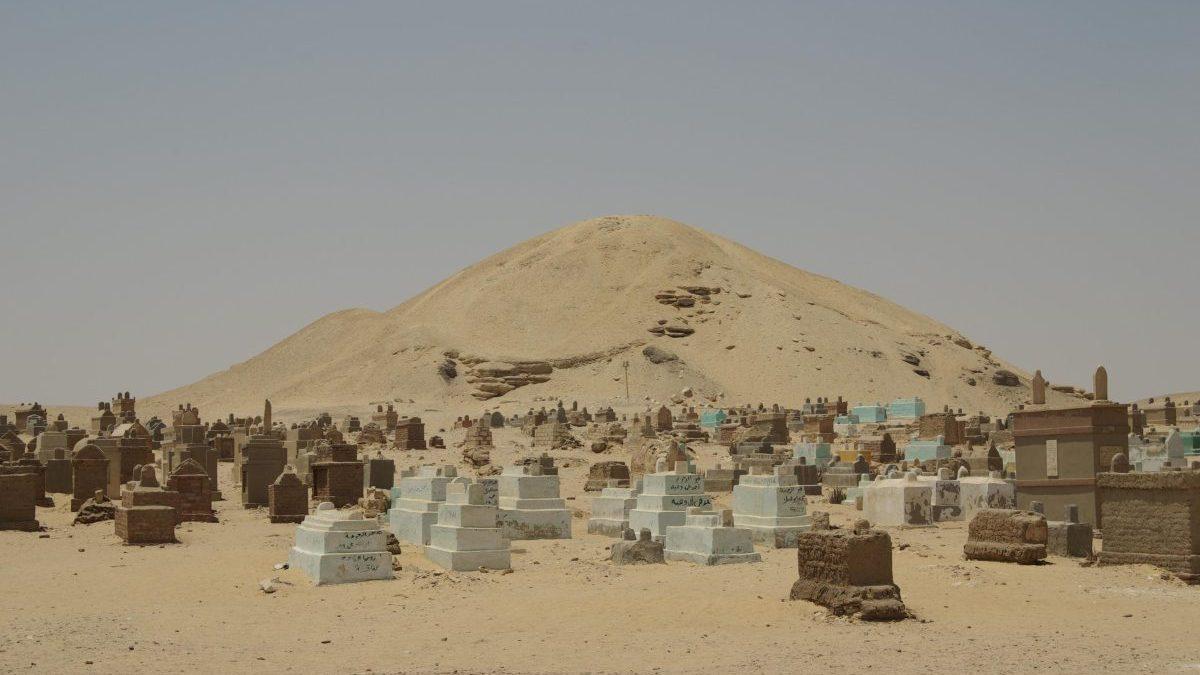
Amenemhat I built his royal pyramid at Lisht, near the new royal center.
The pyramid itself was not as large as the pyramids of the Old Kingdom.
However, it represented an important return to pyramid building.
The Middle Kingdom kings revived the pyramid tradition while adapting it to new architectural and religious ideas.
The Pyramid Complex at Lisht
The pyramid complex included a mortuary temple and other structures.
The location was strategically important because it was close to the new royal residence.
The complex demonstrated Amenemhat's desire to establish a permanent royal presence in the north.
Lisht later became an important royal cemetery for the Twelfth Dynasty.
Reusing Old Monuments
Amenemhat I and later Middle Kingdom kings sometimes reused stone blocks from earlier monuments.
Some blocks incorporated inscriptions and reliefs from Old Kingdom temples.
This practice was partly practical but also had symbolic meaning.
By incorporating ancient royal monuments into their own buildings, Middle Kingdom rulers connected themselves with Egypt's glorious past.
Royal Ideology
Amenemhat presented himself as both a warrior and a protector.
He emphasized order.
He emphasized strength.
He emphasized the restoration of Egyptian greatness.
The king was portrayed as someone who could protect Egypt from enemies and maintain prosperity.
This became a central theme of Twelfth Dynasty royal ideology.
Art Under Amenemhat I
Middle Kingdom art developed a distinctive style.
Royal statues became more individualized than some earlier representations.
Kings could appear serious and thoughtful.
Faces sometimes showed signs of age and responsibility.
This differed from the idealized youthful images common in earlier periods.
Amenemhat's representations helped establish this new royal artistic tradition.
Literature and Culture
The Twelfth Dynasty became famous for its literature.
Works such as The Tale of Sinuhe, The Instructions of Amenemhat, and other Middle Kingdom texts became classics of Egyptian literature.
The development of literature reflected the intellectual strength of the period.
Scribes were highly respected.
Writing became an important tool for administration, religion, and storytelling.
The Tale of Sinuhe
The Tale of Sinuhe is one of the most famous works of Egyptian literature.
The story begins after the death of Amenemhat I.
Sinuhe, a royal official, flees Egypt after hearing about the king's death.
He spends many years abroad before eventually returning.
The story explores themes of loyalty, identity, exile, kingship, and the longing for one's homeland.
It also provides a glimpse into the political world created by Amenemhat's dynasty.
The Importance of Scribes
Scribes were essential to the Middle Kingdom government.
They recorded taxes.
They managed agricultural production.
They documented royal expeditions.
They maintained administrative records.
They worked in temples and palaces.
The centralized government created by Amenemhat I required a large and highly organized bureaucracy.
Everyday Egyptian Life
For ordinary Egyptians, the Nile remained the center of life.
Farmers cultivated wheat and barley.
Fishermen caught fish.
Craftsmen worked with wood, stone, metal, and clay.
Women managed households and participated in economic activities.
Merchants transported goods.
The stability of the Middle Kingdom provided a relatively secure environment for communities.
The Role of the Army
The army became increasingly important during the Twelfth Dynasty.
Soldiers guarded Egypt's borders.
They accompanied mining and quarrying expeditions.
They protected trade routes.
They participated in campaigns against foreign enemies.
Amenemhat I strengthened the military system that later kings would expand.
The Libyan Frontier
The western frontier also required protection.
Groups from the Libyan desert could threaten settlements and trade routes.
Amenemhat's government worked to strengthen Egypt's western defenses.
His policies reflected a broader strategy of controlling the country's borders.
The Northern Delta
The Nile Delta was especially important.
It was fertile.
It was densely populated.
It provided access to the Mediterranean.
It also faced potential threats from foreign groups.
By moving the royal residence northward, Amenemhat could supervise the Delta more effectively.
A Stronger Central State
The central achievement of Amenemhat I was the creation of a stronger centralized state.
The king controlled major economic resources.
The bureaucracy became more powerful.
Provincial governors were increasingly supervised.
The army became more organized.
Royal construction increased.
The state was becoming more efficient.
His Relationship With the Gods
Amenemhat's legitimacy depended on religion.
The king was believed to rule by divine authority.
Temples received offerings.
Priests performed rituals for the gods.
The king was responsible for maintaining maat.
Amenemhat's religious policies helped establish the legitimacy of the new dynasty.
His Relationship With Amun
Although Amun would become overwhelmingly important during the New Kingdom, his connection with royal power was already developing.
Thebes remained an important religious center.
Amenemhat did not abandon the city's religious traditions.
Instead, he balanced Theban traditions with the political importance of the north.
The End of His Reign
Amenemhat I ruled for approximately three decades.
His long reign gave him enough time to establish his political system.
Near the end of his reign, he appointed Senusret I as co-regent.
This decision ensured that the dynasty would continue after his death.
The Death of the King
Amenemhat I died around the beginning of the twentieth century BC.
The exact circumstances remain uncertain.
The Instructions of Amenemhat describes his assassination.
Whether every detail is historically accurate is unknown.
But the story became one of the most influential royal narratives in Egyptian literature.
Senusret Takes the Throne
Because Senusret I was already co-regent, the succession was relatively smooth.
He immediately became king.
He continued his father's policies.
This was one of Amenemhat's greatest political achievements.
He had created a system capable of surviving the death of the king.
Amenemhat's Historical Legacy
Amenemhat I transformed Egypt.
He founded the Twelfth Dynasty.
He strengthened central authority.
He reduced provincial independence.
He moved the royal residence toward the north.
He strengthened the military.
He expanded Egyptian influence in Nubia.
He supported trade.
He developed the Faiyum region.
He sponsored monumental architecture.
He established a successful succession system.
His policies created the foundations for one of Egypt's greatest periods.
Why Amenemhat I Was So Important
Amenemhat I was not simply the founder of a new dynasty.
He was a political reformer.
He understood the dangers of division.
He understood the importance of controlling powerful provincial elites.
He understood the value of a strong military.
He understood the importance of succession planning.
His reign transformed the Middle Kingdom into a more centralized and sophisticated state.
Conclusion
Amenemhat I was one of the most influential kings of ancient Egypt.
He became king at a critical moment.
The Eleventh Dynasty had reunited Egypt, but the country still needed a stronger political structure.
Amenemhat I provided that structure.
He founded the Twelfth Dynasty and created a centralized government capable of controlling the entire country.
One of his most important decisions was moving the royal residence away from Thebes and establishing a new capital known as Itjtawy.
This strengthened royal control over both Upper and Lower Egypt and placed the monarchy closer to the economic heart of the country.
Amenemhat also worked to reduce the independence of provincial governors.
The experience of the First Intermediate Period had shown how dangerous a weak central government could be.
He therefore strengthened royal officials and created a more organized bureaucracy.
Military power was another major part of his reign.
Amenemhat expanded Egyptian influence in Nubia and strengthened the southern frontier.
He also supported expeditions into the Eastern Desert and maintained Egypt's trade connections with distant regions.
His economic policies helped create the prosperity that would characterize the Middle Kingdom.
Amenemhat was also a major builder.
His pyramid at Lisht became an important royal monument and established a new royal cemetery for the Twelfth Dynasty.
His monuments connected the new dynasty with the ancient traditions of Egyptian kingship.
At the same time, the art and literature of his reign introduced new ideas.
Middle Kingdom royal statues could appear more serious and individualized.
Literary works explored themes of kingship, loyalty, death, exile, and political responsibility.
The Instructions of Amenemhat became one of the most famous political texts in Egyptian literature.
Its story of betrayal and assassination created a lasting image of the dangers faced by a pharaoh.
Perhaps Amenemhat's greatest political achievement was his relationship with his son, Senusret I.
By establishing a co-regency before his death, Amenemhat reduced the danger of a disputed succession.
When he died, Senusret was able to become king and continue the dynasty.
This allowed the Twelfth Dynasty to flourish.
Later rulers would build upon Amenemhat's foundations.
Senusret I expanded Egypt's influence.
Senusret III became famous for his military campaigns and strong administration.
Amenemhat III oversaw enormous economic and agricultural projects in the Faiyum.
Together, these kings transformed the Twelfth Dynasty into one of the greatest eras of ancient Egyptian civilization.
Amenemhat I therefore deserves to be remembered as much more than a dynastic founder.
He was a ruler who understood the lessons of Egypt's troubled past.
He knew that unity required strong administration.
He knew that prosperity required secure borders and controlled resources.
He knew that a kingdom needed a reliable succession.
His policies created a state that remained powerful for generations.
The story of Amenemhat I is ultimately the story of Egypt's transformation from a recently reunited kingdom into a centralized Middle Kingdom superpower.
He founded the Twelfth Dynasty, strengthened the Egyptian state, reorganized the government, secured the borders, and established the political foundations for one of the greatest periods in ancient Egyptian history.